
Filter
663
Text search:
Neglected
Tropical
Diseases
(NTDs)
Featured
53
74
Language
Document type
197
105
95
72
51
33
31
30
16
14
7
4
4
2
2
Countries
164
18
13
11
9
9
8
8
8
7
7
7
7
6
6
4
4
4
4
4
4
3
3
3
3
3
3
3
3
2
2
2
2
2
2
2
2
2
2
2
1
1
1
1
1
1
1
1
1
1
1
1
1
1
1
1
1
1
1
1
1
1
1
1
1
1
1
1
Authors & Publishers
Publication Years
Category
115
65
28
19
13
8
2
1
Toolboxes
470
17
13
11
7
6
5
5
4
3
3
3
1
1
1
1
1
1

Website last accessed on 18.03.2023
Website last accessed on 18.03.2023
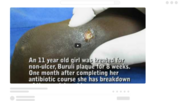
Buruli Ulcer Disease: Obtaining Swab Specimens for Diagnosis of M. Ulcerans Infection - Youtube video
Website last accessed on 18.03.2023
GARC provides tools and training to build in-country skills and knowledge on essential elements of rabies control programmes, enabling countries to strengthen their efforts to eliminate rabies in a systematic way. Our most comprehensive in-country capacity bui
...

Website last accessed on 18.03.2023
WHO often receives requests from Member States and implementing partners to provide training in capacity‐building in endemic areas in order to better equip health personnel to diagnose, treat and control the disease.
Website last accessed on 18.03.2023
Education and information about ascariasis, including fact sheets and information on prevention and control, epidemiology, diagnosis and treatment.
Website last accessed on 18.03.2023
Website last accessed on 18.03.2023
Education and information about hookworm including fact sheets and information on prevention and control, epidemiology, diagnosis and treatment.
Websites last accessed on 24.03.2023
Education and information about Leishmaniasis prevention and control.
Websites last accessed on 24.03.2023
A parasite is an organism that lives on or in a host and gets its food from or at the expense of its host. Parasites can cause disease in humans.
Website last accessed on 24.03.2023
A parasite is an organism that lives on or in a host and gets its food from or at the expense of its host. Parasites can cause disease in humans.
Website last accessed on 24.03.2023
Education and information about Soil-Transmitted Helminths including Human Hookworm, Roundworm and Whipworm.
Website last accessed on 24.03.2023
A parasite is an organism that lives on or in a host and gets its food from or at the expense of its host. Parasites can cause disease in humans.
Website last accessed in 24.03.2023
CDC provides continuing education for professionals involved in rabies prevention and control. While CDC provides some resources directly, others are offered through partnerships and collaborations with other public health entities. This page contains a collec
...
Chagas heart disease (CHD) affects approximately 30% of patients chronically infected with the protozoa Trypanosoma cruzi. CHD is classified into four stages of increasing severity according to electrocardiographic, echocardiographic, and clinical criteria. CHD presents with a myriad of clinical man
...

Background: The human helminth infections include ascariasis, trichuriasis, hookworm infections, schistosomiasis, lymphatic filariasis (LF) and onchocerciasis. It is estimated that almost 2 billion people worldwide are infected with helminths. Whilst the WHO treatment guidelines for helminth infecti
...
Website last accessed on 04.04.2023
Website last accessed on 09.04.2023
Human echinococcosis is a parasitic disease caused by tapeworms of the genus Echinococcus. More than one million people are affected by echinococcosis.
Website last accessed on 09.04.2023
La equinococosis humana es una enfermedad parasitaria causada por tenias del género Echinococcus. La equinococosis afecta a más de un millón de personas.
Website last accessed on 14.04.2023
Les trématodes d'origine alimentaire sont des zoonoses et leurs agents pathogènes ne peuvent être transmis à l'homme qu'après avoir accompli un cycle de vie complexe, dont certaines étapes se déroulent dans un hôte animal intermédiaire. Les premiers h
...
Website last accessed ob 14.04.2023
Los trematodos transmitidos por los alimentos son zoonosis y sus patógenos sólo pueden transmitirse al ser humano tras completar un complejo ciclo vital, algunas de cuyas etapas tienen lugar en un hospedador animal intermediario. El primer hospedador interme
...
