
Filter
5322
Text search:
treatment
setting
Featured
Recommendations
545
New Publications
1334
Language
Document type
No document type
2991
Studies & Reports
797
Guidelines
797
Manuals
336
Strategic & Response Plan
192
Training Material
97
Fact sheets
58
Situation Updates
25
Brochures
11
Resource Platforms
8
Infographics
6
Online Courses
3
Videos
1
Countries / Regions
India
295
Global
223
Kenya
146
South Africa
134
Sierra Leone
108
Western and Central Europe
99
Ethiopia
98
Liberia
95
Nigeria
95
Uganda
94
Tanzania
86
Africa
83
Malawi
79
Nepal
73
Bangladesh
71
Myanmar / Burma
69
Zambia
59
Ghana
57
Rwanda
54
Namibia
53
Latin America and the Carribbean
49
Ukraine
48
Philippines
45
Syria
43
Zimbabwe
36
Congo, Democratic Republic of
33
Eastern Europe
33
Indonesia
32
Lesotho
30
South–East Asia Region
30
South Sudan
29
Mozambique
28
Guinea
25
Haiti
22
Cambodia
22
Botswana
22
Asia
22
Russia
22
Germany
21
West and Central Africa
21
Senegal
20
East and Southern Africa
20
Middle East and North Africa
17
Eastern Europe and Central Asia
17
Burkina Faso
16
Yemen
13
Cameroon
12
Eswatini/ Swaziland
12
Mali
10
Pakistan
10
China
9
Benin
9
Brazil
9
Afghanistan
8
Vietnam
8
Jordan
7
Lebanon
7
Thailand
7
Sudan
7
Sri Lanka
7
Western Pacific Region
7
Venezuela
7
Tajikistan
7
Côte d’Ivoire / Ivory Coast
6
USA
6
Somalia
6
Iraq
6
Central African Republic
6
Burundi
6
Colombia
6
Southern Africa
6
Peru
5
North Macedonia
5
Laos
5
Georgia
5
Togo
4
Turkey
4
Argentina
4
Madagascar
4
Bhutan
4
Albania
4
Armenia
4
Moldova
4
Iran
4
Kyrgyzstan
4
United Kingdom
4
Spain
4
Saudi Arabia
3
Egypt
3
Papua New Guinea
3
El Salvador
3
Libya
3
Timor Leste/ East Timor
3
North America
3
Niger
2
Gambia
2
Singapore
2
Serbia
2
Croatia
2
Ecuador
2
Bolivia
2
Angola
2
Chile
2
Other region
2
Fiji
2
Palestine
2
Canada
2
Kazakhstan
2
Japan
2
Mauritius
2
Portugal
2
Azerbaijan
2
Belarus
2
Guinea-Bissau
1
Chad
1
Ireland
1
Hungary
1
Honduras
1
Greece
1
Guatemala
1
Mexico
1
Paraguay
1
Poland
1
Italy
1
Qatar
1
Bulgaria
1
Estonia
1
Romania
1
Lithuania
1
Uzbekistan
1
Australia
1
Gabon
1
Turkmenistan
1
Denmark
1
Belgium
1
France
1
Bosnia and Herzegovina
1
Latvia
1
Authors & Publishers
Publication Years
Category
Countries
1819
Clinical Guidelines
475
Key Resources
311
Public Health
310
Women & Child Health
291
Capacity Building
159
Pharmacy & Technologies
53
Toolboxes
Mental Health
519
HIV
477
COVID-19
343
TB
338
AMR
193
Caregiver
191
Disability
173
Ebola & Marburg
172
NTDs
155
Conflict
119
NCDs
111
Planetary Health
106
Rapid Response
105
Pharmacy
96
Refugee
94
Global Health Education
73
Malaria
63
2.0 Rapid Response
58
Health Financing Toolbox
51
Natural Hazards
48
Cholera
45
Social Ethics
29
Specific Hazards
25
Zika
22
Polio
21

ith a view to support the monitoring and reporting on the denial of humanitarian access against children, the Office of the Special Representative of the Secretary-General for Children and Armed Conflict and UNICEF publish today* a guidance note offering new tools to practitioners to better address
...

Relapsing malaria caused by Plasmodium vivax parasites poses a significant challenge to global malaria elimination efforts. About one third of the population remains at risk of contracting P. vivax malaria, and 85% of P. vivax infections stem from reactivated latent parasites, leading to chronic ana
...

Meeting report, Kampala, Uganda,
7–8 November 2023

Community led-monitoring is based on the principle that «Nothing that is done for us should
be done without us”. The combination of this principle with evidence shows that community-led
monitoring is an important driver of improved service delivery and health outcomes that needs to
be re-empha
...

Anopheles stephensi is an invasive mosquito species which has been found spreading across Africa. While this species presents a new challenge for malaria control on the continent, its surveillance and management have been ongoing in Asia for many years. This document aims to summarize key lessons fr
...
This practical document is available to support programmes and partners to design and implement risk communication strategies to achieve high uptake of malaria vaccination.

Preferred product characteristics and clinical development considerations
Vector control, alongside case management, remains the most effective approach to controlling and eliminating malaria. Key interventions, such as indoor residual spraying (IRS) and long-lasting insecticidal nets (LLINs), have significantly reduced malaria transmission in many African countries. This
...
The purpose of the guideline is to provide information to stakeholders on the necessary requirements for a complete prequalification dossier for insecticide-treated nets (ITNs). Its aim is to establish the baseline for dossier requirements which are necessary to assess ITN products for the purposes
...

Reprogramming examples for GC7. This document supports the introduction of climate change-related interventions
into programs to reduce transmission of malaria and protect vulnerable populations.
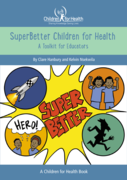
SuperBetter Children is a health and wellbeing curriculum designed to be integrated into school programmes or offered as an extracurricular activity.

This toolkit is a comprehensive set of practical tools and resources designed to support country-level risk communication and community engagement (RCCE) practitioners, decision-makers and partners to plan and implement readiness and response activities for Ebola disease outbreaks. The toolkit conta
...

This toolkit is a comprehensive set of practical tools and resources designed to support country-level risk communication and community engagement (RCCE) practitioners, decision-makers, and partners to plan and implement readiness and response activities for yellow fever outbreaks. The toolkit conta
...

This toolkit is a comprehensive set of practical tools and resources designed to support country-level risk communication and community engagement (RCCE) practitioners, decision-makers, and partners to plan and implement readiness and response activities for yellow fever outbreaks. The toolkit conta
...

This guidance covers different options for banning or phasing out a pesticide and suggests related risk reduction measures to be taken during the phase-out period. A key focus of this guidance is how to take action to manage, prevent, minimize, and communicate about identified risks during the imple
...

STANDARD OPERATING PROCEDURES - PREVENTION AND CARE FOR CHILD SURVIVORS

Access to safe, effective and quality-assured health products and technologies is crucial for achieving universal health coverage and primary health care goals. The continued growth of the aging population; increasing burden of noncommunicable diseases; growing burden of mental health issues; climat
...

Breastfeeding is a cornerstone of healthy infant nutrition, development and survival. It is critical for countries* to improve breastfeeding rates in order to achieve global targets for newborn and child health and survival, as well as economic growth and environmental sustainability

Early Adolescent Skills for Emotions (EASE) is an evidence-based group psychological intervention to help 10–15-year-olds affected by internalizing problems (e.g. stress and symptoms of anxiety, depression) in communities exposed to adversity. Published by the World Health Organization (WHO) and U
...

The objective of this guideline is to present the complete set of all WHO recommendations and best practice statements relating to abortion. While legal, regulatory, policy and service-delivery contexts may vary from country to country, the recommendations and best practices described in this docume
...
