
Filter
1411
Text search:
disability
inclusive
development
Featured
113
312
Language
Document type
855
212
131
84
80
23
12
8
4
1
1
Countries
73
45
37
35
32
31
30
28
26
23
23
23
20
19
19
18
18
17
16
15
13
13
13
11
10
10
10
10
9
9
9
9
8
8
7
7
7
7
7
6
6
6
6
5
5
5
5
5
5
5
5
4
4
4
4
4
3
3
3
3
3
2
2
2
2
2
2
2
2
2
2
2
1
1
1
1
1
1
1
1
1
1
1
1
1
1
1
1
1
1
1
1
1
1
1
1
1
1
1
1
Authors & Publishers
Publication Years
Category
496
101
93
62
41
17
1
Toolboxes
437
125
96
55
44
40
32
28
27
25
22
21
20
16
16
9
7
5
5
3
3
3
1
The United Nations Network on Migration is committed to supporting all partners in pursuit of the implementation of the Global Compact for Safe, Orderly and Regular Migration, recognizing that this cooperative framework provides an invaluable tool for ensuring
...
Every year, an estimated 15 million babies are born preterm – before 37 weeks of pregnancy. That is more than 1 in 10 live births. Approximately 1 million children die each year worldwide due to complications from their early birth. Those that survive often face a lifetime of ill-health including
...

Childhood obesity is a major public health problem globally, which could undermine progress towards achieving the Sustainable Development Goals. Prevention is recognized as the most efficient means of curbing the epidemic; however, given the scale o
...
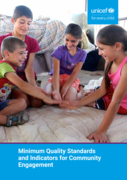
The Minimum Standards and Indicators for Community Engagement were developed through an inter‑agency consultation process that engaged a large number of experts from around the world. UNICEF wishes to acknowledge the contribution of all those that participated, and who share a passion for placing
...

The WHO End TB Strategy aims to end the global TB epidemic by 2030, in alignment with Goal 3 of the United Nations (UN) Sustainable Development Goals (SDGs). Member States of the World Health Organization (WHO) and the UN committed to ending the TB
...
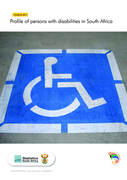
Stats SA has released an in-depth report on persons with disabilities. The report, written using Census 2011 data, is the first in a series of in-depth analyses of various Census 2011 variables, such as ageing and education.
The report provides statistical evidence relating to the prevalence of
...

Self-care interventions are among the most promising and exciting new approaches to improve health and well-being, both from a health systems perspective and for people who use these interventions.
The World Health Organization (WHO) uses the following working definition of self-care: Self-care i
...
This Commission report aims to contribute to a new era of multilateral cooperation based on strong UN institutions to reduce the dangers of COVID-19, forestall the next pandemic, and enable the world to achieve the agreed goals of sustainable development
...

This sourcebook aims to detail why health needs to be part of urban and territorial planning and how to make this happen. It brings together two vital elements we need to build habitable cities on a habitable planet: 1) Processes to guide the development
...

In the last decade, Timor-Leste has made remarkable progress in strengthening its health system and improving the health status of its population. This has resulted in an increased life expectancy, and the achievement of Millennium Development Goals
...

This document is an output of a WHO cross-programme initiative aiming to improve the prevention, diagnosis and management of anaemia and thereby accelerate reduction in its prevalence. It comes at an important time, midway through the era of the Sustainable
...

This report makes clear that there is a path to end AIDS. Taking that path will help ensure preparedness to address other pandemic challenges, and advance progress across the Sustainable Development Goals. The data and real-world examples in the rep
...
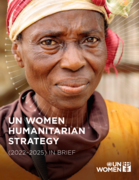
This publication provides an overview of UN Women’s commitments to the humanitarian community guided by the “UN Women strategic plan 2022–2025”. It highlights areas where UN Women has a unique advantage in advancing gender equality and the empowerment of women and girls across the humanitari
...
Financing Global Health 2013: Transition in an Age of Austerity, IHME’s fifth annual report on global health expenditure, depicts financing trends that underline the resilience of development assistance for health. This year’s updated estimates
...

Hypertension is referred to as a “silent killer”. Most people with hypertension are unaware of their condition as in most cases, they experience no warning signs or symptoms hence they are not identified or treated. Hypertention is associated with a number of conditions,
...
Cardiovascular diseases (CVDs) have collectively remained the leading causes of death worldwide and substantially contribute to loss of health and excess health system costs. The Global Burden of Diseases, Injuries, and Risk Factors (GBD) Study has tracked trends in death and
...

To maintain a structured and well-organized implementation plan it is important to have a lead agency or sector. The ministry of health or a similar authority in government will be critical in facilitating development and implementation of the multi
...

Non-Communicable Diseases (NCDs), including mental disorders, currently pose one of the biggest threats to health and development globally, particularly in low and middle income countries2. It is predicted that unless proven interventions are rapidl
...

Providing quality, stigma-free services is essential to equitable health care for all and achieving global HIV goals and broader Sustainable Development Goals related to health. Every person has the right to the highest attainable standard of physic
...

Stigma and discrimination related to mental health conditions are widespread and harmful. Reducing stigma and discrimination can benefit families, societies and economies – it can save lives. The toolkit offers practical guidance on how to achieve this, based on three core evidence-based principle
...
