
Filter
1904
Text search:
Neglected
Diseases
Featured
174
371
Language
1763
148
132
57
51
33
33
26
3
2
1
1
1
1
1
1
1
1
1
1
1
1
1
1
1
1
1
1
1
1
Document type
689
529
195
105
103
82
73
41
24
19
16
10
9
7
2
Countries
241
52
43
36
35
32
31
30
28
26
25
22
21
19
18
16
16
16
16
15
14
14
13
12
11
11
11
10
10
10
9
9
8
8
8
7
7
7
6
6
6
6
5
5
5
4
4
4
4
4
4
3
3
3
3
2
2
2
2
2
2
2
2
2
2
2
2
2
2
2
2
2
1
1
1
1
1
1
1
1
1
1
1
1
1
1
1
1
1
1
1
1
1
1
1
1
1
1
1
1
1
1
1
1
1
1
Authors & Publishers
216
203
62
58
56
37
23
23
22
22
17
14
14
11
10
10
9
9
8
7
7
7
7
6
6
6
6
6
6
5
5
5
5
5
5
5
5
5
5
4
4
4
4
4
4
4
4
4
4
4
4
4
4
4
4
4
4
4
4
4
3
3
3
3
3
3
3
3
3
3
3
3
3
3
3
3
3
3
3
3
3
3
3
3
3
3
3
3
3
3
3
3
3
3
3
3
3
3
3
3
3
3
3
3
3
3
2
2
2
2
2
2
2
2
2
2
2
2
2
2
2
2
2
2
2
2
2
2
2
2
2
2
2
2
2
2
2
2
2
2
2
2
2
2
2
2
2
2
2
2
2
2
2
2
2
2
2
2
2
2
2
2
2
2
2
2
2
2
2
2
2
2
2
2
2
2
2
2
2
2
2
2
2
2
2
2
2
2
2
2
2
2
2
2
2
2
2
2
2
2
2
2
2
2
2
2
2
2
2
2
2
2
2
2
2
2
2
2
2
2
2
2
1
1
1
1
1
1
1
1
1
1
1
1
1
1
1
1
1
1
1
1
1
1
1
1
1
1
1
1
1
1
1
1
1
1
1
1
1
1
1
1
1
1
1
1
1
1
1
1
1
1
1
1
1
1
1
1
1
1
1
1
1
1
1
1
1
1
1
1
1
1
1
1
1
1
1
1
1
1
1
1
1
1
1
1
1
1
1
1
1
1
1
1
1
1
1
1
1
1
1
1
1
1
1
1
1
1
1
1
1
1
1
1
1
1
1
1
1
1
1
1
1
1
1
1
1
1
1
1
1
1
1
1
1
1
1
1
1
1
1
1
1
1
1
1
1
1
1
1
1
1
1
1
1
1
1
1
1
1
1
1
1
1
1
1
1
1
1
1
1
1
1
1
1
1
1
1
1
1
1
1
1
1
1
1
1
1
1
1
1
1
1
1
1
1
1
1
1
1
1
1
1
1
1
1
1
1
1
1
1
1
1
1
1
1
1
1
1
1
1
1
1
1
1
1
1
1
1
1
1
1
1
1
1
1
1
1
1
1
1
1
1
1
1
1
1
1
1
1
1
1
1
1
1
1
1
1
1
1
1
1
1
1
1
1
1
1
1
1
1
1
1
1
1
1
1
1
1
1
1
1
1
1
1
1
1
1
1
1
1
1
1
1
1
1
1
1
1
1
1
1
1
1
1
1
1
1
1
1
1
1
1
1
1
1
1
1
1
1
1
1
1
1
1
1
1
1
1
1
1
1
1
1
1
1
1
1
1
1
1
1
1
1
1
1
1
1
1
1
1
1
1
1
1
1
1
1
1
1
1
1
1
1
1
1
1
1
1
1
1
1
1
1
1
1
1
1
1
1
1
1
1
1
1
1
1
1
1
1
1
1
1
1
1
1
1
1
1
1
1
1
1
1
1
1
1
1
1
1
1
1
1
1
1
1
1
1
1
1
1
1
1
1
1
1
1
1
1
1
1
1
1
1
1
1
1
1
1
1
1
1
1
1
1
1
1
1
1
1
1
1
1
1
1
1
1
1
1
1
1
1
1
1
1
1
1
1
1
1
1
1
1
1
1
1
1
1
1
1
1
1
1
1
1
1
1
1
1
1
1
1
1
1
1
1
1
1
1
1
1
1
1
1
1
1
1
1
1
1
1
1
1
1
1
1
1
1
1
1
1
1
1
1
1
1
1
1
1
1
1
1
1
1
1
1
1
1
1
1
1
1
1
1
1
1
1
1
1
1
1
1
1
1
1
1
1
1
1
1
1
1
1
1
1
1
1
1
1
1
1
1
1
1
1
1
1
1
1
1
1
1
1
1
1
1
1
1
1
1
1
1
1
1
1
1
1
1
1
1
1
1
1
1
1
1
1
1
1
1
1
1
1
1
1
1
1
1
1
1
1
1
1
1
1
1
1
1
1
1
1
1
1
1
1
1
1
1
1
1
1
1
1
1
1
1
1
1
1
1
1
1
1
1
1
1
1
1
1
1
1
1
1
1
1
1
1
1
1
1
1
1
1
1
1
1
1
1
1
1
1
1
1
1
1
1
1
1
1
1
1
1
1
1
1
1
1
1
1
1
1
1
1
1
1
1
1
1
1
1
1
1
1
1
1
1
1
1
1
1
1
1
1
1
1
1
1
1
1
1
1
1
1
1
1
1
1
1
1
1
1
1
1
1
1
1
1
1
1
1
1
1
1
1
1
1
1
1
1
1
1
1
1
1
1
1
1
1
1
1
1
1
1
1
1
1
1
1
1
1
1
1
1
1
1
1
1
1
1
1
1
1
1
1
1
1
1
1
1
1
1
1
1
1
1
1
1
1
1
1
1
1
1
1
1
1
1
1
1
1
1
1
1
1
1
1
1
1
1
1
1
1
1
1
1
1
1
1
1
1
1
1
1
1
1
1
1
1
1
1
1
1
1
1
1
1
1
1
1
1
1
1
1
1
1
1
1
1
1
1
1
1
1
1
1
1
1
1
1
1
1
1
1
1
1
1
1
1
1
1
1
1
1
1
1
1
1
1
1
1
1
1
1
1
1
1
1
1
1
1
1
1
1
1
1
1
1
1
1
1
1
1
1
1
1
1
1
1
1
1
1
1
1
1
1
1
1
1
1
1
1
1
1
1
1
1
1
1
1
1
1
1
1
1
1
1
1
1
1
1
1
1
1
1
1
1
1
1
1
1
1
1
1
1
1
1
1
1
1
1
1
1
1
1
1
1
1
1
1
1
1
1
1
1
1
1
1
1
1
1
1
1
1
1
1
1
1
1
1
1
1
1
1
1
1
1
1
1
1
1
1
1
1
1
1
1
1
1
1
1
1
1
1
1
1
1
1
1
1
1
1
1
1
1
1
1
1
1
1
1
1
1
1
1
1
1
1
1
1
1
1
1
1
1
1
1
1
1
1
1
1
1
1
1
1
1
1
1
1
1
1
1
1
1
1
1
1
1
1
1
1
1
1
1
1
1
1
1
1
1
1
1
1
1
1
1
1
1
1
1
1
1
1
1
1
1
1
1
1
1
1
1
1
1
1
1
1
1
1
1
1
1
1
1
1
1
1
1
1
1
1
1
1
1
1
1
1
1
1
1
1
1
1
1
1
1
1
1
1
1
1
1
1
1
1
1
1
1
1
1
1
1
1
1
1
1
1
1
1
1
1
1
1
1
1
1
1
1
1
1
1
1
1
1
1
1
1
1
1
1
1
1
1
1
1
1
1
1
1
1
1
1
1
1
1
1
1
1
1
1
1
1
1
1
1
1
1
1
1
1
1
1
1
1
1
1
1
1
1
1
1
1
1
1
1
1
1
1
1
1
1
1
1
1
1
1
1
1
1
1
1
1
1
1
1
1
1
1
1
1
1
1
1
1
1
1
1
1
1
1
1
1
1
1
1
1
1
1
1
1
1
1
1
1
1
1
1
1
1
1
1
1
1
1
1
1
1
1
1
1
1
1
1
1
1
1
1
1
1
1
1
1
1
1
1
1
1
1
1
1
1
1
1
1
1
1
1
1
1
1
1
1
1
1
1
1
1
1
1
1
1
1
1
1
1
1
1
1
1
1
1
1
1
1
1
1
1
1
1
1
1
1
1
1
1
1
1
1
1
1
1
1
1
1
1
1
1
1
1
1
1
1
1
1
1
1
1
1
1
1
1
1
1
1
1
1
1
1
1
1
1
1
1
1
1
1
1
1
1
1
1
1
1
1
1
1
1
1
1
1
1
1
1
1
1
1
1
1
1
1
1
1
1
1
1
1
1
1
1
1
1
1
1
1
1
1
1
1
1
1
1
1
1
1
1
1
1
1
1
1
1
1
1
1
1
1
1
1
1
1
1
1
1
1
1
1
1
1
1
1
1
1
1
1
1
1
1
1
1
1
1
1
1
1
1
1
1
1
1
1
1
1
1
1
1
1
1
1
1
Publication Years
783
1001
107
13
Category
445
179
134
78
63
28
27
1
Toolboxes
712
90
75
61
60
54
52
39
31
31
31
30
30
24
24
19
16
13
12
12
12
10
9
7
3
Rabies is a neglected zoonotic disease with a global burden of approximately 59,000 human deaths a year. Once clinical symptoms appear, rabies is almost invariably fatal; however, with timely and appropriate post-exposure prophylaxis (PEP) consistin
...
g of wound washing, vaccine, and in some cases rabies immunoglobulin (RIG), the disease is almost entirely preventable. Access to PEP is limited in many countries, and when available, is often very expensive.
more
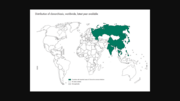
Map of Distribution of clonorchiasis, worldwide.
Foodborne trematodes are a group of diseases that include the parasites Clonorchis, Opisthorchis, Fasciola and Paragonimus. These parasitic flukes have a complex life cycle involving diverse definit
...
ive hosts and one or two intermediate hosts. Foodborne trematodes cause infection in humans via the consumption of contaminated food (raw fish, crustaceans or vegetables). Infection can result in severe liver and lung disease and together these diseases are estimated to cause 2 million life years lost to disability and death worldwide every year.
more
High prevalence of target diseases in rural and developing nations, increased prevalence of malnutrition across the globe, lack of hygiene and poor sanitation facilities, Migratory patterns of population, introduction of new chemical entity in the f
...
ield of therapeutics, favorable government regulations, and increased R&D investments are key factors contributing to high CAGR of point of care diagnostics market during the forecast period.
more
Human African trypanosomiasis (HAT) is a lethal neglected tropical disease (NTD) transmitted by the bite of infected tsetse flies. The disease is also known as “sleeping sickness”. During the 20th century it caused enormous suffering in the ende
...
mic areas in sub-Saharan Africa. HAT transmission last soared in the late 1990s, triggering a renewed, coordinated and very successful control effort. In this paper, we present achievements towards HAT elimination, with a focus on the WHO road map targets for 2020. In particular, reported cases continue to decline, from over 30,000 cases per year at the turn of the century to 663 cases in 2020. Despite the impact of the COVID-19 pandemic, HAT surveillance was largely sustained, and the network of health facilities able to diagnose and treat the disease further expanded. Looking to the future, the World Health Organization (WHO) set bold new targets for HAT in its 2021–2030 road map for NTDs, namely: the elimination of transmission of gambiense HAT, which occurs in western and central Africa, and the elimination as a public health problem of rhodesiense HAT, which is found in eastern and southern Africa. The strong commitment of national health authorities and the international community will be essential if these goals are to be achieved.
more
Rabies is a neglected zoonotic disease responsible for an estimated 59,000 human deaths annually. Rural populations in Africa and Asia are predominantly affected, and approximately
40% of cases occur in children under the age of 15 years. Transmitt
...
ed through bites and scratches from infected animals, dogs are responsible for up to 99% of human rabies cases.
more
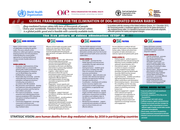
Rabies remains an under-reported neglected zoonosis with a case-fatality rate of almost 100% in humans and animals. Dog-mediated human rabies causes tens of thousands of human deaths annually despite being 100% preventable. More than 95% of human ca
...
ses are caused by the bite of a rabies-infected dog. Dog-mediated human rabies disproportionately affects rural communities, particularly children, and economically disadvantaged areas of Africa and Asia, where awareness of the disease and access to appropriate post-exposure prophylaxis (PEP) can be limited or nonexistent.
more
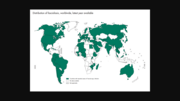
Map of Distribution of fascioliasis, worldwide, latest year available.
Foodborne trematodes are a group of diseases that include the parasites Clonorchis, Opisthorchis, Fasciola and Paragonimus. These parasitic flukes have a complex life cycle invo
...
lving diverse definitive hosts and one or two intermediate hosts. Foodborne trematodes cause infection in humans via the consumption of contaminated food (raw fish, crustaceans or vegetables). Infection can result in severe liver and lung disease and together these diseases are estimated to cause 2 million life years lost to disability and death worldwide every year.
more
Leptospirosis is a zoonotic disease with epidemic potential, especially after a heavy rainfall,
caused by a bacterium called Leptospira. Leptospira interrogans is pathogenic to humans and
animals, with more than 200 serologic variants or serovars. Humans usually acquire
leptospirosis through dire
...
ct contact with the urine of infected animals or a urine-contaminated
environment. Human-to-human transmission occurs only very rarely. Leptospirosis may present
with a wide variety of clinical manifestations, from a mild illness that may progress to a serious
and sometimes fatal disease. Its symptoms may mimic many diseases, such as influenza,
dengue and other viral haemorrhagic diseases; making the correct diagnosis (clinical and
laboratory) at the onset of symptoms is important to prevent severe cases and save lives,
primarily in outbreak situations.
more
Website last accessed on 14.05.2023
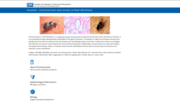
Leishmaniasis A group of diseases, caused by the Leishmania parasites and transmitted by the sandfly
Onchocerciasis, or river blindness, is a neglected tropical disease (NTD) caused by the parasitic worm Onchocerca volvulus. It is transmitted through repeated bites by blackflies of the genus Simulium. The disease is called river blindness because t
...
he blackfly that transmits the infection lives and breeds near fast-flowing streams and rivers, mostly near remote rural villages. The infection can result in visual impairment and sometimes blindness. Additionally, onchocerciasis can cause skin disease, including intense itching, rashes, or nodules under the skin. Worldwide onchocerciasis is second only to trachoma as an infectious cause of blindness.
more

Front. Public Health 9:622809
The control and elimination of schistosomiasis have over the last two decades involved several strategies, with the current strategy by the World Health Organization (WHO) focusing mainly on treatment with praziquantel during mass drug administration (MDA). However, th
...
e disease context is complex with an interplay of social, economic, political, and cultural factors that may affect achieving the goals of the Neglected Tropical Disease (NTD) 2021-2030 Roadmap. There is a need to revisit the current top-down and reactive approach to schistosomiasis control among sub-Saharan African countries and advocate for a dynamic and diversified approach.
more
Carlos Chagas discovered American trypanosomiasis, also named Chagas disease (CD) in his honor, just over a century ago. He described the clinical aspects of the disease, characterized by its etiological agent (Trypanosoma cruzi) and identified its insect vector. Initially, CD occurred only in Latin
...
America and was considered a silent and poorly visible disease. More recently, CD became a neglected worldwide disease with a high morbimortality rate and substantial social impact, emerging as a significant public health threat. In this context, it is crucial to better understand better the epidemiological scenarios of CD and its transmission dynamics, involving people infected and at risk of infection, diversity of the parasite, vector species, and T. cruzi reservoirs. Although efforts have been made by endemic and non-endemic countries to control, treat, and interrupt disease transmission, the cure or complete eradication of CD are still topics of great concern and require global attention. Considering the current scenario of CD, also affecting non-endemic places such as Canada, USA, Europe, Australia, and Japan, in this review we aim to describe the spread of CD cases worldwide since its discovery until it has become a global public health concern.
more
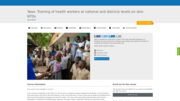
Course information
Yaws is targeted for eradication by WHO in the 2021-2030 NTD Roadmap. It is therefore crucial to know how to identify cases, design and implement activities to eradicate the disease at the community level.
In the context of integration of skin NTDs it is vital to learn to recogn
...
ize a disease targeted for eradication. At the individual level yaws lesions may mimic other skin diseases. At the community level, it is key to know how to design and implement the total community treatment strategy and monitor its impact. This course aims at providing health workers with the basic knowledge to understand the epidemiology, diagnosis, treatment, impact, eradication strategy and reporting of yaws.
more
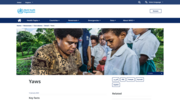
Yaws forms part of a group of chronic bacterial infections commonly known as the endemic treponematoses. These diseases are caused by spiral bacteria of the genus Treponema, which also includes endemic syphilis (bejel) and pinta. Yaws is the most co
...
mmon of these three infections.
more
Course information
Yaws is targeted for eradication by WHO in the 2021-2030 NTD Roadmap. It is therefore crucial to know how to identify cases, design and implement activities to eradicate the disease at the community level.
In the context of integration of skin NTDs it is vital to learn to recogn
...
ize a disease targeted for eradication. At the individual level yaws lesions may mimic other skin diseases. At the community level, it is key to know how to design and implement the total community treatment strategy and monitor its impact. This course aims at providing health workers with the basic knowledge to understand the epidemiology, diagnosis, treatment, impact, eradication strategy and reporting of yaws.
more
We reviewed the evidence on community-based interventions for the prevention and control of cutaneous leishmaniasis (CL). Community initiatives tailored towards awareness and mobilisation are regarded as a priority area in the Neglected Tropical Dis
...
ease Roadmap 2021–2030 by the World Health Organization. We searched nine electronic databases for intervention-based
studies. Two independent reviewers screened and assessed the articles for methodological quality using predefined criteria. We conducted a meta-analysis using a random effects model, along with narrative synthesis. Thirteen articles were eligible for inclusion, of which 12 were quantitative studies (quasi-experimental with control group and pre-post interventions) and one qualitative
study. All articles reported on health education interventions aimed at changing people’s knowledge, attitudes, and practices (KAP) in relation to CL. Participant groups included students, mothers, housewives, volunteer health workers, and residents in general. An increased score was recorded for all outcomes across all interventions: knowledge (SMD: 1.85, 95% CI: 1.23, 2.47), attitudes (SMD:
1.36, 95% CI: 0.56, 2.15), and practices (SMD: 1.73, 95% CI: 0.99, 2.47). Whilst our findings show that educational interventions improved people’s knowledge, attitudes, and practices about CL, we argue that this approach is not sufficient for the prevention and control of this disease. Knowledge does not always translate into action, particularly where other structural barriers exist. Therefore,
we recommend the design of more innovative community-based interventions with a broader focus (e.g., stigma, financial barriers, and healthcare access).
more

Film - People, Partnerships, and a Pill: 20 Years of ITI
Stanley, R. Productions
International Trachoma Initiative; The Taskforce for Global Health
(2018)
CC
In 2018, we are celebrating 20 years of progress in eliminating trachoma, the world’s leading infectious cause of blindness. Set up in 1998 by Pfizer Inc. and the Edna McConnell Clark Foundation, the International Trachoma Initiative (ITI) supports Ministries of Health in over 30 countries around
...
the world by making Zithromax® available for use in public health campaigns to eliminate trachoma. The 20th anniversary of our founding gives us an opportunity to reflect on the distance we’ve traveled in fighting this disease, and raise the ambition for accelerating to a world where diseases like trachoma are a distant memory. We have not traveled alone these past 20 years – a broad coalition of actors including NGOs, the World Health Organization (WHO), Ministries of Health, health workers, and community members have made these incredible achievements possible. Our 20th anniversary gives us an opportunity to celebrate this coalition of partners, colleagues, and friends
more
Leishmaniasis is still considered to be a global health problem, which spreads in most countries in the world. Leishmania is an intracellular obligate protistan parasite that causes different clinical symptoms in infected humans and other animals. There are clinically different types of the disease
...
including: visceral, cutaneous or muco-cutaneous leishmaniasis. Approximately, two million new infections occurring annually; 0.7 to 1.2 million cases are recorded with cutaneous leishmaniasis and 200,000–400,000 cases return for visceral leishmaniasis. However, Cutaneous leishmaniasis considers one of uncontrolled wobbling endemic diseases, especially in Iraq, which occurs at the skin to cause a dermal lesion. Usually, the lesion is spontaneously healed to leave a colorless depressed scar and permanent immunity.
more
Chikungunya virus (CHIKV) is a re-emerging mosquito borne alphavirus responsible
for the recent outbreak in the Americas. Immunologically naïve population in the Americas favors the spread of epidemics. Chikungunya fever is characterized by an abrupt febrile illness, polyarthralgia and maculopapul
...
ar rash. In chikungunya fever, shock or severe hemorrhage is very rarely observed; the onset is more acute and the duration of fever is shorter than dengue disease. The pain is much more pronounced and localized to the joints and tendons in chikungunya fever, in comparison to dengue fever. There is no specific and effective antiviral therapy and vaccines are still in trails. The only effective preventive measures consist of individual protection against mosquito bites and vector control. Disease prevention is important due to the
economic burden it entails. Clinicians need to distinguish chikungunya fever between dengue fever and other diseases to give a successful treatment and prevent disease spreading.
more
Background: Despite several cycles of Mass Drug Administration (MDA), however, the prevalence of Soil-transmitted helminthiasis (STH) remains high in Bangladesh. A clear understanding of local knowledge, attitudes, and practices (KAP) related to the acceptance and utilization of MDA is critical for
...
effective implementation of this intervention.
Methods: This research, a cross-sectional descriptive study that utilized quantitative methods, was conducted between February and June 2017. A total of 380 questionnaire surveys were distributed to school-aged children (SAC), the parents of SAC, and school teachers.
Results: Out of 160 SACs, 81.9% knew of STH and 75.6% knew of MDA. SAC showed a high awareness of STH and recognized the importance of preventive measures and MDA. In terms of the parents of SAC and school teachers, close to half of the respondents were knowledgeable about STH and MDA. While nearly all of the participants held positive attitudes toward MDA, the respondents pointed out that school-based MDA presents severe limitations, as non-school-going children are neglected by this effort. A total of 68.3% of all school teachers and 56.8% of all parents of SAC found MDA efforts to be effective.
Conclusion: STH infections still remain a significant public health burden in Bangladesh. Reforming the MDA policy is necessary to achieve the target of STH elimination.
more
