
Filter
906
Text search:
Ministry
of
Health,
Republic
of
Uganda
Featured
94
279
Language
Document type
497
206
82
44
40
11
10
10
2
2
1
Countries / Regions
152
51
48
33
31
30
26
25
23
23
20
19
16
13
12
11
11
9
8
8
7
6
6
6
5
5
4
4
4
4
3
3
3
3
3
3
3
3
3
2
2
2
2
2
2
2
2
2
2
2
2
2
2
2
2
2
2
2
1
1
1
1
1
1
1
1
1
1
1
1
1
1
1
1
1
1
1
1
1
1
1
1
1
1
1
1
Authors & Publishers
Publication Years
Category
347
54
51
48
46
15
6
1
Toolboxes
77
61
51
51
50
34
33
29
26
24
22
21
17
15
14
14
12
11
10
8
4
4
2
2
2
2

World malaria report 2024
recommended
New data from the WHO reveal that an estimated 2.2 billion cases of malaria and 12.7 million deaths have been averted since 2000, but the disease remains a serious global health threat, particularly
...

Global tuberculosis report 2025
recommended
The WHO Global tuberculosis report 2025 provides a comprehensive and up-to-date assessment of the TB epidemic and of progress in prevention, diagnosis and treatment
...
national programmes for occupational health and safety for health workers: lessons learned from countries: summary report of the WHO online worksho
...

Adolescence, defined as the period between 10 and 19 years of age, is a developmental stage during which many psychosocial and mental health challenges emerge. There is a well-established link betwe
...
Lessons and best practices in empowering pastoralist communities to prevent HIV infection and reduce the impact of AIDS in Ethiopia. Briefing Paper
A guide to increasing coverage and equity in all communities in the African Region
Expanded Programs on Immunization (EPI) is responsible for vaccines and vaccination to control, eliminate and eradicate vaccine preventable diseases (VPDs). Having strong immunization systems to deliver vaccines ...
Expanded Programs on Immunization (EPI) is responsible for vaccines and vaccination to control, eliminate and eradicate vaccine preventable diseases (VPDs). Having strong immunization systems to deliver vaccines ...

Mpox, previously known as monkeypox, is a viral illness caused by the monkeypox virus (MPXV).1
It causes a painful rash, enlarged lymph nodes, fever, headache, muscle ache, back pain and low energy or feeling sick. In most cases, the symptoms of m
...
This Training module on malaria elimination has been developed by WHO to support health professionals in planning, managing, monitoring and evaluating malaria elimination programmes.
Supporting exercises: These files are necessary for participants
...
The Contingency Fund for Emergencies (CFE) provides WHO with rapid and flexible resources to respond to disease outbreaks and other health emergencies. The annual report provides an overview of the
...

Interim rapid response guidance, 10 June 2022.
It includes considerations for certain populations such as patients with mild disease with considerations for community care, patients with moderate to severe disease, sexually active persons, pregnant or breastfeeding women, children and young persons
...
The seventh WHO Report on the global tobacco epidemic analyses national efforts to implement the most effective measures from the WHO Framework Convention on Tobacco Control (WHO FCTC) that are proven to reduce demand for tobacco.
The report showed that while only 23 countries have implemented ce
...
9 June 2021
Since its launch, GLASS has expanded in scope and coverage and as of May 2021, 109 countries and territories worldwide have enrolled in GLASS. A key new component in GLASS is the inclusion of
...
The WHO Living guideline: Drugs to prevent COVID-19 contains the Organization’s most up-to-date recommendations for the use of drugs to prevent COVID-19. The latest version of this living guidelin
...

WHO today released its first roadmap to tackle postpartum haemorrhage (PPH) – defined as excessive bleeding after childbirth - which affects millions of women annually and is the world’s leading cause
...

2nd edition. This second edition builds on the experience of more than 10 years of SMC deployment, and reflects changes introduced in the WHO guidelines for malaria, 3 June 2022. The goal
...

Despite gains in childhood survival, more effort is needed to improve the well-being of children with developmental delays and disabilities. All children, including children with developmental delays and disabilities, need nurturing care. Nurturing
...
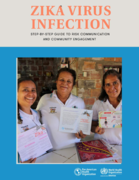
Zika Virus Infection - Step-by-Step Guide to Risk Communication and Community Engagement
recommended
This document provides Technical content on ZIKV, its manifestations, complications, modes of transmission, and prevention measures to be used in answering frequently asked questions and conveying messages in information and communication materials,
...
This working paper was conceived to offer practical tips and suggestions on how to establish and sustain the multisectoral coordination needed to develop and implement National Action Plans on AMR (NAPs). It is intended for anyone with responsibility for addressing AMR at country level. Drawing on b
...
This working paper was conceived to offer practical tips and suggestions on how to establish and sustain the multisectoral coordination needed to develop and implement National Action Plans on AMR (NAPs). It is intended for anyone with responsibility for addressing AMR at country level. Drawing on b
...

In an ambitious new era for health development under the 2030 Agenda for Sustainable Development, WHO and
its partners have a solid foundation of success on which to build.
...
