
Filter
6133
Text search:
physical
access
Featured
578
1552
Language
6004
131
115
83
79
48
33
22
10
10
10
10
8
7
7
6
6
6
6
6
6
5
5
5
4
4
4
4
4
4
4
4
4
4
4
4
3
3
3
3
3
3
3
3
3
3
3
3
2
2
2
2
2
2
2
2
2
1
1
1
1
1
1
1
1
1
1
1
Document type
3271
1093
819
395
220
126
115
46
21
13
6
2
1
1
Countries
283
276
195
143
141
136
125
118
115
110
107
106
99
98
93
85
82
79
69
68
68
68
63
49
43
42
41
39
36
36
34
31
30
29
29
28
28
26
26
26
24
23
22
22
20
20
20
20
19
18
18
17
17
17
16
15
15
14
13
13
12
11
11
11
11
9
9
9
8
8
7
7
6
6
6
6
5
5
5
5
5
4
4
4
4
4
4
4
4
4
4
3
3
3
3
3
3
3
3
3
3
3
3
3
3
3
3
3
2
2
2
2
2
2
2
2
2
2
2
2
2
2
2
2
2
1
1
1
1
1
1
1
1
1
1
1
1
1
1
1
1
1
1
1
1
1
Authors & Publishers
726
194
188
141
124
121
100
89
64
63
55
39
38
37
36
36
34
31
31
30
29
29
28
27
27
25
25
24
24
23
23
23
22
20
20
19
19
18
17
17
17
16
16
16
16
15
14
14
14
14
14
14
14
13
13
13
13
13
13
12
12
12
12
12
12
12
12
12
11
11
11
11
11
11
11
11
10
10
10
10
10
10
10
10
10
9
9
9
9
9
9
9
9
8
8
8
8
8
8
8
8
8
8
7
7
7
7
7
7
7
7
7
7
7
7
7
7
7
7
7
7
7
7
7
7
6
6
6
6
6
6
6
6
6
6
6
6
6
6
6
6
6
6
6
6
6
6
6
6
6
6
6
6
5
5
5
5
5
5
5
5
5
5
5
5
5
5
5
5
5
5
5
5
5
5
5
5
5
5
5
5
5
5
5
5
5
5
5
5
5
5
5
5
5
4
4
4
4
4
4
4
4
4
4
4
4
4
4
4
4
4
4
4
4
4
4
4
4
4
4
4
4
4
4
4
4
4
4
4
4
4
4
4
4
4
4
4
4
4
4
4
4
4
4
4
4
4
4
4
4
4
4
4
4
4
4
4
4
3
3
3
3
3
3
3
3
3
3
3
3
3
3
3
3
3
3
3
3
3
3
3
3
3
3
3
3
3
3
3
3
3
3
3
3
3
3
3
3
3
3
3
3
3
3
3
3
3
3
3
3
3
3
3
3
3
3
3
3
3
3
3
3
3
3
3
3
3
3
3
3
3
3
3
3
3
3
3
3
3
3
3
3
3
3
3
3
3
3
3
3
3
3
3
3
3
3
3
2
2
2
2
2
2
2
2
2
2
2
2
2
2
2
2
2
2
2
2
2
2
2
2
2
2
2
2
2
2
2
2
2
2
2
2
2
2
2
2
2
2
2
2
2
2
2
2
2
2
2
2
2
2
2
2
2
2
2
2
2
2
2
2
2
2
2
2
2
2
2
2
2
2
2
2
2
2
2
2
2
2
2
2
2
2
2
2
2
2
2
2
2
2
2
2
2
2
2
2
2
2
2
2
2
2
2
2
2
2
2
2
2
2
2
2
2
2
2
2
2
2
2
2
2
2
2
2
2
2
2
2
2
2
2
2
2
2
2
2
2
2
2
2
2
2
2
2
2
2
2
2
2
2
2
2
2
2
2
2
2
2
2
2
2
2
2
2
2
2
2
2
2
2
2
2
2
2
2
2
2
2
2
2
2
2
2
2
2
2
2
2
2
2
2
2
2
2
2
2
2
2
2
2
2
2
2
2
2
2
2
2
2
2
2
2
2
2
2
2
2
2
2
2
2
2
2
2
2
2
2
2
2
2
2
2
2
2
2
2
2
2
2
2
2
2
2
2
2
2
2
2
2
2
2
2
2
2
2
2
2
2
2
2
2
2
2
2
2
2
2
2
2
2
2
2
2
2
2
2
2
2
2
2
2
2
2
2
2
2
2
2
2
2
2
2
2
2
2
2
2
2
2
2
2
2
2
2
2
2
2
2
2
2
2
2
2
2
2
2
2
2
2
2
2
2
2
2
2
2
2
2
2
2
2
2
2
2
2
2
2
2
2
2
1
1
1
1
1
1
1
1
1
1
1
1
1
1
1
1
1
1
1
1
1
1
1
1
1
1
1
1
1
1
1
1
1
1
1
1
1
1
1
1
1
1
1
1
1
1
1
1
1
1
1
1
1
1
1
1
1
1
1
1
1
1
1
1
1
1
1
1
1
1
1
1
1
1
1
1
1
1
1
1
1
1
1
1
1
1
1
1
1
1
1
1
1
1
1
1
1
1
1
1
1
1
1
1
1
1
1
1
1
1
1
1
1
1
1
1
1
1
1
1
1
1
1
1
1
1
1
1
1
1
1
1
1
1
1
1
1
1
1
1
1
1
1
1
1
1
1
1
1
1
1
1
1
1
1
1
1
1
1
1
1
1
1
1
1
1
1
1
1
1
1
1
1
1
1
1
1
1
1
1
1
1
1
1
1
1
1
1
1
1
1
1
1
1
1
1
1
1
1
1
1
1
1
1
1
1
1
1
1
1
1
1
1
1
1
1
1
1
1
1
1
1
1
1
1
1
1
1
1
1
1
1
1
1
1
1
1
1
1
1
1
1
1
1
1
1
1
1
1
1
1
1
1
1
1
1
1
1
1
1
1
1
1
1
1
1
1
1
1
1
1
1
1
1
1
1
1
1
1
1
1
1
1
1
1
1
1
1
1
1
1
1
1
1
1
1
1
1
1
1
1
1
1
1
1
1
1
1
1
1
1
1
1
1
1
1
1
1
1
1
1
1
1
1
1
1
1
1
1
1
1
1
1
1
1
1
1
1
1
1
1
1
1
1
1
1
1
1
1
1
1
1
1
1
1
1
1
1
1
1
1
1
1
1
1
1
1
1
1
1
1
1
1
1
1
1
1
1
1
1
1
1
1
1
1
1
1
1
1
1
1
1
1
1
1
1
1
1
1
1
1
1
1
1
1
1
1
1
1
1
1
1
1
1
1
1
1
1
1
1
1
1
1
1
1
1
1
1
1
1
1
1
1
1
1
1
1
1
1
1
1
1
1
1
1
1
1
1
1
1
1
1
1
1
1
1
1
1
1
1
1
1
1
1
1
1
1
1
1
1
1
1
1
1
1
1
1
1
1
1
1
1
1
1
1
1
1
1
1
1
1
1
1
1
1
1
1
1
1
1
1
1
1
1
1
1
1
1
1
1
1
1
1
1
1
1
1
1
1
1
1
1
1
1
1
1
1
1
1
1
1
1
1
1
1
1
1
1
1
1
1
1
1
1
1
1
1
1
1
1
1
1
1
1
1
1
1
1
1
1
1
1
1
1
1
1
1
1
1
1
1
1
1
1
1
1
1
1
1
1
1
1
1
1
1
1
1
1
1
1
1
1
1
1
1
1
1
1
1
1
1
1
1
1
1
1
1
1
1
1
1
1
1
1
1
1
1
1
1
1
1
1
1
1
1
1
1
1
1
1
1
1
1
1
1
1
1
1
1
1
1
1
1
1
1
1
1
1
1
1
1
1
1
1
1
1
1
1
1
1
1
1
1
1
1
1
1
1
1
1
1
1
1
1
1
1
1
1
1
1
1
1
1
1
1
1
1
1
1
1
1
1
1
1
1
1
1
1
1
1
1
1
1
1
1
1
1
1
1
1
1
1
1
1
1
1
1
1
1
1
1
1
1
1
1
1
1
1
1
1
1
1
1
1
1
1
1
1
1
1
1
1
1
1
1
1
1
1
1
1
1
1
1
1
1
1
1
1
1
1
1
1
1
1
1
1
1
1
1
1
1
1
1
1
1
1
1
1
1
1
1
1
1
1
1
1
1
1
1
1
1
1
1
1
1
1
1
1
1
1
1
1
1
1
1
1
1
1
1
1
1
1
1
1
1
1
1
1
1
1
1
1
1
1
1
1
1
1
1
1
1
1
1
1
1
1
1
1
1
1
1
1
1
1
1
1
1
1
1
1
1
1
1
1
1
1
1
1
1
1
1
1
1
1
1
1
1
1
1
1
1
1
1
1
1
1
1
1
1
1
1
1
1
1
1
1
1
1
1
1
1
1
1
1
1
1
1
1
1
1
1
1
1
1
1
1
1
1
1
1
1
1
1
1
1
1
1
1
1
1
1
1
1
1
1
1
1
1
1
1
1
1
1
1
1
1
1
1
1
1
1
1
1
1
1
1
1
1
1
1
1
1
1
1
1
1
1
1
1
1
1
1
1
1
1
1
1
1
1
1
1
1
1
1
1
1
1
1
1
1
1
1
1
1
1
1
1
1
1
1
1
1
1
1
1
1
1
1
1
1
1
1
1
1
1
1
1
1
1
1
1
1
1
1
1
1
1
1
1
1
1
1
1
1
1
1
1
1
1
1
1
1
1
1
1
1
1
1
1
1
1
1
1
1
1
1
1
1
1
1
1
1
1
1
1
1
1
1
1
1
1
1
1
1
1
1
1
1
1
1
1
1
1
1
1
1
1
1
1
1
1
1
1
1
1
1
1
1
1
1
1
1
1
1
1
1
1
1
1
1
1
1
1
1
1
1
1
1
1
1
1
1
1
1
1
1
1
1
1
1
1
1
1
1
1
1
1
1
1
1
1
1
1
1
1
1
1
1
1
1
1
1
1
1
1
1
1
1
1
1
1
1
1
1
1
1
1
1
1
1
1
1
1
1
1
1
1
1
1
1
1
1
1
1
1
1
1
1
1
1
1
1
1
1
1
1
1
1
1
1
1
1
1
1
1
1
1
1
1
1
1
1
1
1
1
1
1
1
1
1
1
1
1
1
1
1
1
1
1
1
1
1
1
1
1
1
1
1
1
1
1
1
1
1
1
1
1
1
1
1
1
1
1
1
1
1
1
1
1
1
1
1
1
1
1
1
1
1
1
1
1
1
1
1
1
1
1
1
1
1
1
1
1
1
1
1
1
1
1
1
1
1
1
1
1
1
1
1
1
1
1
1
1
1
1
1
1
1
1
1
1
1
1
1
1
1
1
1
1
1
1
1
1
1
1
1
1
1
1
1
1
1
1
1
1
1
1
1
1
1
1
1
1
1
1
1
1
1
1
1
1
1
1
1
1
1
1
1
1
1
1
1
1
1
1
1
1
1
1
1
1
1
1
1
1
1
1
1
1
1
1
1
1
1
1
1
1
1
1
1
1
1
1
1
1
1
1
1
1
1
1
1
1
1
1
1
1
1
1
1
1
1
1
1
1
1
1
1
1
1
1
1
1
1
1
1
1
1
1
1
1
1
1
1
1
1
1
1
1
1
1
1
1
1
1
1
1
1
1
1
1
1
1
1
1
1
1
1
1
1
1
1
1
1
1
1
1
1
1
1
1
1
1
1
1
1
1
1
1
1
1
1
1
1
1
1
1
1
1
1
1
1
1
1
1
1
1
1
1
1
1
1
1
1
1
1
1
1
1
1
1
1
1
1
1
1
1
1
1
1
1
1
1
1
1
1
1
1
1
1
1
1
1
1
1
1
1
1
1
1
1
1
1
1
1
1
1
1
1
1
1
1
1
1
1
1
1
1
1
1
1
1
1
1
1
1
1
1
1
1
1
1
1
1
1
1
1
1
1
1
1
1
1
1
1
1
1
1
1
1
1
1
1
1
1
1
1
1
1
1
1
1
1
1
1
1
1
1
1
1
1
1
1
1
1
1
1
1
1
1
1
1
1
1
1
1
1
1
1
1
1
1
1
1
1
1
1
1
1
1
1
1
1
1
1
1
1
1
1
1
1
1
1
1
1
1
1
1
1
1
1
1
1
1
1
1
1
1
1
1
1
1
1
1
1
1
1
1
1
1
1
1
1
1
1
1
1
1
1
1
1
1
1
1
1
1
1
1
1
1
1
1
1
1
1
1
1
1
1
1
1
1
1
1
1
1
1
1
1
1
1
1
1
1
1
1
1
1
1
1
1
1
1
1
1
1
1
1
1
1
1
1
1
1
1
1
1
1
1
1
1
1
1
1
1
1
1
1
1
1
1
1
1
1
1
1
1
1
1
1
1
1
1
1
1
1
1
1
1
1
1
1
1
1
1
1
1
1
1
1
1
1
1
1
1
1
1
1
1
1
1
1
1
1
1
1
1
1
1
1
1
1
1
1
1
1
1
1
1
1
1
1
1
1
1
1
1
1
1
1
1
1
1
1
1
1
1
1
1
1
1
1
1
1
1
1
1
1
1
1
1
1
1
1
1
1
1
1
1
1
1
1
1
1
1
1
1
1
1
1
1
1
1
1
1
1
1
1
1
1
1
1
1
1
1
1
1
1
1
1
1
1
1
1
1
1
1
1
1
1
1
1
1
1
1
1
1
1
1
1
1
1
1
1
1
1
1
1
1
1
1
1
1
1
1
1
1
1
1
1
1
1
1
1
1
1
1
1
1
1
1
1
1
1
1
1
1
1
1
1
1
1
1
1
1
1
1
1
1
1
1
1
1
1
1
1
1
1
1
1
1
1
1
1
1
1
1
1
1
1
1
1
1
1
1
1
1
1
1
1
1
1
1
1
1
1
1
1
1
1
1
1
1
1
1
1
1
1
1
1
1
1
1
1
1
1
1
1
1
1
1
1
1
1
1
1
1
1
1
1
1
1
1
1
1
1
1
1
1
1
1
1
1
1
1
1
1
1
1
1
1
1
1
1
1
1
1
1
1
1
1
1
1
1
1
1
1
1
1
1
1
1
1
1
1
1
1
1
1
1
1
1
1
1
1
1
1
1
1
1
1
1
1
1
1
1
1
1
1
1
1
1
1
1
1
1
1
1
1
1
1
1
1
1
1
1
1
1
1
1
1
1
1
1
1
1
1
1
1
1
1
1
1
1
1
1
1
1
1
1
1
1
1
1
1
1
1
1
1
1
1
1
1
1
1
1
1
1
1
1
1
1
1
1
1
1
1
1
1
1
1
1
1
1
1
1
1
1
1
1
1
1
1
1
1
1
1
1
1
1
1
1
1
1
1
1
1
1
1
1
1
1
1
1
1
1
1
1
1
1
1
1
1
1
1
1
1
1
1
1
1
1
1
1
1
1
1
1
1
1
1
1
1
1
1
1
1
1
1
1
1
1
1
1
1
1
1
1
1
1
1
1
1
1
1
1
1
1
1
1
1
1
1
1
1
1
1
1
1
1
1
1
1
1
1
1
1
1
1
1
1
1
1
1
1
1
1
1
1
1
1
1
1
1
1
1
1
1
1
1
1
1
1
1
1
1
1
1
1
1
1
1
1
1
1
1
1
1
1
1
1
1
1
1
1
1
1
1
1
1
1
1
1
1
1
1
1
1
1
1
1
1
1
1
1
1
1
1
1
1
1
1
1
1
1
1
1
1
1
1
1
1
1
1
1
1
1
1
1
1
1
1
1
1
1
1
1
1
1
1
1
1
1
1
1
1
1
1
1
1
1
1
1
1
1
1
1
1
1
1
1
1
1
1
1
1
1
1
1
1
1
1
1
1
1
1
1
1
1
1
1
1
1
1
1
1
1
1
1
1
1
1
1
1
1
1
1
1
1
1
1
1
1
1
1
1
1
1
1
1
1
1
1
1
1
1
1
1
1
1
1
1
1
1
1
1
1
1
1
1
1
1
1
1
1
1
1
1
1
1
1
1
1
1
1
1
1
1
1
1
1
1
1
1
1
1
1
1
1
1
1
1
1
1
1
1
1
1
1
1
1
1
1
1
1
1
1
1
1
1
1
1
1
1
1
1
1
1
1
1
1
1
1
1
1
1
1
1
1
1
1
1
1
1
1
1
1
1
1
1
1
1
1
1
1
1
1
1
1
1
1
1
1
1
1
1
1
1
1
1
1
1
1
1
1
1
1
1
1
1
1
1
1
1
1
1
1
1
1
1
1
1
1
1
1
1
1
1
1
1
1
1
1
1
1
1
1
1
1
1
1
1
1
1
1
1
1
1
1
1
1
1
1
1
1
1
1
1
1
1
1
1
1
1
1
1
1
1
1
1
1
1
1
1
1
1
1
1
1
1
1
1
1
1
1
1
1
1
1
1
1
1
1
1
1
1
1
1
1
1
1
1
1
1
1
1
1
1
1
1
1
1
1
1
1
1
1
1
1
1
1
1
1
1
1
1
1
1
1
1
1
1
1
1
1
1
1
1
1
1
1
1
1
1
1
1
1
1
1
1
1
1
1
1
1
1
1
1
1
1
1
1
1
1
1
1
1
1
1
1
1
1
1
1
1
1
1
1
1
1
1
1
1
1
1
1
1
1
1
1
1
1
1
1
1
1
1
1
1
1
1
1
1
1
1
1
1
1
1
1
1
1
1
1
1
1
1
1
1
1
1
1
1
1
1
1
1
1
1
1
1
1
1
1
1
1
1
1
1
1
1
1
1
1
1
1
1
1
1
1
1
1
1
1
1
1
1
1
1
1
1
1
1
1
1
1
1
1
1
1
1
1
1
1
1
1
1
1
1
1
1
1
1
1
1
1
1
1
1
1
1
1
1
1
1
1
1
1
1
1
1
1
1
1
1
1
1
1
1
1
1
1
1
1
1
1
1
1
1
1
1
1
1
1
1
1
1
1
1
1
1
1
1
1
1
1
1
1
1
1
1
1
1
1
1
1
1
1
1
1
1
1
1
1
1
1
1
1
1
1
1
1
1
1
1
1
1
1
1
1
1
1
1
1
1
1
1
1
1
1
1
1
1
1
1
1
1
1
1
1
1
1
1
1
1
1
1
1
1
1
1
1
1
1
1
1
1
1
1
1
1
1
1
1
1
1
1
1
1
1
1
1
1
1
1
1
1
1
1
1
1
1
1
1
1
1
1
1
1
1
1
1
1
1
1
1
1
1
1
1
1
1
1
1
1
1
1
1
1
1
1
1
1
1
1
1
1
1
1
1
1
1
1
1
1
1
1
1
1
1
1
1
1
1
1
1
1
1
1
1
1
1
1
1
1
1
1
1
1
1
1
1
1
1
1
1
1
1
1
1
1
1
1
1
1
1
1
1
1
1
1
1
1
1
1
1
1
1
1
1
1
1
1
1
1
1
1
1
1
1
1
1
1
1
1
1
1
1
1
1
1
1
1
1
1
1
1
1
1
1
1
1
1
1
1
1
1
1
1
1
1
1
1
1
1
1
1
1
1
1
1
1
1
1
1
1
1
1
1
1
1
1
1
1
1
1
1
1
1
1
1
1
1
1
1
1
1
1
1
1
1
1
1
1
1
1
1
1
1
1
1
1
1
1
1
1
1
1
1
1
1
1
1
1
1
1
1
1
1
1
1
1
1
1
1
1
1
1
1
1
1
1
1
1
1
1
1
1
1
1
1
1
1
1
1
1
1
1
1
1
1
1
1
1
1
1
1
1
1
1
1
1
1
1
1
1
1
1
1
1
1
1
1
1
1
1
1
1
1
1
1
1
1
1
1
1
1
1
1
1
1
1
1
1
1
1
1
1
1
1
1
1
1
1
1
1
1
1
1
1
1
1
1
1
1
1
1
1
1
1
1
1
1
1
1
1
1
1
1
1
1
1
1
1
1
1
1
1
1
1
1
1
1
1
1
1
1
1
1
1
1
1
1
1
1
1
1
1
1
1
1
1
1
1
1
1
1
1
1
1
1
1
1
1
1
1
1
1
1
1
1
1
1
1
1
1
1
1
1
1
1
1
1
1
1
1
1
1
1
1
1
1
1
1
1
1
1
1
1
1
1
1
1
1
1
1
1
1
1
1
1
1
1
1
1
1
1
1
1
1
1
1
1
1
1
1
1
1
1
1
1
1
1
1
1
1
1
1
1
1
1
1
1
1
1
1
1
1
1
1
1
1
1
1
1
1
1
1
1
1
1
1
1
1
1
1
1
1
1
1
1
1
1
1
1
1
1
1
1
1
1
1
1
1
1
1
1
1
1
1
1
1
1
1
1
1
1
1
1
1
1
1
1
1
1
1
1
1
1
1
1
1
1
1
1
1
1
1
1
1
1
1
1
1
1
1
1
1
1
1
1
1
1
1
1
1
1
1
1
1
1
1
1
1
1
1
1
1
1
1
1
1
1
1
1
1
1
1
1
1
1
1
1
1
1
1
1
1
1
1
1
1
1
1
1
1
1
1
1
1
1
1
1
1
1
1
1
1
1
1
1
1
1
1
1
1
1
1
1
1
1
1
1
1
1
1
1
1
1
1
1
1
1
1
1
1
1
1
1
1
1
1
1
1
1
1
1
1
1
1
1
1
1
1
1
1
1
1
1
1
1
1
1
1
1
1
1
1
1
1
1
1
1
1
1
1
1
1
1
1
1
1
1
1
1
1
1
1
1
1
1
1
1
1
1
1
1
1
1
1
1
1
1
1
1
1
1
1
1
1
1
1
1
1
1
1
1
1
1
1
1
1
1
1
1
1
1
1
1
1
1
1
1
1
1
1
1
1
1
1
1
1
1
1
1
1
1
1
1
1
1
1
1
1
1
1
1
1
1
1
1
1
1
1
1
1
1
1
1
1
1
1
1
1
1
1
1
1
1
1
1
1
1
1
1
1
1
1
1
1
1
1
1
1
1
1
1
1
1
1
1
1
1
1
1
1
1
1
1
1
1
1
1
1
1
1
1
1
1
1
1
1
1
1
1
1
1
1
1
1
1
1
1
1
1
1
1
1
1
1
1
1
1
1
1
1
1
1
1
1
1
1
1
1
1
1
1
1
1
1
1
1
1
1
1
1
1
1
1
1
1
1
1
1
1
1
1
1
1
1
1
1
1
1
1
1
1
1
1
1
1
1
1
1
1
1
1
1
1
1
1
1
1
1
1
1
1
1
1
1
1
1
1
1
1
1
1
1
1
1
1
1
1
1
1
1
1
1
1
1
1
1
1
1
1
1
1
1
1
1
1
1
1
1
1
1
1
1
1
1
1
1
1
1
1
1
1
1
1
1
1
1
1
1
1
1
1
1
1
1
1
1
1
1
1
1
1
1
1
1
1
1
1
1
1
1
1
1
1
1
1
1
1
1
1
1
1
1
1
1
1
1
1
1
1
1
1
1
1
1
1
1
1
1
1
1
1
1
1
1
1
1
1
1
1
1
1
1
1
1
1
1
1
1
1
1
1
1
1
1
1
1
1
1
1
1
1
1
1
1
1
1
1
1
1
1
1
1
1
1
1
1
1
1
1
1
1
1
1
1
1
1
1
1
1
1
1
1
1
1
1
1
1
1
1
1
1
1
1
1
1
1
1
1
1
1
1
1
1
1
1
1
1
1
1
1
1
1
1
1
1
1
1
1
1
1
1
1
1
1
1
1
1
1
1
1
1
1
1
1
1
1
Publication Years
1
1914
3627
563
24
4
Category
2367
450
375
351
338
153
37
2
Toolboxes
675
601
457
270
246
184
170
169
160
155
130
117
117
99
97
83
67
43
41
38
35
34
25
21
15
5
2

One of the main aims of the WHO Global Initiative for Childhood Cancer and the CureAll Americas framework is to strengthen centers of excellence and promote the training of the health workforce, especially pediatric oncology nurses, specialized in nursing care for children and adolescents with cance
...
r and their families. These health personnel provide compassionate, non traumatic, complex, continuous, ethical, conscious patient- and family-centered care in order to meet the physical, emotional, psychosocial, and cultural needs of the people involved. This publication is aimed at health administration teams, hospital management teams, and professional pediatric oncology nursing groups. Its objective is to identify, systematize, and consolidate available evidence on the scope of pediatric oncology nursing practice in Latin America and the Caribbean based on core competencies, in order to incorporate them into clinical practice, teaching, and research. The preparation process included a systematic review aimed at finding the best evidence on this subject. Patient- and family centered care and the conceptual model of competencies for teenagers and young adults with cancer, developed by the Teenage Cancer Trust with the support of the Royal College of Nursing, were the theoretical foundations supporting the systematization of recommendations.
more

Chronic kidney disease (CKD) is an important contributor to mortality from noncommunicable diseases. No decrease has been seen for CKD mortality contrary to many other important non-communicable diseases (e.g., cardiovascular disease). The prevalence of CKD and kidney failure are increasing all over
...
the world – and thereby also the need for dialysis. Unfortunately, the prevalence increases most rapidly in lowand middle-income countries. Globally, there are great inequities in access and quality of management of kidney failure. Many low- and middle-income countries cannot meet the increased need for dialysis. If the patients receive dialysis, it might only be for a limited period due to the out-of-pocket expenses. There are global disparities in CKD mortality reflecting the disparities in access to care. Lack of access to dialysis is an important cause of the increased CKD mortality in low- and middle-income countries.
more
Background
Asthma education, a key component of long-term asthma management, is challenging in resource-limited settings with shortages of clinical staff. Task-shifting educational roles to lay (non-clinical) staff is a potential solution. We conducted a randomised controlled trial of an enhanced a
...
sthma care intervention for children in Malawi, which included reallocation of asthma education tasks to lay-educators. In this qualitative sub-study, we explored the experiences of asthmatic children, their families and lay-educators, to assess the acceptability, facilitators and barriers, and perceived value of the task-shifting asthma education intervention.
Methods
We conducted six focus group discussions, including 15 children and 28 carers, and individual interviews with four lay-educators and a senior nurse. Translated transcripts were coded independently by three researchers and key themes identified.
Results
Prior to the intervention, participants reported challenges in asthma care including the busy and sometimes hostile clinical environment, lack of access to information and the erratic supply of medication. The education sessions were well received: participants reported greater understanding of asthma and their treatment and confidence to manage symptoms. The lay-educators appreciated pre-intervention training, written guidelines, and access to clinical support. Low education levels among carers presented challenges, requiring an open, non-critical and individualised approach.
Discussion
Asthma education can be successfully delivered by lay-educators with adequate training, supervision and support, with benefits to the patients, their families and the community. Wider implementation could help address human resource shortages and support progress towards Universal Health Coverage.
more
Under-diagnosis of asthma in ‘under-fives’ may be alleviated by improved inquiry into disease history. We assessed a questionnaire-based screening tool for asthma among 614 ‘under-fives’ with severe respiratory illness in Uganda. The questionnaire responses were compared to post hoc consensu
...
s diagnoses by three pediatricians who were guided by study definitions that were based on medical history, physical examination findings, laboratory and radiological tests, and response to bronchodilators. Children with asthma or bronchiolitis were categorized as “asthma syndrome”. Using this approach, 253 (41.2%) had asthma syndrome. History of and present breathing difficulties and present cough and wheezing was the best performing combination of four questionnaire items [sensitivity 80.8% (95% CI 77.6–84.0); specificity 84.7% (95% CI 81.8–87.6)]. The screening tool for asthma syndrome in ‘under-fives’ may provide a simple, cheap and quick method of identifying children with possible asthma. The validity and reliability of this tool in primary care settings should be tested.
more

Uganda is Africa's largest refugee-hosting country and ranks fifth globally. Over the decades, Uganda has hosted refugees from nations including South Sudan, the Democratic Republic of Congo, Eritrea, Somalia, Sudan, Burundi, and Rwanda. As of early 2024, it hosts 1 600 000 refugees, primarily in re
...
fugee settlements in northern and southwestern Uganda, and in Kampala City. Thirteen districts accommodate 94% of these refugees.
The World Health Organization (WHO) and Uganda’s Ministry of Health conducted a joint review mission to provide a comprehensive overview of the health system's response. The aim was to understand service delivery challenges and identify opportunities to further support Uganda in strengthening health system capacity and ensuring continued access to health services for refugees, migrants and host communities.
more

This integrated operational framework provides an overview of the connections between mental health, neurological and substance use (MNS) conditions, and their links to health, well-being and the broader public health and sustainable development agenda. The need for integrated approaches is increasi
...
ngly recognized as critical to address the complex interactions between mental health, brain health, substance use, and physical health, particularly in light of global threats such as the COVID-19 pandemic. The framework also provides a series of actions for governments and health service planners and advisors to achieve integration across four domains: leadership and governance; care services; promotion and prevention; and health information systems, evidence generation and research.
more

Safe sanitation is essential for health, from preventing infections to improving and maintaining mental and social
well-being. Lack of adequate sanitation contributes to diarrhoeal diseases, parasitic infections, and undernutrition, as
well as posing significant risks and causing anxiety, especial
...
ly for women and girls. Achieving universal access to safe
sanitation, which protects health, privacy, and dignity, is a global development goal and a recognized basic human right.
more

Towards Sustainable Community Health and Social Welfare Services
Leaving No One Behind. This Operational Guideline for Community-Based Health Services (CBHS)
in line with the CBHS Policy Guideline map an integrated and coordinated
national approach to community-based health services in Tanzania.
...
The
approach builds on and furthers national priorities for decentralization,
community empowerment and strengthened systems for expansion of
access to essential health services at the village level and below.
more

Every day, schools engage in numerous activities that help promote the health and well-being of students, families, and communities. There is clear evidence of the benefits of the health-promoting schools (HPS) approach, not only for improving overall health outcomes (
...
physical, mental, and social) in the educational community but also for achieving better learning outcomes. The closure of schools during the COVID-19 pandemic highlighted these benefits, as well as the close links between health, wellness, and education.
more

The development of the Country Cooperation Strategy (CCS) was based on a consultative and participatory process with strong commitment and support from the Ministry of Health of Ghana. The CCS draws on lessons from the implementation of the first, and second generation CCSs, the country focus strate
...
gy, and the United Nations Sustainable Development Cooperation Framework (2023–2025).
The strategic agenda of the CCS outlines three strategic priorities, which are:
1. improving universal access to essential health services through the primary health care approach.
2. health emergency preparedness and response: addressing gaps in IHR core capacities and strengthening national capacities to prevent, detect and respond appropriately to public health emergencies through a resilient health system.
3. addressing social, economic, and environmental determinants of health; promoting high-impact interventions to address public health risks using multisectoral approaches.
more

Rising levels of inflation, debt and macrofiscal tightening are putting expenditures on the social sectors including health under immense scrutiny. Already, there are worrying signs of reductions in social sector investments. However, even before the pandemic, evidence showed the significant returns
...
on investments in health equity and its social determinants. Emerging data and trends show that these potential returns have increased during the COVID-19 pandemic - investments in social determinants can mitigate widespread reductions in human capital and the increasing likelihood of costly syndemics, while promoting access to healthcare innovations that have thus far been inequitably distributed. Therefore, we argue that, despite immediate fiscal pressures, this is exactly the time to invest in health equity and its broader social determinants, as the returns on such investments have never been greater.
more

National Strategic Plan: Malaria Elimination 2023-27
National Centre for Vector Borne Disease Control (NCVBDC)
Ministry of Health and Family Welfare (MoHFW) - India
(2023)
C2
The National Strategic Plan for Malaria Elimination in India (2023-2027) focuses on achieving malaria elimination by 2030, in alignment with the Global Technical Strategy. The document outlines the strategies, targets, and goals for malaria elimination, aiming for zero indigenous malaria cases by 20
...
27. It emphasizes district-based planning, robust surveillance systems, and enhancing case management and vector control. The plan stresses the importance of universal access to treatment, prevention, and data-driven decision-making. Furthermore, it encourages innovation and research in malaria elimination efforts, fostering multisectoral coordination and community engagement.
more

National Strategic Plan for Malaria Elimination in Bangladesh: 2021-2025
National Malaria Elimination Programme - Directorate General of Health Services
Ministry of Health & Family Welfare - Government of Bangladesh
(2021)
C2
The National Strategic Plan for Malaria Elimination 2021–2025 outlines Bangladesh’s roadmap to achieve zero indigenous malaria cases by 2030, with an interim goal to reduce transmission to near-zero levels by 2025. The strategy builds upon earlier successes in malaria control and shifts focus to
...
ward elimination in both high- and low-endemic areas.
The plan emphasizes five core objectives: ensuring universal access to quality malaria prevention and treatment services, strengthening surveillance and case detection systems, improving vector control through long-lasting insecticidal nets (LLINs) and indoor residual spraying (IRS), building community engagement, and enhancing program governance and accountability.
High-priority districts, especially in the Chittagong Hill Tracts, are targeted for intensified interventions, including active case detection and tailored outreach to mobile and vulnerable populations. The strategy also calls for robust health systems support, cross-border collaboration, and integration of malaria services into broader primary health care.
This document serves as Bangladesh’s strategic foundation to transition from malaria control to phased elimination, in line with national and global targets.
more

On Global Handwashing Day, WHO and UNICEF have released the first-ever global Guidelines on Hand Hygiene in Community Settings to support governments and practitioners in promoting effective hand hygiene outside health care – across households, public spaces and institutions. Framing hand hygiene
...
as a public good and a government responsibility, the Guidelines translate evidence into ready-to-adopt actions that enable sustainable access to effective hygiene services. This will reduce diarrhoeal disease, acute respiratory infections and other preventable illnesses, strengthening routine public health where people live, work, visit and study, and emergency preparedness, including outbreaks like cholera.
Despite clear benefits, 1.7 billion people still lacked basic hand hygiene services at home in 2024, including 611 million with no facility at all. Meeting the 2030 target will require accelerated progress – about a doubling in the global rate, and much faster in specific settings (up to 11-fold in least-developed countries and 8-fold in fragile contexts). Hand hygiene remains one of the most cost-effective health investments, reducing diarrhoea by 30% and acute respiratory infections by 17%, with large, measurable gains for population health.
“Clean hands save lives, but results at scale require policy, financing and accountability,” said Dr Ruediger Krech, Director a.i, Department of Environment, Climate Change, One Health & Migration at the World Health Organization. “These Guidelines help countries move beyond fragmented projects to government-led systems that make soap, water, and conditions conducive to everyday hand hygiene the norm.”
“Children and young people pay the highest price when basic hygiene is out of reach,” said Cecilia Scharp, Director, Water Sanitation and Hygiene (WASH) Team, Programme Group, UNICEF. “These Guidelines provide practical steps to ensure facilities are accessible when they need to be – in homes, schools, markets, and transport hubs – so every child can learn, play and thrive with dignity.”
more

The guide presents a structured framework covering assessment and planning, service delivery models, integration with broader health and social services, monitoring, and sustainability. It emphasizes community leadership, human rights, equitable access
...
and adaptation to local contexts, including closed settings. Practical tools are included to support implementation and accelerate progress towards global targets for controlling HIV and eliminating viral hepatitis epidemics.
more

The document “Strengthening the global architecture for health emergency prevention, preparedness, response and resilience” presents a report by the Director-General of the World Health Organization (WHO) to the World Health Assembly on global efforts to improve preparedness and response to heal
...
th emergencies. It reviews the implementation of the Health Emergency Prevention, Preparedness, Response and Resilience (HEPR) framework and highlights lessons learned from recent crises such as COVID-19. The report describes international initiatives to strengthen global health governance, surveillance systems, laboratory networks, community protection measures, healthcare capacity and access to medical countermeasures like vaccines and diagnostics. It also discusses coordination of emergency responses, support for countries facing outbreaks or humanitarian crises, and the importance of international cooperation. In addition, the report emphasizes the need for sustainable and coordinated financing to strengthen global health security and ensure that countries can better prevent, detect and respond to future health threats.
more

The document provides a standardized protocol for evaluating the Early Warning Alert and Response Network (EWARN), a surveillance system used during humanitarian emergencies when regular national health surveillance may be disrupted. The purpose of EWARN is to detect outbreaks of communicable diseas
...
es early and enable rapid public health response. The guidance explains how the system should be assessed in terms of its structure, implementation, effectiveness, and usefulness. It outlines the key steps of evaluation: preparation, system description, data collection, and post-evaluation reporting. The protocol highlights common challenges observed in previous EWARN implementations, such as delays in establishing the system, limited data quality, weak outbreak response, and lack of clear transition plans back to routine surveillance systems. It emphasizes the need to evaluate both weekly disease reporting and alert verification processes, and to review attributes such as simplicity, data quality, timeliness, sensitivity, and stability. The document also provides templates for interviews, data review forms, and laboratory assessment, as well as guidance on conducting remote evaluations when access is limited. The overall goal of the protocol is to ensure that EWARN functions effectively to detect and respond to outbreaks and that practical recommendations are developed to improve the system’s performance and sustainability in emergency settings.
more
Oxfam Water Supply Scheme for Emergencies. This manual is part of a series of guides devised by the Oxfam Public Health Engineering Team to help provide a reliable water supply for populations affected by conflict or natural disaster. Wherever possible, water supplies in emergency conditions should
...
be obtained from underground sources by exploitation of springs, tubewells, or dug wells. No filtration will then be needed. However, if sources are not available or cannot be developed, the use of surface water from streams, rivers, lakes or ponds becomes necessary. Usually these surface sources are polluted. The level of faecal contamination can be measured by use of the Oxfam/Delagua Water Test Kit (see Section C). Where a serious level of faecal pollution exists, it is essential firstly to try to reduce the cause of contamination, and secondly to treat the water to make it suitable for human consumption. The Filtration equipment provides a simple, long-term physical and biological treatment system that requires no chemicals (except small amounts of chlorine required during filter cleaning) and needs only simple regular maintenance
more
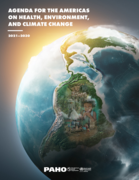
This publication presents the Agenda for the Americas on Health, Environment, and Climate Change 2021–2030 (the Agenda). The Agenda is a call to action to the health sector to lead the charge to address environmental determinants of health in the Americas. The Pan American Health Organization (PAH
...
O) will work with Member States to achieve its goal and objective to ensure healthy lives and promote well-being for all at all ages using a sustainable and equitable approach that places a priority on reducing health inequity. The Agenda has been developed under the umbrella of the WHO Global Strategy on Health, Environment, and Climate Change, and builds upon the commitments set forth in the Sustainable Health Agenda for the Americas 2018–2030 and the PAHO Strategic Plan 2020–2025. The Agenda was developed in consultation with the Technical Advisory Group and through a consensus-driven decision-making process with Member States during the 2019–2020 period. Looking toward the achievement of Sustainable Development Goal 3, the Agenda focuses on: improving the performance of environmental public health programs and institutions; fostering environmentally resilient and sustainable health systems; and promoting environmentally healthy and resilient cities and communities. Its implementation will be context-specific, based on the needs and realities of the countries. It will benefit countries and territories by promoting good governance practices, strengthening the leadership and coordination roles of the health sector, fostering cross-sectoral action, focusing on primary prevention, and enhancing evidence and communication. It will facilitate access to human, technical, and financial resources necessary to address environmental determinants of health and ensure that the Region is fully engaged in global health, environment, and climate change processes and agreements. The objective of the Agenda is to strengthen the capacity of health actors in the health and non-health sectors to address and adapt to environmental determinants of health (EDHs), prioritizing populations living in conditions of vulnerability, in order to meet Outcome 18 of the PAHO Strategic Plan 2020–2025 directly and several other outcomes of the Plan indirectly. To address and adapt to the challenges of EDHs in the Region, an integrated and evidence-informed approach within the health sector and across sectors will be needed, one enabled, and supported by good governance practices, adequate management mechanisms, high-level political will, and adequate human, technical, technological, and financial resources.
more
KEY MESSAGES
Always talk to a GBV specialist first to understand what GBV services are available in your area. Some services may take the form of hotlines, a mobile app or other remote support.
Be aware of any other available services in your area. Identify services provided by humanitarian pa
...
rtners such as health, psychosocial support, shelter and non-food items. Consider services provided by communities such as mosques/ churches, women’s groups and Disability Service Organizations.
Remember your role. Provide a listening ear, free of judgment. Provide accurate, up-to-date information on available services. Let the survivor make their own choices. Know what you can and cannot manage. Even without a GBV actor in your area, there may be other partners, such as a child protection or mental health specialist, who can support survivors that require additional attention and support. Ask the survivor for permission before connecting them to anyone else. Do not force the survivor if s/he says no.
Do not proactively identify or seek out GBV survivors. Be available in case someone asks for support.
Remember your mandate. All humanitarian practitioners are mandated to provide non-judgmental and non-discriminatory support to people in need regardless of: gender, sexual orientation, gender identity, marital status, disability status, age, ethnicity/tribe/race/religion, who perpetrated/committed violence, and the situation in which violence was committed. Use a survivor-centered approach by practicing:
Respect: all actions you take are guided by respect for the survivor’s choices, wishes, rights and dignity.
Safety: the safety of the survivor is the number one priority.
Confidentiality: people have the right to choose to whom they will or will not tell their story. Maintaining confidentiality means not sharing any information to anyone.
Non-discrimination: providing equal and fair treatment to anyone in need of support.
If health services exist, always provide information on what is available. Share what you know, and most importantly explain what you do not. Let the survivor decide if s/he wants to access them. Receiving quality medical care within 72 hours can prevent transmission of sexually transmitted infections (STIs), and within 120 hours can prevent unwanted pregnancy.
Provide the opportunity for people with disabilities to communicate to you without the presence of their caregiver, if wished and does not endanger or create tension in that relationship.
If a man or boy is raped it does not mean he is gay or bisexual. Gender-based violence is based on power, not someone’s sexuality.
Sexual and gender minorities are often at increased risk of harm and violence due to their sexual orientation and/or gender identity. Actively listen and seek to support all survivors.
Anyone can commit an act of gender-based violence including a spouse, intimate partner, family member, caregiver, in-law, stranger, parent or someone who is exchanging money or goods for a sexual act.
Anyone can be a survivor of gender-based violence – this includes, but isn’t limited to, people who are married, elderly individuals or people who engage in sex work.
Protect the identity and safety of a survivor. Do not write down, take pictures or verbally share any personal/identifying information about a survivor or their experience, including with your supervisor. Put phones and computers away to avoid concern that a survivor’s voice is being recorded.
Personal/identifying information includes the survivor’s name, perpetrator(s) name, date of birth, registration number, home address, work address, location where their children go to school, the exact time and place the incident took place etc.
Share general, non-identifying information
To your team or sector partners in an effort to make your program safer.
To your support network when seeking self-care and encouragement.
more
