
Filter
518
Text search:
session
outline
Featured
48
123
Language
Document type
298
57
51
51
45
11
2
1
1
Countries
25
19
18
13
11
10
10
9
9
8
7
6
6
6
5
5
4
4
4
4
4
3
3
2
2
2
2
2
1
1
1
1
1
1
1
1
1
1
1
1
1
1
1
1
1
1
Authors & Publishers
Publication Years
Category
145
58
55
48
35
30
4
Toolboxes
75
38
23
22
18
16
16
14
13
13
10
10
9
8
7
6
6
4
4
3
3
2
2
2
1
1

The Role of Faith, Values and Ethics in Strengthening Action for Nature and Environmental Governance
This concept report was prepared by Faith for Earth Initiative in support of the efforts of the Government of Iceland to put forth a new resolution during UNEA 5.2 1
The guide is suitable and can be used for the following audiences:
1. nurses and other trained healthcare workers who can use this manual as a self-study tool and then incorporate its guidance into their practice;
2. governmental and non-governmental employers of lay and professional TB treatment
...
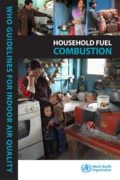
Energy use in the home is a vital and ubiquitous feature of human society. Energy
is used for a wide variety of purposes, including cooking, space heating, light-
ing, small-scale income generation, various household tasks, and entertainment.
CoPEH-Canada has generated a series of teaching and training resources over more than a decade. These resources began with the production of the CoPEH-Canada Teaching Manual (2012), which is dedicated to Bruce Hunter. Our training resources have expanded to include a range of resources including: Mo
...
This report contains the results of an in-depth Training Needs Assessment (TNA) of Health Workers in the 4 project counties of the republic of Kenya – Nakuru, Kisumu, Nairobi and Bungoma. The assessment, facilitated by the UPOPs Project in close collaboration with the Ministry of Health and Minist
...
This adaptation and implementation guide is part of a five-part Caregiver skills training for families of children with developmental delays or disabilities (CST) package providing guidance on caregiver skills training for families of children aged 2–9 years with developmental delays or disabiliti
...
The Investment guidelines for youth in agrifood systems in Africa, developed jointly by FAO and the African Union Commission (AUC) through a multi-stakeholder and participatory process, highlight the importance of youth as change agents and key stakeholders contributing to sustainable agrifood syste
...

This document is a guide defining requirements for quality and safety for malaria rapid diagnostic testing services to safeguard the quality of the results, the safety of the operators and patients and that of the environment for use by national malaria control programmes, regulators, implementers a
...

Cities are uniquely positioned to understand local needs and respond rapidly to changing conditions to safeguard health. These changes require strong city leadership to implement multisectoral, health-relevant policies and public services that engage communities. The response to malaria must be an i
...
The World Health Organization Regional Office for Africa (WHO AFRO), in accordance with recommendations from various WHO committees, has developed three flagship programmes to support Member States in the African region to prepare for, detect and respond to public health emergencies. They are the re
...

One of the principles underpinning the delivery of all essential services and coordination of those services is the “survivor-centered approach”, which places the human rights, needs, and wishes of women and girl survivors at the centre of service delivery.
A key challenge faced by many entit
...

This document, Programme and curriculum development guide, presents a systematic approach to developing programmes and curricula for implementation of the family planning (FP) and comprehensive abortion care (CAC) competencies,and the theory behind the approach. Specifically, the aim is for effectiv
...
This Guidance Note is meant to help protection cluster coordinators apply nexus approaches in a practical way by, providing concrete steps and means to address prevalent or longstanding protection issues, risk patterns, trends and chronic vulnerabilities. The guidance calls for a practical, problem-
...

Countries, partners, and donors are committed to the global elimination of blinding trachoma by 2020.
Achieving this public health milestone requires more than funding; it requires health personnel with the
right mix of skills, and well supported and managed health systems. Mass drug administratio
...

In 2011, ICTC developed a Trachoma Action Plan (TAP) planning guide to support national health officials in endemic countries. This resource was developed to complement the 2020 INSight roadmap by helping countries create specific national plans detailing how they will reach elimination targets in t
...

Those who clean are the first line of defense against health care-associated infections (HAIs), and support efforts to reduce antimicrobial resistance (AMR).
Strengthening the training of this important group can contribute to resolving many of today’s public health challenges. This is importan
...
Today, patient harm due to unsafe care is a large and growing global public health challenge and is one of the
leading causes of death and disability worldwide. Most of this patient harm is avoidable. As countries strive to
achieve universal health coverage and the Sustainable Development Goals, t
...
