
Filter
889
Text search:
ICF
International
Featured
40
309
Language
Document type
678
128
25
24
13
7
5
5
2
1
1
Countries
57
56
45
45
43
43
43
41
37
37
30
29
27
25
21
21
21
17
17
17
16
14
14
13
12
12
11
11
11
9
8
7
6
5
4
4
3
3
2
2
2
2
2
2
2
2
2
2
2
2
2
1
1
1
1
1
1
1
1
1
1
1
1
1
1
1
1
1
1
Authors & Publishers
Publication Years
Category
703
28
20
6
5
5
Toolboxes
119
20
14
11
10
9
7
6
5
4
4
3
3
2
2
2
1
Original research article
Contraception 97 (2018) 439–444
https://doi.org/10.1016/j.contraception.2018.01.003
0010-7824/© 2018 The Authors. Published by Elsevier Inc.
This report presents further analysis of the 2015 Nepal Health Facility Survey. Data analysis is based on the Donabedian framework for assessing quality of care in health services, which divides the indicators into three groups: structure, process, and outcome. The World Health Organization Service
...
Case Study on Improving HIV Testing and Services for Children Orphaned or made Vulnerable by HIV (OVC)

Malnutrition in childhood and pregnancy has many adverse consequences for child survival and long-term well-being. It
also has far-reaching consequences for human capital, economic productivity, and national development overall. The
consequences of malnutrition should be a significant concern for
...

This paper showed a large positive correlation coefficient between psychosocial health problems and dysfunctional abilities among rural community members
MEASURE Evaluation PRH Working Paper Series

Saudi Journal of Biological Sciences. http://dx.doi.org/10.1016/j.sjbs.2016.03.006
Open Access
PLoS ONE 11(1): e0144662. doi:10.1371/journal.pone.0144662
UGANDA NATIONAL TUBERCULOSIS AND LEPROSY CONTROL PROGRAMME
Scant data exists on the prevalence of violence against children worldwide. However, available information, including the United Nations Secretary-General’s Study on Violence against Children, shows that violence against children is a global problem. This desktop study aims to glean from published
...
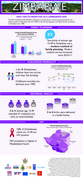
FAST FACTS FROM THE 2015 ZIMBABWE DHS

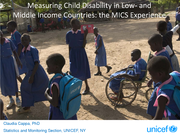
UNICEF’s support for data collection: the Multiple Indicator Cluster Surveys (MICS)
