
Filter
4726
Text search:
United
Nations
Development
Programme
Featured
388
1319
Language
4419
239
92
87
52
33
31
28
8
7
6
6
5
5
4
4
4
4
4
3
3
3
3
3
3
3
3
3
2
2
2
2
2
2
2
2
2
2
2
1
1
1
1
1
1
1
1
1
1
1
1
1
1
1
1
1
1
Document type
2631
894
501
273
230
72
61
38
12
6
2
2
Countries / Regions
248
137
119
104
99
98
94
86
84
83
83
72
71
70
67
65
62
62
59
57
50
47
43
43
41
37
36
35
34
32
32
31
29
28
26
26
24
24
23
20
20
20
19
19
18
18
17
17
17
16
15
14
14
14
12
12
12
12
11
10
10
10
9
9
9
9
9
9
8
8
7
7
6
5
5
5
5
4
4
4
4
4
3
3
3
3
3
3
3
3
3
3
3
3
2
2
2
2
2
2
2
2
2
2
2
2
2
2
2
2
2
2
2
1
1
1
1
1
1
1
1
1
1
1
1
1
1
1
1
1
1
1
1
1
1
1
1
1
1
1
1
1
1
1
Authors & Publishers
689
225
175
160
154
152
116
80
79
52
35
33
32
31
29
29
28
24
22
20
20
20
20
18
18
17
16
16
16
15
14
14
14
14
14
14
14
14
14
13
13
13
13
12
12
11
11
11
11
10
10
10
10
10
10
10
10
10
9
9
9
9
9
9
8
8
8
8
8
8
8
8
8
8
8
8
7
7
7
7
7
7
7
7
7
7
7
7
7
7
7
7
7
7
7
6
6
6
6
6
6
6
6
6
6
6
6
6
6
6
6
6
6
6
6
6
6
5
5
5
5
5
5
5
5
5
5
5
5
5
5
5
5
5
5
5
5
5
5
5
5
5
5
4
4
4
4
4
4
4
4
4
4
4
4
4
4
4
4
4
4
4
4
4
4
4
4
4
4
4
4
4
4
4
4
4
4
4
4
4
4
4
4
4
3
3
3
3
3
3
3
3
3
3
3
3
3
3
3
3
3
3
3
3
3
3
3
3
3
3
3
3
3
3
3
3
3
3
3
3
3
3
3
3
3
3
3
3
3
3
3
3
3
3
3
3
3
3
3
3
3
3
3
3
3
3
3
3
3
3
3
3
3
3
3
3
3
3
3
3
3
3
3
3
3
3
3
3
3
3
3
3
3
3
2
2
2
2
2
2
2
2
2
2
2
2
2
2
2
2
2
2
2
2
2
2
2
2
2
2
2
2
2
2
2
2
2
2
2
2
2
2
2
2
2
2
2
2
2
2
2
2
2
2
2
2
2
2
2
2
2
2
2
2
2
2
2
2
2
2
2
2
2
2
2
2
2
2
2
2
2
2
2
2
2
2
2
2
2
2
2
2
2
2
2
2
2
2
2
2
2
2
2
2
2
2
2
2
2
2
2
2
2
2
2
2
2
2
2
2
2
2
2
2
2
2
2
2
2
2
2
2
2
2
2
2
2
2
2
2
2
2
2
2
2
2
2
2
2
2
2
2
2
2
2
2
2
2
2
2
2
2
2
2
2
2
2
2
2
2
2
2
2
2
2
2
2
2
2
2
2
2
2
2
2
2
2
2
2
2
2
2
2
2
2
2
2
2
2
2
2
2
2
2
2
2
2
2
2
2
2
2
2
2
2
2
2
2
2
2
2
2
2
2
2
2
2
2
2
2
2
2
2
2
2
2
2
2
2
2
2
2
2
2
2
2
2
2
2
2
2
2
2
2
2
2
2
2
2
2
2
2
2
2
2
2
2
2
2
2
2
2
2
2
2
2
2
2
2
2
2
2
2
2
2
2
2
2
2
2
2
2
2
2
2
1
1
1
1
1
1
1
1
1
1
1
1
1
1
1
1
1
1
1
1
1
1
1
1
1
1
1
1
1
1
1
1
1
1
1
1
1
1
1
1
1
1
1
1
1
1
1
1
1
1
1
1
1
1
1
1
1
1
1
1
1
1
1
1
1
1
1
1
1
1
1
1
1
1
1
1
1
1
1
1
1
1
1
1
1
1
1
1
1
1
1
1
1
1
1
1
1
1
1
1
1
1
1
1
1
1
1
1
1
1
1
1
1
1
1
1
1
1
1
1
1
1
1
1
1
1
1
1
1
1
1
1
1
1
1
1
1
1
1
1
1
1
1
1
1
1
1
1
1
1
1
1
1
1
1
1
1
1
1
1
1
1
1
1
1
1
1
1
1
1
1
1
1
1
1
1
1
1
1
1
1
1
1
1
1
1
1
1
1
1
1
1
1
1
1
1
1
1
1
1
1
1
1
1
1
1
1
1
1
1
1
1
1
1
1
1
1
1
1
1
1
1
1
1
1
1
1
1
1
1
1
1
1
1
1
1
1
1
1
1
1
1
1
1
1
1
1
1
1
1
1
1
1
1
1
1
1
1
1
1
1
1
1
1
1
1
1
1
1
1
1
1
1
1
1
1
1
1
1
1
1
1
1
1
1
1
1
1
1
1
1
1
1
1
1
1
1
1
1
1
1
1
1
1
1
1
1
1
1
1
1
1
1
1
1
1
1
1
1
1
1
1
1
1
1
1
1
1
1
1
1
1
1
1
1
1
1
1
1
1
1
1
1
1
1
1
1
1
1
1
1
1
1
1
1
1
1
1
1
1
1
1
1
1
1
1
1
1
1
1
1
1
1
1
1
1
1
1
1
1
1
1
1
1
1
1
1
1
1
1
1
1
1
1
1
1
1
1
1
1
1
1
1
1
1
1
1
1
1
1
1
1
1
1
1
1
1
1
1
1
1
1
1
1
1
1
1
1
1
1
1
1
1
1
1
1
1
1
1
1
1
1
1
1
1
1
1
1
1
1
1
1
1
1
1
1
1
1
1
1
1
1
1
1
1
1
1
1
1
1
1
1
1
1
1
1
1
1
1
1
1
1
1
1
1
1
1
1
1
1
1
1
1
1
1
1
1
1
1
1
1
1
1
1
1
1
1
1
1
1
1
1
1
1
1
1
1
1
1
1
1
1
1
1
1
1
1
1
1
1
1
1
1
1
1
1
1
1
1
1
1
1
1
1
1
1
1
1
1
1
1
1
1
1
1
1
1
1
1
1
1
1
1
1
1
1
1
1
1
1
1
1
1
1
1
1
1
1
1
1
1
1
1
1
1
1
1
1
1
1
1
1
1
1
1
1
1
1
1
1
1
1
1
1
1
1
1
1
1
1
1
1
1
1
1
1
1
1
1
1
1
1
1
1
1
1
1
1
1
1
1
1
1
1
1
1
1
1
1
1
1
1
1
1
1
1
1
1
1
1
1
1
1
1
1
1
1
1
1
1
1
1
1
1
1
1
1
1
1
1
1
1
1
1
1
1
1
1
1
1
1
1
1
1
1
1
1
1
1
1
1
1
1
1
1
1
1
1
1
1
1
1
1
1
1
1
1
1
1
1
1
1
1
1
1
1
1
1
1
1
1
1
1
1
1
1
1
1
1
1
1
1
1
1
1
1
1
1
1
1
1
1
1
1
1
1
1
1
1
1
1
1
1
1
1
1
1
1
1
1
1
1
1
1
1
1
1
1
1
1
1
1
1
1
1
1
1
1
1
1
1
1
1
1
1
1
1
1
1
1
1
1
1
1
1
1
1
1
1
1
1
1
1
1
1
1
1
1
1
1
1
1
1
1
1
1
1
1
1
1
1
1
1
1
1
1
1
1
1
1
1
1
1
1
1
1
1
1
1
1
1
1
1
1
1
1
1
1
1
1
1
1
1
1
1
1
1
1
1
1
1
1
1
1
1
1
1
1
1
1
1
1
1
1
1
1
1
1
1
1
1
1
1
1
1
1
1
1
1
1
1
1
1
1
1
1
1
1
1
1
1
1
1
1
1
1
1
1
1
1
1
1
1
1
1
1
1
1
1
1
1
1
1
1
1
1
1
1
1
1
1
1
1
1
1
1
1
1
1
1
1
1
1
1
1
1
1
1
1
1
1
1
1
1
1
1
1
1
1
1
1
1
1
1
1
1
1
1
1
1
1
1
1
1
1
1
1
1
1
1
1
1
1
1
1
1
1
1
1
1
1
1
1
1
1
1
1
1
1
1
1
1
1
1
1
1
1
1
1
1
1
1
1
1
1
1
1
1
1
1
1
1
1
1
1
1
1
1
1
1
1
1
1
1
1
1
1
1
1
1
1
1
1
1
1
1
1
1
1
1
1
1
1
1
1
1
1
1
1
1
1
1
1
1
1
1
1
1
1
1
1
1
1
1
1
1
1
1
1
1
1
1
1
1
1
1
1
1
1
1
1
1
1
1
1
1
1
1
1
1
1
1
1
1
1
1
1
1
1
1
1
1
1
1
1
1
1
1
1
1
1
1
1
1
1
1
1
1
1
1
1
1
1
1
1
1
1
1
1
1
1
1
1
1
1
1
1
1
1
1
1
1
1
1
1
1
1
1
1
1
1
1
1
1
1
1
1
1
1
1
1
1
1
1
1
1
1
1
1
1
1
1
1
1
1
1
1
1
1
1
1
1
1
1
1
1
1
1
1
1
1
1
1
1
1
1
1
1
1
1
1
1
1
1
1
1
1
1
1
1
1
1
1
1
1
1
1
1
1
1
1
1
1
1
1
1
1
1
1
1
1
1
1
1
1
1
1
1
1
1
1
1
1
1
1
1
1
1
1
1
1
1
1
1
1
1
1
1
1
1
1
1
1
1
1
1
1
1
1
1
1
1
1
1
1
1
1
1
1
1
1
1
1
1
1
1
1
1
1
1
1
1
1
1
1
1
1
1
1
1
1
1
1
1
1
1
1
1
1
1
1
1
1
1
1
1
1
1
1
1
1
1
1
1
1
1
1
1
1
1
1
1
1
1
1
1
1
1
1
1
1
1
1
1
1
1
1
1
1
1
1
1
1
1
1
1
1
1
1
1
1
1
1
1
1
1
1
1
1
1
1
1
1
1
1
1
1
1
1
1
1
1
1
1
1
1
1
1
1
1
1
1
1
1
1
1
1
1
1
1
1
1
1
1
1
1
1
1
1
1
1
1
1
1
1
1
1
1
1
1
1
1
1
1
1
1
1
1
1
1
1
1
1
1
1
1
1
1
1
1
1
1
1
1
1
1
1
1
1
1
1
1
1
1
1
1
1
1
1
1
1
1
1
1
1
1
1
1
1
1
1
1
1
1
1
1
1
1
1
1
1
1
1
1
1
1
1
1
1
1
1
1
1
1
1
1
1
1
1
1
1
1
1
1
1
1
1
1
1
1
1
1
1
1
1
1
1
1
1
1
1
1
1
1
1
1
1
1
1
1
1
1
1
1
1
1
1
1
1
1
1
1
1
1
1
1
1
1
1
1
1
1
1
1
1
1
1
1
1
1
1
1
1
1
1
1
1
1
1
1
1
1
1
1
1
1
1
1
1
1
1
1
1
1
1
1
1
1
1
1
1
1
1
1
1
1
1
1
1
1
1
1
1
1
1
1
1
1
1
1
1
1
1
1
1
1
1
1
1
1
1
1
1
1
1
1
1
1
1
1
1
1
1
1
1
1
1
1
1
1
1
1
1
1
1
1
1
1
1
1
1
1
1
1
1
1
1
1
1
1
1
1
1
1
1
1
1
1
1
1
1
1
1
1
1
1
1
1
1
1
1
1
1
1
1
1
1
1
1
1
1
1
1
1
1
1
1
1
1
1
1
1
1
1
1
1
1
1
1
1
1
1
1
1
1
1
1
1
1
1
1
1
1
1
1
1
1
1
1
1
1
1
1
1
1
1
1
1
1
1
1
1
1
1
1
1
1
1
1
1
1
1
1
1
1
1
1
1
1
1
1
1
1
1
1
1
1
1
1
1
1
1
1
1
1
1
1
1
1
1
1
1
1
1
1
1
1
1
1
1
1
1
1
1
1
1
1
1
1
1
1
1
1
1
1
1
1
1
1
1
1
1
1
1
1
1
1
1
1
1
1
1
1
1
1
1
1
1
1
1
1
1
1
1
1
1
1
1
1
1
1
1
1
1
1
1
1
1
1
1
1
1
1
1
1
1
1
1
1
1
1
1
1
1
1
1
1
1
1
1
1
1
1
1
1
1
1
1
1
1
1
1
1
1
1
1
1
1
1
1
1
1
1
1
1
1
1
1
1
1
1
1
1
1
1
1
1
1
1
1
1
1
1
1
1
1
1
1
1
1
1
1
1
1
1
1
1
1
1
1
1
1
1
1
1
1
1
1
1
1
1
1
1
1
1
1
1
1
1
1
1
1
1
1
1
1
1
1
1
1
1
1
1
1
1
1
1
1
1
1
1
1
1
1
1
1
1
1
1
1
1
1
1
1
1
1
1
1
1
1
1
1
1
1
1
1
1
1
1
1
1
1
1
1
1
1
1
1
1
1
1
1
1
1
1
1
1
1
1
1
1
1
1
1
1
1
1
1
1
1
1
1
1
1
1
1
1
1
1
1
1
1
1
1
1
1
1
1
1
1
1
1
1
1
1
1
1
1
1
1
1
1
1
1
1
1
1
1
1
1
1
1
1
1
1
1
1
1
1
1
1
1
1
1
1
1
1
1
1
1
1
1
1
1
1
1
1
1
1
1
1
1
1
1
1
1
1
1
1
1
1
1
1
1
1
1
1
1
1
1
1
1
1
1
1
1
1
1
1
1
1
1
1
1
1
1
1
1
1
1
1
1
1
1
1
1
1
1
1
1
1
1
1
1
1
1
1
1
1
1
1
1
1
1
1
1
1
1
1
1
1
1
1
1
1
1
1
1
1
1
1
1
1
1
1
1
1
1
1
1
1
1
1
1
1
1
1
1
1
1
1
1
1
1
1
1
1
1
1
1
1
1
1
1
1
1
1
1
1
1
1
1
1
1
1
1
1
1
1
1
1
1
1
1
1
1
1
1
1
1
1
1
1
1
1
1
1
1
1
1
1
1
1
1
1
1
1
1
1
1
1
1
1
1
1
1
1
1
1
1
1
1
1
1
1
1
1
1
1
1
1
1
1
1
1
1
1
1
1
1
1
1
1
1
1
1
1
1
1
1
1
1
1
1
1
1
1
1
1
1
1
1
1
1
1
1
1
1
1
1
1
1
1
1
1
1
1
1
1
1
1
1
1
1
1
1
1
1
1
1
1
1
1
1
1
1
1
1
1
1
1
1
1
1
1
1
1
1
1
1
1
1
1
1
1
1
1
1
1
1
1
1
1
1
1
1
1
1
1
1
1
1
1
1
1
1
1
1
1
1
1
1
1
1
1
1
1
1
1
1
1
1
1
1
1
1
1
1
1
1
1
1
1
1
1
1
1
1
1
1
1
1
1
1
1
1
1
1
1
1
1
1
1
1
1
1
1
1
1
1
1
1
1
1
1
1
1
1
1
1
1
1
1
1
1
1
1
1
1
1
1
1
1
1
1
1
1
1
1
1
1
1
1
1
1
1
1
1
1
1
1
1
1
1
1
1
1
1
1
1
1
1
1
1
1
1
1
1
1
1
1
1
1
1
1
1
1
1
1
1
1
1
1
1
1
1
1
1
1
1
1
1
1
1
1
1
1
1
1
1
1
1
1
1
1
1
1
1
1
1
1
1
1
1
1
1
1
1
1
1
1
1
1
1
1
1
1
1
1
1
1
1
1
1
1
1
1
1
1
1
1
1
1
1
1
1
1
1
1
1
1
1
1
1
1
1
1
1
1
1
1
1
1
1
1
1
1
1
1
1
1
1
1
1
1
1
1
1
1
1
1
1
1
1
1
1
1
1
1
1
1
1
1
1
1
1
1
1
1
1
1
1
1
1
1
1
1
1
1
1
1
1
1
1
1
1
1
1
1
1
1
1
1
1
1
1
1
1
1
1
1
1
1
1
1
1
1
1
1
1
1
1
1
1
1
1
1
1
1
1
1
1
1
1
1
1
1
1
1
1
1
1
1
1
1
1
1
1
1
1
1
1
1
1
1
1
1
1
1
1
1
1
1
1
1
1
1
1
1
1
1
1
1
1
1
1
1
1
1
1
1
1
1
1
1
1
1
1
1
1
1
1
1
1
1
1
1
1
1
1
1
1
1
1
1
1
1
1
1
1
1
1
1
1
1
1
1
1
1
1
1
1
1
1
1
1
1
1
1
1
1
1
1
1
1
1
1
1
1
1
1
1
1
1
1
1
1
1
1
1
1
1
1
1
1
1
1
1
1
1
1
1
1
1
1
1
1
1
1
1
1
1
1
1
1
1
1
1
1
1
1
1
1
1
1
1
1
1
1
1
1
1
1
1
1
1
1
1
1
1
1
1
1
1
1
1
1
1
1
1
1
1
1
1
1
1
1
1
1
1
1
1
1
1
1
1
1
1
1
1
1
1
1
1
1
1
1
1
1
1
1
1
1
1
1
1
1
1
1
1
1
1
1
1
1
1
1
1
1
1
1
1
1
1
1
1
1
1
1
1
1
1
1
1
1
1
1
1
1
1
1
1
1
1
1
1
1
1
1
1
1
1
1
1
1
1
1
1
1
1
1
1
1
Publication Years
1
1406
2910
383
24
1
1
Category
1740
361
344
265
263
76
33
Toolboxes
350
319
305
268
247
198
193
123
113
106
93
93
92
90
75
66
54
52
52
41
27
25
21
11
11
5
2

This brief update on tuberculosis (TB) in the African region covers the state of TB in the WHO African region, strategic priorities and targets and the impact of COVID-19 on essential services. This is followed by key figures for the region, the role of WHO in country support and, recognizing the im
...
portance of diagnosis and drug susceptibility testing, a focus onstrengthening laboratory networks and the regional laboratory and diagnostic objectives. A brief update of the state of the science and how this is funded across the African region is provided, before closing with challenges and opportunities,strategic directions and a brief discussion of funding concerns. Discussions around the drivers of the disease, and issues of the poverty, inequality and stigma that continue to plague those living with TB are fully recognized, but are outside the scope of this report.
more

This toolkit was developed to provide detailed information and resources to support implementation of the WHO intrapartum and immediate postnatal care recommendations at the health-care facility level. The careful design of this toolkit is based on a rigorous evidence-based approach that includes im
...
plementation strategies of proven effectiveness to help close the gap between WHO’s care recommendations and current policies and practices.
The primary target audience for the toolkit includes policy-makers, health-care facility managers, implementers and managers of maternal and child health programmes, nongovernmental organizations (NGOs) and professional societies involved in the planning and management of maternal and child health services.
more
Ukraine: Russian invasion has forced older people with disabilities to endure isolation and neglect – new report
Many temporary shelters inaccessible to people with physical disabilities
Overburdened care system often provides few alternatives to institutions for older people
Authorities
...
and humanitarian actors must ensure an inclusive response
Displaced older people with disabilities in Ukraine are physically and financially unable to access adequate housing and care amid Russia’s ongoing invasion, sometimes leaving few alternatives to being placed in residential institutions, Amnesty International said in a new report.
more

The Global Appeal provides updated information for government, private donors, partners and other readers interested in UNHCR's priorities and budgeted activities for 2021 to protect and improve the lives of tens of millions of people of concern (refugees, internally displaced people, stateless pers
...
ons and others)
more
The Guidelines for drinking-water quality: small water supplies have been developed to address the needs and opportunities associated with small supplies to facilitate progressive improvement towards safe and sustainable drinking-water services for all. These Guidelines are based on the principal re
...
commendation in the World Health Organization’s Guidelines for drinking-water quality, and they provide guidance on applying that recommendation to small water supplies in particular. These Guidelines aim to help governments and practitioners improve the safety of drinking-water delivered through small supplies.
more

As the Americas undergo profound demographic change and there are more persons aged 65 years or older than children younger than 5 years, it is crucial to recognize that national immunization programs must be redesigned to ensure comprehensive protection for individuals across the lifespan. By adopt
...
ing a life course approach (LCA) to immunization, vaccination programs can be tailored to close immunity gaps at different stages of life. The life course approach foresees the establishment of multiple strategies to reduce missed opportunities for vaccination according to age group. This technical document explains the key concepts of the LCA with a focus on immunization by vaccination, as well as the underlying biological mechanisms that require the application different vaccines at different life stages according to changes to the immune system and in the epidemiological situation of a community.
more

The article focuses on "The State of the World’s Children 2023" report published by UNICEF. It highlights the critical role of vaccines in saving lives and the challenges in global immunization efforts, especially for marginalized and underserved children. The report emphasizes the impact of COVID
...
-19 on routine immunization, leaving millions of children unprotected from preventable diseases. It calls for urgent measures to restore and improve vaccination coverage, ensure equity in vaccine access, strengthen primary healthcare systems, and build trust in vaccines. The report also advocates for innovations and sustainable funding to achieve immunization for every child.
more

Air pollution is a major environmental risk factor and contributor to chronic, noncommunicable diseases (NCDs). However, most public health approaches to NCD prevention focus on behavioural and biomedical risk factors, rather than environmental risk factors such as air pollution. This article discus
...
ses the implications of such a focus. It then outlines the opportunities for those in public health and environmental science to work together across three key areas to address air pollution, NCDs and climate change: (a) acknowledging the shared drivers, including corporate determinants; (b) taking a ‘co-benefits’ approach to NCD prevention; and (c) expanding prevention research and evaluation methods through investing in systems thinking and intersectoral, cross-disciplinary collaborations.
more

People with disabilities experience significant health inequalities. In Malawi, where most individuals live in low-income rural settings, many of these inequalities are exacerbated by restricted access to health care services. This qualitative study explores the barriers to health care access experi
...
enced by individuals with a mobility or sensory impairment, or both, living in rural villages in Dowa district, central Malawi. In addition, the impact of a chronic lung condition, alongside a mobility or sensory impairment, on health care accessibility is explored.
more

Communicable and non-communicable diseases in Africa in 2021/22
World Health Organization Africa Region; WHO Africa
World Health Organization Africa Region; WHO Africa
(2023)
C_WHO
This report is one of the first major products of the newly established Precision Public Health Metrics unit of the UCN cluster of the WHO Regional Office for Africa. The report presents national trends in communicable and non-communicable disease burden and control in the WHO African region. It tra
...
cks progress made with respect to disease burden reduction, elimination and eradication. It also highlights major emerging threats, opportunities and priorities in the fight against commu- nicable and non-communicable diseases in the region. It covers the period 2000-2022, but for some indicators, information is available only up to 2021.
The report shows the number of reported cases for malaria and vaccine preventable diseases (meningitis, measles, yellow fever, pertussis, diphtheria, tetanus, and polio); disease incidence due to HIV, tuberculosis and four major noncommunicable diseases (cardiovas- cular diseases, cancers, diabetes and chronic respira- tory diseases).
more

Mpox continues to affect people around the world. A new framework released today by WHO will guide health authorities, communities and other stakeholders in preventing and controlling mpox outbreaks, eliminating human-to-human transmission of the disease, and reducing spillover of the virus from ani
...
mals to humans.
Mpox is a viral illness caused by the monkeypox virus (MPXV). It can cause a painful rash, enlarged lymph nodes and fever. Most people fully recover, but some get very sick. The virus transmits from person to person through close, including sexual, contact. It also has animal reservoirs in east, central and west Africa, where spillovers from animals to humans can occasionally occur, sparking further outbreaks.
There are two different clades of the virus: clade I and clade II. Clade I outbreaks are deadlier than clade II outbreaks.
A major emergence of mpox linked to clade II began in 2017, and since 2022, has spread to all regions of the world. Between July 2022 and May 2023, the outbreak was declared a Public Health Emergency of International Concern. While that outbreak has largely subsided, cases and deaths continue to be reported today, illustrating that low-level transmission continues around the world.
Currently, there is also a major outbreak of clade I virus in the Democratic Republic of the Congo (DRC), where cases have been on the rise for decades. Since the beginning of the year, over 6500 cases and 345 deaths have been reported in the DRC. Almost half of these are among children under the age of 15 years.
The Strategic framework for enhancing prevention and control of mpox (2024–2027) provides a roadmap for health authorities, communities, and stakeholders worldwide to control mpox outbreaks in every context, advance mpox research and access to countermeasures, and to minimize zoonotic transmission.
more

The WHO document "Integrating the prevention and control of noncommunicable diseases in HIV/AIDS, tuberculosis, and sexual and reproductive health programmes: implementation guidance" provides a framework for integrating noncommunicable diseases (NCDs) into existing health programs for HIV/AIDS, tub
...
erculosis (TB), and sexual and reproductive health (SRH). It emphasizes the importance of a people-centered approach to enhance healthcare accessibility and efficiency, especially in low-resource settings. The document outlines strategies for strengthening policy, financing, capacity building, and health system infrastructure. It offers actionable steps, tools, and case studies to support countries in reducing the burden of NCDs through integrated, holistic care within primary health services.
more

This review examines high-quality research evidence that synthesises the efects of extreme heat on human health in tropical
Africa. Web of Science (WoS) was used to identify research articles on the efects extreme heat, humidity, Wet-bulb Globe
Temperature (WBGT), apparent temperature, wind, Heat
...
Index, Humidex, Universal Thermal Climate Index (UTCI), heatwave, high temperature and hot climate on human health, human comfort, heat stress, heat rashes, and heat-related morbidity
and mortality
more
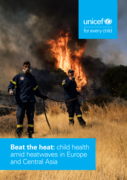
Beat the heat: child health amid heatwaves in Europe and Central Asia finds that half of these children died from heat-related illnesses in their first year of life. Most children died during the summer months.
"Around half of children across Europe and Central Asia – or 92 million children –
...
are already exposed to frequent heatwaves in a region where temperatures are rising at the fastest rate globally. The increasingly high temperatures can have serious health complications for children, especially the youngest children, even in a short space of time. Without care, these complications can be life-threatening,” said Regina De Dominicis UNICEF Regional Director for Europe and Central Asia.
Heat exposure has acute effects on children, even before they are born, and can result in pre-term births, low birth weight, stillbirth, and congenital anomalies. Heat stress is a direct cause of infant mortality, can affect infant growth and cause a range of paediatric diseases. The report also notes that extreme heat caused the loss of more than 32,000 years of healthy life among children and teenagers in the region.
As the temperatures continue to rise, UNICEF urges governments across Europe and Central Asia to:
- Integrate strategies to reduce the impact of heatwaves including through National Determined Contributions (NDC), National Adaptation Plans (NAP), and disaster risk reduction and disaster management policies with children at the centre of these plans
Invest in heat health action plans and primary health care to more adequately support heat-related illness among children
- Invest in early warning systems, including heat alert systems
- Adapt education facilities to reduce the temperatures in the areas children play in and equip teachers with skills to respond to heat stress
- Adapt urban design and infrastructure including ensuring buildings, particularly those housing the most vulnerable communities are equipped to minimize heat exposure
- Secure the provision of safe water, particularly in countries with deteriorating water quality and availability.
UNICEF works with governments, partners and communities across the region to build resilience against heatwaves. This includes equipping teachers, community health workers and families with the skills and knowledge to respond to heat stress.
more

Medical devices are used for the prevention, diagnosis and treatment of illness and diseases and for rehabilitation. WHO developed guidance on medical device donation in 2011, which has been now reviewed, with new evidence, new references on considerations for medical device solicitation and provisi
...
on, risks associated with inappropriate donations, the responsibilities of donors and recipient, and the steps they should follow before, during and after a donation. It includes three sections: description of major problems that may be faced during the donation process, listing of best practices for donors and recipients and addressing situations requiring special attention. It also has three annexes for further reading: the criteria for the acceptability of a donation, literature review on donations of medical devices between 2010 and 2023 and a flyer. This document is intended to improve the quality of medical devices donations, including medical equipment, single-use medical devices and in-vitro diagnostics, to provide maximum benefit to all stakeholders. The considerations can be used to develop institutional or national policies and regulations for medical devices donations. This document is intended for use by any organization, expert or practitioner involved in the donation, procurement, management of medical devices, including health workers, biomedical engineers, health managers, policymakers, donors, nongovernmental organizations and academic institutions.
more
On 14 August 2024, the Director-General of the World Health Organization determined that the upsurge of mpox in a growing number of countries in Africa constitutes a new public health emergency of international concern (PHEIC) under the International Health Regulations (IHR) (2005)
Evidence- and rights-based national policies, guidelines and legislation play a key role in improving sexual, reproductive, maternal, newborn, child and adolescent health (SRMNCAH), framing the enabling environment for equitable provision and accessibility of quality services. The SRMNCAH policy sur
...
vey monitors the existence of national SRMNCAH laws, policies, strategies and guidelines and the extent to which they are aligned with WHO recommendations on SRMNCAH. This publication reports on the findings from the 2023 WHO SRMNCAH policy survey.
more

Stigma and discrimination related to mental health conditions are widespread and harmful. Reducing stigma and discrimination can benefit families, societies and economies – it can save lives. The toolkit offers practical guidance on how to achieve this, based on three core evidence-based principle
...
s: leadership or co-leadership by people with lived experience, social contact, and inclusive partnerships. These 3 principles can be realized using a four-step process: identify and define aims, plan and prepare, launch and learn and reflect and proceed. Twelve case studies from all across the world are provided to demystify the process. Stigma and discrimination can be ended if each of us acts as one using the principles in this toolkit.
more

This document is a compilation of all questions, justifications, and sources used to determine the 2021 Global Health Security Index scores for Zambia. For a category and indicator-level summary, please see the Country Profile for Zambia.
