Filter
3266
Text search:
policy
solutions
Featured
284
804
Language
3083
201
65
53
46
27
23
13
6
5
3
3
2
2
2
2
1
1
1
1
1
1
1
1
1
1
1
1
1
1
1
Document type
1539
736
408
231
189
71
49
23
10
4
3
2
1
Countries
190
90
82
73
67
66
63
58
55
55
53
50
41
40
39
38
38
37
36
35
34
31
30
24
23
21
20
19
18
17
17
17
16
16
15
14
13
13
13
13
12
12
12
12
11
11
11
10
10
10
10
9
9
9
9
8
8
8
8
8
7
7
7
6
6
6
5
5
4
4
4
4
4
3
3
3
3
3
3
3
3
3
3
3
3
3
2
2
2
2
2
2
2
2
2
2
2
2
2
2
2
2
2
2
1
1
1
1
1
1
1
1
1
1
1
1
1
1
1
1
1
1
1
1
1
1
1
1
1
1
1
1
1
Authors & Publishers
414
109
108
94
83
76
59
50
33
28
20
19
18
17
16
16
16
16
16
15
14
13
12
12
11
11
11
10
10
10
10
10
9
9
9
9
9
9
9
9
9
8
8
8
8
8
8
8
8
7
7
7
7
7
7
7
7
7
7
6
6
6
6
6
6
6
6
6
6
6
6
6
6
6
6
6
6
6
6
6
6
6
6
5
5
5
5
5
5
5
5
5
5
5
5
5
5
5
5
5
5
5
5
5
5
5
5
5
5
4
4
4
4
4
4
4
4
4
4
4
4
4
4
4
4
4
4
4
4
4
4
4
4
4
4
4
4
4
4
4
4
4
4
4
3
3
3
3
3
3
3
3
3
3
3
3
3
3
3
3
3
3
3
3
3
3
3
3
3
3
3
3
3
3
3
3
3
3
3
3
3
3
3
3
3
3
3
3
3
3
3
3
3
3
3
3
3
3
3
3
3
3
2
2
2
2
2
2
2
2
2
2
2
2
2
2
2
2
2
2
2
2
2
2
2
2
2
2
2
2
2
2
2
2
2
2
2
2
2
2
2
2
2
2
2
2
2
2
2
2
2
2
2
2
2
2
2
2
2
2
2
2
2
2
2
2
2
2
2
2
2
2
2
2
2
2
2
2
2
2
2
2
2
2
2
2
2
2
2
2
2
2
2
2
2
2
2
2
2
2
2
2
2
2
2
2
2
2
2
2
2
2
2
2
2
2
2
2
2
2
2
2
2
2
2
2
2
2
2
2
2
2
2
2
2
2
2
2
2
2
2
2
2
2
2
2
2
2
2
2
2
2
2
2
2
2
2
2
2
2
2
2
2
2
2
2
2
2
2
2
2
2
2
2
2
2
2
2
2
2
2
2
2
2
1
1
1
1
1
1
1
1
1
1
1
1
1
1
1
1
1
1
1
1
1
1
1
1
1
1
1
1
1
1
1
1
1
1
1
1
1
1
1
1
1
1
1
1
1
1
1
1
1
1
1
1
1
1
1
1
1
1
1
1
1
1
1
1
1
1
1
1
1
1
1
1
1
1
1
1
1
1
1
1
1
1
1
1
1
1
1
1
1
1
1
1
1
1
1
1
1
1
1
1
1
1
1
1
1
1
1
1
1
1
1
1
1
1
1
1
1
1
1
1
1
1
1
1
1
1
1
1
1
1
1
1
1
1
1
1
1
1
1
1
1
1
1
1
1
1
1
1
1
1
1
1
1
1
1
1
1
1
1
1
1
1
1
1
1
1
1
1
1
1
1
1
1
1
1
1
1
1
1
1
1
1
1
1
1
1
1
1
1
1
1
1
1
1
1
1
1
1
1
1
1
1
1
1
1
1
1
1
1
1
1
1
1
1
1
1
1
1
1
1
1
1
1
1
1
1
1
1
1
1
1
1
1
1
1
1
1
1
1
1
1
1
1
1
1
1
1
1
1
1
1
1
1
1
1
1
1
1
1
1
1
1
1
1
1
1
1
1
1
1
1
1
1
1
1
1
1
1
1
1
1
1
1
1
1
1
1
1
1
1
1
1
1
1
1
1
1
1
1
1
1
1
1
1
1
1
1
1
1
1
1
1
1
1
1
1
1
1
1
1
1
1
1
1
1
1
1
1
1
1
1
1
1
1
1
1
1
1
1
1
1
1
1
1
1
1
1
1
1
1
1
1
1
1
1
1
1
1
1
1
1
1
1
1
1
1
1
1
1
1
1
1
1
1
1
1
1
1
1
1
1
1
1
1
1
1
1
1
1
1
1
1
1
1
1
1
1
1
1
1
1
1
1
1
1
1
1
1
1
1
1
1
1
1
1
1
1
1
1
1
1
1
1
1
1
1
1
1
1
1
1
1
1
1
1
1
1
1
1
1
1
1
1
1
1
1
1
1
1
1
1
1
1
1
1
1
1
1
1
1
1
1
1
1
1
1
1
1
1
1
1
1
1
1
1
1
1
1
1
1
1
1
1
1
1
1
1
1
1
1
1
1
1
1
1
1
1
1
1
1
1
1
1
1
1
1
1
1
1
1
1
1
1
1
1
1
1
1
1
1
1
1
1
1
1
1
1
1
1
1
1
1
1
1
1
1
1
1
1
1
1
1
1
1
1
1
1
1
1
1
1
1
1
1
1
1
1
1
1
1
1
1
1
1
1
1
1
1
1
1
1
1
1
1
1
1
1
1
1
1
1
1
1
1
1
1
1
1
1
1
1
1
1
1
1
1
1
1
1
1
1
1
1
1
1
1
1
1
1
1
1
1
1
1
1
1
1
1
1
1
1
1
1
1
1
1
1
1
1
1
1
1
1
1
1
1
1
1
1
1
1
1
1
1
1
1
1
1
1
1
1
1
1
1
1
1
1
1
1
1
1
1
1
1
1
1
1
1
1
1
1
1
1
1
1
1
1
1
1
1
1
1
1
1
1
1
1
1
1
1
1
1
1
1
1
1
1
1
1
1
1
1
1
1
1
1
1
1
1
1
1
1
1
1
1
1
1
1
1
1
1
1
1
1
1
1
1
1
1
1
1
1
1
1
1
1
1
1
1
1
1
1
1
1
1
1
1
1
1
1
1
1
1
1
1
1
1
1
1
1
1
1
1
1
1
1
1
1
1
1
1
1
1
1
1
1
1
1
1
1
1
1
1
1
1
1
1
1
1
1
1
1
1
1
1
1
1
1
1
1
1
1
1
1
1
1
1
1
1
1
1
1
1
1
1
1
1
1
1
1
1
1
1
1
1
1
1
1
1
1
1
1
1
1
1
1
1
1
1
1
1
1
1
1
1
1
1
1
1
1
1
1
1
1
1
1
1
1
1
1
1
1
1
1
1
1
1
1
1
1
1
1
1
1
1
1
1
1
1
1
1
1
1
1
1
1
1
1
1
1
1
1
1
1
1
1
1
1
1
1
1
1
1
1
1
1
1
1
1
1
1
1
1
1
1
1
1
1
1
1
1
1
1
1
1
1
1
1
1
1
1
1
1
1
1
1
1
1
1
1
1
1
1
1
1
1
1
1
1
1
1
1
1
1
1
1
1
1
1
1
1
1
1
1
1
1
1
1
1
1
1
1
1
1
1
1
1
1
1
1
1
1
1
1
1
1
1
1
1
1
1
1
1
1
1
1
1
1
1
1
1
1
1
1
1
1
1
1
1
1
1
1
1
1
1
1
1
1
1
1
1
1
1
1
1
1
1
1
1
1
1
1
1
1
1
1
1
1
1
1
1
1
1
1
1
1
1
1
1
1
1
1
1
1
1
1
1
1
1
1
1
1
1
1
1
1
1
1
1
1
1
1
1
1
1
1
1
1
1
1
1
1
1
1
1
1
1
1
1
1
1
1
1
1
1
1
1
1
1
1
1
1
1
1
1
1
1
1
1
1
1
1
1
1
1
1
1
1
1
1
1
1
1
1
1
1
1
1
1
1
1
1
1
1
1
1
1
1
1
1
1
1
1
1
1
1
1
1
1
1
1
1
1
1
1
1
1
1
1
1
1
1
1
1
1
1
1
1
1
1
1
1
1
1
1
1
1
1
1
1
1
1
1
1
1
1
1
1
1
1
1
1
1
1
1
1
1
1
1
1
1
1
1
1
1
1
1
1
1
1
1
1
1
1
1
1
1
1
1
1
1
1
1
1
1
1
1
1
1
1
1
1
1
1
1
1
1
1
1
1
1
1
1
1
1
1
1
1
1
1
1
1
1
1
1
1
1
1
1
1
1
1
1
1
1
1
1
1
1
1
1
1
1
1
1
1
1
1
1
1
1
1
1
1
1
1
1
1
1
1
1
1
1
1
1
1
1
1
1
1
1
1
1
1
1
1
1
1
1
1
1
1
1
1
1
1
1
1
1
1
1
1
1
1
1
1
1
1
1
1
1
1
1
1
1
1
1
1
1
1
1
1
1
1
1
1
1
1
1
1
1
1
1
1
1
1
1
1
1
1
1
1
1
1
1
1
1
1
1
1
1
1
1
1
1
1
1
1
1
1
1
1
1
1
1
1
1
1
1
1
1
1
1
1
1
1
1
1
1
1
1
1
1
1
1
1
1
1
1
1
1
1
1
1
1
1
1
1
1
1
1
1
1
1
1
1
1
1
1
1
1
1
1
1
1
1
1
1
1
1
1
1
1
1
1
1
1
1
1
1
1
1
1
1
1
1
1
1
1
1
1
1
1
1
1
1
1
1
1
1
1
1
1
1
1
1
1
1
1
1
1
1
1
1
1
1
1
1
1
1
1
1
1
1
1
1
1
1
1
1
1
1
1
1
1
1
1
1
1
1
1
1
1
1
1
1
1
1
1
1
1
1
1
1
1
1
1
1
1
1
1
1
1
1
1
1
1
1
1
1
1
1
1
1
1
1
1
1
1
1
1
1
1
1
1
1
1
1
1
1
1
1
1
1
1
1
1
1
1
1
1
1
1
1
1
1
1
1
1
1
1
1
1
1
1
1
1
1
1
1
1
1
1
1
1
1
1
1
1
1
1
1
1
1
1
1
1
1
1
1
1
1
1
1
1
1
1
1
1
1
1
1
1
1
1
1
1
1
1
1
1
1
1
1
1
1
1
1
1
1
1
1
1
1
1
1
1
1
1
1
1
1
1
1
1
1
1
1
1
1
1
1
1
1
1
1
1
1
1
1
1
1
1
1
1
1
1
1
1
1
1
1
1
1
1
1
1
1
1
1
1
1
1
1
1
1
1
1
1
1
1
1
1
1
1
1
1
1
1
1
1
1
1
1
1
1
1
1
1
1
1
1
1
1
1
1
1
1
1
1
1
1
1
1
1
1
1
1
1
1
1
1
1
1
1
1
1
1
1
1
1
1
1
1
1
1
1
1
1
1
1
1
1
1
1
1
1
1
1
1
1
1
1
1
1
1
1
1
1
1
1
1
1
1
1
1
1
1
1
1
1
1
1
1
1
1
1
1
1
1
1
1
1
1
1
1
1
1
1
1
1
1
1
1
1
1
1
1
1
1
1
1
1
1
1
1
1
1
1
1
1
1
1
1
1
1
1
1
1
1
1
1
1
1
1
1
1
1
1
1
1
1
1
1
1
1
1
1
1
1
1
1
1
1
1
1
1
1
1
1
1
1
1
1
1
1
1
1
1
1
1
1
1
1
1
1
1
1
1
1
1
1
1
1
1
1
1
1
1
1
1
1
1
1
1
1
1
1
1
1
1
1
1
1
1
1
1
1
1
1
1
1
1
1
1
1
1
1
1
1
1
1
1
1
1
1
1
1
1
1
1
1
1
1
1
1
1
1
1
1
1
1
1
1
1
1
1
1
1
1
1
1
1
1
1
1
1
1
1
1
1
1
1
1
1
1
1
1
1
1
1
1
1
1
1
1
1
1
1
1
1
1
1
1
1
1
1
1
1
1
1
1
1
1
1
1
1
1
1
1
1
1
1
1
1
1
1
1
1
1
1
1
1
1
1
1
1
1
1
1
1
1
1
1
1
1
1
1
1
1
1
1
1
1
1
1
1
1
1
1
1
1
1
1
1
1
1
1
1
1
1
1
1
1
1
1
1
1
1
1
1
1
1
1
1
1
1
1
1
1
1
1
1
1
1
1
1
1
1
1
1
1
1
1
1
1
1
1
1
1
1
1
1
1
1
1
1
1
1
1
1
1
1
1
1
1
1
1
1
1
1
1
1
1
1
1
1
1
1
1
1
1
1
1
1
1
1
1
1
1
1
1
1
1
1
1
1
1
1
1
1
1
1
1
1
1
1
1
1
1
1
1
1
1
1
1
1
1
1
1
1
1
1
1
1
1
1
1
1
1
1
1
1
1
1
1
1
1
1
1
1
1
1
1
1
1
1
1
1
1
1
1
1
1
1
1
1
1
1
1
1
1
1
1
1
1
1
1
1
1
1
1
1
1
1
1
1
1
1
1
1
1
1
1
1
1
1
1
1
1
1
1
1
1
1
1
1
1
1
1
1
1
1
1
1
1
1
1
1
1
1
1
1
1
1
1
1
1
1
1
1
1
1
1
1
1
1
1
1
1
1
1
1
1
1
1
1
1
1
1
1
1
1
1
1
1
1
1
1
1
1
1
1
1
1
1
Publication Years
1
1135
1843
275
11
1
Category
1047
313
218
213
170
69
40
1
Toolboxes
282
249
239
171
145
120
109
106
106
99
82
73
73
66
65
62
59
54
41
33
19
17
14
12
10
1

The African Palliative Care Association is pleased to publish the first edition of Palliative Care Standards for Africa. The development of these standards was achieved through wide consultation with service beneficiaries and providers, and they have been developed to suit different levels of
...
service delivery, from primary to tertiary. These standards are underpinned by the World Health Organization’s definition of palliative care, and recognise that scaling up palliative care requires a public health approach with four pillars: policy, education, drug availability and implementation. In addition, the increasing need to establish specific indicators of quality and effectiveness for palliative care has been a big driving force behind these comprehensive standards. It is APCA’s wish that they will provide a framework for the development of evaluation
and performance indicators that can facilitate programme improvement and development. The standards are designed to allow the development or improvement of palliative care across the different services levels, within the organisational capacity of various service providers. They describe a relationship between primary, intermediary and tertiary level service providers, with expectations for all providers articulated through detailed criteria for each standard. It is therefore expected that these standards will influence the planning and delivery of palliative care services at all levels of health care service delivery.
more

Drawing on the World Health Organization’s package of NCD best buys, the report demonstrates how these evidence-based measures can help countries reduce premature deaths, strengthen health systems, and advance progress towards the Sustainable Development Goals. It provides policymakers, donors, ad
...
vocates, and partners with a clear economic and social rationale for scaling up implementation of proven solutions. By framing NCD prevention and control as both a health and development priority, the report offers a roadmap for action that delivers benefits across populations, economies, and generations. The evidence is clear: investing in WHO’s best buys is not only possible—it is imperative. The time to act is now.
more

TArtificial intelligence (AI) is transforming health systems, reshaping how care is planned, delivered and governed. This report presents the first assessment of AI integration into health systems across the whole of the WHO European Region, based on findings from the 2024–2025 survey on AI for he
...
alth care. It examines national strategies, governance models, legal and ethical frameworks, workforce readiness, data governance, stakeholder engagement, private sector roles and the uptake of AI applications. Drawing on insights from 50 Member States, the report explores how countries are navigating opportunities and challenges, highlighting emerging trends, gaps and practices to guide policy-makers towards coherent, ethical and people-centred approaches to AI in health care.
more

Sustaining HIV Community-led Responses: Technical guidelines for costing and budgeting
UNAIDS
(2026)
Community-led responses (CLRs) are a vital pillar of the HIV response and central to achieving national and global targets, including the 30-80-60 commitments outlined in the 2021 Political Declaration on HIV and AIDS. These guidelines provide practical, step-by-step methods for costing and budgetin
...
g community-led responses (CLRs), tailored to the unique features of CLRs. They are designed for use by community-led organizations (CLOs), their partners, national governments, policy-makers, donors, and researchers involved in planning, implementing, financing or evaluating CLRs that address HIV.
more
The report identifies major global gaps in WASH services: one third of health care facilities do not have what is needed to clean hands where care is provided; one in four facilities have no water services, and 10% have no sanitation services. This means that 1.8 billion people use facilities that l
...
ack basic water services and 800 million use facilities with no toilets. Across the world’s 47 least-developed countries, the problem is even greater: half of health care facilities lack basic water services. Furthermore, the extent of the problem remains hidden because major gaps in data persist, especially on environmental cleaning.
This report also describes the global and national responses to the 2019 World Health Assembly resolution on WASH in health care facilities. More than 70% of countries have conducted related situation analyses, 86% have updated and are implementing standards and 60% are working to incrementally improve infrastructure and operation and maintenance of WASH services. Case studies from 30 countries demonstrate that progress is being propelled by strong national leadership and coordination, use of data to direct resources and action, and the mutual benefits of empowering health workers and communities to develop solutions together.
more

As countries aim to progress towards the Sustainable Development Goals (SDGs) and achieving universal health coverage, health inequities driven by racial discrimination and intersecting factors remain pervasive. Inequities experienced by indigenous peoples as well as people of African descent, Roma
...
and other ethnic minorities are of concern globally; they are unjust, preventable and remediable.
Health systems themselves are important determinants of health and health equity. They can perpetuate health inequities by reflecting structural racism and discriminatory practices of wider society. For instance, systemic racism, implicit bias, misinformed clinical practice, or discrimination by health professionals contributes to health inequities. However, health systems can also be a leading force for tackling the inequities faced by populations experiencing racial discrimination.
Primary health care (PHC) is the essential strategy for reorientating health systems and societies to become healthier, equitable, effective and sustainable. In 2018, on the 40th anniversary of the Declaration of Alma-Ata, the World Health Organization (WHO) and the United Nations Children’s Fund (UNICEF) renewed the emphasis on PHC with their strategy,
WHO outlines 14 strategic and operational levers for policy-makers to strengthen PHC. Within each lever, there are multiple potential entry points for targeted actions to address racial discrimination, foster intercultural care, and reduce health inequities experienced by indigenous peoples as well as people of African descent, Roma and other ethnic minorities.
more
The ongoing COVID-19 pandemic has shown that public financial management (PFM) should be an integral part of the response. Effectiveness in financing the health response depends not only on the level of funding but also on the way public funds are allocated and spent, this is determined by the PFM r
...
ules, and how money flows to health service providers. So far, early assessments have shown that PFM systems ranged from being a fundamental enabler to acting as a roadblock in the COVID-19 health response. While service delivery mechanisms have been extensively documented throughout the pandemic, the underlying PFM mechanisms of the response also merit attention. To highlight the importance of PFM in health emergency contexts, this rapid review analyses various country PFM experiences and identifies early lessons emerging from the financing of the health response to COVID-19. The assessment is done by stages of the budget cycle: budget allocation, budget execution, and budget oversight. Identifying lessons from the varying PFM modalities used to finance the response to COVID-19 is fundamental both for health policy-makers and for finance authorities to prepare for future health emergencies.
more

In this version of the compendium, each guidance is coded using the International Classification of Health Interventions (ICHI).
The compendium provides a systematic compilation of published guidance from WHO and other UN organizations on health and environment. Guidance on policies and actions a
...
s well as awareness raising and capacity building interventions is presented for all major areas of health and environment. Guidance referring to priority settings for action such as cities and other urban settlements, housing, workplaces and health care facilities is also listed. For greater practical relevance, each guidance is classified according to principally involved sectors, level of implementation and instruments for implementation.
The compilation of guidance for each area of health and environment or priority setting for action is accompanied, as available, by information on main sources, exposure assessment and existing guideline values. Important tools and further resources are presented alongside.
This compilation of published guidance on health and environment highlights that a large number of actions across main topics of health and environment, concerning various sectors, and applicable to various levels are available to improve health and reduce environmental risks. This compendium is intended to serve as a repository and easy-to-use and useful resource for decision and policy makers in health and environment at various levels.
more

Since the Alma Ata Declaration in 1978, community health volunteers (CHVs) have been at the forefront, providing health services, especially to underserved communities, in low-income countries. However, consolidation of CHVs position within formal health systems has proved to be complex and continue
...
s to challenge countries, as they devise strategies to strengthen primary healthcare. Malawi’s community health strategy, launched in 2017, is a novel attempt to harmonise the multiple health
service structures at the community level and strengthen service delivery through a team-based approach. The core community health team (CHT) consists of health surveillance assistants (HSAs), clinicians, environmental health officers and CHVs. This paper reviews Malawi’s strategy, with particular focus on the interface between HSAs, volunteers in community-based programmes and
the community health team. Our analysis identified key challenges that may impede the strategy’s implementation:
(1) inadequate training, imbalance of skill sets within CHTs and unclear job descriptions for CHVs; (2) proposed community-level interventions require expansion of pre-existing roles for most CHT members; and (3) district authorities may face challenges meeting financial obligations and filling community-level positions. For effective implementation, attention and further deliberation is needed on the appropriate forms of CHV support, CHT composition with possibilities of co-opting trained CHVs
from existing volunteer programmes into CHTs, review of CHT competencies and workload, strengthening coordination and communication across all community actors, and financing mechanisms. Policy support through the development of an addendum to the strategy, outlining opportunities for task-shifting between CHT members, CHVs’ expected duties and interactions with paid CHT personnel is recommended.
more
The document "Combating False Information on Vaccines: A Guide for Health Workers" is designed to help health workers address vaccine misinformation. It begins by defining misinformation and explaining why it spreads rapidly, often due to its emotional appeal and simplistic explanations. The guide i
...
dentifies common sources of vaccine misinformation, including influential individuals who profit from spreading false information. The document outlines strategies for combating misinformation, emphasizing the importance of health workers as trusted sources. It provides tips for identifying misinformation online, such as checking URLs, dates, and author credentials, and recognizing tactics like evoking strong emotions or pushing conspiracy theories. Two main approaches to fighting misinformation are discussed: prebunking and debunking. Prebunking involves warning individuals about potential misinformation before they encounter it, while debunking aims to correct false information after it has been consumed. The guide offers practical examples for both methods. Additionally, the document highlights the role of health workers in supporting peers and patients to trust immunization. It suggests being kind, nonjudgmental, and transparent when addressing concerns, and using motivational interviewing techniques to understand and respond to patients' doubts. Overall, the guide emphasizes the critical role of health workers in maintaining trust in vaccines and provides comprehensive strategies to identify, address, and prevent the spread of vaccine misinformation in clinical and community settings. The guide is a valuable resource for health workers to enhance their ability to combat vaccine misinformation, support informed decision-making, and promote trust in vaccines within their communities, and it addresses a pressing issue with practical solutions, supports trusted health workers, and ultimately aims to protect public health by promoting accurate information and trust in vaccines.
more
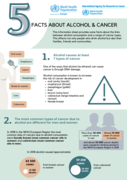
This factsheet provides five important facts for policy makers, health professionals and the general public about the links between alcohol consumption and a range of cancer types. This affects not only people who drink alcohol but also their famili
...
es, friends and communities.
- Alcohol causes at least seven types of cancer
- The most common types of cancer due to alcohol are different for men and women
- The risk of cancer from alcohol consumption increases from the first drink
- Using tobacco as well as alcohol multiplies cancer risks
- Cancers due to alcohol consumption are preventable
The factsheet emphasizes that implementation of WHO ‘Best Buy’ policies to make alcohol less affordable, to ban or restrict alcohol marketing across all types of media, and to reduce alcohol availability can support the reduction of alcohol consumption and ultimately of cancers due to alcohol consumption. This will help progress towards a WHO SAFER European Region, free from harm due to alcohol. The factsheet was launched as part of European Week Against Cancer 2021.
more
The World’s Leading Resource for Climate Solutions
Our mission is to help the world reach “drawdown”—the point in the future when levels of greenhouse gases in the atmosphere stop climbing and start to steadily decline, thereby stopping cat
...
astrophic climate change—as quickly, safely, and equitably as possible.
more
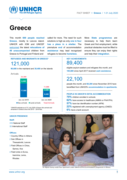
This month 600 people reached Greece, mostly to Lesvos island. UNHCR with IOM and UNICEF welcomed the latest relocations of 49 unaccompanied children from Greece to Portugal and Finland and called for more. The need for such solutions is high as onl
...
y one in four has a place in a shelter. The premature end of accommodation assistance may lead recognized refugees to become homeless.
more
Quick guide to video-supported treatment of tuberculosis (2020).
Despite being a curable and preventable disease, tuberculosis (TB) remains as one of the major challenges for health systems, globally. Every year, TB affects more than 10 million people and kills more than 1.4 million people. WHO’
...
s Digital Health for the End TB Strategy – an Agenda for Action outlines a conceptual framework in which advantageously positioned digital health solutions are matched to the most urgent needs of TB programmes. Video-supported treatment is a component of one of the four core functions of this framework, the Patient Care domain, and primarily supports the first pillar of the End TB Strategy. This quick guide provides information on the solutions available for asynchronous modes of video communication and how these can be of use to TB programmes.
more
L'objectif est de veiller à ce que les IPNS soient non seulement présents dans chaque État membre, mais qu'ils disposent également des cadres juridiques, des ressources et de l'expertise r à la réalisation de cet objectif, l'Africa CDC a élaboré un Plan de développement des instituts nation
...
aux de santé publique en Afrique 2025-2027. L'objectif nécessaires pour mener efficacement les efforts de sécurité sanitaire en Afrique.
more

The Government of Malawi is committed to improving health and livelihoods in Malawi through community health – the
provision of basic health services in rural and urban communities with the participation of people who live there.
Historically, Community Health has significantly contributed to im
...
provements in Malawi’s health outcomes in particular
attainment of MDG4. However, the community health system faces resource constraints and inconsistencies around quality
of service – which negatively affect health outcomes.
more
Capacity Building for Physical Activity of Older People
German Gymnastics Federation (Deutscher Turner-Bund, DTB)
German Gymnastics Federation (Deutscher Turner-Bund, DTB)
(2014)
CC
The “ActiveAge Handbook” is an outcome of the “ActiveAge Project, which was carried out from January 2013 until June 2014 in the frame of “2012 Preparatory Actions in the Field of Sport” of the European Commission Directory General Education and Cul-
ture (DG EAC) in cooperation with 13 E
...
uropean partners under the leadership of the German Gymnastic Federation (DTB). “ActiveAge” was set up as a transnational project that fosters the exchange of knowledge and experience to counteract the physical inactivity of elderly people through capacity building for physical activities and sport programs of aging people in well-
structured and wide-spread settings, with the starting point in sport-organizations.
The handbook is intended to be used as a guideline for further activities of the “European Platform Active Aging in Sport” (EPAAS), which will continue the mission of the ActiveAge Project. Furthermore the handbook should serve as well for any other stakeholder interested to promote physical activities and sport for elderly people.
more
Noncommunicable diseases (NCDs) – chief among them, cardiovascular diseases (heart disease and stroke), cancer, diabetes and chronic respiratory diseases – along with mental health, cause nearly three quarters of deaths in the world. Their drivers are social, environmental, commercial and geneti
...
c, and their presence is global. Every year 17 million people under the age of 70 die of NCDs, and 86% of them live in low- and middle-income countries (LMICs).
more

Cerebrum. 2016 Jul-Aug; 2016: cer-10-16.
Published online 2016 Jul 1.