
Filter
1647
Text search:
International
Organization
for
Migration
Featured
120
464
Language
Document type
875
375
139
90
89
27
23
19
5
2
2
1
Countries / Regions
82
58
57
48
41
37
36
36
32
31
31
31
27
26
24
22
22
21
20
19
18
18
17
17
16
16
13
13
12
12
12
11
11
11
11
10
10
10
10
9
9
9
9
9
8
8
8
7
7
7
7
7
6
6
6
6
5
5
5
5
5
5
5
5
5
5
4
4
4
4
4
4
4
3
3
3
3
3
3
2
2
2
2
2
2
2
2
2
2
2
2
2
2
2
2
2
2
2
2
1
1
1
1
1
1
1
1
1
1
1
1
1
1
1
1
1
1
1
1
1
1
Authors & Publishers
Publication Years
Category
571
122
91
62
52
24
11
1
Toolboxes
126
122
118
111
105
102
92
65
54
53
31
31
29
22
21
20
18
15
13
9
8
7
6
5
3
1
1
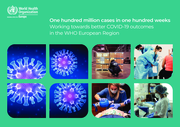
Working towards better COVID-19 outcomes in the WHO European Region.From the first COVID-19 cases in Europe reported on
24 January 2020, the pandemic reached 1 million cases
within 3 months, 10 million cases within 8 months, and
100 million cases in Europe alone within 2 years. Over
the course o
...

This joint publication by UNAIDS and WHO emphasizes the importance of integrating HIV prevention, testing, treatment and care and mental health services for people living with HIV. It provides a compilation of tools, best practices, recommendations
...
The purpose of this book is to provide an overview of Buruli ulcer (Mycobacterium ulcerans infection) for the medical and scientific communities and the general public alike.

Despite the significant role of vector control in national leishmaniasis control programmes, the programmatic community perceives vector control as the weakest component of leishmaniasis control strategies in terms of resources, scientific evidence of the usefulness of interventions and capacity
...
During the 17 years since Surgical approaches to the urogenital manifestations of lymphatic filariasis was first published, there has been heightened awareness of the physical, economic and emotional burden of the genitourinary manifestations of filariasis. With the impetus to provide better guidanc
...

The objective of this manual is to guide managers of schistosomiasis and soil-transmitted helminthiases control programmes towards the elimination of these diseases as public health problems informed by evidence generated through monitoring and evaluation of these programmes. The manual complements
...
In April 2018, Refugees International (RI) conducted a mission to Bangladesh, to research the GBV (gender-based violence) response for Rohingya women and girls. RI found that the entire humanitarian
...
Ukraine: Russian invasion has forced older people with disabilities to endure isolation and neglect – new report
Many temporary shelters inaccessible to people with physical disabilities
Overburdened care system often provides few alternatives to institutions
...
This is the 19th annual Landmine Monitor report. It is the sister publication to the Cluster Munition Monitor report, first published in November 2010.
Landmine Monitor 2016 provides a global overview of the landmine situation. Chapters on developments in specific countries and other areas are ava
...
This report, published in conjunction with a summary overview of results of rounds 1–8, is the eighth and final report in a series of laboratory-based evaluations of rapid diagnostic tests (RDTs) for malaria. It provides a comparative measure of t
...

It is our hope and prayer that the guidance and multiple tools provided herein to manage
the entire lifecycle of a food security program are useful to our food security staff, our
local partners, and our fellow international Cooperating Sponsors t
...
After almost 50 years of military dictatorship, and following the 2010 general elections which were rigged in favour of the military Union Solidarity and Development Party (USDP), Myanmar underwent a series of political reforms from 2011 onwards. In November 2015, the first free general elections si
...

This country cooperation strategy (CCS) outlines how the World Health Organization (WHO) will work with the Lao People’s Democratic Republic over the next five years (2024–2028), supporting the implementation of the five-year health sector devel
...

Evidence-based psychological interventions are an important part of health, social, protection and education services and can help increase access to effective mental health treatments and progression towards universal health coverage.
This manual provides managers and others responsible
...
A survey was conducted in countries in all six WHO regions and focused on the building blocks that are considered prerequisites to combat antimicrobial resistance: a comprehensive national plan, laboratory capacity to undertake surveillance for resi
...

his Framework begins with a desired future scenario and considers actions and interventions necessary to get there. It advocates for holistic view to address tuberculosis. The Framework revisits challenges and actions in four layers: TB specific; ch
...

An interregional meeting on leishmaniasis among neighbouring endemic
countries in the Eastern Mediterranean, African and European regions was organized by the World Health Organization (WHO) Regional Office
...

Novel coronavirus will disproportionately impact world’s 70 million displaced people
Report recommends stopping asylum seeker deportations, prioritising hygiene and refugee camp decongestion, better communication
Displaced people must be included in prevention, mitigation efforts -
...

Every year, an estimated 15 million babies are born preterm – before 37 weeks of pregnancy. That is more than 1 in 10 live births. Approximately 1 million children die each year worldwide due to complications from their early birth. Those that survive often face a lifetime of ill-health including
...
Policy brief, 24 July 2020
The COVID-19 pandemic has affected older people disproportionately, especially those living in long-term care facilities. In many countries, evidence shows that more than 40% of COVID-19 related deaths have been linked to long-term care facilities, with figures being as h
...
