
Filter
711
Text search:
University
of
Malawi
,
et
al.
Featured
45
135
Language
Document type
399
191
52
38
14
7
6
2
1
Countries / Regions
60
33
29
23
21
21
20
17
10
9
9
9
8
8
8
8
7
6
5
5
5
5
5
5
5
4
4
4
4
3
3
3
3
2
2
2
2
2
2
2
2
2
2
2
2
1
1
1
1
1
1
1
1
1
1
1
1
1
1
1
1
1
1
1
1
1
Authors & Publishers
Publication Years
Category
240
67
54
47
29
11
4
Toolboxes
99
74
49
39
29
25
23
22
21
15
13
12
8
8
6
6
4
4
3
3
2
2
2
1
This publication describes the first WHO public-benefit Target Product Profiles (TPPs) for snakebite antivenoms. It focuses on antivenoms for treatment of snakebite envenoming in sub-Saharan Africa. Four TPPs are described in the document:
Broad sp
...
The WHO Global research agenda on health, migration and displacement identified the health of displaced and migrant populations in the context of climate change as one
...
Accessed November 2017.
The World Health Organization (WHO) endorses the use of population-based prevalence surveys for estimating the prevalence of trachoma. In general, the prevalence
...
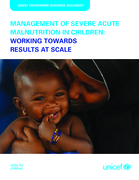
This Guidance Document provides practical assistance to Country Offices scaling up programmes to manage SAM in young children. It outlines a step-by-step process through which countries can analyse their current situation, identify barriers and bottlenecks through the MoRES approach, and plan action
...
The Fifty-first World Health Assembly adopted resolution WHA51.11 in 1998, which targets the
global elimination of trachoma as a public health problem by 2020 (1). The strategy recommended
to achieve that goal is encapsulated by the acronym “SAF
...

On Global Handwashing Day, WHO and UNICEF have released the first-ever global Guidelines on Hand Hygiene in Community Settings to support governments and practitioners in promoting effective hand hygiene outside health care – across households, public spaces and institutions. Framing hand hygiene
...
Updated Guideline.
The Emergency Triage Assessment and Treatment (ETAT) guidelines provide guidance on the most common emergency conditions in children presenting at the health facility. These include but are not limited to airway obstruction and other breathing problems; circulatory impairment or
...

Infectious disease outbreaks and epidemics are increasing in frequency, scale and impact. Health care facilities can amplify the transmission of emerging infectious diseases or multidrug-resistant organisms (MDRO) within their settings and communiti
...
DHS Analytical Studies No. 51
Child Health, Family Planning, Geographic Information, HIV, Malaria, Maternal Health
Who suffers Most from Extreme Weather Events? Weather-related Loss Events in 2019 and 2000 to 2019
The Global Climate Risk Index 2021 analyses and ranks to what extent countries and regions have been affected by impacts of climate related extreme w
...
It provides insight into WHO’s work that aims to improve the health of the people of the United Republic of Tanzania in collaboration with key st
...
Recommandations pour une Approche de Santé publique.
Juin 2013.

Water, sanitation and hygiene (WASH) are critical in the prevention and care for all of the 17 neglected tropical diseases (NTDs) scheduled for intensified control or elimination by 2020.
Provision of ...
Provision of ...

Over half a billion children are living in areas with extremely high levels of floods and nearly 160 million children live in areas of high or extremely high droughts. The World Health Organisation
...

This report is dedicated to the struggle of LGBTQ+ people, activists, and
their allies in the push for decriminalization, equity, advancement of
human rights, and against regressive criminalizatio
...

Guidelines for the Prevention and Treatment of Opportunistic Infections in Adults and Adolescents With HIV
recommended
The Guidelines for the Prevention and Treatment of Opportunistic Infections in Adults and
Adolescents With HIV document is published in an electronic format and updated as relevant changes
in prevention and treatment recommendations occur.
