
Filter
4193
Text search:
blood
services
Featured
463
1233
Language
4035
123
66
48
34
23
15
14
5
5
5
4
4
4
4
4
3
3
3
3
3
2
2
2
2
2
2
2
2
1
1
1
1
1
1
1
1
1
1
1
1
1
1
1
1
1
1
1
1
1
1
1
1
Document type
2339
635
587
275
143
102
53
26
13
9
6
2
1
Countries / Regions
306
150
138
111
100
96
96
96
90
90
88
73
68
65
57
57
53
50
47
47
45
40
37
37
36
33
31
27
26
23
22
21
21
18
18
17
17
17
17
15
15
14
14
13
13
13
12
12
11
10
10
10
9
9
8
7
6
6
6
6
6
5
5
5
5
5
5
5
5
4
4
4
4
4
4
4
4
4
3
3
3
3
3
3
3
3
3
3
3
3
3
3
3
3
3
2
2
2
2
2
2
1
1
1
1
1
1
1
1
1
1
1
1
1
1
1
1
1
1
1
1
1
1
1
1
1
1
1
1
1
1
1
1
1
1
1
1
1
1
Authors & Publishers
569
220
174
114
96
78
68
61
52
42
36
29
28
28
28
26
24
24
23
23
23
20
20
19
19
18
18
16
16
16
16
16
16
16
16
16
15
14
14
14
13
13
13
13
13
13
13
12
12
12
11
11
11
10
10
10
10
10
10
10
9
9
9
9
9
8
8
8
8
8
8
8
7
7
7
7
7
7
7
7
7
7
7
7
7
7
7
7
7
7
7
6
6
6
6
6
6
6
6
6
6
6
6
6
6
6
6
5
5
5
5
5
5
5
5
5
5
5
5
5
5
5
5
5
5
5
5
5
4
4
4
4
4
4
4
4
4
4
4
4
4
4
4
4
4
4
4
4
4
4
4
4
4
4
4
4
4
4
4
4
4
4
4
4
4
4
4
4
4
4
4
4
4
4
4
4
4
4
4
3
3
3
3
3
3
3
3
3
3
3
3
3
3
3
3
3
3
3
3
3
3
3
3
3
3
3
3
3
3
3
3
3
3
3
3
3
3
3
3
3
3
3
3
3
3
3
3
3
3
3
3
3
3
3
3
3
3
3
3
3
3
3
3
3
3
3
3
3
3
3
3
3
3
3
3
3
3
3
3
3
3
3
3
3
3
3
3
3
3
3
3
3
3
3
3
3
3
2
2
2
2
2
2
2
2
2
2
2
2
2
2
2
2
2
2
2
2
2
2
2
2
2
2
2
2
2
2
2
2
2
2
2
2
2
2
2
2
2
2
2
2
2
2
2
2
2
2
2
2
2
2
2
2
2
2
2
2
2
2
2
2
2
2
2
2
2
2
2
2
2
2
2
2
2
2
2
2
2
2
2
2
2
2
2
2
2
2
2
2
2
2
2
2
2
2
2
2
2
2
2
2
2
2
2
2
2
2
2
2
2
2
2
2
2
2
2
2
2
2
2
2
2
2
2
2
2
2
2
2
2
2
2
2
2
2
2
2
2
2
2
2
2
2
2
2
2
2
2
2
2
2
2
2
2
2
2
2
2
2
2
2
2
2
2
2
2
2
2
2
2
2
2
2
2
2
2
2
2
2
2
2
2
2
2
2
2
2
2
2
2
2
2
2
2
2
2
2
2
2
2
2
2
2
2
2
2
2
2
2
2
2
2
2
2
2
2
2
2
2
2
2
2
2
2
2
2
2
2
2
2
2
2
2
2
2
2
2
2
2
2
2
2
2
2
1
1
1
1
1
1
1
1
1
1
1
1
1
1
1
1
1
1
1
1
1
1
1
1
1
1
1
1
1
1
1
1
1
1
1
1
1
1
1
1
1
1
1
1
1
1
1
1
1
1
1
1
1
1
1
1
1
1
1
1
1
1
1
1
1
1
1
1
1
1
1
1
1
1
1
1
1
1
1
1
1
1
1
1
1
1
1
1
1
1
1
1
1
1
1
1
1
1
1
1
1
1
1
1
1
1
1
1
1
1
1
1
1
1
1
1
1
1
1
1
1
1
1
1
1
1
1
1
1
1
1
1
1
1
1
1
1
1
1
1
1
1
1
1
1
1
1
1
1
1
1
1
1
1
1
1
1
1
1
1
1
1
1
1
1
1
1
1
1
1
1
1
1
1
1
1
1
1
1
1
1
1
1
1
1
1
1
1
1
1
1
1
1
1
1
1
1
1
1
1
1
1
1
1
1
1
1
1
1
1
1
1
1
1
1
1
1
1
1
1
1
1
1
1
1
1
1
1
1
1
1
1
1
1
1
1
1
1
1
1
1
1
1
1
1
1
1
1
1
1
1
1
1
1
1
1
1
1
1
1
1
1
1
1
1
1
1
1
1
1
1
1
1
1
1
1
1
1
1
1
1
1
1
1
1
1
1
1
1
1
1
1
1
1
1
1
1
1
1
1
1
1
1
1
1
1
1
1
1
1
1
1
1
1
1
1
1
1
1
1
1
1
1
1
1
1
1
1
1
1
1
1
1
1
1
1
1
1
1
1
1
1
1
1
1
1
1
1
1
1
1
1
1
1
1
1
1
1
1
1
1
1
1
1
1
1
1
1
1
1
1
1
1
1
1
1
1
1
1
1
1
1
1
1
1
1
1
1
1
1
1
1
1
1
1
1
1
1
1
1
1
1
1
1
1
1
1
1
1
1
1
1
1
1
1
1
1
1
1
1
1
1
1
1
1
1
1
1
1
1
1
1
1
1
1
1
1
1
1
1
1
1
1
1
1
1
1
1
1
1
1
1
1
1
1
1
1
1
1
1
1
1
1
1
1
1
1
1
1
1
1
1
1
1
1
1
1
1
1
1
1
1
1
1
1
1
1
1
1
1
1
1
1
1
1
1
1
1
1
1
1
1
1
1
1
1
1
1
1
1
1
1
1
1
1
1
1
1
1
1
1
1
1
1
1
1
1
1
1
1
1
1
1
1
1
1
1
1
1
1
1
1
1
1
1
1
1
1
1
1
1
1
1
1
1
1
1
1
1
1
1
1
1
1
1
1
1
1
1
1
1
1
1
1
1
1
1
1
1
1
1
1
1
1
1
1
1
1
1
1
1
1
1
1
1
1
1
1
1
1
1
1
1
1
1
1
1
1
1
1
1
1
1
1
1
1
1
1
1
1
1
1
1
1
1
1
1
1
1
1
1
1
1
1
1
1
1
1
1
1
1
1
1
1
1
1
1
1
1
1
1
1
1
1
1
1
1
1
1
1
1
1
1
1
1
1
1
1
1
1
1
1
1
1
1
1
1
1
1
1
1
1
1
1
1
1
1
1
1
1
1
1
1
1
1
1
1
1
1
1
1
1
1
1
1
1
1
1
1
1
1
1
1
1
1
1
1
1
1
1
1
1
1
1
1
1
1
1
1
1
1
1
1
1
1
1
1
1
1
1
1
1
1
1
1
1
1
1
1
1
1
1
1
1
1
1
1
1
1
1
1
1
1
1
1
1
1
1
1
1
1
1
1
1
1
1
1
1
1
1
1
1
1
1
1
1
1
1
1
1
1
1
1
1
1
1
1
1
1
1
1
1
1
1
1
1
1
1
1
1
1
1
1
1
1
1
1
1
1
1
1
1
1
1
1
1
1
1
1
1
1
1
1
1
1
1
1
1
1
1
1
1
1
1
1
1
1
1
1
1
1
1
1
1
1
1
1
1
1
1
1
1
1
1
1
1
1
1
1
1
1
1
1
1
1
1
1
1
1
1
1
1
1
1
1
1
1
1
1
1
1
1
1
1
1
1
1
1
1
1
1
1
1
1
1
1
1
1
1
1
1
1
1
1
1
1
1
1
1
1
1
1
1
1
1
1
1
1
1
1
1
1
1
1
1
1
1
1
1
1
1
1
1
1
1
1
1
1
1
1
1
1
1
1
1
1
1
1
1
1
1
1
1
1
1
1
1
1
1
1
1
1
1
1
1
1
1
1
1
1
1
1
1
1
1
1
1
1
1
1
1
1
1
1
1
1
1
1
1
1
1
1
1
1
1
1
1
1
1
1
1
1
1
1
1
1
1
1
1
1
1
1
1
1
1
1
1
1
1
1
1
1
1
1
1
1
1
1
1
1
1
1
1
1
1
1
1
1
1
1
1
1
1
1
1
1
1
1
1
1
1
1
1
1
1
1
1
1
1
1
1
1
1
1
1
1
1
1
1
1
1
1
1
1
1
1
1
1
1
1
1
1
1
1
1
1
1
1
1
1
1
1
1
1
1
1
1
1
1
1
1
1
1
1
1
1
1
1
1
1
1
1
1
1
1
1
1
1
1
1
1
1
1
1
1
1
1
1
1
1
1
1
1
1
1
1
1
1
1
1
1
1
1
1
1
1
1
1
1
1
1
1
1
1
1
1
1
1
1
1
1
1
1
1
1
1
1
1
1
1
1
1
1
1
1
1
1
1
1
1
1
1
1
1
1
1
1
1
1
1
1
1
1
1
1
1
1
1
1
1
1
1
1
1
1
1
1
1
1
1
1
1
1
1
1
1
1
1
1
1
1
1
1
1
1
1
1
1
1
1
1
1
1
1
1
1
1
1
1
1
1
1
1
1
1
1
1
1
1
1
1
1
1
1
1
1
1
1
1
1
1
1
1
1
1
1
1
1
1
1
1
1
1
1
1
1
1
1
1
1
1
1
1
1
1
1
1
1
1
1
1
1
1
1
1
1
1
1
1
1
1
1
1
1
1
1
1
1
1
1
1
1
1
1
1
1
1
1
1
1
1
1
1
1
1
1
1
1
1
1
1
1
1
1
1
1
1
1
1
1
1
1
1
1
1
1
1
1
1
1
1
1
1
1
1
1
1
1
1
1
1
1
1
1
1
1
1
1
1
1
1
1
1
1
1
1
1
1
1
1
1
1
1
1
1
1
1
1
1
1
1
1
1
1
1
1
1
1
1
1
1
1
1
1
1
1
1
1
1
1
1
1
1
1
1
1
1
1
1
1
1
1
1
1
1
1
1
1
1
1
1
1
1
1
1
1
1
1
1
1
1
1
1
1
1
1
1
1
1
1
1
1
1
1
1
1
1
1
1
1
1
1
1
1
1
1
1
1
1
1
1
1
1
1
1
1
1
1
1
1
1
1
1
1
1
1
1
1
1
1
1
1
1
1
1
1
1
1
1
1
1
1
1
1
1
1
1
1
1
1
1
1
1
1
1
1
1
1
1
1
1
1
1
1
1
1
1
1
1
1
1
1
1
1
1
1
1
1
1
1
1
1
1
1
1
1
1
1
1
1
1
1
1
1
1
1
1
1
1
1
1
1
1
1
1
1
1
1
1
1
1
1
1
1
1
1
1
1
1
1
1
1
1
1
1
1
1
1
1
1
1
1
1
1
1
1
1
1
1
1
1
1
1
1
1
1
1
1
1
1
1
1
1
1
1
1
1
1
1
1
1
1
1
1
1
1
1
1
1
1
1
1
1
1
1
1
1
1
1
1
1
1
1
1
1
1
1
1
1
1
1
1
1
1
1
1
1
1
1
1
1
1
1
1
1
1
1
1
1
1
1
1
1
1
1
1
1
1
1
1
1
1
1
1
1
1
1
1
1
1
1
1
1
1
1
1
1
1
1
1
1
1
1
1
1
1
1
1
1
1
1
1
1
1
1
1
1
1
1
1
1
1
1
1
1
1
1
1
1
1
1
1
1
1
1
1
1
1
1
1
1
1
1
1
1
1
1
1
1
1
1
1
1
1
1
1
1
1
1
1
1
1
1
1
1
1
1
1
1
1
1
1
1
1
1
1
1
1
1
1
1
1
1
1
1
1
1
1
1
1
1
1
1
1
1
1
1
1
1
1
1
1
1
1
1
1
1
1
1
1
1
1
1
1
1
1
1
1
1
1
1
1
1
1
1
1
1
1
1
1
1
1
1
1
1
1
1
1
1
1
1
1
1
1
1
1
1
1
1
1
1
1
1
1
1
1
1
1
1
1
1
1
1
1
1
1
1
1
1
1
1
1
1
1
1
1
1
1
1
1
1
1
1
1
1
1
1
1
1
1
1
1
1
1
1
1
1
1
1
1
1
1
1
1
1
1
1
1
1
1
1
1
1
1
1
1
1
1
1
1
1
1
1
1
1
1
1
1
1
1
1
1
1
1
1
1
1
1
1
1
1
1
1
1
1
1
1
1
1
1
1
1
1
1
1
1
1
1
1
1
1
1
1
1
1
1
1
1
1
1
1
1
1
1
1
1
1
1
1
1
1
1
1
1
1
1
1
1
1
1
1
1
1
1
1
1
1
1
1
1
1
1
1
1
1
1
1
1
1
1
1
1
1
1
1
1
1
1
1
1
1
1
1
1
1
1
1
1
1
1
1
1
1
1
1
1
1
1
1
1
1
1
1
1
1
1
1
1
1
1
1
1
1
1
1
1
1
1
1
1
1
1
1
1
1
1
1
1
1
1
1
1
1
1
1
1
1
1
1
1
1
1
1
1
1
1
1
1
1
1
1
1
1
1
1
1
1
1
1
1
1
1
1
1
1
1
1
1
1
1
1
1
1
1
1
1
1
1
1
1
1
1
1
1
1
1
1
1
1
1
1
1
1
1
1
1
1
1
1
1
1
1
1
1
1
1
1
1
1
1
1
1
1
1
1
1
1
1
1
1
1
1
1
1
1
1
1
1
1
1
1
1
1
1
1
1
1
1
1
1
1
1
1
1
1
1
1
1
1
1
1
1
1
1
1
1
1
1
1
1
1
1
1
1
1
1
1
1
1
1
1
1
1
1
1
1
1
1
1
1
1
1
1
1
1
1
1
1
1
1
1
1
1
1
1
1
1
1
1
1
1
1
1
1
1
1
1
1
1
1
1
1
1
1
1
1
1
1
1
1
1
1
1
1
1
1
1
1
1
1
1
1
1
1
1
1
1
1
1
1
1
1
1
1
1
1
1
1
1
1
1
1
1
1
1
1
1
1
1
1
1
1
1
1
1
1
1
1
1
1
1
1
1
1
1
1
1
1
1
1
1
1
1
1
1
1
1
1
1
1
1
1
1
1
1
1
1
1
1
1
1
1
1
1
1
1
1
1
1
1
1
1
1
1
1
1
1
1
1
1
1
1
1
1
1
1
1
1
1
1
1
1
1
1
1
1
1
1
1
1
1
1
1
1
1
1
1
1
1
1
1
1
1
1
1
1
1
1
1
1
1
1
1
1
1
1
1
1
1
1
1
1
1
1
1
1
1
1
1
1
1
1
1
1
1
1
1
1
1
1
1
1
1
1
1
1
1
1
1
1
1
1
1
1
1
1
1
1
1
1
1
1
1
1
1
1
1
1
1
1
1
1
1
1
1
1
1
1
1
1
1
1
1
1
1
1
1
1
1
1
1
1
1
1
1
1
1
1
1
1
1
1
1
1
1
1
1
1
1
1
1
1
1
1
1
1
1
1
1
1
1
1
1
1
1
1
1
1
1
1
1
1
1
1
1
1
1
1
1
1
1
1
1
1
1
1
1
1
1
1
1
1
1
1
1
1
1
1
1
1
1
1
1
1
1
1
1
1
1
1
1
1
1
1
1
1
1
1
1
1
1
1
1
1
1
1
1
1
1
1
1
1
1
1
1
1
1
1
1
1
1
1
1
1
1
1
1
1
1
1
1
1
1
1
1
1
1
1
1
1
1
1
1
1
1
1
1
1
1
1
1
1
1
1
1
1
1
1
1
1
1
1
1
1
1
1
1
1
1
1
1
1
1
1
1
1
1
1
1
1
1
1
1
1
1
1
1
1
1
1
1
1
1
1
1
1
1
1
1
1
1
1
1
1
1
1
1
1
1
1
1
1
1
1
1
1
1
1
1
1
1
1
1
1
1
1
1
1
1
1
1
1
1
1
1
1
1
1
1
1
1
1
1
1
1
1
1
1
1
1
1
1
1
1
1
1
1
1
1
1
1
1
1
1
1
1
1
1
1
1
1
1
1
1
1
1
1
1
1
1
1
1
1
1
1
1
1
1
1
1
1
1
1
1
1
1
1
1
Publication Years
1091
2648
432
21
1
Category
1837
441
252
242
178
115
72
1
Toolboxes
298
237
204
179
164
155
136
131
109
89
80
78
72
65
61
49
47
45
39
28
27
24
17
14
12

Non-communicable diseases (NCDs) are the second common cause of death in sub-Saharan Africa (SSA) accounting for about 35% of all deaths, after a composite of communicable, maternal, neonatal, and nutritional diseases. Despite prior perception of low NCDs mortality rates, current evidence suggests t
...
hat SSA is now at the dawn of the epidemiological transition with contemporary double burden of disease from NCDs and communicable diseases. In SSA, cardiovascular diseases (CVDs) are the most frequent causes of NCDs deaths, responsible for approximately 13% of all deaths and 37% of all NCDs deaths. Although ischemic heart disease (IHD) has been identified as the leading cause of CVDs mortality in SSA followed by stroke and hypertensive heart disease from statistical models, real field data suggest IHD rates are still relatively low. The neglected endemic CVDs of SSA such as endomyocardial fibrosis and rheumatic heart disease as well as congenital heart diseases remain unconquered. While the underlying aetiology of heart failure among adults in high-income countries (HIC) is IHD, in SSA the leading causes are hypertensive heart disease, cardiomyopathy, rheumatic heart disease, and congenital heart diseases. Of concern is the tendency of CVDs to occur at younger ages in SSA populations, approximately two decades earlier compared to HIC. Obstacles hampering primary and secondary prevention of CVDs in SSA include insufficient health care systems and infrastructure, scarcity of cardiac professionals, skewed budget allocation and disproportionate prioritization away from NCDs, high cost of cardiac treatments and interventions coupled with rarity of health insurance systems. This review gives an overview of the descriptive epidemiology of CVDs in SSA, while contrasting with the HIC and highlighting impediments to their management and making recommendations.
more

Non-communicable diseases (NCDs) are of increasing concern for society and national governments, as well as globally due to their high mortality rate. The main risk factors of NCDs can be classified into the categories of self-management, genetic factors, environmental factors, factors of medical co
...
nditions, and socio-demographic factors.
more

As the Americas undergo profound demographic change and there are more persons aged 65 years or older than children younger than 5 years, it is crucial to recognize that national immunization programs must be redesigned to ensure comprehensive protection for individuals across the lifespan. By adopt
...
ing a life course approach (LCA) to immunization, vaccination programs can be tailored to close immunity gaps at different stages of life. The life course approach foresees the establishment of multiple strategies to reduce missed opportunities for vaccination according to age group. This technical document explains the key concepts of the LCA with a focus on immunization by vaccination, as well as the underlying biological mechanisms that require the application different vaccines at different life stages according to changes to the immune system and in the epidemiological situation of a community.
more
Approximately 80% of the 463 million adults worldwide with diabetes live in low-income and middle-income countries (LMICs). A major obstacle to designing evidence-based policies to improve diabetes outcomes in LMICs is the scarce availability of nationally representative data on the current patterns
...
of treatment coverage. The objectives of this study were to estimate the proportion of adults with diabetes in LMICs who receive coverage of recommended pharmacological and non-pharmacological diabetes treatment; and to describe country-level and individual-level characteristics that are associated with treatment.
more

In this document, the Inter-American Committee of Cardiovascular Prevention and Rehabilitation, together with the South
American Society of Cardiology, aimed to formulate strategies, measures, and actions for cardiovascular disease prevention
and rehabilitation (CVDPR). In the context of the imple
...
mentation of a regional and national health policy in Latin American
countries, the goal is to promote cardiovascular health and thereby decrease morbidity and mortality. The study group on
Cardiopulmonary and Metabolic Rehabilitation from the Department of Exercise, Ergometry, and Cardiovascular Rehabilitation
of the Brazilian Society of Cardiology has created a committee of experts to review the Portuguese version of the guideline
and adapt it to the national reality.
The mission of this document is to help health professionals to adopt effective measures of CVDPR in the routine
clinical practice. The publication of this document and its broad implementation will contribute to the goal of the World
Health Organization (WHO), which is the reduction of worldwide cardiovascular mortality by 25% until 2025.
more

Since the discovery of insulin nearly 100 years ago, advances in diabetes treatments and therapies have transformed the lives of people
with diabetes (PwD), notably reducing the daily burden of its management.
Newer technologies, including those driven by artificial intelligence, have the potentia
...
l to further improve the quality of life of PwD and help
identify and diagnose people at risk of developing Type 2 diabetes and diabetes-related complications early. However, medical and technological advances alone are not enough to fix the diabetes challenge. It is also critical to acknowledge the complexity and the seriousness of diabetes, its impact on the quality of life and well-being of over 32 million PwD in the EU and the financial burden it represents for health systems and society at large.
more

One of the main aims of the WHO Global Initiative for Childhood Cancer and the CureAll Americas framework is to strengthen centers of excellence and promote the training of the health workforce, especially pediatric oncology nurses, specialized in nursing care for children and adolescents with cance
...
r and their families. These health personnel provide compassionate, non traumatic, complex, continuous, ethical, conscious patient- and family-centered care in order to meet the physical, emotional, psychosocial, and cultural needs of the people involved. This publication is aimed at health administration teams, hospital management teams, and professional pediatric oncology nursing groups. Its objective is to identify, systematize, and consolidate available evidence on the scope of pediatric oncology nursing practice in Latin America and the Caribbean based on core competencies, in order to incorporate them into clinical practice, teaching, and research. The preparation process included a systematic review aimed at finding the best evidence on this subject. Patient- and family centered care and the conceptual model of competencies for teenagers and young adults with cancer, developed by the Teenage Cancer Trust with the support of the Royal College of Nursing, were the theoretical foundations supporting the systematization of recommendations.
more
Diabetes mellitus is a major cause of morbidity and mortality in Scotland and worldwide, with an increasing prevalence. In 2009 there were around 228,000 people registered as having diabetes in Scotland, an increase of 3.6% from the preceding year. This increase relates, in part, to the increasing a
...
ge of the population, an increase in obesity and also perhaps to increasing survival of those with diabetes.
more

Air pollution is a major environmental risk factor and contributor to chronic, noncommunicable diseases (NCDs). However, most public health approaches to NCD prevention focus on behavioural and biomedical risk factors, rather than environmental risk factors such as air pollution. This article discus
...
ses the implications of such a focus. It then outlines the opportunities for those in public health and environmental science to work together across three key areas to address air pollution, NCDs and climate change: (a) acknowledging the shared drivers, including corporate determinants; (b) taking a ‘co-benefits’ approach to NCD prevention; and (c) expanding prevention research and evaluation methods through investing in systems thinking and intersectoral, cross-disciplinary collaborations.
more

Air pollution exposure—the (in)visible risk factor for respiratory diseases
Bălă, G.P.; Râjnoveanu, R.M.; Tudorache, E. et al.
Environmental Science and Pollution Research
(2021)
CC
There is increasing interest in understanding the role of air pollution as one of the greatest threats to human health worldwide. Nine of 10 individuals breathe air with polluted compounds that have a great impact on lung tissue. The nature of the relationship is complex, and new or updated data are
...
constantly being reported in the literature. The goal of our review was to summarize the most important air pollutants and their impact on the main respiratory diseases (chronic obstructive pulmonary disease, asthma, lung cancer, idiopathic pulmonary fibrosis, respiratory infections, bronchiectasis, tuberculosis) to reduce both short- and the long-term exposure consequences. We considered the most important air pollutants, including sulfur dioxide, nitrogen dioxide, carbon monoxide, volatile organic compounds, ozone, particulate matter and biomass smoke, and observed their impact on pulmonary pathologies. We focused on respiratory pathologies, because air pollution potentiates the increase in respiratory diseases, and the evidence that air pollutants have a detrimental effect is growing. It is imperative to constantly improve policy initiatives on air quality in both high- and low-income countries.
more

Compendium of WHO and other UN guidance on health and environment - 2022 update
World Health Organization WHO
World Health Organization WHO; UN environment programme; UNDP; unicef
(2022)
C_WHO
The combined effects from ambient (outdoor) air pollution and indoor (household, in particular) air pollution cause approximately 7 million premature deaths every year, largely as a result of increased mortality from stroke, IHD, COPD, lung cancer and acute respiratory infections (1). Air pollution
...
can occur in both the outdoor and indoor environments. Cook-stoves in homes, motor vehicles, industrial facilities and forest fires are common sources of air pollution. Air pollutants with the strongest evidence for adverse health outcomes include particulate matter (PM; both PM 2.5 (i.e. particles with an aerodynamic diameter
equal to or less than 2.5 μm) and PM10 (i.e. particles with an aerodynamic diameter equal to or less than 10 μm), ozone (O 3), nitrogen dioxide (NO 2 ), sulfur dioxide (SO 2 ) and carbon monoxide (CO). Air pollution is however composed of many more pollutants (1).
more
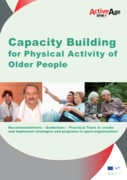
Capacity Building for Physical Activity of Older People
German Gymnastics Federation (Deutscher Turner-Bund, DTB)
German Gymnastics Federation (Deutscher Turner-Bund, DTB)
(2014)
CC
The “ActiveAge Handbook” is an outcome of the “ActiveAge Project, which was carried out from January 2013 until June 2014 in the frame of “2012 Preparatory Actions in the Field of Sport” of the European Commission Directory General Education and Cul-
ture (DG EAC) in cooperation with 13 E
...
uropean partners under the leadership of the German Gymnastic Federation (DTB). “ActiveAge” was set up as a transnational project that fosters the exchange of knowledge and experience to counteract the physical inactivity of elderly people through capacity building for physical activities and sport programs of aging people in well-
structured and wide-spread settings, with the starting point in sport-organizations.
The handbook is intended to be used as a guideline for further activities of the “European Platform Active Aging in Sport” (EPAAS), which will continue the mission of the ActiveAge Project. Furthermore the handbook should serve as well for any other stakeholder interested to promote physical activities and sport for elderly people.
more
The documents focus on promoting healthier nutrition by addressing issues like sugar, salt, and fat intake, emphasizing their role in non-communicable diseases such as obesity, diabetes, and heart diseases. They include educational tools for children and adults to support balanced diets and public h
...
ealth strategies to reform food systems and improve dietary habits globally.
more

The aim of the present paper is to review capacity building in public health nutrition (PHN), the need for which has been stressed for many years by a range of academics, national and international organisations. Although great strides have been made worldwide in the science of nutrition, there rema
...
in many problems of undernutrition and increasingly of obesity and related chronic diseases. The main emphasis in capacity building has been on the nutrition and health workforce, but the causes of these health problems are multifactorial and require collaboration across sectors in their solution. This means that PHN capacity building has to go beyond basic nutrition and beyond the immediate health workforce to policy makers in other sectors. The present paper provides examples of capacity building activities by various organisations, including universities, industry and international agencies. Examples of web-based courses are given including an introduction to the e-Nutrition Academy. The scope is international but with a special focus on Africa. In conclusion, there remains a great need for capacity building in PHN but the advent of the internet has revolutionised the possibilities.
more

Diabetes mellitus is one of the most common noncommunicable diseases worldwide. In the Eastern Mediterranean Region there has been a rapid increase in the incidence of diabetes mellitus and it is now the fourth leading cause of death. The increasing prevalence of diabetes mellitus, the emergence of
...
diabetes complications as a cause of early morbidity and mortality, and the enormous and mounting burden on health care systems make diabetes a priority health concern. These guidelines provide up-to-date, reliable and balanced information for the prevention and care of diabetes mellitus in the Region. The information is evidence-based and clearly stated to facilitate the use of the guidelines in daily practice. They are intended to benefit physicians at primary, secondary and tertiary level, general practitioners, internists and family medicine specialists, clinical dieticians and nurses as well as policy-makers at ministries of health. They provide the information necessary for decision-making by health care providers and patients themselves about disease management in the most commonly encountered situations.
more

Smallpox eradication was certified in 1980. Mpox has been endemic in Central and West African countries since it was first detected in 1958 . It is a zoonosis; cases are often found close to tropical rainforests where various animals carry the orthopoxvirus that causes the disease. In endemic countr
...
ies, most mpox infections in humans result from a primary animal-to-human transmission. Human-to-human transmission can result from close contact with respiratory secretions, skin lesions of an infected person, or recently contaminated objects. Transmission can also occur via the placenta from mother to fetus or through close contact during and after birth.
more

Noncommunicable diseases (NCDs) – chief among them, cardiovascular diseases (heart disease and stroke), cancer, diabetes and chronic respiratory diseases – along with mental health, cause nearly three quarters of deaths in the world. Their drivers are social, environmental, commercial and geneti
...
c, and their presence is global. Every year 17 million people under the age of 70 die of NCDs, and 86% of them live in low- and middle-income countries (LMICs).
more
The aim of this guidance manual is to introduce the user to project/programme plan- ning in a Red Cross Red Crescent environment. It describes the different stages of the planning phase of the “project/programme cycle” within the context of Results-Based Management (RBM). It also gives an overvi
...
ew of the various components of RBM and explains how to integrate and apply this approach in practice. In addition, the manual summarizes briefly the other key phases of the cycle (assessment, imple- mentation and monitoring, evaluation) and provides references to the key Federation manuals on these phases.
The manual has been developed primarily for use by people managing projects and programmes either in a National Society or the secretariat of the International Federation of Red Cross and Red Crescent Societies (International Federation). Although it is mainly designed for use at the country level, the basic principles can be applied to project and programme planning at any level. The manual draws on two International Red Cross and Red Crescent Movement publications – the International Federation’s Project Planning Process (2002) and the ICRC Economic Security Unit’s Programme/ Project Management: The Results-Based Approach (2008) – reflecting the significant similarity of approach. The International Federation has developed the manual internally to suit the particular needs and uses of project/programme management within the organization.
more

Noncommunicable diseases (NCDs) – chief among them, cardiovascular diseases (heart disease and stroke), cancer, diabetes and chronic respiratory diseases – along with mental health, cause nearly three quarters of deaths in the world. Their drivers are social, environmental, commercial and geneti
...
c, and their presence is global. Every year 17 million people under the age of 70 die of NCDs, and 86% of them live in low- and middle-income countries (LMICs).
more

The article outlines the prioritized research agenda for the prevention and control of chronic respiratory diseases (CRDs) as part of the World Health Organization's (WHO) action plan on noncommunicable diseases (NCDs) from 2008 to 2013. It highlights the significant global impact of CRDs, including
...
asthma, chronic obstructive pulmonary disease (COPD), and other related conditions, particularly in low- and middle-income countries (LMICs). The document stresses the need for effective prevention strategies and better surveillance, as well as enhanced healthcare infrastructure and resources in LMICs. It calls for research into CRD risk factors, effective interventions, and integrated care approaches that align with broader NCD prevention programs. The article emphasizes the importance of public health initiatives and cross-sector collaborations to reduce the disease burden and improve patient outcomes.
more
