
Filter
387
Text search:
rebuilding
Featured
28
133
Language
Document type
250
65
20
20
17
6
4
4
1
Countries
47
32
21
14
13
13
10
9
8
8
7
7
6
5
5
5
5
4
4
3
3
3
3
3
2
2
2
2
2
2
2
2
2
2
2
2
1
1
1
1
1
1
1
1
1
1
1
1
1
1
1
1
1
1
1
1
Authors & Publishers
Publication Years
Category
141
62
17
15
6
1
Toolboxes
55
47
43
36
21
19
18
14
7
4
4
4
2
2
2
2
1
1
1
1
1
1
1
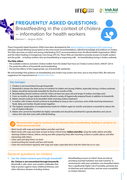
These Frequently Asked Questions (FAQs) have been developed by the Infant Feeding in Emergencies (IFE) Core Group Infectious Disease Working Group based on the most recent recommendations, collective knowledge and evidence on cholera. The FAQs also draw on infant and young child feeding (IYCF) recom
...

Ces questions fréquemment posées (FAQs) ont été élaborées par le Groupe de travail sur les maladies infectieuses du Groupe l'alimentation central sur des nourrissons en situation d'urgence (IFE) en se basant sur les recommandations les plus récentes, les connaissances collectives et les donnÃ
...

Abrupt reductions in international HIV assistance in 2025 have deepened existing funding shortfalls. The OECD estimates that external health assistance is projected to drop by 30–40% in 2025 compared with 2023, causing immediate and even more severe disruption to health services in low- and middle
...

This booklet is aimed at HCP’s, and serves to raise awareness, and emphasize the need for
the inclusion and integration of psychosocial support in the Comprehensive HIV and AIDS
Care, Management and Treatment (CCMT) of children and adolescents.

The text explains the concept of disaster preparedness and outlines how societies can better prepare for and respond to emergencies. It describes key components such as risk assessment, planning, resource management, warning systems, and training, emphasizing that effective preparedness requires coo
...
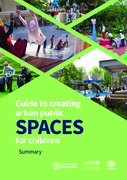
This guide defines public spaces for children as those that can be easily and freely accessed and enjoyed by all children, either alone or with friends or family, regardless of gender,
ethnicity, sexuality, nationality, social status or physical ability. Whatever their context, these places are saf
...
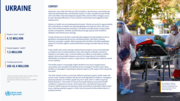
The 2026 outlook remains concerning. Without sustained support, health needs will remain acute. Disease outbreak risks persist amid degraded surveillance. Interagency planning indicates 10.8 million people may be in need, with 4.1 million requiring health assistance. The burden of noncommunicable di
...
