
Filter
1023
Text search:
childhood
disabilities
Featured
94
263
Language
Document type
697
135
83
36
32
21
8
7
2
1
1
Countries
46
33
30
30
29
26
18
18
17
17
16
14
13
13
13
13
13
12
12
12
11
11
10
9
9
9
8
7
7
6
6
6
5
4
4
4
4
4
4
4
4
4
4
3
3
3
3
2
2
2
2
2
2
2
2
2
2
1
1
1
1
1
1
1
1
1
1
1
1
1
1
1
1
1
1
1
1
1
1
Authors & Publishers
Publication Years
Category
395
84
54
31
31
19
Toolboxes
244
185
48
33
27
26
25
23
14
12
11
11
7
6
5
5
3
3
3
2
2
1
1

Limited research has examined factors associated with psychological distress following natural
disasters among non-Western child populations. Conditions associated with trauma-related symptoms following the 2004 tsunami in a sample of 265 Sri Lankan child survivors (53.6% female, aged 3 to 17) were
...
Q12: Should the treatment be similar in individuals with intellectual disability and epilepsy compared to people with epilepsy only?
PLoS Med 15(7): e1002615. https://doi.org/10.1371/journal. pmed.1002615
JOINT RESPONSE PLAN (JRP)
The Strategic Executive Group has developed a Joint Response Plan (JRP) for 2019 regarding the displaced people from Myanmar and who are affected specially by this influx The JRP has included different issues in terms of measuring people who are in need, of support interve
...
В этой главе мы попытаемся представить современные взгляды на классификацию, эпидемиологию, этиологию, клиническую картину, оценку, прогноз и лечение РАС. Мы надее
...
Attention-Deficit/Hyperactivity Disorder

Dissertationsubmitted for the degree of Doctor of Philosophy, Brunel University
Можно выделить две формы энкопреза: энкопрез с запором и без запора. Такое разделение крайне важно, так как в основе этих двух форм лежит разная патофизиология, они
...
Int J Environ Res Public Health. 2018 Jun; 15(6): 1279.
Published online 2018 Jun 16. doi: 10.3390/ijerph15061279
Maternal Mental Health and child health and development in low and middle income countries
recommended
The impact of maternal mental health problems on infants in high income countries has been identified mostly in terms of psychosocial and emotional development, thanks to the groundbreaking early work of Spitz (2) and of Bowlby (3), who studied the emotional needs of infants and mother-child attachm
...
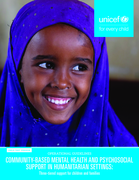
The CB MHPSS operational guidelines were developed in response to emerging evidence on the determinants of children’s resilience, lessons learned from the evaluation of existing approaches, and the unique challenges that today’s crises pose for children’s safety, wellbeing and optimal developm
...
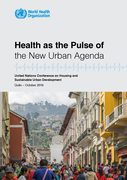
This report considers how to integrate health into urban planning, investments, and policy decisions, so as to support the implementation and achievement of the goals and objectives of the New Urban Agenda.
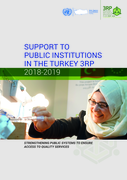

How we respond both now and going forward will help mitigate the impact of COVID-19, and to the extent possible preserve children’s rights to Survive, Learn, and Be Protected. We will focus our efforts on the most critical work essential to maintaining these commitments to the extent possible.

An estimated 99% of children worldwide – or more than 2.3 billion children – live in one of the 186 countries that have implemented some form of restrictions due to COVID-191. Although children are not at a high risk of direct harm from the virus, they are disproportionately affected by its hid
...
This guide is designed to assist UNICEF staff and partners, in establishing and
operating Child Friendly Spaces (CFS) in an emergency. It attempts to provide
readers with the main principles of a CFS and the processes on how to establish
one.
The overall aim is to improve the standards and capac
...
The German Institute for Human Rights annually submits a report on the development of the human rights situation in Germany to the German Federal Parliament (in accordance with sec. 2 para. 5 of the Act regarding the Legal Status and Mandate of the German Institute for Human Rights of 16 July 2015;
...
23 Dec 2020. The aim of this document is to provide an update on the knowledge surrounding the role of children in the transmission of SARS-CoV-2 and the role of schools in the COVID-19 pandemic, based on the experience in the EU from August–December, 2020. This document also addresses transmissio
...
Rwanda first confirmed cases of coronavirus disease 2019 (COVID-19) in March 2020. Although the number of cases has been low, health system resources are being redirected to respond and an increasing number of children are affected by the socio-economic impacts of the pandemic, including disruptions
...
