
Filter
2396
Text search:
child
malnutrition
Featured
221
857
Language
2200
169
50
25
20
15
11
4
3
3
3
3
2
2
2
2
2
2
2
1
1
1
1
1
1
1
1
1
1
1
1
Document type
1477
354
209
104
92
63
41
35
11
4
2
1
Countries
126
80
79
77
66
60
57
56
55
51
47
45
41
41
40
40
37
37
37
32
31
30
28
28
24
21
21
18
18
18
16
16
15
15
15
15
15
14
13
11
11
11
10
10
9
8
8
8
8
7
7
6
6
6
5
5
5
5
5
4
4
4
4
4
3
3
3
3
3
3
2
2
2
2
2
2
2
2
2
2
1
1
1
1
1
1
1
1
1
1
1
1
1
1
1
1
1
Authors & Publishers
204
127
105
66
60
52
52
47
35
24
21
20
18
17
16
12
11
11
11
11
11
10
10
9
9
9
9
8
8
8
8
8
8
8
8
8
7
7
6
6
6
6
6
6
6
6
6
6
6
6
6
6
6
6
5
5
5
5
5
5
5
5
5
5
5
5
5
5
5
5
5
5
5
5
5
5
5
5
5
5
5
5
5
5
5
5
5
5
5
4
4
4
4
4
4
4
4
4
4
4
4
4
4
4
4
4
4
4
4
4
4
4
4
4
4
4
4
4
4
4
4
3
3
3
3
3
3
3
3
3
3
3
3
3
3
3
3
3
3
3
3
3
3
3
3
3
3
3
3
3
3
3
3
3
3
3
3
3
3
3
3
3
3
3
3
3
3
3
3
3
3
3
3
3
3
3
3
3
3
3
3
3
3
2
2
2
2
2
2
2
2
2
2
2
2
2
2
2
2
2
2
2
2
2
2
2
2
2
2
2
2
2
2
2
2
2
2
2
2
2
2
2
2
2
2
2
2
2
2
2
2
2
2
2
2
2
2
2
2
2
2
2
2
2
2
2
2
2
2
2
2
2
2
2
2
2
2
2
2
2
2
2
2
2
2
2
2
2
2
2
2
2
2
2
2
2
2
2
2
2
2
2
2
2
2
2
2
2
2
2
2
2
2
2
2
2
2
2
2
2
2
2
2
2
2
2
2
2
2
2
2
2
2
2
2
2
2
2
2
2
2
2
2
2
2
1
1
1
1
1
1
1
1
1
1
1
1
1
1
1
1
1
1
1
1
1
1
1
1
1
1
1
1
1
1
1
1
1
1
1
1
1
1
1
1
1
1
1
1
1
1
1
1
1
1
1
1
1
1
1
1
1
1
1
1
1
1
1
1
1
1
1
1
1
1
1
1
1
1
1
1
1
1
1
1
1
1
1
1
1
1
1
1
1
1
1
1
1
1
1
1
1
1
1
1
1
1
1
1
1
1
1
1
1
1
1
1
1
1
1
1
1
1
1
1
1
1
1
1
1
1
1
1
1
1
1
1
1
1
1
1
1
1
1
1
1
1
1
1
1
1
1
1
1
1
1
1
1
1
1
1
1
1
1
1
1
1
1
1
1
1
1
1
1
1
1
1
1
1
1
1
1
1
1
1
1
1
1
1
1
1
1
1
1
1
1
1
1
1
1
1
1
1
1
1
1
1
1
1
1
1
1
1
1
1
1
1
1
1
1
1
1
1
1
1
1
1
1
1
1
1
1
1
1
1
1
1
1
1
1
1
1
1
1
1
1
1
1
1
1
1
1
1
1
1
1
1
1
1
1
1
1
1
1
1
1
1
1
1
1
1
1
1
1
1
1
1
1
1
1
1
1
1
1
1
1
1
1
1
1
1
1
1
1
1
1
1
1
1
1
1
1
1
1
1
1
1
1
1
1
1
1
1
1
1
1
1
1
1
1
1
1
1
1
1
1
1
1
1
1
1
1
1
1
1
1
1
1
1
1
1
1
1
1
1
1
1
1
1
1
1
1
1
1
1
1
1
1
1
1
1
1
1
1
1
1
1
1
1
1
1
1
1
1
1
1
1
1
1
1
1
1
1
1
1
1
1
1
1
1
1
1
1
1
1
1
1
1
1
1
1
1
1
1
1
1
1
1
1
1
1
1
1
1
1
1
1
1
1
1
1
1
1
1
1
1
1
1
1
1
1
1
1
1
1
1
1
1
1
1
1
1
1
1
1
1
1
1
1
1
1
1
1
1
1
1
1
1
1
1
1
1
1
1
1
1
1
1
1
1
1
1
1
1
1
1
1
1
1
1
1
1
1
1
1
1
1
1
1
1
1
1
1
1
1
1
1
1
1
1
1
1
1
1
1
1
1
1
1
1
1
1
1
1
1
1
1
1
1
1
1
1
1
1
1
1
1
1
1
1
1
1
1
1
1
1
1
1
1
1
1
1
1
1
1
1
1
1
1
1
1
1
1
1
1
1
1
1
1
1
1
1
1
1
1
1
1
1
1
1
1
1
1
1
1
1
1
1
1
1
1
1
1
1
1
1
1
1
1
1
1
1
1
1
1
1
1
1
1
1
1
1
1
1
1
1
1
1
1
1
1
1
1
1
1
1
1
1
1
1
1
1
1
1
1
1
1
1
1
1
1
1
1
1
1
1
1
1
1
1
1
1
1
1
1
1
1
1
1
1
1
1
1
1
1
1
1
1
1
1
1
1
1
1
1
1
1
1
1
1
1
1
1
1
1
1
1
1
1
1
1
1
1
1
1
1
1
1
1
1
1
1
1
1
1
1
1
1
1
1
1
1
1
1
1
1
1
1
1
1
1
1
1
1
1
1
1
1
1
1
1
1
1
1
1
1
1
1
1
1
1
1
1
1
1
1
1
1
1
1
1
1
1
1
1
1
1
1
1
1
1
1
1
1
1
1
1
1
1
1
1
1
1
1
1
1
1
1
1
1
1
1
1
1
1
1
1
1
1
1
1
1
1
1
1
1
1
1
1
1
1
1
1
1
1
1
1
1
1
1
1
1
1
1
1
1
1
1
1
1
1
1
1
1
1
1
1
1
1
1
1
1
1
1
1
1
1
1
1
1
1
1
1
1
1
1
1
1
1
1
1
1
1
1
1
1
1
1
1
1
1
1
1
1
1
1
1
1
1
1
1
1
1
1
1
1
1
1
1
1
1
1
1
1
1
1
1
1
1
1
1
1
1
1
1
1
1
1
1
1
1
1
1
1
1
1
1
1
1
1
1
1
1
1
1
1
1
1
1
1
1
1
1
1
1
1
1
1
1
1
1
1
1
1
1
1
1
1
1
1
1
1
1
1
1
1
1
1
1
1
1
1
1
1
1
1
1
1
1
1
1
1
1
1
1
1
1
1
1
1
1
1
1
1
1
1
1
1
1
1
1
1
1
1
1
1
1
1
1
1
1
1
1
1
1
1
1
1
1
1
1
1
1
1
1
1
1
1
1
1
1
1
1
1
1
1
1
1
1
1
1
1
1
1
1
1
1
1
1
1
1
1
1
1
1
1
1
1
1
1
1
1
1
1
1
1
1
1
1
1
1
1
1
1
1
1
1
1
1
1
1
1
1
1
1
1
1
1
1
1
1
1
1
1
1
1
1
1
1
1
1
1
1
1
1
1
1
1
1
1
1
1
1
1
1
1
1
1
1
1
1
1
1
1
1
1
1
1
1
1
1
1
1
1
1
1
1
1
1
1
1
1
1
1
1
1
1
1
1
1
1
1
1
1
1
1
1
1
1
1
1
1
1
1
1
1
1
1
1
1
1
1
1
1
1
1
1
1
1
1
1
1
1
1
1
1
1
1
1
1
1
1
1
1
1
1
1
1
1
1
1
1
1
1
1
1
1
1
1
1
1
1
1
1
1
1
1
1
1
1
1
1
1
1
1
1
1
1
1
1
1
1
1
1
1
1
1
1
1
1
1
1
1
1
1
1
1
1
1
1
1
1
1
1
1
1
1
1
1
1
1
1
1
1
1
1
1
1
1
1
1
1
1
1
1
1
1
1
1
1
1
1
1
1
1
1
1
1
1
1
1
1
1
1
1
1
1
1
1
1
1
1
1
1
1
1
1
1
1
1
1
1
1
1
1
1
1
1
1
1
1
1
1
1
1
1
1
1
1
1
1
1
1
1
1
1
1
1
1
1
1
1
1
1
1
1
1
1
1
1
1
1
1
1
1
1
1
1
1
1
1
1
1
1
1
1
1
1
1
1
1
1
1
1
1
1
1
1
1
1
1
1
1
1
1
1
1
1
1
1
1
1
1
1
1
1
1
1
1
1
1
1
1
1
1
1
1
1
1
1
1
1
1
1
1
1
1
1
1
1
1
1
1
1
1
1
1
1
1
1
1
1
1
1
1
1
1
1
1
1
1
1
1
1
1
1
1
1
1
1
1
1
1
1
1
1
1
1
1
1
1
1
1
1
1
1
1
1
1
1
1
1
1
1
1
1
1
1
1
1
1
1
1
1
1
1
1
1
1
1
1
1
1
1
1
1
1
1
1
1
1
1
1
1
1
1
1
1
1
1
1
1
1
1
1
1
1
1
1
1
1
1
1
1
1
1
1
1
1
1
1
1
1
1
1
Publication Years
576
1492
311
17
Category
1220
285
172
167
106
70
4
1
Toolboxes
121
107
103
101
90
89
71
63
54
41
40
33
32
29
22
21
19
16
16
14
13
10
4
2
1
1
1
Food environments are usually defined as the settings with all the different types of
food made available and accessible to people as they go about their daily lives.
That is, the range of food in supermarkets, small retail outlets, wet markets, street
food stalls, coffee shops, tea houses, s
...
chool canteens, restaurants, and all the other
venues where people buy and eat food. These environments differ enormously depending on the context. They can be extensive and diverse, with a seemingly endless array of options and price ranges, or they can be sparse, with very few options on offer. Because they determine what food consumers can access at a given moment in time, at what price, and with what degree of convenience, food environments both constrain and prompt the consumer’s choice.Food environments are influenced by the food systems which supply them, and vice versa. Food systems encompass the entire range of activities, people and institutions involved in the production, processing,
marketing, consumption and disposal of food (FAO, 2013). They include but are not limited to food supply chains. Making food systems nutrition-sensitive can contribute to addressing all forms of malnutrition, as food systems determine whether the food needed for good nutrition are available, affordable, acceptable and of adequate
quantity and quality. How closely food systems and food environments are interrelated and interdependent, and the degree to which external factors affect nutrition outcomes, varies from setting to setting.Many of today’s food systems
and food environments are challenged in supporting consumer choices that are
consistent with healthy diets and good nutrition. Consumers are not making choices based on nutrition and health, and poor diet is now the number one risk factor for death and disability worldwide (GBD, 2015). Food systems that do not enable healthy diets are increasingly recognized as an underlying cause of malnutrition (GLOPAN, 2016), and malnutrition, irrespective of form, has a huge cost. Economic costs associated with undernutrition are estimated at $1-2 trillion per year, about 2-3% of global GDP (FAO, 2013); the global economic cost of obesity and associated diet-related non-communicable diseases is estimated at $2 trillion per year, about 2.8% of global GDP (McKinsey, 2014). Influencing food environments for promoting healthy diets is an emerging strategy to address today’s nutrition challenges.
more

On Global Handwashing Day, WHO and UNICEF have released the first-ever global Guidelines on Hand Hygiene in Community Settings to support governments and practitioners in promoting effective hand hygiene outside health care – across households, public spaces and institutions. Framing hand hygiene
...
as a public good and a government responsibility, the Guidelines translate evidence into ready-to-adopt actions that enable sustainable access to effective hygiene services. This will reduce diarrhoeal disease, acute respiratory infections and other preventable illnesses, strengthening routine public health where people live, work, visit and study, and emergency preparedness, including outbreaks like cholera.
Despite clear benefits, 1.7 billion people still lacked basic hand hygiene services at home in 2024, including 611 million with no facility at all. Meeting the 2030 target will require accelerated progress – about a doubling in the global rate, and much faster in specific settings (up to 11-fold in least-developed countries and 8-fold in fragile contexts). Hand hygiene remains one of the most cost-effective health investments, reducing diarrhoea by 30% and acute respiratory infections by 17%, with large, measurable gains for population health.
“Clean hands save lives, but results at scale require policy, financing and accountability,” said Dr Ruediger Krech, Director a.i, Department of Environment, Climate Change, One Health & Migration at the World Health Organization. “These Guidelines help countries move beyond fragmented projects to government-led systems that make soap, water, and conditions conducive to everyday hand hygiene the norm.”
“Children and young people pay the highest price when basic hygiene is out of reach,” said Cecilia Scharp, Director, Water Sanitation and Hygiene (WASH) Team, Programme Group, UNICEF. “These Guidelines provide practical steps to ensure facilities are accessible when they need to be – in homes, schools, markets, and transport hubs – so every child can learn, play and thrive with dignity.”
more
Facts For Life
recommended
Handbook on pregnancy, childbirth, childhood illnesses, child development and the care of children. The handbook, Facts for Life, provides vital messages and information for mothers, fathers, other family members and caregivers and communities to us
...
e in changing behaviours and practices that can save and protect the lives of children and help them grow and develop to their full potential.
This version of Facts for Life builds on the three previous editions, which have been helping families and communities around the world since 1989. Newborn Health has been added to the Safe Motherhood chapter, giving attention to child survival from the first stage of life. A new chapter, Child Protection, has been included, focusing attention on the actions needed to ensure children grow up in protective environments.
more
This is a pocket-sized manual for use by doctors, senior nurses and other senior health workers who are responsible for the care of young children at the first referral level in developing countries. It presents up-to-date clinical guidelines which are based on a review of the available published ev
...
idence by subject experts, for both inpatient and outpatient care in small hospitals where basic laboratory facilities and essential drugs and inexpensive medicines are available. It focuses on the inpatient management of the major causes of childhood mortality, such as pneumonia, diarrhoea, severe malnutrition, malaria, meningitis, measles, HIV infection and related conditions. It covers neonatal problems and surgical conditions of children which can be managed in small hospitals. This pocket book is part of a series of documents and tools that support the Integrated Management of Childhood Illness (IMCI).
more
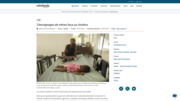
L'article "Témoignages de mères face au choléra" sur ReliefWeb présente les récits de mères haïtiennes dont les enfants ont été touchés par le choléra. Il met en lumière les défis auxquels ces familles sont confrontées, en particulier dans les régions où l'accès aux soins de santé
...
et aux infrastructures sanitaires est insuffisant. L'article souligne la vulnérabilité accrue des enfants malnutris face au choléra et insiste sur l'importance des mesures de prévention ainsi que sur la nécessité d'un accès à l'eau potable et à des soins médicaux adéquats.
more
Après un rappel des données générales sur la malnutrition infantile, nous décrirons l'évolution de la mortalité et de la morbidité de ce fléau. Puis, nous exposerons la méthodologie et les résultats de notre étude. L'étude est d'abord r
...
étrospective, analysant les indicateurs de fonctionnement du centre sous régime diététique traditionnel, puis prospective avec l'étude de l'efficacité d'un produit de renutrition prêt à l'emploi, le Plumpy Nut. Nous rappellerons les principaux facteurs de risque liés à l'installation d'un déficit nutritionnel. Les résultats obtenus, principalement en termes de gain de poids moyen et d'indicateursde fonctionnement du centre de renutrition seront comparés à ceux de la littérature. Nous développerons les méthodes d'approches thérapeutiques, multidisciplinaires les mieux adaptées à chaque situation pour améliorer la prévention et la guérison de la malnutrition des enfants malnutris.
more
El Niño is over but its impact on children is set to worsen as disease, malnutrition continue to spread
In Eastern and Southern Africa alone, 26.5 million children are in need of aid
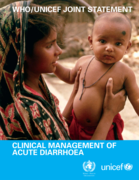
Available in Englisch, French, Spanish and Chinese
The document provides guidelines for the management of acute diarrhoea, highlighting improved oral rehydration solutions (ORS) with reduced osmolarity and zinc supplementation. It emphasizes their effectiveness in reducing the duration and severity
...
of diarrhoeal episodes and preventing future cases. Aimed at families, communities, and healthcare professionals, it seeks to integrate these practices into routine care at home and in health centers.
more
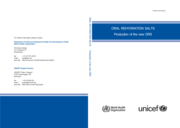
The document provides detailed guidelines for the production, formulation, and implementation of oral rehydration salts (ORS) to combat dehydration caused by diarrhoea, particularly in children. It focuses on the composition, quality standards, and packaging requirements of ORS, aiming to support na
...
tional authorities and healthcare providers in ensuring effective and accessible treatment. It also highlights strategies for manufacturing ORS locally while adhering to international health and safety standards.
more
Le document fournit des lignes directrices sur la gestion des diarrhées aiguës, mettant en avant des solutions de réhydratation orale (SRO) améliorées avec une osmolarité réduite et la supplémentation en zinc. Il souligne leur efficacité pour réduire la durée et la gravité des épisodes
...
diarrhéiques et prévenir de futurs cas. Destiné aux familles, aux communautés et aux professionnels de santé, il vise à intégrer ces pratiques dans les soins de routine à domicile et dans les centres de santé.
more

Directives nationales pour la prise en charge du paludisme en République Démocratique du Congo
Programme National de Lutte contre le Paludisme (PNLP)
Ministère de la Santé Publique, Hygiène et Prévention, République Démocratique du Congo
(2023)
C2
Le document « Directives nationales pour la prise en charge du paludisme en RDC », publié en 2023 par le PNLP et le Ministère de la Santé, définit les protocoles officiels pour diagnostiquer et traiter le paludisme sur l’ensemble du territoire. Il recommande l’usage systématique du te
...
st de diagnostic rapide avant tout traitement, et l’administration des CTA pour le paludisme simple et de l’artésunate injectable pour les cas graves. Le texte insiste sur la gratuité des soins pour les enfants de moins de 5 ans et les femmes enceintes, la gestion rationnelle des médicaments et la formation continue du personnel de santé. Ces directives visent à réduire la mortalité et à atteindre l’élimination du paludisme d’ici 2030.
more

Despite gains in childhood survival, more effort is needed to improve the well-being of children with developmental delays and disabilities. All children, including children with developmental delays and disabilities, need nurturing care. Nurturing care can contribute to preventing developmental del
...
ays and protect children who are exposed to risk factors, as well as improve functioning and long-term outcomes for children with developmental disabilities. This Brief outlines why and how nurturing care is relevant for children with developmental delays and disabilities. Recognizing that these children have diverse needs requiring different levels of coordinated and family-centred support, it recommends a set of actions to strengthen policies, services, communities and caregiver capabilities so that these children receive nurturing care.
more
Nutrición de menores de 2 de edad
Diarrhoea Treatment Guidelines
recommended
The WHO page addresses diarrhoeal diseases, one of the leading causes of death among children under five, which can be prevented through clean water, improved hygiene, and vaccinations. It emphasizes the importance of oral rehydration solutions (ORS) and zinc supplementation for treatment, as well a
...
s preventive measures like breastfeeding and handwashing. The WHO supports global strategies to reduce diarrhoea-related deaths through education and improved healthcare systems.
Including new recommendations for the use of ORS and zinc Supplementation for Clinic-Based Healthcare Workers.
more

Namibia recorded its first COVID-19 case on 14 March 2020, with cumulative cases reaching 15,773 and 118 deaths by 10 December 2020. Namibia has done relatively well to contain the outbreak.
However, positivity rates have shown a consistent increase above 5 percent in quarter 4 of 2020, necessitati
...
ng renewed attention to surveillance and outbreak control in 2021.
more

Towards Sustainable Community Health and Social Welfare Services
Leaving No One Behind. This Operational Guideline for Community-Based Health Services (CBHS)
in line with the CBHS Policy Guideline map an integrated and coordinated
national approach to community-based health services in Tanzania.
...
The
approach builds on and furthers national priorities for decentralization,
community empowerment and strengthened systems for expansion of
access to essential health services at the village level and below.
more

Pneumonia and diarrhoea account for 23% of under-five mortality and were responsible for an estimated 1.17 million deaths in children under five globally. Furthermore, pneumonia and diarrhoea were responsible for 18% of mortality in children 5–9 years of age, resulting in an estimated 86 000 preve
...
ntable deaths globally in 2021. Existing World Health Organization (WHO) guidance on the clinical management of pneumonia and diarrhoea has mainly focused on children less than 5 years of age.
more
Para sobrevivir y prosperar, los niños y adolescentes necesitan una buena salud, una nutrición adecuada, un entorno limpio, seguro y de apoyo, oportunidades para el aprendizaje temprano y la educación, relaciones sensibles y de conexión, así como oportunidades para la autonomía personal y la a
...
utorrealización. Para promover su salud y bienestar, requieren el acompañamiento de padres, familias, comunidades, instituciones cercanas y un entorno propicio. También necesitan controles rutinarios y consultas regulares con proveedores de salud que garanticen su crecimiento, desarrollo y bienestar durante las dos primeras décadas de vida, y que apoyen y orienten a los padres en el cuidado que brindan tanto a sus hijos como a sí mismos.
more

The article explores the underlying factors influencing unhealthy diets and sedentary lifestyles among adolescents in Kilifi County, Kenya. Using a qualitative approach, the study involved interviews and focus group discussions with adolescents, stakeholders, and young adults. Key findings include a
...
preference for unhealthy, carbohydrate-rich, and sugary foods over traditional and nutritious options, exacerbated by factors like low socioeconomic status, urbanization, and poor farming practices.
Sedentary behavior, such as gambling and extensive technology use, was prevalent, often replacing physical activity. Protective factors like school attendance, community-based services, and parental engagement were identified as mitigating risks. The study highlights the importance of ecological intervention strategies targeting intrapersonal, interpersonal, and community factors to address unhealthy behaviors and promote better health outcomes in adolescents.
more
