Filter
1395
Text search:
World
Health
Organization
(South-East
Asia)
Featured
Recommendations
153
New Publications
360
Language
Document type
No document type
662
Studies & Reports
305
Guidelines
201
Manuals
81
Strategic & Response Plan
61
Training Material
24
Fact sheets
20
Situation Updates
14
Resource Platforms
14
Infographics
8
Online Courses
3
Brochures
2
Countries / Regions
Global
108
South–East Asia Region
83
India
70
Asia
48
Myanmar / Burma
45
Nepal
35
Bangladesh
35
Indonesia
22
Africa
19
Philippines
17
Cambodia
15
Western and Central Europe
15
Western Pacific Region
13
Nigeria
11
Kenya
11
Thailand
11
South Africa
10
Latin America and the Carribbean
9
Congo, Democratic Republic of
8
Ethiopia
8
Sri Lanka
7
Vietnam
7
Pakistan
6
Afghanistan
6
Syria
6
Tanzania
6
China
6
Middle East and North Africa
6
Eastern Europe
6
Ghana
5
East and Southern Africa
5
West and Central Africa
5
Russia
5
Liberia
4
Uganda
4
Laos
4
Timor Leste/ East Timor
4
Senegal
3
Haiti
3
South Sudan
3
Rwanda
3
Brazil
3
Venezuela
3
Albania
3
Burkina Faso
2
Sierra Leone
2
Cameroon
2
Zambia
2
Mozambique
2
Sudan
2
Madagascar
2
Yemen
2
Eastern Europe and Central Asia
2
Iran
2
Guinea
1
Mali
1
Morocco
1
USA
1
Saudi Arabia
1
Niger
1
Somalia
1
Iraq
1
Jordan
1
Lebanon
1
Turkey
1
Egypt
1
Malaysia
1
Malawi
1
Papua New Guinea
1
Benin
1
Central African Republic
1
Namibia
1
Eswatini/ Swaziland
1
Serbia
1
Croatia
1
Ukraine
1
Colombia
1
Ecuador
1
Botswana
1
Greece
1
Mexico
1
Other region
1
Paraguay
1
Bhutan
1
Palestine
1
North Korea
1
Mongolia
1
Tajikistan
1
Kazakhstan
1
Georgia
1
Japan
1
Maldives
1
Tunisia
1
Bosnia and Herzegovina
1
Authors & Publishers
Publication Years
Category
Countries
321
Clinical Guidelines
181
Public Health
122
Women & Child Health
108
Key Resources
69
Capacity Building
44
Pharmacy & Technologies
22
Toolboxes
Mental Health
128
HIV
118
NTDs
91
TB
82
COVID-19
76
Planetary Health
72
AMR
52
Malaria
48
Global Health Education
47
Caregiver
41
NCDs
39
Disability
35
Rapid Response
35
Pharmacy
27
Zika
21
2.0 Rapid Response
20
Ebola & Marburg
16
Refugee
16
Natural Hazards
14
Health Financing Toolbox
14
Conflict
13
Polio
12
Specific Hazards
8
Cholera
7
Typhoon
1
Social Ethics
1
The Leprosy Programme and Transmission Assessment (LPTA) is an activity that is carried out by internal teams towards the end of Phase 1 (see Leprosy Elimination Framework in the Annex) when a subnational jurisdiction (typically second-tier) reaches the milestone for interruption of transmission, i.
...
The strategic priorities of the CCS 2014–2018 are:
(1) Strengthening the health system.
(2) Enhancing the achievement of communicable disease control targets.
(3) Controlling the growth of the noncommunicable disease burden.
(4 ...
(1) Strengthening the health system.
(2) Enhancing the achievement of communicable disease control targets.
(3) Controlling the growth of the noncommunicable disease burden.
(4 ...
Policy Note #4: Myanmar Health Systems in Transition Policy Notes Series
Protecting people from financial hardship when they fall ill is one of the two key elements of universal health coverage ...
Protecting people from financial hardship when they fall ill is one of the two key elements of universal health coverage ...
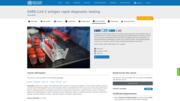
All personnel performing SARS-CoV-2 antigen rapid diagnostic tests (Ag-RDT) need to understand how to safely perform testing, ensure quality testing and interpret results. This course is developed to provide theoretical knowledge on SARS-CoV-2 Ag-RDT testing. The learning package consists of 10 modu
...

This guide covers psychological first aid which involves humane, supportive and practical help to fellow human beings suffering serious crisis events. It is written for people in a position to help others who have experienced an extremely distressing event. It gives a framework for supporting people
...
The Guidelines for the Diagnosis, Treatment and Prevention of Leprosy provide state-of-the-art knowledge and evidence on leprosy diagnosis, treatment and prevention based on a public health approach in endemic countries. The target audience of this
...
Lymphatic filariasis, commonly known as elephantiasis, is a neglected tropical disease. Infection occurs when filarial parasites are transmitted to humans through mosquitoes. When a mosquito with infective stage larvae bites a person, the parasites are deposited on the person’s skin from where the
...
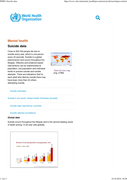
Close to 800 000 people die due to suicide every year, which is one person every 40 seconds. Suicide is a global phenomenon and occurs throughout the lifespan. Effective and evidence-based interventions can be implemented at population, sub-population and individual levels to prevent suicide and sui
...
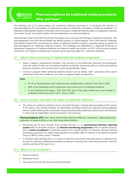
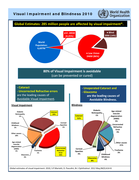
Bulletin of the World Health Organization 2016. doi: http://dx.doi.org/10.2471/BLT.16.171082
Objective: To describe the temporal and geographical
...
This document provides interim recommendations for the surveillance of Zika virus infection, microcephaly and Guillain-Barré syndrome, in four different contexts and describes reporting requirements to WHO. Transmission refers to vector-borne transmission, unless specified differently. Autochthonou
...