
Filter
995
Text search:
psychological
coping
Featured
123
203
Language
Document type
597
123
111
86
27
25
12
6
4
2
2
Countries
43
36
33
23
20
20
19
16
16
15
15
12
12
10
10
10
8
8
8
8
8
7
7
7
6
6
6
5
5
5
5
5
4
4
4
3
3
3
3
3
3
3
3
3
3
3
3
3
3
3
2
2
2
2
2
2
2
2
2
1
1
1
1
1
1
1
1
1
1
1
1
1
1
1
1
1
1
1
1
1
1
1
1
1
1
1
Authors & Publishers
Publication Years
Category
252
81
53
42
32
32
Toolboxes
336
99
81
50
40
39
25
23
19
16
14
11
9
9
8
6
6
6
3
1
1

PFA for Red Cross and Red Crescent Societies has several parts that can be used separately or together. It comprises this guide, a small booklet on PFA, and four training modules on PFA. This guide has general information about psychological first a
...
Comparative effectiveness of different formats of psychological treatments for depressive disorder
recommended
Q8.SCOPING QUESTION: In adults and older adolescents with depressive disorder, what is the comparative effectiveness of different formats of psychological treatments?
Q7. SCOPING QUESTION: In adults with moderate-severe depressive disorder, what is the effectiveness and safety of antidepressant medication (ADM) in comparison with psychological treatment?
The WHO mhGAP programme’s existing guidelines recommen
...

Early Adolescent Skills for Emotions (EASE) is an evidence-based group psychological intervention to help 10–15-year-olds affected by internalizing problems (e.g. stress and symptoms of anxiety, depression) in communities exposed to adversity. Pub
...
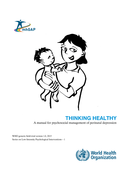
The Thinking Health manual outlines an evidence-based approach describing how community health workers can reduce prenatal depression through evidence-based cognitive-behavioural techniques recommended by the mhGAP programme.
This manual is the first volume of WHO’s new series on low-intensity
...
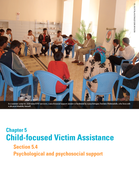

Factsheet on PTSD | Most of us have had frightening experiences. Often we think about them long after the event. For some people, these distressing thoughts or images persist, as well as other symptoms such as a strong sense of threat, feeling emotionally numb, and irritability. If these reactions o
...
Much of our knowledge about PTSD is based on studies of adults. As evidenced by the birth of new scientific disciplines (e.g., developmental translational neuroscience), it is clear that what we learn from research involving adults may not necessarily be applicable to children and adolescents. Indee
...
PSYCHOLOGICAL HELP FOR ADULTS IN COMMUNITIES EXPOSED TO ADVERSITY
Psychological first aid is a simple, yet powerful way of helping someone in distress. It involves paying attention to the person’s reactions, active listening and if relevant, practical assistance to help address immediate problems and basic needs
...
Problem Management Plus (PM+)
recommended
Individual psychological help for adults impaired by distress in communities exposed to adversity.
The manual describes a scalable psychological intervention called Problem Management Plus (PM+) fo
...
Group psychological help for adults impaired by distress in communities exposed to adversity
With this manual, the World Health Organization (WHO) is responding to requests from colleagues around the world for a group version of the manual Problem
...
This literature review summarizes the link between psychological well-being and entrepreneurial outcomes for small and medium-size enterprises in fragile, conflict, and violence–affected contexts. It identifies potentially promising, scalable psyc
...
IASC Guidelines on Mental Health and Psychosocial Support in Emergency Settings. Checklist
recommended
Armed conflicts and natural disasters cause significant psychological and social suffering to affected populations. The psychological and social impacts of emergencies may be acute in the short term
...

Limited research has examined factors associated with psychological distress following natural
disasters among non-Western child populations. Conditions associated with trauma-related symptoms following the 2004 tsunami in a sample of 265 Sri Lanka
...
The nature of humanitarian work has also drastically changed over the last
decade. Humanitarian workers have paid dearly in the face of violence and
terrorism. Burn out and after-effects of traumatic experiences constitute a
major risk for humanitarian workers. After ten years of experience with
...
Abstract: Posttraumatic stress disorder (PTSD) is a chronic psychological disorder that can develop after exposure to a traumatic event. This review summarizes the literature on the epidemiology, assessment, and treatment of PTSD. We provide a revie
...
The PS Centre has released three publications addressing the need for MHPSS tools and guidance in Ukraine and surrounding countries.
The Introduction to Psychological First Aid, presents a training module on basic
...

a comprehensive guide
for the HCPs who work in counselling and psychological care of children and adoles-
cents. The Handbook includes information on HIV clinical care; growth and development;
mental health; child protection; counselling and comm
...
AACAP OFFICIAL ACTION | This Practice Parameter identifies best approaches to the assessment and management of children and adolescents across all phases of a disaster. Delivered within a disaster system of care, many interventions are appropriate for implementation in the weeks and months after a d
...
