
Filter
1631
Text search:
impairment
Featured
184
323
Language
1562
38
38
37
19
9
8
7
5
5
3
3
3
3
2
2
2
2
2
2
2
2
1
1
1
1
1
1
1
Document type
1084
221
159
84
29
24
14
5
4
3
2
2
Countries
77
59
50
41
34
30
28
25
23
23
22
21
17
17
17
16
16
16
14
14
13
13
12
11
11
10
10
10
9
8
7
7
7
6
6
6
6
5
5
4
4
4
4
4
3
3
3
3
3
3
3
2
2
2
2
2
2
2
2
2
2
2
1
1
1
1
1
1
1
1
1
1
1
1
1
1
1
1
1
1
1
1
1
1
Authors & Publishers
195
61
56
55
53
38
35
27
20
20
19
18
16
15
14
10
10
10
10
8
8
8
7
7
7
7
7
7
7
7
7
7
6
6
6
6
6
5
5
5
5
4
4
4
4
4
4
3
3
3
3
3
3
3
3
3
3
3
3
3
3
3
3
3
3
3
3
3
3
3
3
3
3
3
2
2
2
2
2
2
2
2
2
2
2
2
2
2
2
2
2
2
2
2
2
2
2
2
2
2
2
2
2
2
2
2
2
2
2
2
2
2
2
2
2
2
2
2
2
2
2
2
2
2
2
2
2
2
2
2
2
2
2
2
2
2
2
2
2
2
2
2
2
2
2
2
2
2
2
2
2
2
2
2
2
2
2
2
2
2
2
2
2
2
2
2
2
2
2
2
2
2
2
2
2
2
2
2
2
2
2
2
2
2
2
2
2
2
2
2
2
2
2
2
1
1
1
1
1
1
1
1
1
1
1
1
1
1
1
1
1
1
1
1
1
1
1
1
1
1
1
1
1
1
1
1
1
1
1
1
1
1
1
1
1
1
1
1
1
1
1
1
1
1
1
1
1
1
1
1
1
1
1
1
1
1
1
1
1
1
1
1
1
1
1
1
1
1
1
1
1
1
1
1
1
1
1
1
1
1
1
1
1
1
1
1
1
1
1
1
1
1
1
1
1
1
1
1
1
1
1
1
1
1
1
1
1
1
1
1
1
1
1
1
1
1
1
1
1
1
1
1
1
1
1
1
1
1
1
1
1
1
1
1
1
1
1
1
1
1
1
1
1
1
1
1
1
1
1
1
1
1
1
1
1
1
1
1
1
1
1
1
1
1
1
1
1
1
1
1
1
1
1
1
1
1
1
1
1
1
1
1
1
1
1
1
1
1
1
1
1
1
1
1
1
1
1
1
1
1
1
1
1
1
1
1
1
1
1
1
1
1
1
1
1
1
1
1
1
1
1
1
1
1
1
1
1
1
1
1
1
1
1
1
1
1
1
1
1
1
1
1
1
1
1
1
1
1
1
1
1
1
1
1
1
1
1
1
1
1
1
1
1
1
1
1
1
1
1
1
1
1
1
1
1
1
1
1
1
1
1
1
1
1
1
1
1
1
1
1
1
1
1
1
1
1
1
1
1
1
1
1
1
1
1
1
1
1
1
1
1
1
1
1
1
1
1
1
1
1
1
1
1
1
1
1
1
1
1
1
1
1
1
1
1
1
1
1
1
1
1
1
1
1
1
1
1
1
1
1
1
1
1
1
1
1
1
1
1
1
1
1
1
1
1
1
1
1
1
1
1
1
1
1
1
1
1
1
1
1
1
1
1
1
1
1
1
1
1
1
1
1
1
1
1
1
1
1
1
1
1
1
1
1
1
1
1
1
1
1
1
1
1
1
1
1
1
1
1
1
1
1
1
1
1
1
1
1
1
1
1
1
1
1
1
1
1
1
1
1
1
1
1
1
1
1
1
1
1
1
1
1
1
1
1
1
1
1
1
1
1
1
1
1
1
1
1
1
1
1
1
1
1
1
1
1
1
1
1
1
1
1
1
1
1
1
1
1
1
1
1
1
1
1
1
1
1
1
1
1
1
1
1
1
1
1
1
1
1
1
1
1
1
1
1
1
1
1
1
1
1
1
1
1
1
1
1
1
1
1
1
1
1
1
1
1
1
1
1
1
1
1
1
1
1
1
1
1
1
1
1
1
1
1
1
1
1
1
1
1
1
1
1
1
1
1
1
1
1
1
1
1
1
1
1
1
1
1
1
1
1
1
1
1
1
1
1
1
1
1
1
1
1
1
1
1
1
1
1
1
1
1
1
1
1
1
1
1
1
1
1
1
1
1
1
1
1
1
1
1
1
1
1
1
1
1
1
1
1
1
1
1
1
1
1
1
1
1
1
1
1
1
1
1
1
1
1
1
1
1
1
1
1
1
1
1
1
1
1
1
1
1
1
1
1
1
1
1
1
1
1
1
1
1
1
1
1
1
1
1
1
1
1
1
1
1
1
1
1
1
1
1
1
1
1
1
1
1
1
1
1
1
1
1
1
1
1
1
1
1
1
1
1
1
1
1
1
1
1
1
1
1
1
1
1
1
1
1
1
1
1
1
1
1
1
1
1
1
1
1
1
1
1
1
1
1
1
1
1
1
1
1
1
1
1
1
1
1
1
1
1
1
1
1
1
1
1
1
1
1
1
1
1
1
1
1
1
1
1
1
1
1
1
1
1
1
1
1
1
1
1
1
1
1
1
1
1
1
1
1
1
1
1
1
1
1
1
1
1
1
1
1
1
1
1
1
1
1
1
1
1
1
1
1
1
1
1
1
1
1
1
1
1
1
1
1
1
1
1
1
1
1
1
1
1
1
1
1
1
1
1
1
1
1
1
1
1
1
1
1
1
1
1
1
1
1
1
1
1
1
1
1
1
1
1
1
1
1
1
1
1
1
1
1
1
1
1
1
1
1
1
1
1
1
1
1
1
1
1
1
1
1
1
1
1
1
1
1
1
1
1
1
1
1
1
1
1
1
1
1
1
1
1
1
1
1
1
1
1
1
1
1
1
1
1
1
1
1
1
1
1
1
1
1
1
1
1
1
1
1
1
1
1
1
1
1
1
1
1
1
1
1
1
1
1
1
1
1
1
1
1
1
1
1
1
1
1
1
1
1
1
1
1
1
1
1
1
1
1
1
1
1
1
1
1
1
1
1
1
1
1
1
1
1
1
1
1
1
1
1
1
1
1
1
1
1
1
1
1
1
1
1
1
1
1
1
1
1
1
1
1
1
1
1
1
1
1
1
1
1
1
1
1
1
1
1
1
1
1
1
1
1
1
1
1
1
1
1
1
1
1
1
1
1
1
1
1
1
1
1
1
1
1
1
1
1
1
1
1
1
1
1
1
1
1
1
1
1
1
1
1
1
1
1
1
1
1
1
1
1
1
1
1
1
1
1
1
1
1
1
1
1
1
1
1
1
1
1
1
1
1
1
1
1
1
1
1
1
1
1
1
1
1
1
1
1
1
1
1
1
1
1
1
1
1
1
1
1
1
1
1
1
1
1
1
1
1
1
1
1
1
1
1
1
1
1
1
1
1
1
1
1
1
1
1
1
1
1
1
1
1
1
1
1
1
1
1
1
1
1
1
1
1
1
1
1
1
1
1
1
1
1
1
1
1
1
1
1
1
1
1
1
1
1
1
1
1
1
1
1
1
1
1
1
1
1
1
1
1
1
1
1
1
1
1
1
1
1
1
1
1
1
1
1
1
1
1
1
1
1
1
1
1
1
1
1
1
1
1
1
1
1
1
1
1
1
1
1
1
1
1
1
1
1
1
1
1
1
1
1
1
1
1
1
1
1
1
1
1
1
1
1
1
1
1
1
1
1
1
1
1
1
1
1
1
1
1
1
1
1
1
1
1
1
1
1
1
1
1
1
1
1
1
1
1
1
1
1
1
1
1
1
1
1
1
1
1
1
1
1
1
1
1
1
1
1
1
1
1
1
1
1
1
1
1
1
1
1
1
1
1
1
1
1
1
1
1
1
1
1
1
1
1
1
1
1
1
1
1
1
1
1
1
1
1
1
1
1
1
1
1
1
1
1
1
1
1
1
1
1
1
1
1
1
1
1
1
1
Publication Years
329
1110
179
13
Category
505
156
117
61
48
23
5
1
Toolboxes
373
320
88
69
50
38
32
28
25
23
23
19
13
13
13
10
9
9
8
8
7
3
2
1
1
1
Updated Guideline.
The Emergency Triage Assessment and Treatment (ETAT) guidelines provide guidance on the most common emergency conditions in children presenting at the health facility. These include but are not limited to airway obstruction and other breathing problems; circulatory
...
impairment or shock; severely altered CNS function (coma or convulsive seizures); and severe dehydration which require urgent appropriate care to prevent death.
more
The Model Disability Survey (MDS) is a general population survey that provides detailed and nuanced information about how people with and without disabilities conduct their lives and the difficulties they encounter, regardless of any underlying health condition or
...
impairment.
more

The aim of this pamphlet is to inform parents and guardians of supports and services available for children and young people who are blind or have a visual impairment.
Induced abortion is permitted in Burkina Faso only to save the life and protect the health of a
pregnant woman, or in cases of rape, incest, and severe fetal impairment. As a result, the vast
majority of women who end unintended pregnancies do so
...
in secrecy, out of fear of prosecution
and to avoid the social stigma that surrounds this practice. Most clandestine abortions are carried
out in unsafe conditions that jeopardize women’s health and sometimes their lives. This report
presents estimates of the number and rate of induced abortions that occurred in Burkina Faso in
2008 and 2012; reports levels of unintended pregnancy (the major reason that women seek
abortions in the first place); and describes some of the adverse consequences of unsafe abortion
for women, their families and society.
more
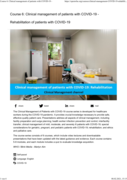
The sixth course of the Clinical Management of Patients with COVID-19 course series is devoted to the rehabilitation of patients with COVID-19. The seven course modules address the manifold and varied rehabilitation needs of patients recovering from COVID-19, including patients with cognitive
...
impairment, physical deconditioning and weakness, respiratory impairment, swallow impairment, communication impairment and challenges in completing Activities of Daily Living (ADLs). Techniques for rehabilitation also are addressed
more
Assessment on Family Planning Needs of People Living with Disabilities: Case of Addis Ababa, Ethiopia
United States Agency for International Development USAID
United States Agency for International Development USAID
(2017)
C1
.This assessment was conducted using focus group discussion(FGD)with peopleliving with disabilities who were members of the Ethiopian National Association of the Deaf(Person with hearing impairment), Ethiopian National Association of the Deaf -Blind
...
( Person with hearing and visual impairment), Ethiopian National Association of the Blind (Person with visual impairment), Ethiopian National Association of the Physically Handicapped (Person with physical impairment), Ethiopian National Association of Intellectual Disability (Person with intellectual disability). In total 152 people living with disabilities participated in the discussion groups.Results from the assessment were analysed based on themes and are presented by each group in the following report.
more

The world is facing an unprecedented range of emergencies. In reaction to these complex adversities, many people experience considerable distress and impairment, and a minority may even go on to develop mental health conditions. Meanwhile, those wit
...
h pre-existing mental health conditions may experience a worsening of their condition and are at risk of neglect, abandonment, abuse and lack of access to support. Unfortunately, evidence-based mental health care is often extremely limited in humanitarian settings. In response, the World Health Organization (WHO) and the United Nations High Commissioner for Refugees (UNHCR) published the Mental Health Gap Action Programme (mhGAP) Humanitarian Intervention Guide (mhGAP-HIG) in 2015. This practical tool supports health-care providers in assessing and offering first-line management of mental, neurological and substance use (MNS) conditions in humanitarian emergency settings.
2 December 2021. The current report, Stories of change from four countries: Building capacity for integrating mental health care within health services across humanitarian settings, describes efforts in four countries to build evidence-based mental health systems in humanitarian emergency settings using the mhGAP-HIG. This report includes three sections, the first describing the importance of scaling up mental health care in emergency contexts, the second outlining case studies (“stories of change”) to scale up the Mental Health Gap Action Programme (mhGAP) programme in four settings and the third describing lessons learned by stakeholders.
more

People affected by impairments and disabilities associated with TB are even more likely to belong to marginalized segments of society and are more likely to have their human rights unprotected. The challenges faced by people affected by TB include the consequences of
...
impairment and disability associated with the disease, its treatment as well as with the stigma and discrimination applied to people affected by TB. There is now compelling evidence that the disease and its treatment affect quality of life and life expectancy even after successful treatment.
The WHO Global Tuberculosis Programme has produced the first policy brief on TB-associated disability, building on the increasing evidence in recent years on the unaddressed needs of people with TB who experience impairment and disability while on TB treatment and after completing TB treatment.
more
Position statement for adult and paediatric spirometry in South Africa: 2022 update
Maree, D.M.; Swanepoel, R.A.; Swart, F. et al.
African Journal of Thoracic and Critical Care Medicine
(2022)
CC
Spirometry is required as part of the comprehensive evaluation of both adult and paediatric individuals with suspected or confirmed respiratory diseases and occupational assessments. It is used in the categorisation of impairment, grading of severit
...
y, assessment of potential progression and response to interventions. Guidelines for spirometry in South Africa are required to improve the quality, standardisation and usefulness in local respiratory practice. The broad principles of spirometry have remained largely unchanged from previous versions of the South African Spirometry Guidelines; however, minor adjustments have been incorporated from more comprehensive international guidelines, including adoption of the Global Lung Function Initiative 2012 (GLI 2012) spirometry reference equations for the South African population.
All equipment should have proof of validation regarding resolution and consistency of the system. Daily calibration must be performed, and equipment quality control processes adhered to. It is important to have standard operating procedures to ensure consistency and quality and, additionally, strict infection control as highlighted during the COVID-19 pandemic.
Adequate spirometry relies on a competent, trained operator, accurate equipment, standardised operating procedures, quality control and patient co-operation. All manoeuvres must be performed strictly according to guidelines, and strict quality assurance methods should be in place, including acceptability criteria (for any given effort) and repeatability (between efforts).
more
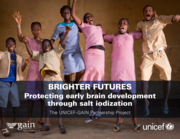
The UNICEF-GAIN Partnership Project
The report notes that iodine deficiency is a leading cause of preventable brain damage worldwide. Insufficient iodine during pregnancy and infancy results in neurological and psychological deficits, reducing a child’s IQ by 8 to 10 points. This translates ... into major losses in the cognitive capital of entire nations and thus their socio-economic development.
The report outlines urgent steps to reduce the risk of mental impairment to babies’ growing brains:
• Integrate salt iodization into national plans to support children’s nutrition and brain development in early childhood;
• Align salt iodization and salt reduction agendas; • Establish surveillance systems to identify unreached populations;
• Strengthen regulatory systems to enforce existing legislation on salt iodization;
• Recognize the growing importance of fortified foods as potential sources of iodized salt. more
The report notes that iodine deficiency is a leading cause of preventable brain damage worldwide. Insufficient iodine during pregnancy and infancy results in neurological and psychological deficits, reducing a child’s IQ by 8 to 10 points. This translates ... into major losses in the cognitive capital of entire nations and thus their socio-economic development.
The report outlines urgent steps to reduce the risk of mental impairment to babies’ growing brains:
• Integrate salt iodization into national plans to support children’s nutrition and brain development in early childhood;
• Align salt iodization and salt reduction agendas; • Establish surveillance systems to identify unreached populations;
• Strengthen regulatory systems to enforce existing legislation on salt iodization;
• Recognize the growing importance of fortified foods as potential sources of iodized salt. more
Includes a Special Report on the Financial and Personal Benefits of Early Diagnosis
2018 Alzheimer’s Disease Facts and Figures is a statistical resource for U.S. data related to Alzheimer’s disease,
the most common cause of dementia. Background and context for interpretating the data are con
...
tained in
the Overview. Additional sections address prevalence, mortality and morbidity, caregiving and use and costs of health care and services. A Special Report discusses the financial and personal benefits of diagnosing earlier in the disease process, in the stage of mild cognitive impairment.
more
The ICOPE guidance for person-centred assessment and pathways in primary care (ICOPE Handbook) helps community health and care workers put the recommendations outlined in the ICOPE Guidelines into practice. The Handbook assists with setting person-centred goals, screening for loss in a range of doma
...
ins of intrinsic capacity and assessing health and social care needs to develop a personalised care plan. The care plan may include multiple interventions to manage declines in intrinsic capacity, provide social care and support, support self-management and support caregivers. The domains of intrinsic capacity include cognitive decline, limited mobility, malnutrition, visual impairment, hearing loss and depressive symptoms.
more
Buku Pegangan -Panduan penilaian dan alur layanan berbasis individu di layanan kesehatan primer
recommended
Indonesian Version of: Integrated care for older people (ICOPE): guidance for person-centred assessment and pathways in primary care. The ICOPE guidance for person-centred assessment and pathways in primary care (ICOPE Handbook) helps community health and care workers put the recommendations o
...
utlined in the ICOPE Guidelines into practice. The Handbook assists with setting person-centred goals, screening for loss in a range of domains of intrinsic capacity and assessing health and social care needs to develop a personalised care plan. The care plan may include multiple interventions to manage declines in intrinsic capacity, provide social care and support, support self-management and support caregivers. The domains of intrinsic capacity include cognitive decline, limited mobility, malnutrition, visual impairment, hearing loss and depressive symptoms.
more
Lymphatic filariasis (LF) is a preventable neglected tropical disease (NTD) caused by infection with the filarial parasites Wuchereria bancrofti, Brugia malayi or B. timori. Mosquitos in the genera Culex, Anopheles, Mansonia and Aedes transmit the parasites from person to person. Lymphoedema and hyd
...
rocoele are the visible, chronic clinical consequences of the impairment of lymphatic vessels caused by infection with these parasites. WHO established the Global Programme to Eliminate Lymphatic Filariasis (GPELF) to stop transmission of infection by mass drug administration (MDA) of anthelminthics and to alleviate the suffering of people affected by the disease through morbidity management and disability prevention (MMDP). Since the start of GPELF, the number of infections has been reduced by 74% globally. The latest estimate is that 51.4 million people are infected.
more
Trachoma is an eye infection affecting both eyes. It is the world’s leading cause of infectious blindness. A bacterium called Chlamydia trachomatis causes trachoma. According to the World Health Organization (WHO), trachoma has caused the visual impairme
...
nt of 1.8 million people. Of those people, 450,000 are irreversibly blind.
more
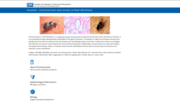
Onchocerciasis, or river blindness, is a neglected tropical disease (NTD) caused by the parasitic worm Onchocerca volvulus. It is transmitted through repeated bites by blackflies of the genus Simulium. The disease is called river blindness because the blackfly that transmits the infection lives and
...
breeds near fast-flowing streams and rivers, mostly near remote rural villages. The infection can result in visual impairment and sometimes blindness. Additionally, onchocerciasis can cause skin disease, including intense itching, rashes, or nodules under the skin. Worldwide onchocerciasis is second only to trachoma as an infectious cause of blindness.
more
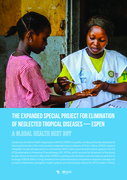
While virtually unheard of in developed countries, NTDs are a group of medically diverse parasitic and bacterial infectious diseases common in tropical and subtropical areas. NTDs affect more than 1.5 billion people annually, causing death, blindness, disfigurement, chronic pain, cognitive
...
impairment and other long-term disabilities that create obstacles to education, employment, economic growth and overall
development. When measured in disability-adjusted life years (DALYs), the NTD burden is greater than malaria or tuberculosis.
more
Although air pollution is well known to be harmful to the lung and airways, it can also damage most other organ systems of the body. It is estimated that about 500,000 lung cancer deaths and 1.6 million COPD deaths can be attributed to air pollution, but air pollution may also account for 19% of all
...
cardiovascular deaths and 21% of all stroke deaths. Air pollution has been linked to other malignancies, such as bladder cancer and childhood leukemia. Lung development in childhood is stymied with exposure to air pollutants, and poor lung development in children predicts lung impairment in adults. Air pollution is associated with reduced cognitive function and increased risk of dementia. Particulate matter in the air (particulate matter with an aerodynamic diameter < 2.5 μm) is associated with delayed psychomotor development and lower child intelligence. Studies link air pollution with diabetes mellitus prevalence, morbidity, and mortality. Pollution affects the immune system and is associated with allergic rhinitis, allergic sensitization, and autoimmunity. It is also associated with osteoporosis and bone fractures, conjunctivitis, dry eye disease, blepharitis, inflammatory bowel disease, increased intravascular coagulation, and decreased glomerular filtration rate. Atopic and urticarial skin disease, acne, and skin aging are linked to air pollution. Air pollution is controllable and, therefore, many of these adverse health effects can be prevented.
more

People with disabilities experience significant health inequalities. In Malawi, where most individuals live in low-income rural settings, many of these inequalities are exacerbated by restricted access to health care services. This qualitative study explores the barriers to health care access experi
...
enced by individuals with a mobility or sensory impairment, or both, living in rural villages in Dowa district, central Malawi. In addition, the impact of a chronic lung condition, alongside a mobility or sensory impairment, on health care accessibility is explored.
more
A 20-year follow-up study on chronic respiratory effects of exposure to cotton dust
Wang, X-R.; Zhang, H-X.; Sun, B-X.; et al.
European Respiratory Journal, part of the European Respiratory Society (ERS)
(2005)
CC2
The article "A 20-year follow-up study on chronic respiratory effects of exposure to cotton dust" evaluates the long-term impact of cotton dust exposure on respiratory health. It followed a cohort of Chinese cotton and silk workers from 1981 to 2001, comparing lung function and symptoms. Results sho
...
wed that cotton workers experienced greater declines in lung function and persistent respiratory symptoms compared to silk workers. The study found that exposure to airborne endotoxins in cotton dust was strongly linked to chronic respiratory impairment. It highlighted that stopping exposure helped improve lung function, particularly in non-smoking men, while smokers continued to show negative effects.
more
