Filter
1889
Text search:
humanitarian
practice
Featured
215
520
Language
Document type
934
345
264
150
94
37
33
15
10
3
1
1
1
Countries
133
71
59
54
47
38
34
33
32
32
32
31
30
27
21
20
20
18
15
15
14
14
13
13
13
13
12
12
12
12
12
11
9
9
9
8
8
8
7
7
7
7
6
6
6
6
6
6
6
5
5
5
5
5
5
5
5
4
4
4
4
4
4
3
3
3
3
3
3
3
2
2
2
2
2
2
2
2
2
2
1
1
1
1
1
1
1
1
1
1
1
1
1
1
1
1
1
1
1
1
1
1
1
1
1
1
1
1
1
Authors & Publishers
Publication Years
Category
450
356
171
107
91
43
7
3
Toolboxes
212
177
171
123
115
75
71
69
66
38
37
35
32
30
22
20
19
18
13
13
13
10
7
6
6
4
1
The NGO Safety and Security Training Report provides a narrative of the research findings, an updated curriculum, and guidance tools for training. It is based on extensive research and interviews with members of the NGO community. The report draws upon existing training materials, community consulta
...

A practical handbook. This Health Cluster Guide (2nd edition, 2020) provides practical advice on how WHO, Health Cluster Coordinators and partners can work together during a humanitarian crisis to achieve the aims of reducing avoidable mortality, mo
...

Each humanitarian setting provides distinct opportunities and challenges for actors to coordinate and collaborate at strategic and operational levels. The Health and Protection Joint Operational Framework has been developed to ensure that the health
...
Child Friendly Spaces (CFSs) are used by humanitarian agencies as a means to promote protection and psychosocial wellbeing for children in emergency settings. World Vision International together with Columbia University is conducting a series of stu
...

Guidelines for Medicine Donations
recommended
This 3rd edition of Guidelines for medicine donations has been developed by the World Health Organization (WHO) in cooperation with major international agencies active in humanitarian relief and development assistance. The guidelines are intended to
...
The COVID-19 pandemic and in fact all crises – acute or prolonged – remind us that human rights need to be central in all recovery and development efforts. The Sustainable Development Goals will only be achieved if we are able to create equal opportunities for all, address failures exposed and e
...
Gender and security is a complex issue, and this research found that there are different levels of comprehension of what it means in humanitarian and development assistance practice. The aims of the
...

A discussion paper on the scope of the problem, its drivers, and strategies for moving forward for policy, practice, and research
In many protracted emergencies, the prevalence rates of global acute malnutrition (GAM) regularly exceed the emergency
...
A guidance document in simple language for health personnel, setting out their rights and responsibilities in conflict and other situations of violence. It explains how responsibilities and rights for health personnel can be derived from international huma
...
One of the 16 Pledge commitments asked CEOs to “[r]ecognize the immediate and long-term effects sexual abuse, exploitation, and harassment have on [NGO] staff and the people [they] serve, and [to] … ensure [their] organizations have robust policies and funded mechanisms to provide the necessary
...
CEA Toolkit
recommended
This revised CEA Toolkit accompanies the Red Cross Red Crescent CEA Guide. It is organised around the CEA Minimum Actions, with each numbered action linking to the relevant activities, templates, checklists, and guidance to help you put the Guide’s recommendations into
...
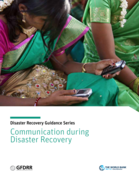
This Guide provides practical guidance for governments regarding how to effectively communicate with communities during the recovery phase following an emergency. It explains how to identify communication needs, and presents “best fit” communication methods and strategies to deploy to support Di
...
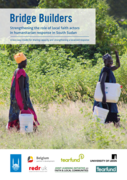
This report outlines and analyses the implementation of the Bridge Builder Model. This is a two-way, capacity-sharing model aimed at bringing together local faith actors (LFAs) and international humanitarian actors to increase understanding, trust,
...
Building on previous guidelines, the People In Aid Code seeks to offer agencies an effective framework for human resources management, helping them assess and raise their performance.
This guidance is intended for people designing /or implementing feedback mechanisms in a humanitarian programme. It also available in Arabic, Spanish and French
Humanitarian Response in Violent Conflict
recommended
A Toolbox of Conflict Sensitive Indicators.
This toolbox adapts a sample of 15 indicators from the SPHERE Project's Humanitarian Charter and Minimum Standards in Humanitarian Response to be even mo
...