Filter
768
Text search:
dehydration
Featured
123
246
Language
Document type
398
138
73
48
45
23
22
10
5
3
1
1
1
Countries
103
26
24
22
19
19
17
16
13
13
11
10
9
9
8
8
7
6
6
6
5
5
5
5
4
4
4
3
3
3
2
2
2
2
2
2
2
2
2
2
2
1
1
1
1
1
1
1
1
1
1
1
1
1
1
1
1
1
1
1
1
1
1
Authors & Publishers
Publication Years
Category
311
124
98
44
43
37
3
Toolboxes
87
40
33
32
30
19
19
17
15
14
14
13
13
10
9
6
6
6
6
5
5
4
1
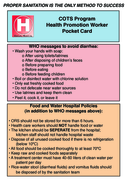
COTS (Cholera Outbreak Training and Shigellosis) Program Health Promotion Worker Pocket Card
recommended
The COTS Cholera Outbreak Training and Shigellosis Program Pocket Card provides essential guidelines for health promotion workers to prevent and manage cholera and shigellosis outbreaks. It emphasizes proper sanitation, hygiene practices, safe water handling, and food safety as the primary methods f
...
. Interim Guidelines. This interim guideline lays out some basic principles of optimal nutritional care for adults and paediatric patients during treatment and convalescence in Ebola treatment units, community care centres or to other centres where Ebola patients are receiving care and support. It h
...
Updated Guideline.
The Emergency Triage Assessment and Treatment (ETAT) guidelines provide guidance on the most common emergency conditions in children presenting at the health facility. These include but are not limited to airway obstruction and other breathing problems; circulatory impairment or
...
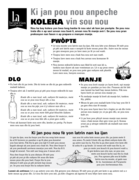
Fact sheet Cholera in Creole
The cholera factsheet provides key information on prevention, symptoms, and treatment. It emphasizes hygiene, safe food handling, and water treatment through boiling, filtering, or disinfection. Cholera, a severe diarrheal disease from contaminated water, causes
...
The World Health Organization's cholera fact sheet provides essential information about cholera, an acute diarrheal infection caused by ingesting food or water contaminated with Vibrio cholerae bacteria. The disease remains a global public health threat, particularly in areas lacking safe water and
...

The technical note from the Global Task Force on Cholera Control (GTFCC) examines the risks and benefits of vaccinating pregnant women with WHO-prequalified oral cholera vaccines (OCVs) during mass vaccination campaigns. It highlights that three WHO-approved vaccines (Dukoral®, Shanchol™, and Euv
...
Health workers participating in pandemic response are exposed to many different occupational risks to health and safety. These include: COVID-19 infection, illness, and transmission to others; fatigue from working longer hours and heavy workload, insufficient sleep or rest,
...
The document provides a detailed overview of cholera, including its clinical features, diagnosis, treatment, and prevention. It explains the causes of cholera, its symptoms such as severe diarrhea and dehydration, and the importance of rehydration t
...
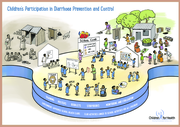
The document provides educational messages and practical guidance to prevent and manage diarrhoea, particularly in children. It emphasizes hygiene practices like proper handwashing, using latrines, and safe food handling. It also highlights the importance of breastfeeding, balanced nutrition, immuni
...
The purpose of this reference manual to support learning of ETAT + principles and to complement your clinical training and practice. The manual is for use before, during, and after an ETAT + course.
This manual contains the necessary information to help you to:
• Triage all sick children when th
...
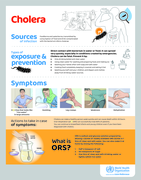
The cholera poster provides essential information about the disease, including its symptoms, sources of infection, prevention measures, and treatment options. It describes cholera as a potentially fatal disease that spreads through contaminated food and water, particularly in emergency conditions. K
...
The World Health Organization's cholera fact sheet provides essential information about cholera, an acute diarrheal infection caused by ingesting food or water contaminated with Vibrio cholerae bacteria. The disease remains a global public health threat, particularly in areas lacking safe water and
...
Since late August 2022, cases of severe acute watery diarrhoea have been increasingly reported across Syria, concentrated
particularly along the Euphrates river. These were later confirmed to be cholera cases.3 Cholera is a disease caused by
bacteria that can be found in faeces, and spreads throug
...
Cholera is a diarrheal disease caused by the bacterium Vibrio cholera. The infection primarily spreads through contaminated water and food. Symptoms include the onset of acute diarrhea and/or vomiting, muscle cramps, and body weakness. If untreated, the infection can result in rapid
...

The video "Cholera - Questions & Answers" by the World Health Organization (WHO) explains the essential aspects of cholera, an acute diarrheal disease caused by ingesting water or food contaminated with the Vibrio cholerae bacterium. It highlights the main symptoms, including severe watery diarrhea,
...

This review article provides a comprehensive overview of Ebola Virus Disease (EVD), covering its epidemiology, clinical presentation, diagnosis, treatment, and prevention. It explains that Ebola is a severe zoonotic infection caused by the Ebola virus, most likely originating from fruit bats and tra
...
Cochrane Database of Systematic Reviews 2015, Issue 2. Art. No.: CD011386. DOI: 10.1002/14651858.CD011386.pub2
Free access from the website http://onlinelibrary.wiley.com/enhanced/doi/10.1002/14651858.CD011386.pub2
Watch a short film which accompanies this Cochrane Review and talks about applying
...
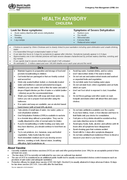
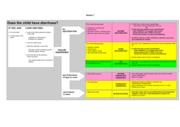
Does the child have diarrhoea
recommended
Chart