
Filter
770
Text search:
World
Stroke
Organization
Featured
Recommendations
87
New Publications
165
Language
Document type
No document type
349
Studies & Reports
206
Guidelines
105
Manuals
33
Strategic & Response Plan
30
Fact sheets
19
Training Material
13
Dashboards/Maps
6
Situation Updates
5
Resource Platforms
2
Brochures
1
App
1
Countries / Regions
Global
62
India
57
Kenya
17
South Africa
16
Philippines
14
Ukraine
14
Latin America and the Carribbean
14
Western and Central Europe
14
Nigeria
13
Ethiopia
12
South–East Asia Region
11
Nepal
10
Africa
10
Tanzania
9
Ghana
8
Bangladesh
8
Zambia
7
Rwanda
7
Namibia
7
Myanmar / Burma
7
Sierra Leone
6
Uganda
6
Indonesia
6
Asia
6
Liberia
5
Syria
5
Malawi
5
Brazil
5
Lesotho
5
Russia
5
North America
5
Zimbabwe
4
Mozambique
4
Eastern Europe
4
Middle East and North Africa
3
Western Pacific Region
3
Cameroon
2
Somalia
2
Pakistan
2
Iraq
2
Afghanistan
2
Cambodia
2
China
2
Peru
2
Colombia
2
Botswana
2
Chile
2
West and Central Africa
2
Eastern Europe and Central Asia
2
Paraguay
2
Moldova
2
Vietnam
2
Guinea
1
Senegal
1
Congo, Democratic Republic of
1
USA
1
Haiti
1
South Sudan
1
Jordan
1
Germany
1
Lebanon
1
Turkey
1
Egypt
1
Thailand
1
Eswatini/ Swaziland
1
Mexico
1
Sri Lanka
1
East and Southern Africa
1
Other region
1
Fiji
1
Kyrgyzstan
1
Kazakhstan
1
United Kingdom
1
Portugal
1
Spain
1
Azerbaijan
1
Israel
1
Authors & Publishers
Publication Years
Category
Countries
263
Public Health
142
Clinical Guidelines
73
Women & Child Health
22
Capacity Building
19
Key Resources
17
Pharmacy & Technologies
3
Toolboxes
NCDs
126
Mental Health
95
Planetary Health
69
COVID-19
52
Disability
46
Global Health Education
32
Caregiver
20
NTDs
12
Conflict
11
HIV
8
Pharmacy
7
Ebola & Marburg
6
Refugee
6
TB
5
Health Financing Toolbox
5
Natural Hazards
4
Rapid Response
4
Zika
3
Specific Hazards
2
Polio
1
Malaria
1
The World Health Organization's Regional Office for Africa webpage on diabetes provides an overview of the disease's impact in the African Region. It highlights that diabetes is a serious, chronic,
...

The Mexico Declaration for Circulatory Health brings together global health
organizations committed to improving circulatory health and reducing deaths and disability from heart disease and stroke around the
...
Worldwide, there are about 17 million deaths due to cardiovascular disease (CVD) each year and at least two or three times as many non-fatal events. Raised cholesterol greatly increases the risks of stroke and heart disease, causing a large
health
...
Effective implementation of WHO PEN, combined with other very cost effective population-wide interventions, will help even resource constrained settings to attain the global voluntary targets related to reduction of premature mortality and preventionof heart attacks and strokes.

Допомога при інсульті є пріоритетом в Україні. Рівень смертності від інсульту є
вищим, ніж у більшості Європейських країн. За підрахунками в Україні щороку
перено
...
NEUROLOGY ATLAS presents for the first time, the most
comprehensive collection and compilation of information on
neurological resources across 109 countries. The results confirm
that the available resources including services for neurological
disorders are markedly insufficient; in addition, the
...

Diabetes is a serious, chronic disease that occurs either when the pancreas does not produce enough insulin (a hormone that regulates blood sugar, or glucose), or when the body cannot effectively use the insulin it produces. Diabetes is an important public health problem, one of four priority noncom
...

The document "Global Report on Diabetes" by the World Health Organization (WHO) provides an in-depth analysis of diabetes as a global health challenge. It covers the rising prevalence of the disease
...
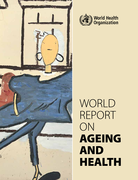
Comprehensive public health action on population ageing is urgently needed. This will require fundamental shifts, not just in the things we do, but in how we think about ageing itself. The World report on ageing and health outlines a framework for a
...

Universal health coverage ensures everyone has access to the health services they need without suffering financial hardship as a result. In December 2012, a UN resolution was passed encouraging governments to move towards providing universal access to affordable and quality health care services. As
...

Primary care - Putting people first: This chapter describes how primary care brings promotion and prevention, cure and care together in a safe, effective and socially productive way at the interface between the population and the health system.

The 2024 edition reviews more than 50 health-related indicators from the Sustainable Development Goals and WHO’s Thirteenth General Programme of Work. It also highlights the findings from the Global health estimates 2021, notably the impact of the COVID-19 pandemic on life expectancy and healthy l
...
Bull World Health Organ 2016;94:554–556 | doi: http://dx.doi.org/10.2471/BLT.15.162610

Background: Atherosclerotic cardiovascular diseases (ASCVD) including myocardial infarction, stroke and peripheral arterial disease continue to be major causes of premature death, disability and healthcare expenditure globally. Preventing the accumu
...

Regular physical activity is proven to help prevent and treat noncommunicable diseases (NCDs) such as heart disease, stroke, diabetes and breast and colon cancer. It also helps to prevent hypertension, overweight and obesity and can improve mental h
...

In 2012, all Member States of the World Health Organization (WHO) endorsed a historical target to reduce premature mortality from noncommunicable diseases
(NCD). This commitment was echoed in 2015
...
The World health statistics report is the annual compilation of health and health-related indicators, which has been published by the World Health Organiz
...
В новой книге из серии «Вам поставили диагноз…ª популярно изложены современные представления о причинах возникновения и последствиях инсульта, детально описана
...
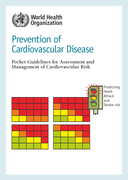
Prevention of Cardiovascular Disease. Pocket Guidelines for Assessment and Management of Cardiovascular Risk
recommended
These pocket guidelines provide evidence-based guidance on how to reduce the incidence of first and recurrent clinical events due to coronary heart disease (CHD), cerebrovascular disease (CeVD) and peripheral vascular disease in two categories of people
