
Filter
2255
Text search:
World
Health
Organization
WHO
Health
Cluster
Featured
Recommendations
225
New Publications
672
Language
Document type
No document type
1215
Studies & Reports
383
Guidelines
294
Manuals
133
Strategic & Response Plan
114
Situation Updates
48
Fact sheets
29
Training Material
24
Resource Platforms
8
Infographics
4
Brochures
1
Dashboards/Maps
1
Online Courses
1
Countries / Regions
Global
102
Nepal
59
Kenya
55
Sierra Leone
49
Nigeria
49
India
48
Bangladesh
46
Syria
45
Liberia
43
Myanmar / Burma
43
Ethiopia
41
Malawi
41
Africa
38
Uganda
37
Congo, Democratic Republic of
32
South Sudan
31
Yemen
30
Ukraine
29
South Africa
28
Mozambique
27
Zambia
26
Ghana
25
Tanzania
24
Zimbabwe
23
Rwanda
23
Haiti
21
Western and Central Europe
21
Philippines
20
Latin America and the Carribbean
19
Senegal
17
Russia
15
South–East Asia Region
14
Guinea
13
Pakistan
13
Afghanistan
13
West and Central Africa
13
Namibia
12
Brazil
12
East and Southern Africa
12
Burkina Faso
11
Somalia
11
Cambodia
11
Indonesia
11
Venezuela
11
Cameroon
10
Madagascar
10
Eastern Europe
10
Mali
9
Sudan
9
Central African Republic
9
Lesotho
9
Colombia
8
Middle East and North Africa
8
Niger
7
Palestine
7
Lebanon
6
Thailand
6
Eswatini/ Swaziland
6
Moldova
6
Jordan
4
Western Pacific Region
4
Eastern Europe and Central Asia
4
Asia
4
Laos
4
Guinea-Bissau
3
Iraq
3
Turkey
3
Hungary
3
Burundi
3
Botswana
3
Libya
3
Angola
3
Sri Lanka
3
Paraguay
3
Albania
3
Vietnam
3
Côte d’Ivoire / Ivory Coast
2
Morocco
2
Germany
2
Chad
2
Gambia
2
China
2
Papua New Guinea
2
Mexico
2
Poland
2
Armenia
2
Romania
2
Iran
2
Georgia
2
North America
2
Saudi Arabia
1
Togo
1
Malaysia
1
Mauritania
1
Benin
1
Argentina
1
Peru
1
North Macedonia
1
Croatia
1
Ecuador
1
Greece
1
Chile
1
Other region
1
Fiji
1
Bhutan
1
Italy
1
Southern Africa
1
Timor Leste/ East Timor
1
Tajikistan
1
Qatar
1
Bulgaria
1
Slovakia
1
Kyrgyzstan
1
Jamaica
1
Denmark
1
Mauritius
1
Tunisia
1
Norway
1
Portugal
1
Azerbaijan
1
Belarus
1
Authors & Publishers
Publication Years
Category
Countries
859
Key Resources
196
Women & Child Health
163
Clinical Guidelines
141
Public Health
134
Capacity Building
28
Pharmacy & Technologies
16
Toolboxes
COVID-19
242
HIV
144
Mental Health
131
Conflict
128
Ebola & Marburg
89
Disability
74
TB
70
Rapid Response
60
NTDs
60
Planetary Health
50
Natural Hazards
49
AMR
39
2.0 Rapid Response
38
Caregiver
37
Global Health Education
33
NCDs
32
Malaria
28
Cholera
27
Refugee
27
Pharmacy
18
Polio
17
Zika
17
Specific Hazards
15
Health Financing Toolbox
13
Typhoon
3
Social Ethics
2
South Sudan
1
The war in Gaza has resulted in thousands of amputations, including early estimates of over 1000 children, all of whom have immediate and life-long needs. Surgical amputations performed under extremely difficult conditions are likely to be sub-optimal, meaning many of those amputated will require fu
...
The war in Gaza has resulted in many hundreds of spinal cord injuries (SCI), which will have a devastating impact on those injured and their families for the rest of their lives.
The optimal management of SCI requires effective pre-hospital care, early specialized imaging (using CT or MRI) and in
...
A Call for Action in Safeguarding Dignity and Saving Women’s Lives: Clinical and Psychosocial Support for Survivors of Sexual Violence in Eastern DRC's Protection Crisis
Tens of thousands: According to the GBV AoR’s 6W mapping tool, there is a significant increase in number of reported cases of
...

The response to a cholera outbreak must focus on limiting mortality and reducing the spread of the disease. It should be comprehensive and multisectoral, including epidemiology, case management, water, sanitation and hygiene, logistics, community engagement and risk communication. All efforts must b
...
Scientific brief
8 April 2020

This report is one of the first major products of the newly established Precision Public Health Metrics unit of the UCN cluster of the WHO Regional
...
This guidance has been developed in line with the WHO corporate risk management framework, the WHO business continuity and contingency plans, as well as the Inter-Agency Emergency Response Preparedn
...
Available in Arabic, Chinese, English, French, Russian and Spanish. You can download a summary of the main report and background documents!
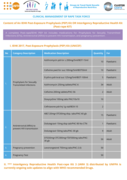
The report demonstrates that the current system—at both national and international levels— was not adequate to protect people from COVID-19. The time it t
...
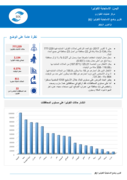
This document is a situation report (#6) from October 2, 2017, describing the cholera outbreak in Yemen. By October 1, 2017, there were 777,229 suspected cholera cases and 2,134 deaths across 22 of Yemen's 23 governorates. The response involves WASH partners providing hygiene supplies and water trea
...
The World Health Organization (WHO) endorses the use of population-based prevalence surveys for
...
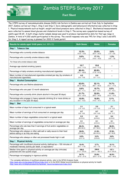
The STEPS survey of noncommunicable disease (NCD) risk factors in Zambia was carried out from July to September 2017. Zambia carried out Step 1, Step 2 and Step 3. Socio demographic and behavioural information was collected in Step 1. Physical measurements such as height, weight and blood pressure w
...
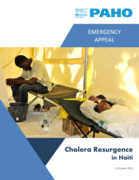
After more than three years without cases, Haiti reported on 2 October 2022 a cluster of cholera cases in the metropolitan area of Port-au-Prince, just as the country was on the verge of being declared cholera- free.
This cholera resurgence in Hait
...
UNICEF, WHO Whole of Syria Nutrition, Cluster, the Global Nutrition Cluster, the IFE Core Group, and partners call for ALL involved in the response
...
Accessed Sept, 5 2018
Weekly epidemiological record, Relevé épidémiologique hebdomadaire : Vol.93 (2018) No.13
Essential medicines are those that satisfy the priority health care needs of a population. They are selected with due regard to disease prevalence and public health relevance, evidence of efficacy a
...
The WHO Model List of Essential Medicines and Model List of Essential Medicines for Children are updated and published every two years, intended as a guide for countries or regional authorities to adopt or adapt in accordance with local priorities a
...
The World Health Organization (WHO) endorses the use of population-based prevalence surveys for
...
September – December 2021
The funds will be used by WHO to ensure:
continued coordination with other agencies and health actors in the response to the crisis situation
continuity of
...
This Roadmap is structured around a results-based framework of outcomes, outputs and deliveraebles, to ensure that WHO maintains appropriate levels of organizational readiness, supports country-level capacity building and preparedness, deploys effic
...
