
Filter
57
Text search:
World
Health
Organization
(WHO)
&
United
Nations
Children's
Fund
(UNICEF)
Featured
Recommendations
5
New Publications
14
Language
Document type
No document type
33
Studies & Reports
17
Guidelines
3
Manuals
2
Training Material
1
Situation Updates
1
Countries / Regions
Global
3
Kenya
2
Sierra Leone
1
Senegal
1
Congo, Democratic Republic of
1
Ethiopia
1
Niger
1
Somalia
1
Nepal
1
Syria
1
Indonesia
1
South Africa
1
Namibia
1
Greece
1
Lesotho
1
Yemen
1
Western and Central Europe
1
Authors & Publishers
Publication Years
Category
Women & Child Health
22
Countries
13
Key Resources
2
Capacity Building
1
Public Health
1
Clinical Guidelines
1
Pharmacy & Technologies
1
Toolboxes
Disability
8
COVID-19
5
HIV
4
Mental Health
4
Conflict
2
Caregiver
2
Planetary Health
2
Pharmacy
2
Cholera
1
Polio
1
Refugee
1
Specific Hazards
1
Global Health Education
1
Interpersonal violence – in all its forms – has a grave effect on children: Violence undermines children’s future potential; damages their physical, psychological and emotional well-being; and
...

“We must not forget that no matter where we are or how old we are, we can all work for life and take action.” Francisco Vera, 15, UNICEF Child Advocate
The Young Climate Activists toolkit was created by advocates of all ages
...
This report presents the most current data on four specific forms of violence – violent discipline and exposure to domestic abuse during early childhood; violence at school; violent deaths among adolescents; and sexual violence in childhood and adolescence. The statistics reveal that children expe
...
Consolidated Report
Guidance | Preparedness - Response and early recovery - Recovery and reconstruction
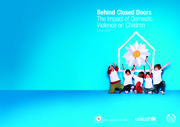
The report examines some of the underlying causes of domestic violence and the impact on children of being exposed to violence in the home.
Technical brief by the H4+ (UNAIDS, UNFPA, UNICEF, UN Women, WHO and the World Bank)
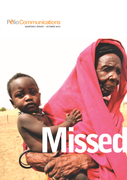
With a focus on Pakistan and Nigeria’s most vulnerable communities, this report provides insight about the role that community push-back is playing in the transmission of the polio virus and how the Global Polio Eradication Initiative (GPEI) can mitigate these social risks to reach every missed ch
...
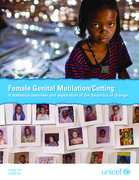
This report is a comprehensive statistical overview of female genital mutilation/cutting (FGM/C) in the 29 countries where the practice is concentrated. Analysis of the data reflects current perspectives on FGM/C, informed by the latest policy, programmatic and theoretical evidence.
The coronavirus disease 2019 (COVID-19) pandemic has created a global and gendered crisis that is compounding existing inequalities and disproportionately affecting girls and women. Emerging evidence from the COVID-19 crisis in 2020 shows school closures, disruptions in essential services and rising
...
A companion to the Child Friendly Schools Manual
WASH in Schools aims to improve the health and learning performance of school-aged children – and, by extension, that of their families – by reducing the incidence of water and sanitat ...
WASH in Schools aims to improve the health and learning performance of school-aged children – and, by extension, that of their families – by reducing the incidence of water and sanitat ...

This report makes clear that there is a path to end AIDS. Taking that path will help ensure preparedness to address other pandemic challenges, and advance progress across the Sustainable Development Goals. The data and real-world examples in the rep
...

Pregnancy and childbirth during adolescence profoundly affects the lives of millions of girls worldwide, and is a leading cause of maternal mortality and morbidity, and infant and child mortality. Every year, an estimated 21 million girls aged 15–19 years old in low- and middle-income countries be
...
Child marriage and female genital mutilation (FGM) threaten the well-being of millions of girls around the world. Both have existed for generations, as manifestations of gender inequality, and have been propagated by discriminatory norms that devalu
...
Conflict, climate crisis and COVID-19 pose great threats to the health of women and children.
Gaps in data covering refugees, asylum seekers, migrants and internally displaced populations are endangering the lives and wellbeing of millions of children on the move, warned five UN and partner agencies today. In 'A call to action: Protecting children on the move starts with better data',
...
