
Filter
3051
Text search:
Options
for
the
Poor
Featured
319
849
Language
2994
68
41
37
27
19
13
7
3
2
2
2
2
2
2
2
1
1
1
1
1
1
1
1
1
Document type
1607
531
454
200
120
80
32
14
7
4
2
Countries
160
147
94
77
72
66
60
59
54
52
48
43
42
40
38
35
34
34
32
32
30
26
26
20
19
18
17
17
16
16
16
15
15
14
13
13
13
13
12
10
10
10
10
10
10
9
9
9
8
8
8
8
7
7
6
6
6
5
5
5
5
5
5
4
4
4
4
4
3
3
3
3
3
3
3
3
3
3
3
3
2
2
2
2
2
2
2
2
2
2
2
2
2
1
1
1
1
1
1
1
1
1
1
1
1
1
1
1
1
1
1
1
1
1
1
1
1
1
1
1
1
1
Authors & Publishers
429
125
101
86
76
61
48
41
28
24
22
21
20
19
15
15
14
14
14
14
13
12
12
12
12
11
11
11
11
10
10
10
9
9
9
9
9
9
8
8
8
8
8
8
8
8
7
7
7
7
7
7
7
7
7
7
7
7
6
6
6
6
6
6
6
6
6
6
6
6
6
6
5
5
5
5
5
5
5
5
5
5
5
5
5
5
5
5
5
5
5
5
5
5
5
5
5
5
4
4
4
4
4
4
4
4
4
4
4
4
4
4
4
4
4
4
4
4
4
4
4
4
4
4
4
4
4
3
3
3
3
3
3
3
3
3
3
3
3
3
3
3
3
3
3
3
3
3
3
3
3
3
3
3
3
3
3
3
3
3
3
3
3
3
3
3
3
3
3
3
3
3
3
3
3
3
3
3
3
3
3
3
3
3
3
3
3
3
3
3
3
2
2
2
2
2
2
2
2
2
2
2
2
2
2
2
2
2
2
2
2
2
2
2
2
2
2
2
2
2
2
2
2
2
2
2
2
2
2
2
2
2
2
2
2
2
2
2
2
2
2
2
2
2
2
2
2
2
2
2
2
2
2
2
2
2
2
2
2
2
2
2
2
2
2
2
2
2
2
2
2
2
2
2
2
2
2
2
2
2
2
2
2
2
2
2
2
2
2
2
2
2
2
2
2
2
2
2
2
2
2
2
2
2
2
2
2
2
2
2
2
2
2
2
2
2
2
2
2
2
2
2
2
2
2
2
2
2
2
2
2
2
2
2
2
2
2
2
2
2
2
2
2
2
2
2
2
2
2
2
2
2
2
2
2
2
2
2
2
2
2
1
1
1
1
1
1
1
1
1
1
1
1
1
1
1
1
1
1
1
1
1
1
1
1
1
1
1
1
1
1
1
1
1
1
1
1
1
1
1
1
1
1
1
1
1
1
1
1
1
1
1
1
1
1
1
1
1
1
1
1
1
1
1
1
1
1
1
1
1
1
1
1
1
1
1
1
1
1
1
1
1
1
1
1
1
1
1
1
1
1
1
1
1
1
1
1
1
1
1
1
1
1
1
1
1
1
1
1
1
1
1
1
1
1
1
1
1
1
1
1
1
1
1
1
1
1
1
1
1
1
1
1
1
1
1
1
1
1
1
1
1
1
1
1
1
1
1
1
1
1
1
1
1
1
1
1
1
1
1
1
1
1
1
1
1
1
1
1
1
1
1
1
1
1
1
1
1
1
1
1
1
1
1
1
1
1
1
1
1
1
1
1
1
1
1
1
1
1
1
1
1
1
1
1
1
1
1
1
1
1
1
1
1
1
1
1
1
1
1
1
1
1
1
1
1
1
1
1
1
1
1
1
1
1
1
1
1
1
1
1
1
1
1
1
1
1
1
1
1
1
1
1
1
1
1
1
1
1
1
1
1
1
1
1
1
1
1
1
1
1
1
1
1
1
1
1
1
1
1
1
1
1
1
1
1
1
1
1
1
1
1
1
1
1
1
1
1
1
1
1
1
1
1
1
1
1
1
1
1
1
1
1
1
1
1
1
1
1
1
1
1
1
1
1
1
1
1
1
1
1
1
1
1
1
1
1
1
1
1
1
1
1
1
1
1
1
1
1
1
1
1
1
1
1
1
1
1
1
1
1
1
1
1
1
1
1
1
1
1
1
1
1
1
1
1
1
1
1
1
1
1
1
1
1
1
1
1
1
1
1
1
1
1
1
1
1
1
1
1
1
1
1
1
1
1
1
1
1
1
1
1
1
1
1
1
1
1
1
1
1
1
1
1
1
1
1
1
1
1
1
1
1
1
1
1
1
1
1
1
1
1
1
1
1
1
1
1
1
1
1
1
1
1
1
1
1
1
1
1
1
1
1
1
1
1
1
1
1
1
1
1
1
1
1
1
1
1
1
1
1
1
1
1
1
1
1
1
1
1
1
1
1
1
1
1
1
1
1
1
1
1
1
1
1
1
1
1
1
1
1
1
1
1
1
1
1
1
1
1
1
1
1
1
1
1
1
1
1
1
1
1
1
1
1
1
1
1
1
1
1
1
1
1
1
1
1
1
1
1
1
1
1
1
1
1
1
1
1
1
1
1
1
1
1
1
1
1
1
1
1
1
1
1
1
1
1
1
1
1
1
1
1
1
1
1
1
1
1
1
1
1
1
1
1
1
1
1
1
1
1
1
1
1
1
1
1
1
1
1
1
1
1
1
1
1
1
1
1
1
1
1
1
1
1
1
1
1
1
1
1
1
1
1
1
1
1
1
1
1
1
1
1
1
1
1
1
1
1
1
1
1
1
1
1
1
1
1
1
1
1
1
1
1
1
1
1
1
1
1
1
1
1
1
1
1
1
1
1
1
1
1
1
1
1
1
1
1
1
1
1
1
1
1
1
1
1
1
1
1
1
1
1
1
1
1
1
1
1
1
1
1
1
1
1
1
1
1
1
1
1
1
1
1
1
1
1
1
1
1
1
1
1
1
1
1
1
1
1
1
1
1
1
1
1
1
1
1
1
1
1
1
1
1
1
1
1
1
1
1
1
1
1
1
1
1
1
1
1
1
1
1
1
1
1
1
1
1
1
1
1
1
1
1
1
1
1
1
1
1
1
1
1
1
1
1
1
1
1
1
1
1
1
1
1
1
1
1
1
1
1
1
1
1
1
1
1
1
1
1
1
1
1
1
1
1
1
1
1
1
1
1
1
1
1
1
1
1
1
1
1
1
1
1
1
1
1
1
1
1
1
1
1
1
1
1
1
1
1
1
1
1
1
1
1
1
1
1
1
1
1
1
1
1
1
1
1
1
1
1
1
1
1
1
1
1
1
1
1
1
1
1
1
1
1
1
1
1
1
1
1
1
1
1
1
1
1
1
1
1
1
1
1
1
1
1
1
1
1
1
1
1
1
1
1
1
1
1
1
1
1
1
1
1
1
1
1
1
1
1
1
1
1
1
1
1
1
1
1
1
1
1
1
1
1
1
1
1
1
1
1
1
1
1
1
1
1
1
1
1
1
1
1
1
1
1
1
1
1
1
1
1
1
1
1
1
1
1
1
1
1
1
1
1
1
1
1
1
1
1
1
1
1
1
1
1
1
1
1
1
1
1
1
1
1
1
1
1
1
1
1
1
1
1
1
1
1
1
1
1
1
1
1
1
1
1
1
1
1
1
1
1
1
1
1
1
1
1
1
1
1
1
1
1
1
1
1
1
1
1
1
1
1
1
1
1
1
1
1
1
1
1
1
1
1
1
1
1
1
1
1
1
1
1
1
1
1
1
1
1
1
1
1
1
1
1
1
1
1
1
1
1
1
1
1
1
1
1
1
1
1
1
1
1
1
1
1
1
1
1
1
1
1
1
1
1
1
1
1
1
1
1
1
1
1
1
1
1
1
1
1
1
1
1
1
1
1
1
1
1
1
1
1
1
1
1
1
1
1
1
1
1
1
1
1
1
1
1
1
1
1
1
1
1
1
1
1
1
1
1
1
1
1
1
1
1
1
1
1
1
1
1
1
1
1
1
1
1
1
1
1
1
1
1
1
1
1
1
1
1
1
1
1
1
1
1
1
1
1
1
1
1
1
1
1
1
1
1
1
1
1
1
1
1
1
1
1
1
1
1
1
1
1
1
1
1
1
1
1
1
1
1
1
1
1
1
1
1
1
1
1
1
1
1
1
1
1
1
1
1
1
1
1
1
1
1
1
1
1
1
1
1
1
1
1
1
1
1
1
1
1
1
1
1
1
1
1
1
1
1
1
1
1
1
1
1
1
1
1
1
1
1
1
1
1
1
1
1
1
1
1
1
1
1
1
1
1
1
1
1
1
1
1
1
1
1
1
1
1
1
1
1
1
1
1
1
1
1
1
1
1
1
1
1
1
1
1
1
1
1
1
1
1
1
1
1
1
1
1
1
1
1
1
1
1
1
1
1
1
1
1
1
1
1
1
1
1
1
1
1
1
1
1
1
1
1
1
1
1
1
1
1
1
1
1
1
1
1
1
1
1
1
1
1
1
1
1
1
1
1
1
1
1
1
1
1
1
1
1
1
1
1
1
1
1
1
1
1
1
1
1
1
1
1
1
1
1
1
1
1
1
1
1
1
1
1
1
1
1
1
1
1
1
1
1
1
1
1
1
1
1
1
1
1
1
1
1
1
1
1
1
1
1
1
1
1
1
1
1
1
1
1
1
1
1
1
1
1
1
1
1
1
1
1
1
1
1
1
1
1
1
1
1
1
1
1
1
1
1
1
1
1
1
1
1
1
1
1
1
1
1
1
1
1
1
1
1
1
1
1
1
1
1
1
1
1
1
1
1
1
1
1
1
1
1
1
1
1
1
1
1
1
1
1
1
1
1
1
1
1
1
1
1
1
1
1
1
1
1
1
1
1
1
1
1
1
1
1
1
1
1
1
1
1
1
1
1
1
1
1
1
1
1
1
1
1
1
1
1
1
1
1
1
1
1
1
1
1
1
1
1
1
1
1
1
1
1
1
1
1
1
1
1
1
1
1
1
1
1
1
1
1
1
1
1
1
1
1
1
1
1
1
1
1
1
1
1
1
1
1
1
1
1
1
1
1
1
1
1
1
1
1
1
1
1
1
1
1
1
1
1
1
1
1
1
1
1
1
1
1
1
1
1
1
1
1
1
1
1
1
1
1
1
1
1
1
1
1
1
1
1
1
1
1
1
1
1
1
1
1
1
1
1
1
1
1
1
1
1
1
1
1
1
1
1
1
1
1
1
1
1
1
1
1
1
1
1
1
1
1
1
1
1
1
1
1
1
1
1
1
1
1
1
1
1
1
1
1
1
1
1
1
1
1
1
1
1
1
1
1
1
1
1
1
1
1
1
1
1
1
1
1
1
1
1
1
1
1
1
1
1
1
1
1
1
1
1
1
1
1
1
1
1
1
1
1
1
1
1
1
1
1
1
1
1
1
1
1
1
1
1
1
1
1
1
1
1
1
1
1
1
1
1
1
1
1
1
1
1
1
1
1
1
1
1
1
1
1
1
1
1
1
1
1
1
1
1
1
1
1
1
1
1
1
1
1
1
1
1
1
1
1
1
1
1
1
1
1
1
1
1
1
1
1
1
1
1
1
1
1
1
1
1
1
1
1
1
1
1
1
1
1
1
1
1
1
1
1
1
1
1
1
1
1
1
1
1
1
1
1
1
1
1
1
1
1
1
1
1
1
1
1
1
1
1
1
1
1
1
1
1
1
1
1
1
1
1
1
1
1
1
1
1
1
1
1
1
1
1
1
1
1
1
1
1
1
1
1
1
1
1
1
1
1
1
1
1
1
1
1
1
1
1
1
1
1
1
1
1
1
1
1
1
1
1
1
1
1
1
1
1
1
1
1
1
1
1
1
1
1
1
1
1
1
1
1
1
1
1
1
1
1
1
1
1
1
1
1
1
1
1
1
1
1
1
1
1
1
1
1
1
1
1
1
1
1
1
1
1
1
1
1
1
1
1
1
1
1
1
1
1
1
1
1
1
1
1
1
1
1
1
1
1
1
1
1
1
1
1
1
1
1
1
1
1
1
1
1
1
1
1
1
1
1
1
1
1
1
1
1
1
1
1
1
1
1
1
1
1
1
1
1
1
1
1
1
1
1
1
1
1
1
1
1
1
1
1
1
1
1
1
1
1
1
1
1
1
1
1
1
1
1
1
1
1
1
1
1
1
1
1
1
1
1
1
1
1
1
1
1
1
1
1
1
1
1
1
1
1
1
1
1
1
1
1
1
1
1
1
1
1
1
1
1
1
1
1
1
1
1
1
1
1
1
1
1
1
1
1
1
1
1
1
1
1
1
1
1
1
1
Publication Years
896
1884
255
16
Category
1050
250
240
210
203
80
22
Toolboxes
268
188
182
150
140
101
100
94
83
77
75
68
68
65
64
56
50
41
27
25
22
19
18
13
10
3
1
This report, examining the mood of a country that holds the top spot in the Fragile States Index, is based on field research conducted in South
...
Sudan in April and May 2014.
more
The "Global NCD action plan" provides a road map and a menu of policy options for countries to take in order to attain
...
the 9 voluntary global targets, including that of a 25% relative reduction in premature mortality from cardiovascular diseases, cancer, diabetes or chronic respiratory diseases by 2025. The main focus of this action plan is on 4 types of NCDs (cardiovascular diseases, cancer, chronic respiratory diseases, diabetes) which make the largest contribution to morbidity and mortality due to NCDs, and on 4 shared behavioural risk factors (tobacco use, unhealthy diet, physical inactivity, harmful use of alcohol).
more

The larval stage of the parasite Taenia solium can encyst in the central nervous system causing neurocysticercosis, which is
...
the main cause of acquired epilepsy in the countries in which the parasite is endemic. Endemic areas are those with the presence (or likely presence) of the full life cycle of Taenia solium. The parasite is most prevalent in poor and vulnerable communities in which pigs roam free, open defecation is practiced, basic sanitation is deficient, and health education is absent or limited. Several tools are available for the control of Taenia solium. Preventive chemotherapy for Taenia solium taeniasis, which is directed at the adult tapeworm, is one of them. Other tools focus on pig management, pig vaccination and treatment, sanitation and hygiene, and community education. Three potential drugs—niclosamide, praziquantel, and albendazole—have been considered for use for preventive chemotherapy in Taenia solium taeniasis control programs through mass drug administration or targeted chemotherapy. In this Guideline, we provide recommendations for preventive chemotherapy in Taenia solium-endemic areas using niclosamide, praziquantel, or albendazole, including at which dose and in which population groups.
more
Trends and Determinants of Unmet Need for Family Planning and Programme Options, Ethiopia.
Ayele, Wondimu, Habtamu Tesfaye, Roman Gebreyes, and Tesfayi Gebreselassie
ICF International
(2013)
C2
Further Analysis of the 2000, 2005, and 2011 Demographic and Health Surveys. DHS Further Analysis Reports No. 81
In the area of nutrition and HIV, children deserve special attention because of their additional needs to ensure growth and development and their dependency on adults for adequate care. It was ther
...
efore proposed to first develop guidelines for children and thereafter consider a similar approach for other specific groups.
The content of these guidelines acknowledges that wasting and undernutrition in HIV-infected children reflect a series of failures within the health system, the home and community and not just a biological process related to virus and host interactions. In trying to protect the nutritional well-being or reverse the undernutrition experienced by infected children, issues of food insecurity, food quantity and quality as well as absorption and digestion of nutrients are considered. Interventions are proposed that are practical and feasible in resource-poor settings and offer a prospect for clinical improvement.
The guidelines do not cover the feeding of infants 0 to 6 months old, because the specialised care in this age group is already addressed in other WHO guidelines and documents.
more
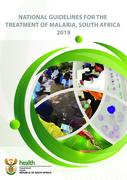
National Guidelines for the Treatment of Malaria - 2019
South African Malaria Elimination Committee (SAMC)
National Department of Health South Africa
(2019)
CC
These guidelines are based on the 3rd Edition of the WHO Guidelines (Published 2015) World Health Organization’s Guidelines for
...
the treatment of malaria. Additional literature surveys have been undertaken. Factors that were considered in the choice of therapeutic options included effectiveness, safety, and impact on malaria transmission and on the emergence and spread of antimalarial drug resistance. On-going surveillance is critical given the spread of artemisinin resistance in Southeast Asia, although not yet confirmed anywhere in Africa. The guidelines on the treatment of malaria in South Africa aim to facilitate effective, appropriate and timeous treatment of malaria, thereby reducing the burden of this disease in our communities. This is essential to further reduce the malaria case fatality rates currently recorded in South Africa, to decrease malaria transmission and to limit resistance to antimalarial drugs.
more
Community health nurses have the potential to make significant contributions to meet the health care needs of various population groups in a variety of community settings. In order to assess
...
the extent to which CHNs are achieving this potential, WHO conducted a study between 2010 and 2014 that examined the status of community health nursing in 22 countries, 13 of which were experiencing a critical shortage of health care workers. The study revealed that the countries surveyed had the basic and operational framework for optimizing CHN in their health systems as evidenced by the availability of PHC structures to guide interventions. However, challenges were identified related to the education, practice and management of CHNs in these countries. The major challenges identified were: Limited availability of career opportunities; poor worker retention; low recognition for CHNs; inadequate and unsupportive working conditions and environments; absence of educational standards; varying educational entry-level requirements for CHN programmes; and a lack of consensus on the scope of practice for CHNs.
more
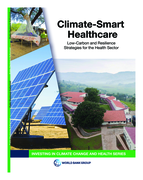
Climate change is damaging human health now and is projected to have a greater impact in the future. Low- and middle-income countries are seeing the worst effects as they are most vulnerable to clim
...
ate shifts and least able to adapt given weak health systems and poor infrastructure. Low-carbon approach can provide effective, cheaper care while at the same time being climate smart. Low-carbon healthcare can advance institutional strategies toward low-carbon development and health-strengthening imperatives and inspire other development institutions and investors working in this space. Low-carbon healthcare provides an approach for designing, building, operating, and investing in health systems and facilities that generate minimal amounts of greenhouse gases. It puts health systems on a climate-smart development path, aligning health development and delivery with global climate goals. This approach saves money by reducing energy and resource costs. It can improve the quality of care in a diversity of settings. By prompting ministries of health to tackle climate change mitigation and foster low-carbon healthcare, the development community can help governments strengthen local capacity and support better community health.
more
This Technical Brief focuses on appraising and prioritising options for climate resilience with a view to informing water, sanitation and hygiene (WASH) programme and project design.
This Tech ... nical Brief:
- provides a simple scorecard/checklist approach to use as a starting point for appraising and prioritising options, and as an awareness-raising activity - covers all aspects of WASH
- has a predominantly rural focus, to align with the rest of the Strategic Framework and Technical Briefs
- focuses on current and near future options over the next 15–20 years, which fits in with WASH programming timescales and development
- includes WASH examples to show how the approach can be applied. more
This Tech ... nical Brief:
- provides a simple scorecard/checklist approach to use as a starting point for appraising and prioritising options, and as an awareness-raising activity - covers all aspects of WASH
- has a predominantly rural focus, to align with the rest of the Strategic Framework and Technical Briefs
- focuses on current and near future options over the next 15–20 years, which fits in with WASH programming timescales and development
- includes WASH examples to show how the approach can be applied. more
Version 2 (unedited). The Basic Needs Analysis (BNA) is a multi-sector needs analysis approach that can be applied in both sudden onset and protracted emergencies. The methodology comprises
...
the Guidance (this document) presenting the conceptual BNA framework and related processes, and a Toolbox, which includes tools, templates, training materials, and examples drawn from its first pilot, in Borno State(Nigeria).
The BNA is conceived to go hand in hand with the Facilitator’s Guide for the Response Options Analysis and Planning (a separate document), as it is part of a broader response planning process (see The BNA within the ). It shall be carried out with other assessments on the operational environment and would not add any value if undertaken in isolation.
more

Asthma is the most common non-communicable disease in children and remains one of the most common throughout the life course.
...
The great majority of the burden of this disease is seen in low-income and middle-income countries (LMICs), which have disproportionately high asthma-related mortality relative to asthma prevalence. This is particularly true for many countries in sub-Saharan Africa. Although inhaled asthma treatments (particularly those containing inhaled corticosteroids) markedly reduce asthma morbidity and mortality, a substantial proportion of the children, adolescents, and adults with asthma in LMICs do not get to benefit from these, due to poor availability and affordability. In this review, we consider the reality faced by clinicians managing asthma in the primary and secondary care in sub-Saharan Africa and suggest how we might go about making diagnosis and treatment decisions in a range of resource-constrained scenarios. We also provide recommendations for research and policy, to help bridge the gap between current practice in sub-Saharan Africa and Global Initiative for Asthma (GINA) recommended diagnostic processes and treatment for children, adolescents, and adults with asthma.
more
Noncommunicable diseases (NCDs) such as cancer, cardiovascular diseases, diabetes and chronic respiratory diseases and their risk factors are an increasing public health and development challenge in Kyrgyzstan. This report provides evidence through three analyses that NCDs reduce economic outp
...
ut and discusses potential options in response, outlining details of their relative returns on investment. An economic burden analysis shows that economic losses from NCDs are equivalent to 3.9% of gross domestic product. An intervention costing analysis provides an estimate of the funding required to implement a set of policy interventions for prevention and clinical interventions. A cost–benefit analysis compares these implementation costs with the estimated health gains and identifies which policy packages would give the greatest returns on investment.
more
Noncommunicable diseases (NCDs) such as cancer, cardiovascular diseases, diabetes and chronic respiratory diseases and their risk factors are an increasing public health and development challenge in Turkey. This report provides evidence through three analyses that NCDs reduce economic output, and di
...
scusses potential options in response, outlining details of their relative returns on investment. An economic burden analysis shows that economic losses from NCDs are equivalent to 3.6% of gross domestic product. An intervention costing analysis provides an estimate of the funding required to implement a set of policy interventions for prevention and clinical interventions. A cost–benefit analysis compares these implementation costs with the estimated health gains and identifies which policy packages would give the greatest returns on investment.
more
Forests and Trees for Human Health: Pathways, Impacts, Challenges and Response Options
Cecil Konijnendijk, Dikshya Devkota, Stephanie Mansourian & Christoph Wildburger (eds.)
International Union of Forest Research Organizations (IUFRO)
(2023)
C2
Forests, trees and green spaces, hereinafter ‘forests and trees’ for short, provide multiple goods and services that contribute to human health. These include medicines, nutritious foods and other non-wood forest products (NWFPs). Globally, at l
...
east 3.5 billion people use NWFPs, including medicinal plants, which are particularly important for vulnerable groups and Indigenous Peoples and local communities (IPLCs).
During periods of crises, such as the COVID-19 pandemic, demand for forest products typically increases amongst these groups. Forests and trees also contribute to better health by playing a role in climate change
mitigation and adaptation, contributing to regulating the carbon cycle, but also moderating the micro-climate, filtering pollutants from the air and protecting settlements against the effects of extreme events such as droughts and flash floods.
more
The aim of these Guidelines is to provide a framework for the conservation and sustainable use of plants in medicine. To do this,
...
the Guidelines describe the various tasks that should be carried out to ensure that where medicinal plants are taken from the wild, they are taken on a basis that is sustainable.
The Guidelines conform to the principles of Caring for the Earth, prepared in partnership by IUCN, UNEP and WWF. Caring for the Earth extends the message and scope of the World Conservation Strategy to an ethic of sustainable living, and explains how to integrate conservation with development. Its message is particularly relevant to the issue of medicinal plants, which in many parts of the world are being seriously depleted due to over-exploitation and loss of habitats, resulting in a lack of essential medicines and so reducing options for the future. more
The Guidelines conform to the principles of Caring for the Earth, prepared in partnership by IUCN, UNEP and WWF. Caring for the Earth extends the message and scope of the World Conservation Strategy to an ethic of sustainable living, and explains how to integrate conservation with development. Its message is particularly relevant to the issue of medicinal plants, which in many parts of the world are being seriously depleted due to over-exploitation and loss of habitats, resulting in a lack of essential medicines and so reducing options for the future. more
Ethiopia has seen high economic growth over the last decade, but remains a poor country with a high burden of disease. It has made considerable health gains in recent years, mainly by
...
having health policies that focus on extending primary healthcare, using health extension workers. It has made good use of existing resources,but has a low health expenditure (of around US$21 per capita, and totalling 4per centof GDP). It has a federal system with devolved healthcare financing, whereby block grants are allocated to sectors at regional and woreda(district) level. The challenge now,with the epidemiological transition (and a sense that the ‘low-hanging fruits’have already been gathered in relation to public health), is how Ethiopia, still poor, continuesto invest in health improvements?Human resources for health (HRH) are a critical pillar within any health system –the health staff combine inputs to provide the services, thus affecting how all other resources are used, and they make frontline (and back-office) decisions thatare importantdeterminants of servicequality,effectiveness and equity. HRH is usually the most resource-intensive element within the health system –commonly absorbing 50–70per centof public expenditure onhealth, although the proportions are very varied by individual countries and across regions. As they are commonly part of the public administration, reforms to HRH are also part of a complex political economy in most countries.Assessing value for money (VfM) in relation to HRH is correspondingly complex;across the value chain, manyfactors influence the conversion of inputs into outputs and outcomes (see Figure 1).A more detailed description of the HRH value chain can be found in Annex1.
more

Delivering quality health services: A global imperative for universal health coverage
Kieny, Marie-Paule; Evans, Timothy Grant; Scarpetta, Stefano; Kelley, Edward T.; Klazinga, Niek; Forde, Ian; Veillard, Jeremy Henri Maurice; Leatherman, Sheila; Syed, Shamsuzzoha; Kim, Sun Mean; Nejad, Sepideh Bagheri; Donaldson, Liam
World Health Organization (WHO), Organisation for Economic Co-operation and Development (OECD), and The World Bank
(2018)
C_WHO
Poor quality health services are holding back progress on improving health in countries at all income levels.
Today, inaccurate diagnosis, medication errors, inappropriate or unnecessary treatment, inadequate or unsafe clinical facilities or pr ... actices, or providers who lack adequate training and expertise prevail in all countries.
The situation is worst in low and middle-income countries where 10 percent of hospitalized patients can expect to acquire an infection during their stay, as compared to seven percent in high income countries. This is despite hospital acquired infections being easily avoided through better hygiene, improved infection control practices and appropriate use of antimicrobials.. At the same time, one in ten patients is harmed during medical treatment in high income countries. more
Today, inaccurate diagnosis, medication errors, inappropriate or unnecessary treatment, inadequate or unsafe clinical facilities or pr ... actices, or providers who lack adequate training and expertise prevail in all countries.
The situation is worst in low and middle-income countries where 10 percent of hospitalized patients can expect to acquire an infection during their stay, as compared to seven percent in high income countries. This is despite hospital acquired infections being easily avoided through better hygiene, improved infection control practices and appropriate use of antimicrobials.. At the same time, one in ten patients is harmed during medical treatment in high income countries. more
The Demographic Dividend study on Rwanda assessed the socio-economic and human development potential of our country in the short, medium and long-t
...
erm period using a comprehensive approach. It generated relevant policy and programme information to guide a well-informed polciy required to propel Rwanda towards achieving its aspirations of being high middle income country by 2035 and high income country by 2050.
The primary objectives of this study were to assess Rwanda’s prospects for harnessing the demographic dividend and demonstrate priority policy and programme options that the country should adopt in order to optimise its chances of earning a maximum demographic dividend in the context of its youthful population and medium, long-term socio-economic development aspirations.
more
The Demographic Dividend study on Rwanda assessed the socio-economic and human development potential of our country in the short, medium and long-t
...
erm period using a comprehensive approach. It generated relevant policy and programme information to guide a well-informed polciy required to propel Rwanda towards achieving its aspirations of being high middle income country by 2035 and high income country by 2050.
The primary objectives of this study were to assess Rwanda’s prospects for harnessing the demographic dividend and demonstrate priority policy and programme options that the country should adopt in order to optimise its chances of earning a maximum demographic dividend in the context of its youthful population and medium, long-term socio-economic development aspirations.
more
The Demographic Dividend study on Rwanda assessed the socio-economic and human development potential of our country in the short, medium and long-t
...
erm period using a comprehensive approach. It generated relevant policy and programme information to guide a well-informed polciy required to propel Rwanda towards achieving its aspirations of being high middle income country by 2035 and high income country by 2050.
The primary objectives of this study were to assess Rwanda’s prospects for harnessing the demographic dividend and demonstrate priority policy and programme options that the country should adopt in order to optimise its chances of earning a maximum demographic dividend in the context of its youthful population and medium, long-term socio-economic development aspirations.
more
