
Filter
742
Text search:
International
Disability
Alliance
Featured
Recommendations
69
New Publications
153
Language
Document type
No document type
392
Studies & Reports
148
Guidelines
72
Manuals
51
Strategic & Response Plan
42
Training Material
18
Fact sheets
8
Situation Updates
5
Resource Platforms
3
Infographics
2
Online Courses
1
Countries / Regions
Global
63
Kenya
21
Uganda
14
Western and Central Europe
13
Ethiopia
12
India
12
Nepal
11
Syria
11
South Africa
11
Latin America and the Carribbean
10
Nigeria
8
South Sudan
8
Zambia
8
Bangladesh
8
Malawi
8
Lesotho
8
Ghana
7
Cambodia
7
Namibia
7
Myanmar / Burma
7
Asia
7
Africa
7
Liberia
6
Indonesia
6
South–East Asia Region
6
Sierra Leone
5
Mozambique
5
Ukraine
5
Eastern Europe
5
Vietnam
5
Congo, Democratic Republic of
4
Zimbabwe
4
Philippines
4
Thailand
4
China
4
Laos
4
Haiti
3
Jordan
3
Germany
3
Lebanon
3
Tanzania
3
Mexico
3
Yemen
3
Middle East and North Africa
3
Burkina Faso
2
Cameroon
2
Iraq
2
Afghanistan
2
Rwanda
2
Sudan
2
Peru
2
Eswatini/ Swaziland
2
Brazil
2
Sri Lanka
2
East and Southern Africa
2
Canada
2
Guinea
1
Senegal
1
Mali
1
USA
1
Somalia
1
Turkey
1
Egypt
1
Malaysia
1
Ireland
1
Papua New Guinea
1
Central African Republic
1
Serbia
1
Burundi
1
Honduras
1
Botswana
1
El Salvador
1
Bolivia
1
Guatemala
1
Nicaragua
1
West and Central Africa
1
Venezuela
1
Palestine
1
Albania
1
Southern Africa
1
Timor Leste/ East Timor
1
Tajikistan
1
Russia
1
Estonia
1
Iran
1
North America
1
Authors & Publishers
Publication Years
Category
Countries
178
Public Health
69
Women & Child Health
51
Clinical Guidelines
49
Key Resources
43
Capacity Building
10
Pharmacy & Technologies
2
Toolboxes
Disability
132
Mental Health
103
COVID-19
50
HIV
36
NTDs
34
Conflict
29
Global Health Education
29
Planetary Health
28
NCDs
26
Health Financing Toolbox
22
TB
19
Caregiver
17
Refugee
14
AMR
9
Ebola & Marburg
4
Malaria
4
Natural Hazards
3
Rapid Response
3
Pharmacy
3
Zika
2
Social Ethics
2
2.0 Rapid Response
2
Polio
1
Specific Hazards
1
Humanity & Inclusion has published a report on November 20, on the difficulties children with disabilities face in accessing education in the world’s poorest countries.

Disabled people in developing countries are the poorest of the poor: if we are serious about tackling extreme poverty, our development work has to target them. The post-2015 development framework offers hope that disabled people will finally get the prominence they deserve on the global development
...
Last update: 2 April 2020
The report surveyed 9 leading bilateral and multilateral education donors in respect of their approach to disability-inclusive education.

The NDMS&IP focuses on mainstreaming disability to promote equitable access to services in the six thematic areas of health, education, livelihoods, empowerment, and social inclusion and cross-cutting issues.
The first part of the NDMS&IP outlines
...
The QualityRights training and orientation modules have been developed to enhance the knowledge, skills and understanding of key stakeholders on how to promote the rights of people with psychosocial, intellectual or cognitive disabilities, improve the quality of services and support provided in the
...
This guidance note is intended primarily for health actors working in emergency and disaster risk management (hereafter 'emergency risk management') at the local, national or international level, and in governmental or nongovernm
...
According to the National Institute of Statistics and Demography (NSID) 168,094 persons out of Burkina Faso’s 14,017,262 inhabitants are living with a physical, sensory or mental disability. The numbers are questioned as the effort to collect in-d
...
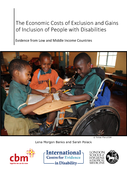
Evidence from Low and Middle Income Countries
The Standard consists of nine key inclusion standards, and seven sets of sector-specific inclusion standards for protection – water, sanitation and hygiene, food security and livelihoods, nutrition, shelter, settlement and household items, health and education. Each standard comes with key actions
...
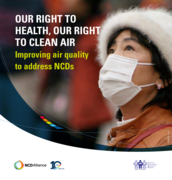
This policy brief explores the impact of air pollution on health and address the air quality issue in the response to noncommunicable diseases (NCDs). It also provides key actions that policy makers, NGOs and health professionals can take to ensure that every one can breathe clean air.
Trachoma is an eye infection that for thousands of years caused many people to go blind across all continents. As the result of development and targeted interventions, trachoma is now limited to an estimated 57 countries, often affecting the poorest
populations of the world. Today, more than 2 mill
...
The project was developed by the International Federation of Medical Students’ Associations (IFMSA), in line with the Federation’s statement “a world in which students are equipped with knowledge, skills and value to take on
...

- Build community resilience to coastal hazards by improving capacity of inclusive disaster management systems.
- Reduce the mortality rate of persons with disabilities in situations of risk.
- Raise awareness about inclusive policies, practices and disaster risk reduction strategies that address
...

An estimated 1.3 billion people – or 16% of global population worldwide – experience a significant disability today. Persons with disabilities have the right to the highest attainable standard of health as those without disabilities. However, th
...
Recommendations to develop guidelines on community-based rehabilitation (CBR) were made during the International Consultation to Review Community-based Rehabilitation which was held in Helsinki, Finland in 2003. WHO; the
...
Recommendations to develop guidelines on community-based rehabilitation (CBR) were made during the International Consultation to Review Community-based Rehabilitation which was held in Helsinki, Finland in 2003. WHO; the
...
