
Filter
914
Text search:
Infecciones
Featured
99
147
Language
Document type
313
266
97
76
59
35
20
14
9
8
6
5
5
Countries
84
79
50
49
48
45
29
25
22
20
19
13
8
6
6
6
4
4
4
3
3
3
3
3
2
2
2
2
2
2
2
1
1
1
1
1
1
1
1
1
1
1
1
1
1
1
1
1
1
1
1
1
1
1
1
1
1
1
1
1
Authors & Publishers
Publication Years
Category
396
143
67
66
16
15
13
Toolboxes
226
110
58
51
39
33
32
27
26
22
18
16
15
14
11
5
5
5
5
4
4
2

Esta nota de orientación elaborada por el UNICEF tiene por objeto ayudar al personal de agua, saneamiento e higiene en su preparación y respuesta a la actual pandemia de COVID-19. Proporciona una visión general de la prevención y el control de las infe
...
La presente publicación describe la evidencia científica disponible sobre la efectividad del uso de mascarillas o respiradores en la prevención y control de infecciones respiratorias virales incluido COVID-19 a nivel comunitario y hospitalario. S
...


This document provides interim guidance on the prevention, identification and management of health worker infection in the context of COVID-19. It is intended for occupational health departments, infection prevention and control departments or focal points, health facility administrators and public
...
El informe anual de la vigilancia de la resistencia a los antibióticos de los países participantes de la Región de las Américas se discute y analiza con el fin de tomar medidas para el perfeccionamiento continuo de la calidad de los datos, y su utilidad en la orientación a los clínicos para el
...
Las infecciones de transmisión sexual (ITS) constituyen un importante problema de salud pública en todo el mundo, que afecta a la calidad de vida y se acompaña de importantes niveles de morbilidad y mortalidad. Estas
...
Las infecciones relacionadas con la atención sanitaria (IRAS) plantean una seria carga de enfermedad y tienen un efecto económico considerable en los pacientes y en los sistemas sanitarios de todo el mundo. Sin em
...
Las infecciones relacionadas con la atención sanitaria (IRAS) suponen una tremenda carga de enfermedad y tienen un importante impacto económico en los pacientes y los sistemas sanitarios de todo el mundo. Pero una buena higiene de las manos, la se
...
Las Infecciones Asociadas a la Atención en Salud (IAAS) son reconocidas en la
actualidad como un problema de salud pública y existen lineamientos guber-
namentales en la mayoría de los países para constituir sistemas de vigilancia y
Program
...
Las infecciones del sitio quirúrgico (ISQ) constituyen una de las Infecciones Asociadas al Cuidado de la Salud (IACS) más frecuentes que ponen en riesgo a los pacientes llevando muchas veces al fr
...
Los antibióticos tratan solamente las infecciones causadas por bacterias. Como todos los medicamentos, los antibióticos pueden ser dañinos y deben usarse solo cuando sea necesario.
OBJETIVOS
•Definir la Higiene de manos y las infecciones adquiridas en los hospitales (HAIs).
•Describir el impacto negativo de las HAIs en pacientes dados de alta.
•Discutir cómo la higiene de manos puede prevenir los HAIs.
•Identifica
...
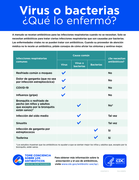
Los antibióticos solo son necesarios para tratar ciertas infecciones causadas por bacterias. Las enfermedades virales no pueden tratarse con antibióticos. Cuando tomar antibióticos no sea lo indicado, pídale a su profesional de atención médica
...
manual de referencia rápida de anomalías congénitas e infecciones seleccionadas
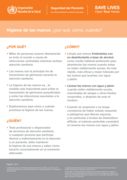
Miles de personas mueren diariamente en todo el mundo a causa de infecciones contraídas mientras reciben atención sanitaria.

Se sabe que las mujeres embarazadas experimentan cambios inmunológicos y fisiológicos que pueden hacerlas más susceptibles a las infecciones respiratorias virales, incluido COVID-19. Varios estudios revelaron que las mujeres
...
