
Filter
34
Text search:
FGM/C
Language
Document type
24
3
2
2
2
1
Countries
4
3
3
2
2
2
2
2
1
1
1
1
1
1
1
1
1
1
1
1
1
1
1
1
1
1
1
1
1
1
1
1
1
Authors & Publishers
Publication Years
Category
30
13
Toolboxes
3
This report provides insight into the work that UNFPA has been doing to tackle FGM across borders in these border areas, where country offices are implementing a wide range of initiatives to address the issue. The information provided in this report is structured into four pillars, namely those list
...
This statistical overview has been prepared on the occasion of the European Institute for
Gender Equality (EIGE) study on FGM in the European Union and Croatia. Little is known
about FGM in the European Union in general, and this statement holds true about FGM
and asylum more specifically. In lig
...
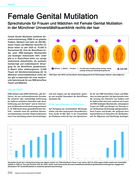
Female Genital Mutilation (weibliche Genitalverstümmelung, FGM) ist ein globales Problem. Weltweit sind mehr als 200 Millionen Frauen und Mädchen betroffen. Davon lebten im Jahr 2020 ca. 75.000 in Deutschland. Viele der Betroffenen leiden unter FGM-bedingten Beschwerden
und benötigen medizinisch
...
Female genital mutilation/cutting (FGM/C) refers to “all procedures involving partial or total removal of the female external genitalia or other injury to the female genital organs for non-medical
...
Female genital mutilation/cutting (FGM/C) refers to “all procedures involving partial
or total removal of the female external genitalia or other injury to the female
genital organs for non-medic
...
This report is a comprehensive statistical overview of female genital mutilation/cutting (FGM/C) in the 29 countries where the practice is concentrated. Analysis of the data reflects current perspec
...
Accessed on 20.10.2020
These statistical profiles present the latest available data on female genital mutilation/cutting (FGM/C) for 30 countries where FMG/C is concentrated. They provide figures
...
Intended for use primarily by those responsible for developing policies and directing the working practices of nurses, midwives and other frontline health-care providers, these guidelines aim to promote and strengthen the case against the medicalization of female genital mutilation and support and p
...
Female genital mutilation is a harmful traditional practice that violates girls’ right to health
and overall well-being. Most research cites social acceptance, marriageability, community
belonging, proof of virginity, curbing promiscuity, hygiene, and religion as motivations for the
practice. I
...
Ces directives sont destinées à ceux qui sont responsables de l'élaboration des politiques et de la supervision des pratiques professionnelles des infirmières, des sages-femmes et d'autres prestataires de la santé. Elles veulent également promouvoir le combat contre la "médicalisation" de ces
...
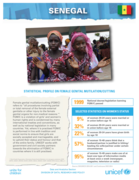
Au Sénégal, près de deux millions de filles et de femmes ont subi des MGF. Au total, 25 % des filles et des femmes ont subi cette pratique, allant de plus de 90 % dans la région de Kédougou à un peu moins de 1 % dans celle de Diourbel
Au Mali, près de huit millions de filles et de femmes ont subi des MGF. À l’échelle nationale, 89 % des filles et des femmes âgées de 15 à 49 ans ont subi cette pratique. À l’échelle infranationale, cette proportion varie de 96 % dans la région de Sikasso à moins de 1 % dans les régio
...
