Filter
1808
Text search:
Diagnose
Featured
209
430
Language
1599
153
46
44
34
28
25
14
10
9
8
7
6
5
4
4
3
3
3
3
3
3
2
2
2
2
1
1
1
1
1
1
1
1
1
1
1
1
Document type
1019
283
242
98
56
43
32
11
7
5
5
3
2
2
Countries / Regions
113
92
76
54
48
45
43
36
35
32
29
26
26
24
24
22
22
21
20
19
18
17
16
16
13
13
11
11
10
9
9
8
7
7
6
6
6
5
5
5
5
4
4
4
4
4
4
4
4
3
3
3
3
3
3
3
3
3
2
2
2
2
2
2
2
2
2
2
1
1
1
1
1
1
1
1
1
1
1
1
1
1
1
1
1
1
1
1
1
1
1
1
1
1
1
1
Authors & Publishers
235
85
51
51
42
40
37
32
27
26
19
17
16
16
15
15
12
10
10
9
9
9
8
8
8
8
7
7
7
7
7
7
7
7
6
6
6
6
6
6
5
5
5
5
5
5
4
4
4
4
4
4
4
4
4
4
4
4
4
4
4
4
4
4
4
4
4
4
4
4
4
3
3
3
3
3
3
3
3
3
3
3
3
3
3
3
3
3
3
3
3
3
3
3
3
3
3
3
3
3
3
3
3
3
3
3
3
3
2
2
2
2
2
2
2
2
2
2
2
2
2
2
2
2
2
2
2
2
2
2
2
2
2
2
2
2
2
2
2
2
2
2
2
2
2
2
2
2
2
2
2
2
2
2
2
2
2
2
2
2
2
2
2
2
2
2
2
2
2
2
2
2
2
2
2
2
2
2
2
2
2
2
2
2
2
2
2
2
2
2
2
2
2
2
2
2
2
2
2
2
2
2
2
2
2
2
2
2
2
2
2
2
2
2
2
2
2
2
2
2
2
2
2
2
2
2
1
1
1
1
1
1
1
1
1
1
1
1
1
1
1
1
1
1
1
1
1
1
1
1
1
1
1
1
1
1
1
1
1
1
1
1
1
1
1
1
1
1
1
1
1
1
1
1
1
1
1
1
1
1
1
1
1
1
1
1
1
1
1
1
1
1
1
1
1
1
1
1
1
1
1
1
1
1
1
1
1
1
1
1
1
1
1
1
1
1
1
1
1
1
1
1
1
1
1
1
1
1
1
1
1
1
1
1
1
1
1
1
1
1
1
1
1
1
1
1
1
1
1
1
1
1
1
1
1
1
1
1
1
1
1
1
1
1
1
1
1
1
1
1
1
1
1
1
1
1
1
1
1
1
1
1
1
1
1
1
1
1
1
1
1
1
1
1
1
1
1
1
1
1
1
1
1
1
1
1
1
1
1
1
1
1
1
1
1
1
1
1
1
1
1
1
1
1
1
1
1
1
1
1
1
1
1
1
1
1
1
1
1
1
1
1
1
1
1
1
1
1
1
1
1
1
1
1
1
1
1
1
1
1
1
1
1
1
1
1
1
1
1
1
1
1
1
1
1
1
1
1
1
1
1
1
1
1
1
1
1
1
1
1
1
1
1
1
1
1
1
1
1
1
1
1
1
1
1
1
1
1
1
1
1
1
1
1
1
1
1
1
1
1
1
1
1
1
1
1
1
1
1
1
1
1
1
1
1
1
1
1
1
1
1
1
1
1
1
1
1
1
1
1
1
1
1
1
1
1
1
1
1
1
1
1
1
1
1
1
1
1
1
1
1
1
1
1
1
1
1
1
1
1
1
1
1
1
1
1
1
1
1
1
1
1
1
1
1
1
1
1
1
1
1
1
1
1
1
1
1
1
1
1
1
1
1
1
1
1
1
1
1
1
1
1
1
1
1
1
1
1
1
1
1
1
1
1
1
1
1
1
1
1
1
1
1
1
1
1
1
1
1
1
1
1
1
1
1
1
1
1
1
1
1
1
1
1
1
1
1
1
1
1
1
1
1
1
1
1
1
1
1
1
1
1
1
1
1
1
1
1
1
1
1
1
1
1
1
1
1
1
1
1
1
1
1
1
1
1
1
1
1
1
1
1
1
1
1
1
1
1
1
1
1
1
1
1
1
1
1
1
1
1
1
1
1
1
1
1
1
1
1
1
1
1
1
1
1
1
1
1
1
1
1
1
1
1
1
1
1
1
1
1
1
1
1
1
1
1
1
1
1
1
1
1
1
1
1
1
1
1
1
1
1
1
1
1
1
1
1
1
1
1
1
1
1
1
1
1
1
1
1
1
1
1
1
1
1
1
1
1
1
1
1
1
1
1
1
1
1
1
1
1
1
1
1
1
1
1
1
1
1
1
1
1
1
1
1
1
1
1
1
1
1
1
1
1
1
1
1
1
1
1
1
1
1
1
1
1
1
1
1
1
1
1
1
1
1
1
1
1
1
1
1
1
1
1
1
1
1
1
1
1
1
1
1
1
1
1
1
1
1
1
1
1
1
1
1
1
1
1
1
1
1
1
1
1
1
1
1
1
1
1
1
1
1
1
1
1
1
1
1
1
1
1
1
1
1
1
1
1
1
1
1
1
1
1
1
1
1
1
1
1
1
1
1
1
1
1
1
1
1
1
1
1
1
1
1
1
1
1
1
1
1
1
1
1
1
1
1
1
1
1
1
1
1
1
1
1
1
1
1
1
1
1
1
1
1
1
1
1
1
1
1
1
1
1
1
1
1
1
1
1
1
1
1
1
1
1
1
1
1
1
1
1
1
1
1
1
1
1
1
1
1
1
1
1
1
1
1
1
1
1
1
1
1
1
1
1
1
1
1
1
1
1
1
1
1
1
1
1
1
1
1
1
1
1
1
1
1
1
1
1
1
1
1
1
1
1
1
1
1
1
1
1
1
1
1
1
1
1
1
1
1
1
1
1
1
1
1
1
1
1
1
1
1
1
1
1
1
1
1
1
1
1
1
1
1
1
1
1
1
1
1
1
1
1
1
1
1
1
1
1
1
1
1
1
1
1
1
1
1
1
1
1
1
1
1
1
1
1
1
1
1
1
1
1
1
1
1
1
1
1
1
1
1
1
1
1
1
1
1
1
1
1
1
1
1
1
1
1
1
1
1
1
1
1
1
1
1
1
1
1
1
1
1
1
1
1
1
1
1
1
1
1
1
1
1
1
1
1
1
1
1
1
1
1
1
1
1
1
1
1
1
1
1
1
1
1
1
1
1
1
1
1
1
1
1
1
1
1
1
1
1
1
1
1
1
1
1
1
1
1
1
1
1
1
1
1
1
1
1
1
1
1
1
1
1
1
1
1
1
1
1
1
1
1
1
1
1
1
1
1
1
1
1
1
1
1
1
1
1
1
1
1
1
1
1
1
1
1
1
1
1
1
1
1
1
1
1
1
1
1
1
1
1
1
1
1
1
1
1
1
1
1
1
1
1
1
1
1
1
1
1
1
1
1
1
1
1
1
1
1
1
1
1
1
1
1
1
1
1
1
1
1
1
1
1
1
1
1
1
1
1
1
1
1
1
1
1
1
1
1
1
1
1
1
1
1
1
1
1
1
1
1
1
1
1
1
1
1
1
1
1
1
1
1
1
1
1
1
1
1
1
1
1
1
1
1
1
1
1
1
1
1
1
1
1
1
1
1
1
1
1
1
1
1
1
1
1
1
1
1
1
1
1
1
1
1
1
1
1
1
1
1
1
1
1
1
1
1
1
1
1
1
1
1
1
1
1
1
1
1
1
1
1
1
1
1
1
1
1
1
1
1
1
1
1
1
1
1
1
1
1
1
1
1
1
1
1
1
1
1
1
1
1
1
1
1
1
1
1
1
1
1
1
1
1
1
1
1
1
1
1
1
1
1
1
1
1
1
1
1
1
1
1
1
1
1
1
1
1
1
1
1
1
1
1
1
1
1
1
1
1
1
1
1
1
1
1
1
1
1
1
1
1
1
1
1
1
1
1
1
1
1
1
1
1
1
1
1
1
1
1
1
1
1
1
1
1
1
1
1
1
1
1
1
1
1
1
1
1
1
1
1
1
1
1
1
1
1
1
1
1
1
1
1
1
1
1
1
1
1
1
1
1
1
1
1
1
1
1
1
1
1
1
1
1
1
1
1
1
1
1
1
1
1
1
1
1
1
1
1
1
1
1
1
1
1
1
1
1
1
1
1
1
1
1
1
1
1
1
1
1
1
1
1
1
1
1
1
1
1
1
1
1
1
1
1
1
1
1
1
1
1
Publication Years
492
1123
183
9
1
Category
669
211
112
65
42
41
31
Toolboxes
239
140
120
113
107
92
62
43
42
36
29
26
19
16
15
15
14
12
11
9
9
4
4
4
3
Schwerpunkt Arabischer und Persischer Raum/Focus on Arab and Persian Culture/ Accent sur le monde arabe et persiqü.
Sich besser verstehen, auch ohne die gleiche Sprache zu sprechen. Das gegenseitige Verständnis zwischen Arzt und patient und damit der Weg zur
...
Diagnose soll vereinfacht werden.
more
Primary Care 101
recommended
Symptom-based integrated approach to the adult in primary care.
Primary Care 101 is a comprehensive clinical practice guideline that aims to equip nurses and other clinicians to diagnose and manage common adult conditions at primary level.
Tb; HI
...
V; Asthma/COPD; cardiovascular disease; diabetes; Mental health conditions; Epilepsy; Musculoskeletal disorders; Women’s health
more
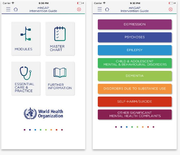
WHO’s mhGAP Intervention Guide 2.0 app, launched in October, is now available in both iOS and Android. The app provides non-specialized health-care providers with access to comprehensive information to help them diagnose and treat a range of menta
...

l, neurological and substance use (MNS) disorders including depression, epilepsy and dementia from their tablets or mobile phones. Each module includes a description and guidance on assessment and management of priority MNS conditions. The tool can be downloaded free of charge. It is currently available in English. Other languages are expected to be available soon
Download the iOS Version under: https://itunes.apple.com/gb/app/mhgap-ig-2-0-app-e-mhgap/id1291414206?mt=8
The Android Version under: https://play.google.com/store/apps/details?id=com.universaltools.mhgap
more
Traumata werden definiert als Ereignisse von außergewöhnlicher Bedrohung, die nahezu bei jedem tiefgreifende Verzweiflung auslösen würde. Die „klassische“ Posttraumatische Belastungsstörung (PTBS) ist gekennzeichnet durch Intrusionen, Vermeidung und Hyperausal. Die komplexe Posttraumatische
...
Belastungsstörung (KPTBS) wird als eigenständige Diagnose in das ICD-11 aufgenommen und tritt als Folge von sich wiederholenden oder langandauernden traumatischen Ereignissen auf. Die KPTBS ist neben den Symptomen der PTBS durch Affektregulationsstörungen, negative Selbstwahrnehmung und Beziehungsstörungen gekennzeichnet. Aktuelle empirische Studien lieferten Hinweise für die Validität dieser Diagnose. Die Exposition in sensu mit dem traumatischen Ereignis steht im Mittelpunkt der als erfolgreich evaluierten Psychotherapien der PTBS und der KPTBS. Zur differenziellen Wirkung einzelner traumafokussierter Verfahren bei KPTBS können jedoch noch keine eindeutigen Empfehlungen ausgesprochen werden.
more
Sich besser verstehen, auch ohne die gleiche Sprache zu sprechen: Das ist das Ziel des Patienten-Arzt-Booklets 'Beim Arzt in Deutschland'. Das gegenseitige Verständnis zwischen Arzt und Patient, und damit der Weg zur Diagnose, soll vereinfacht werd
...
en. Wichtig dabei: Der kulturelle Hintergrund. Wie beeinflusst etwa der religiöse Hintergrund die Medikamenteneinnahme? Die Broschüre ist praxiserprobt, kann aber nicht jeder Situation gerecht werden.
more
If you notice changes in the person’s mood, behaviour, energy levels, habits or
personality, you should consider depression as a possible reason for these changes.
However, you should not attempt to diagnose the person with depression, as only a
...
trained professional can do this. Do not ignore the symptoms you have noticed or
assume that they will just go away
more
Journal of Clinical TB and other Mycobacterial Diseases
uberculosis (TB) in the gastrointestinal tract or peritoneum is an uncommon condition in clinical practice. Its rarity, combined with its nonspecific presentations, makes this kind of extrapulmonary tuberculosis difficult to
...

diagnose as it can mimic other inflammatory or malignant conditions. Delays in treatment and frequent misdiagnosis can lead to hazardous complications. In countries like Ecuador where the disease is endemic, TB should always be considered in the differential diagnosis of a patients who present with nonspecific abdominal symptoms. In these scenarios, laparoscopy can be an invaluable tool when used with sufficiently high clinical awareness and adequate training.
Case presentation
We present the case of a 37-year-old female patient from Ecuador with a 1-year history of abdominal pain, nausea, intermittent vomits, night sweats, and weight loss. After clinical evaluation and a laparoscopic intervention, abdominal TB was detected and promptly treated. Antituberculosis chemotherapy was initiated, and the patient successfully reco
High clinical awareness is imperative when approaching abdominal TB due to its wide spectrum of clinical symptoms and its rarity. Early detection and prompt treatment are critical to minimize the possibility of hazardous complications.
more
Ein Dokumentarfilm über den Kampf gegen Chagas, eine tödliche Krankheit, die weltweit 6-7 Millionen Infizierte bedroht. Inklusive Interviews mit internationalen Experten und einem Besuch in Argentinien, wo eine Koalition von Ärzten, mobilen medizinischen Einsatz- und Aufklärungsteams sowohl die
...
Landbevölkerung, die kaum Zugang zur richtigen Diagnose, Behandlung und Medizin hat, als auch Stadtbewohner untersucht und versorgt.
more
Scabies is a contagious skin condition caused by the mite Sarcoptes scabiei which burrows into the skin and causes severe itching. Scabies is transmitted by direct skin-to-skin contact or indirectly by contact with contaminated material (fomites). This condition is often challenging to
...
diagnose as many patients may have only subtle symptoms. However, other patients may present with the classic history of exposure, severe pruritis that is worse at night, and reference to other individuals with similar symptoms. This activity reviews the evaluation and treatment of scabies and highlights the role of the interprofessional team in managing patients with this condition.
more
Website last accessed on 18.03.2023
WHO often receives requests from Member States and implementing partners to provide training in capacity‐building in endemic areas in order to better equip health personnel to diagnose, treat and control the
...
disease.
more
This document outlines the concept and content of the WHO people-centred approach to addressing antimicrobial resistance (AMR) in the human health sector. The proposed approach recognizes and aims to address the challenges and health system barriers people face when accessing health services to prev
...

ent, diagnose and treat (drug-resistant) infections. It puts people and their needs at the centre of the AMR response and guides policy-makers in taking programmatic and comprehensive actions to mitigate AMR in line with a proposed package of core interventions. These interventions are based on a review of four pillars and two foundational steps that are critical to overcome barriers faced by people and health systems in addressing AMR.
more
Each year since 2007, G-FINDER has provided policy-makers, donors, researchers and industry with a comprehensive analysis of global investment into research and development of new products to
prevent, diagnose, control or cure neglected diseases in
...
low- and middle-income countries, making it the gold standard in tracking and reporting global funding for neglected disease R&D. This year’s report, the sixteenth overall, focuses on investments made in participants’ 2022 financial year (‘FY2022’) and, for the first time, adds comprehensive coverage of the product pipeline in each disease area.
more
The skin of a patient is the first and most visible structure of the body that any health-care worker encounters during the course of an examination. To the patient, it is also highly visible, and any disease that affects it is noticeable and will have an impact on personal and social well-being. Th
...
e skin is therefore an important entry point for both diagnosis and management. Many diseases of humans are associated with changes to the skin, ranging from symptoms such as itching to changes in colour, feel and appearance.
This training guide explains how to identify the signs and symptoms of neglected tropical diseases of the skin through their visible characteristics. It also contains information on how to diagnose and manage common skin problems that front-line health workers may encounter.
more
Dieser E-Learning-Kurs verschafft Ihnen durch informative Texte, anschauliche Fallbeispiele und nützliche Links einen umfassenden Überblick zur Diabetes-Situation weltweit. Der Schwerpunkt liegt dabei auf dem globalen Süden. Praktische Hilfestellungen für Ihre Arbeit runden das Angebot ab. Für
...
die Bearbeitung der gesamten E-Learning Einheit benötigen Sie etwa zweieinhalb Stunden.
Modul A: Überblick zur aktuellen Situation; Folgen für Länder des globalen Südens (Daür: ca. 15 Min.);
Modul B: Medizinische Grundlagen; Ursachen und Komplikationen; Zusammenhänge mit nfektionskrankheiten (Daür: ca. 30 Min.); Modul C: Grundlagen von Diagnose, Behandlung und Schulung; Präventionsmaßnahmen; Probleme beim Zugang zu Medikamenten (Daür: ca. 30 Min.); Modul D: Nutzen und Schaden gängiger Antidiabetika, rationale Auswahl von Medikamenten (Daür: ca. 30 Min.); Modul E: Globale Verbreitung von Diabetes; Länderstudien; politischen Gegenmaßnahmen und WHO-Pläne (Daür: ca. 30 Min.); Modul F: Praktische Hilfestellungen für die Arbeit (Daür: ca. 15 Min.)
more
Traumatische Erlebnisse bei Kindern: Diagnostik und Psycho-Edukation
Regula Buchli; Carmen de Witt-Amrein; Fabienne Heiniger
Erziehungsdirektion Kanton Bern, Amt für Kindergarten, Volksschule und Beratung (AKVB)
(2017)
C2
Die aktuelle weltpolitische Lage führt dazu, dass immer mehr potentiell traumatisierte Kinder der Unterstützung von Fachleuten – auch in der psychologischen Grundversorgung - bedürfen. Traumata können bei Kindern aber auch durch Hospitalisationen und damit verbundene medizinische Eingriffe, Un
...

fälle o.ä. ausgeloest werden, wie im Folgenden beschrieben wird.
Die Diagnose von Traumafolgestörungen bei Kindern ist durch die Tatsache erschwert, dass sie eine Reihe unspezifischer und altersabhängiger Symptome zeigen, die auch bei anderen Störungen auftreten, was unter Umständen zu Fehldiagnosen (ADHS) führen kann.
Aus diesem Grund hat die vorliegende Arbeit zum Ziel, Fachpersonen eine Zusammenstellung grundlegender Informationen zur Entstehung und Diagnostik von Traumafolgestörungen sowie einen Überblick über gängige Diagnoseinstrumente zur Verfügung zu stellen.
more
The Zambia Population Based HIV impact assessment of 2016, reported the prevalence of viral hepatitis in Zambia as ranging between 5.6% among adults aged 15 to 59% in the general population, and 7.1% among HIV infected individuals. It is estimated that the majority of persons with chronic hepatitis
...
B and/ or hepatitis C are unware of their infection and do not benefit from promotive, preventive and curative services designed to reduce onward transmission. Zambia introduced hepatitis B virus vaccine to the routine Under 5 vaccination schedule in 2005. Preliminary results from the ZAMPHIA indicate that hundreds of infections have been abated in children since then. However, its also clear that we continue to miss key opportunities to prevent transmission, diagnose and treat infections, prevent serious disease, and in many cases cure people. In addition, high risk groups inter alia health care workers still have limited access to the vaccine.
more
This publication is based on the list of clinical interventions selected from clinical guidelines on prevention, screening, diagnosis, treatment, palliative care, monitoring and end of life care. This publication addresses medical devices for six types of cancer: breast, cervical, colorectal, leukem
...
ia, lung and prostate. The first section defines the global increase in cancer cases, the global goals to manage NCDs and the WHO activities related to these goals. The second section presents the methodology used for the selection of medical devices that support clinical interventions required to screen, diagnose, treat and monitor cancer stages, as well as the provision of palliative care, based on evidence-based information. The third section lists the priority medical devices required to manage cancer in seven different units of health care services: 1. Vaccination, clinical assessment and endoscopy, 2. Medical imaging and nuclear medicine, 3. Surgery, 4. Laboratory and pathology, 5. Radiotherapy, 6. Systemic therapy and 7. Palliative and end of life care
more
Klinische Falldefinition einer Post-COVID-19-Erkrankung gemäß Delphi-Konsens, 6.Oktober 2021
recommended
Die WHO hat mit Hilfe der Delphi-Methode eine klinische Falldefinition für das Post-COVID-19-Syndrom entwickelt, die 12 Domänen umfasst und in allen Bereichen verwendet werden kann. Diese erste Version wurde von Patienten, Forschern und anderen Personen aus allen WHO-Regionen entwickelt, wobei dav
...
on ausgegangen wird, dass sich die Definition ändern kann, wenn sich neue Erkenntnisse ergeben und sich unser Verständnis der Folgen von COVID-19 weiterentwickelt.
Die Post-COVID-19-Erkrankung tritt bei Personen mit einer wahrscheinlichen oder bestätigten SARS-CoV-2-Infektion in der Anamnese auf, in der Regel drei Monate nach dem Auftreten von COVID-19 mit Symptomen, die mindestens zwei Monate anhalten und nicht durch eine andere Diagnose erklärt werden können. Zu den häufigen Symptomen gehören Müdigkeit, Kurzatmigkeit, kognitive Störungen, aber auch andere Symptome, die sich im Allgemeinen auf das tägliche Leben auswirken. Die Symptome können nach der anfänglichen Genesung von einer akuten COVID-19-Episode neu auftreten oder nach der ersten Erkrankung fortbestehen. Die Symptome können auch schwanken oder im Laufe der Zeit wieder auftreten.
more
The Practical manual on laboratory strengthening, 2022 update provides practical guidance on implementation of WHO recommendations and best practices for TB laboratory strengthening. It is an updated version of the GLI Practical Guide to Laboratory Strengthening published in 2017 and provides the la
...

test practical guidance on use of newly recommended diagnostics as well as guidance in key technical areas, including quality assurance and quality management systems, specimen collection and registration, procurement and supply-chain management, diagnostic connectivity, biosafety, data management, human resources, strategic planning, and model algorithms. The key changes are:
inclusion of recent or updated WHO recommendations for tests to diagnose TB and detect drug resistance;
alignment with the latest WHO critical concentrations for phenotypic drug-susceptibility testing (DST) and the new definitions of pre-XDR-TB and XDR-TB;
updated information on building quality-assured TB testing and management capacity using the Stepwise Laboratory Quality Improvement Process Towards Accreditation (SLIPTA) approach (Score-TB package1);
updated information on assessing, analysing and optimising TB diagnostic networks; and
updated information on the use of next-generation sequencing (NGS) to detect mutations associated with drug resistance for surveillance purposes.
The document also provides references to resources and tools relevant for work on laboratory strengthening.
more
Trailer zum Dokumentarfilm über den Kampf gegen Chagas, eine tödliche Krankheit, die weltweit 6-7 Millionen Infizierte bedroht. Inklusive Interviews mit internationalen Experten und einem Besuch in Argentinien, wo eine Koalition von Ärzten, mobilen medizinischen Einsatz- und Aufklärungsteams sow
...
ohl die Landbevölkerung, die kaum Zugang zur richtigen Diagnose, Behandlung und Medizin hat, als auch Stadtbewohner untersucht und versorgt.
more