
Filter
1551
Text search:
integrated
antenatal
care
Featured
Recommendations
127
New Publications
589
Language
Document type
No document type
1093
Studies & Reports
177
Guidelines
140
Manuals
44
Strategic & Response Plan
41
Training Material
25
Fact sheets
13
Situation Updates
8
Infographics
5
Resource Platforms
2
Brochures
1
App
1
Online Courses
1
Countries / Regions
India
86
Kenya
75
Nigeria
63
Nepal
62
Uganda
57
Malawi
57
South Africa
54
Liberia
53
Global
51
Ethiopia
47
Sierra Leone
46
Zambia
44
Tanzania
42
Namibia
40
Rwanda
39
Myanmar / Burma
35
Bangladesh
34
Ghana
31
Lesotho
21
Africa
21
Zimbabwe
17
Botswana
15
South Sudan
12
Senegal
11
Asia
11
Burkina Faso
10
Syria
10
Cambodia
10
Indonesia
10
South–East Asia Region
10
Haiti
9
East and Southern Africa
9
Philippines
8
Pakistan
7
Mozambique
7
Western and Central Europe
7
Middle East and North Africa
6
Latin America and the Carribbean
6
Guinea
5
Congo, Democratic Republic of
5
Albania
5
Cameroon
4
Afghanistan
4
Lebanon
4
Sudan
4
Benin
4
Ukraine
4
Madagascar
4
West and Central Africa
4
Mali
3
Jordan
3
Eswatini/ Swaziland
3
Yemen
3
Eastern Europe
3
Southern Africa
3
Georgia
3
Iraq
2
Turkey
2
Papua New Guinea
2
North Macedonia
2
Colombia
2
Western Pacific Region
2
Eastern Europe and Central Asia
2
Timor Leste/ East Timor
2
Russia
2
Niger
1
Togo
1
Somalia
1
Germany
1
Egypt
1
Thailand
1
Gambia
1
Central African Republic
1
Switzerland
1
Burundi
1
Angola
1
Guatemala
1
Mexico
1
Sri Lanka
1
Other region
1
Bhutan
1
Venezuela
1
Palestine
1
Armenia
1
Bulgaria
1
Romania
1
Moldova
1
Iran
1
Kyrgyzstan
1
Vietnam
1
Authors & Publishers
Publication Years
Category
Countries
917
Women & Child Health
161
Clinical Guidelines
86
Public Health
66
Key Resources
44
Capacity Building
42
Pharmacy & Technologies
5
Toolboxes
HIV
206
Caregiver
46
COVID-19
44
Mental Health
40
TB
37
Conflict
30
Malaria
24
Refugee
16
Global Health Education
16
NCDs
11
Disability
10
Ebola & Marburg
10
Health Financing Toolbox
10
AMR
9
Planetary Health
8
NTDs
7
Rapid Response
6
Zika
5
Pharmacy
5
Natural Hazards
4
Cholera
3
2.0 Rapid Response
3
Polio
2
Typhoon
1
Social Ethics
1

This comprehensive HPFM report thoroughly explores Kenya’s health financing landscape. It provides an in-depth analysis of the current state of affairs and sheds light on required strategic changes in health financing. The report points out the need to improve public financial management within th
...

In 2008 the Ministry of Health and Social Services (MOHSS) commissioned a national health and social service system review which found that although some progress has been made in primary health care, provision of health services did not go beyond t
...

Enabling young children to achieve their full developmental potential is a human right and an essential requisite for sustainable development. Given the critical importance of enabling children to make the best start in life, the health sector, among other sectors, has an important role and responsi
...
PEPFAR Malawi’s Country Operational Plan 2022 (COP22) embodies joint priorities from national and subnational dialogues building on the 2020-2025 National Strategic Plan for HIV/AIDS. The interagency team has developed a person-centered, district-tailored and Malawi Population-Based HIV Impact Ass
...

Thesis presented in partial fulfilment of the requirements for the degree of Master of Nursing Science in the Faculty of Health Sciences at Stellenbosch University.
The mobile clinic health care services fulfil an essential role in delivering prim
...
A case study from Albania
June 2016
EHRN is grateful to all who contributed to this document, especially (in alphabetical order): Alena Alba, Program Officer, Eastern Europe and Central Asia Team, Asia, Europe, Latin America and the Caribbean Department, The Global Fund to Fight AIDS, Tuberc
...
The key areas covered are diagnosis, imaging, pathology, surgery, rehabilitation, palliative care and survivorship. It emphasizes a multi-disciplinary team approach which is paramount for quality cancer
...
PEPFAR Malawi’s Country Operational Plan (COP) 2021 reflects a culmination of strong interagency collaboration between the PEPFAR Malawi team, Government of Malawi (GoM), and civil society organizations (CSOs) to mitigate the devastating impacts of COVID-19 and sustain progress achieved over the l
...
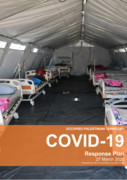
The primary focus of the plan continues to be prevention, preparedness and treatment of the the Novel Coronavirus (COVID-19) outbreak. Central to the plan are the following overall objectives:
To prevent further transmission of COVID-19 in the oPt;
To provide adequate
...
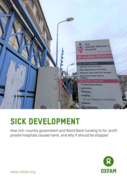
Development finance institutions owned by European governments and the World Bank Group are spending hundreds of millions of dollars on expensive for-profit hospitals in the Global South that block patients from getting care, or bankrupt them, with
...
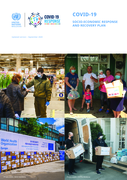
Updated version – September 2020
The COVID-19 pandemic is affecting everyone. Globally, millions of people have been infected with the virus, while hundreds of thousands have lost their lives. In Moldova, the pandemic is placing an ever-increasing pressure on the health
...
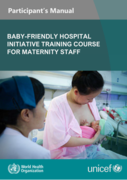
1.1 Why this course is needed
The first few hours and days of a newborn baby’s life are a critical window for establishing breastfeeding and for providing mothers with the support they need to breastfeed successfully. Since 1991, the Baby-friendly Hospital Initiative (BFHI) has helped to motivate
...
The resources provide both the older as well as the updated Operational Guidelines for antiretroviral therapy centres, including administrative issues, functions and establishment of centres, reporting and recording tools, measures to improve retention in HIV
...

Guidelines on hepatitis B and C testing
recommended
Testing and diagnosis of hepatitis B (HBV) and C (HCV) infection is the gateway for access to both prevention and treatment services, and is a crucial component of an effective response to the hepatitis epidemic. Early identification of persons with chronic HBV or HCV infection enables them to recei
...
Maternal and child malnutrition is a significant public health problem in South Sudan. Among children aged 6-59 months, 31% are stunted, 28% are underweight, and nearly 23% are acutely malnourished of which 13% are estimated to suffer from moderate acute malnutrition and 10% from severe acute malnut
...

The protracted humanitarian situation in northeastern Nigeria, particularly in Borno, Adamawa, and Yobe (BAY) States, remains a concern due to ongoing insecurity, displacement, food insecurity, disease outbreaks, and climate-related shocks. To address these complex challenges, the health sector has
...

This document is an output of a WHO cross-programme initiative aiming to improve the prevention, diagnosis and management of anaemia and thereby accelerate reduction in its prevalence. It comes at an important time, midway through the era of the Sustainable Development Goals, when progress in reduci
...
In 2020, the COVID-19 pandemic impacted the world beyond imagination. To date, it has infected more than 135 million people, killed over 2.9 million people, and is projected to plunge up to 115 million people into extreme poverty.1 As countries have gone into lockdown, gender-based violence has incr
...
The majority of Countdown countries did not reach the fourth Millennium Development Goal (MDG 4) on reducing child mortality, despite the fact that donor funding to the health sector has drastically increased. When tracking aid invested in child survival, previous studies have exclusively focused on
...
Internally displaced persons (IDPs), refugees, migrants and returnees constitute a sizeable population in the WHO Eastern Mediterranean Region. There were 12 million refugees (half are Palestinians) and 13 million IDPs in the Region as of 2018. These populations are often vul
...
