
Filter
1560
Text search:
World
Health
Organization
WHO,
Regional
Office
for
Europe
Featured
170
241
Language
Document type
578
421
250
127
67
41
40
21
5
4
3
1
1
Countries
143
103
73
70
38
30
23
19
17
16
14
13
12
12
11
11
10
10
10
9
9
8
8
8
8
8
8
8
7
7
7
6
5
5
5
5
5
5
5
5
5
5
4
4
4
4
4
4
4
4
4
3
3
3
3
3
3
3
3
3
3
3
3
3
3
3
3
3
2
2
2
2
2
2
2
2
2
2
2
2
2
1
1
1
1
1
1
1
1
1
1
1
1
1
1
1
1
1
1
1
1
1
1
1
1
1
1
1
Authors & Publishers
Publication Years
Category
304
128
111
101
96
25
12
Toolboxes
198
172
141
120
79
67
62
58
55
55
53
44
44
32
30
29
28
28
12
11
9
8
5
5
2
2
This update of the Guidelines for poison control, entitled Guidelines for establishing a poison centre, reflects the development of the role of poison centres in public
...

Terminology used to describe the transmission of pathogens through the air varies across scientific disciplines, organizations and the general public. While this has been the case for decades, during the coronavirus disease (COVID-19) pandemic, the
...
Key stakeholders must be involved in the planning, implementation, monitoring and evaluation of NCD plans and programmes. Within a ministry of health there will be different types of stakeholders, such as programme managers and senior managers in de
...

- The goal of diagnostic testing for Ebola and Marburg virus diseases is to identify cases to provide timely and appropriate care and to stop disease transmission.
- All individuals meeting the case definition
...

This document is for public health specialists, health emergency responders, clinicians, health
...

Developed through broad and inclusive consultation, and aligned with the WHO Global Health Sector Strategies and the Sustainable Development Goals, the framework promotes a people-centred approach a
...

Addressing comorbidities and risk factors for TB is a crucial component of Pillar one of the End TB Strategy, which focuses on integrated patient-centred care and prevention, including action on TB and comorbidities. The Framework
...
A framework for action provides a guide for those involved in the development of the multisectoral action plan. It starts with a wide-ranging vision and, through a series of increasingly specific in
...
To maintain a structured and well-organized implementation plan it is important to have a lead agency or sector. The ministry of health or a similar authority in government will be critical in facilitating development and implementation of the multi
...

The Guidance on global monitoring for diabetes prevention and control by WHO provides a comprehensive framework to support countries in tracking and managing diabetes prevention, care, and outcomes.
...
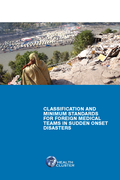
The document introduces a simple classification, minimums standards and a registration form for Foreign Medical Teams (FMTs) that may provide surgical and trauma care arriving within the aftermath of a sudden onset disaster. These can serve as tools
...
This paper was developed to support AMR coordination committees and others tasked with addressing AMR at country level to do just that. Drawing on the published literature and the operational experience and expertise of different LMICs, the paper points to six key strategies
...
The frequency of infectious disease epidemics is increasing, and the role of the health sector in the management of epidemics is crucial in terms of response. In the context of infectious disease epidemics, the use of climate-informed early warning
...

Available in English, French, Spanish and Russian from the website https://apps.who.int/iris/handle/10665/344562
These policy guidelines provide a strategic approach and new recommendations for integrated TB and HIV services for patients suffering from substance-abuse addiction. The key recommendations fall un
...
Rapid Advice Guideline
