Filter
366
Text search:
South
African
Medical
Journal
Featured
Recommendations
23
New Publications
58
Language
Document type
No document type
220
Studies & Reports
81
Guidelines
32
Manuals
13
Strategic & Response Plan
6
Situation Updates
4
Fact sheets
4
Training Material
3
Resource Platforms
3
Countries / Regions
South Africa
30
Africa
20
Kenya
15
Global
15
Uganda
7
Cameroon
6
India
6
Tanzania
6
Sierra Leone
5
Zimbabwe
5
Rwanda
5
Nigeria
4
Ethiopia
4
Zambia
4
Bangladesh
4
Malawi
4
Brazil
4
Lesotho
4
Guinea
3
Liberia
3
Nepal
3
Congo, Democratic Republic of
2
Thailand
2
Indonesia
2
Mozambique
2
Argentina
2
Ukraine
2
Myanmar / Burma
2
East and Southern Africa
2
West and Central Africa
2
South–East Asia Region
2
Latin America and the Carribbean
2
Southern Africa
2
Russia
2
Senegal
1
Morocco
1
Ghana
1
Philippines
1
South Sudan
1
Lebanon
1
Syria
1
Chad
1
Cambodia
1
Sudan
1
Namibia
1
Eswatini/ Swaziland
1
North Macedonia
1
Hungary
1
Colombia
1
Botswana
1
Mexico
1
Yemen
1
Western and Central Europe
1
Asia
1
Eastern Europe
1
Canada
1
Tajikistan
1
Kyrgyzstan
1
Georgia
1
Jamaica
1
Norway
1
Portugal
1
Authors & Publishers
Publication Years
Category
Countries
102
Clinical Guidelines
42
Public Health
30
Women & Child Health
20
Key Resources
14
Capacity Building
2
Pharmacy & Technologies
2
Toolboxes
HIV
46
Mental Health
40
Disability
27
TB
23
NCDs
22
COVID-19
16
NTDs
13
AMR
12
Caregiver
12
Ebola & Marburg
8
Rapid Response
6
Refugee
6
Social Ethics
5
Health Financing Toolbox
5
Pharmacy
4
Conflict
3
Global Health Education
3
Planetary Health
3
Natural Hazards
2
Cholera
1
Polio
1
Zika
1
2.0 Rapid Response
1
WHO has issued a new recommendation on the length of bladder catheterization following surgical repair of a simple obstetric urinary fistula. Currently the length of catheterization is not standard and ranges from 5 to 42 days. The new guidance recommends a 7–10 day period of bladder catheterizati
...
Annals of Global Health, 87(1), p.43. DOI: http://doi.org/10.5334/aogh.3269;
The aim of this study was to examine the prevalence of mental health symptoms (anxiety, depression, and stress) in Bangladesh and the factors associated with these symptoms during the COVID-19 pandemic.
They found that
...
National Tuberculosis Control Program; Mycobacterial Disease Control National AIDS/STD Program
The recommendation in this document thus supersedes the previous WHO recommendation for the prevention of PPH as published in the 2012 guideline, WHO recommendations for the prevention and treatment of postpartum haemorrhage.
Laboratory testing for the monkeypox virus
recommended
Any individual that meets the suspected case definition of monkeypox should be offered testing in appropriately equipped laboratories by staff trained in the relevant technical and safety procedures. Confirmation of monkeypox virus infection is based on nucleic acid amplification testing (NAAT), usi
...
Guidelines for social mobilization
TB and poverty; TB and children; TB and women; TB, migrants and refugees; TB and prisons
WHO/CDS/STB/2001.9
Original: English; Distribution: Limited
This guideline provides global, evidence-informed recommendations on daily iron supplementation in infants and children, as a public-health intervention for the prevention of anaemia and iron deficiency. It includes recommendations for iron supplementation in countries where malaria is prevalent.

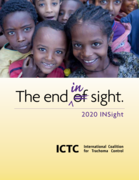
Trachoma is an eye infection that for thousands of years caused many people to go blind across all continents. As the result of development and targeted interventions, trachoma is now limited to an estimated 57 countries, often affecting the poorest
populations of the world. Today, more than 2 mill
...
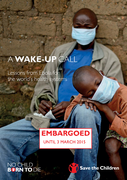
Almost 30 countries vulnerable to a new Ebola-style Epidemic, jeopardising the future of millions of Children. The report ranks the world’s poorest countries on the state of their public health systems, finding that 28 have weaker defences in place than Liberia where, alongside Sierra Leone and Gu
...
Early data estimates suggest that 90% of the Ukrainian population could be facing poverty and extreme economic vulnerability should the war deepen, setting the country – and the region – back decades and leaving deep social and economic scars for generations to come
The purpose of the landscape analysis is ultimately to facilitate improved engagement of private providers, thereby contributing to universal access to quality and affordable TB care and the end of the TB epidemic. It focuses on the role of private for-profit providers and on specific challenges and
...