
Filter
3832
Text search:
environmental
change
Featured
372
932
Language
3708
116
96
56
51
35
27
17
7
5
5
4
4
4
4
4
3
3
3
3
3
2
2
2
2
2
2
2
2
2
2
2
2
2
2
2
2
2
1
1
1
1
1
1
1
1
1
1
1
1
1
1
1
1
1
1
1
1
Document type
1798
888
490
261
203
75
61
19
15
10
5
4
1
1
1
Countries
247
141
102
83
75
74
69
67
66
64
64
59
59
58
51
51
49
48
45
41
29
29
28
26
25
25
24
24
21
21
21
21
20
19
18
17
16
16
16
15
14
14
13
13
13
12
12
12
12
10
10
9
9
9
9
9
9
8
8
8
7
7
6
5
5
4
4
4
3
3
3
3
3
3
3
3
3
3
3
3
3
3
3
3
2
2
2
2
2
2
2
2
2
2
2
2
2
2
2
2
2
2
2
1
1
1
1
1
1
1
1
1
1
1
1
1
1
1
1
1
1
1
1
1
1
1
1
1
1
1
1
1
Authors & Publishers
516
124
113
112
108
71
56
50
44
40
34
27
24
16
16
16
15
15
14
14
13
13
12
12
12
12
12
12
11
11
11
11
11
11
11
11
11
11
11
10
10
10
9
9
9
9
8
8
8
8
8
8
8
8
8
8
8
8
8
7
7
7
7
7
7
7
7
7
7
7
7
7
7
7
7
6
6
6
6
6
6
6
6
6
6
6
6
6
5
5
5
5
5
5
5
5
5
5
5
5
5
5
5
5
5
5
5
5
4
4
4
4
4
4
4
4
4
4
4
4
4
4
4
4
4
4
4
4
4
4
4
4
4
4
4
4
4
4
4
4
4
4
4
4
4
4
4
4
4
4
4
4
3
3
3
3
3
3
3
3
3
3
3
3
3
3
3
3
3
3
3
3
3
3
3
3
3
3
3
3
3
3
3
3
3
3
3
3
3
3
3
3
3
3
3
3
3
3
3
3
3
3
3
3
3
3
3
3
3
3
3
3
3
3
3
3
3
3
3
3
3
3
3
3
3
3
3
2
2
2
2
2
2
2
2
2
2
2
2
2
2
2
2
2
2
2
2
2
2
2
2
2
2
2
2
2
2
2
2
2
2
2
2
2
2
2
2
2
2
2
2
2
2
2
2
2
2
2
2
2
2
2
2
2
2
2
2
2
2
2
2
2
2
2
2
2
2
2
2
2
2
2
2
2
2
2
2
2
2
2
2
2
2
2
2
2
2
2
2
2
2
2
2
2
2
2
2
2
2
2
2
2
2
2
2
2
2
2
2
2
2
2
2
2
2
2
2
2
2
2
2
2
2
2
2
2
2
2
2
2
2
2
2
2
2
2
2
2
2
2
2
2
2
2
2
2
2
2
2
2
2
2
2
2
2
2
2
2
2
2
2
2
2
2
2
2
2
2
2
2
2
2
2
2
2
2
2
2
2
2
2
2
2
2
2
2
2
2
2
2
2
2
2
2
2
2
2
2
2
2
2
2
2
2
2
2
2
2
2
2
2
2
2
2
2
2
2
2
2
2
2
2
2
2
1
1
1
1
1
1
1
1
1
1
1
1
1
1
1
1
1
1
1
1
1
1
1
1
1
1
1
1
1
1
1
1
1
1
1
1
1
1
1
1
1
1
1
1
1
1
1
1
1
1
1
1
1
1
1
1
1
1
1
1
1
1
1
1
1
1
1
1
1
1
1
1
1
1
1
1
1
1
1
1
1
1
1
1
1
1
1
1
1
1
1
1
1
1
1
1
1
1
1
1
1
1
1
1
1
1
1
1
1
1
1
1
1
1
1
1
1
1
1
1
1
1
1
1
1
1
1
1
1
1
1
1
1
1
1
1
1
1
1
1
1
1
1
1
1
1
1
1
1
1
1
1
1
1
1
1
1
1
1
1
1
1
1
1
1
1
1
1
1
1
1
1
1
1
1
1
1
1
1
1
1
1
1
1
1
1
1
1
1
1
1
1
1
1
1
1
1
1
1
1
1
1
1
1
1
1
1
1
1
1
1
1
1
1
1
1
1
1
1
1
1
1
1
1
1
1
1
1
1
1
1
1
1
1
1
1
1
1
1
1
1
1
1
1
1
1
1
1
1
1
1
1
1
1
1
1
1
1
1
1
1
1
1
1
1
1
1
1
1
1
1
1
1
1
1
1
1
1
1
1
1
1
1
1
1
1
1
1
1
1
1
1
1
1
1
1
1
1
1
1
1
1
1
1
1
1
1
1
1
1
1
1
1
1
1
1
1
1
1
1
1
1
1
1
1
1
1
1
1
1
1
1
1
1
1
1
1
1
1
1
1
1
1
1
1
1
1
1
1
1
1
1
1
1
1
1
1
1
1
1
1
1
1
1
1
1
1
1
1
1
1
1
1
1
1
1
1
1
1
1
1
1
1
1
1
1
1
1
1
1
1
1
1
1
1
1
1
1
1
1
1
1
1
1
1
1
1
1
1
1
1
1
1
1
1
1
1
1
1
1
1
1
1
1
1
1
1
1
1
1
1
1
1
1
1
1
1
1
1
1
1
1
1
1
1
1
1
1
1
1
1
1
1
1
1
1
1
1
1
1
1
1
1
1
1
1
1
1
1
1
1
1
1
1
1
1
1
1
1
1
1
1
1
1
1
1
1
1
1
1
1
1
1
1
1
1
1
1
1
1
1
1
1
1
1
1
1
1
1
1
1
1
1
1
1
1
1
1
1
1
1
1
1
1
1
1
1
1
1
1
1
1
1
1
1
1
1
1
1
1
1
1
1
1
1
1
1
1
1
1
1
1
1
1
1
1
1
1
1
1
1
1
1
1
1
1
1
1
1
1
1
1
1
1
1
1
1
1
1
1
1
1
1
1
1
1
1
1
1
1
1
1
1
1
1
1
1
1
1
1
1
1
1
1
1
1
1
1
1
1
1
1
1
1
1
1
1
1
1
1
1
1
1
1
1
1
1
1
1
1
1
1
1
1
1
1
1
1
1
1
1
1
1
1
1
1
1
1
1
1
1
1
1
1
1
1
1
1
1
1
1
1
1
1
1
1
1
1
1
1
1
1
1
1
1
1
1
1
1
1
1
1
1
1
1
1
1
1
1
1
1
1
1
1
1
1
1
1
1
1
1
1
1
1
1
1
1
1
1
1
1
1
1
1
1
1
1
1
1
1
1
1
1
1
1
1
1
1
1
1
1
1
1
1
1
1
1
1
1
1
1
1
1
1
1
1
1
1
1
1
1
1
1
1
1
1
1
1
1
1
1
1
1
1
1
1
1
1
1
1
1
1
1
1
1
1
1
1
1
1
1
1
1
1
1
1
1
1
1
1
1
1
1
1
1
1
1
1
1
1
1
1
1
1
1
1
1
1
1
1
1
1
1
1
1
1
1
1
1
1
1
1
1
1
1
1
1
1
1
1
1
1
1
1
1
1
1
1
1
1
1
1
1
1
1
1
1
1
1
1
1
1
1
1
1
1
1
1
1
1
1
1
1
1
1
1
1
1
1
1
1
1
1
1
1
1
1
1
1
1
1
1
1
1
1
1
1
1
1
1
1
1
1
1
1
1
1
1
1
1
1
1
1
1
1
1
1
1
1
1
1
1
1
1
1
1
1
1
1
1
1
1
1
1
1
1
1
1
1
1
1
1
1
1
1
1
1
1
1
1
1
1
1
1
1
1
1
1
1
1
1
1
1
1
1
1
1
1
1
1
1
1
1
1
1
1
1
1
1
1
1
1
1
1
1
1
1
1
1
1
1
1
1
1
1
1
1
1
1
1
1
1
1
1
1
1
1
1
1
1
1
1
1
1
1
1
1
1
1
1
1
1
1
1
1
1
1
1
1
1
1
1
1
1
1
1
1
1
1
1
1
1
1
1
1
1
1
1
1
1
1
1
1
1
1
1
1
1
1
1
1
1
1
1
1
1
1
1
1
1
1
1
1
1
1
1
1
1
1
1
1
1
1
1
1
1
1
1
1
1
1
1
1
1
1
1
1
1
1
1
1
1
1
1
1
1
1
1
1
1
1
1
1
1
1
1
1
1
1
1
1
1
1
1
1
1
1
1
1
1
1
1
1
1
1
1
1
1
1
1
1
1
1
1
1
1
1
1
1
1
1
1
1
1
1
1
1
1
1
1
1
1
1
1
1
1
1
1
1
1
1
1
1
1
1
1
1
1
1
1
1
1
1
1
1
1
1
1
1
1
1
1
1
1
1
1
1
1
1
1
1
1
1
1
1
1
1
1
1
1
1
1
1
1
1
1
1
1
1
1
1
1
1
1
1
1
1
1
1
1
1
1
1
1
1
1
1
1
1
1
1
1
1
1
1
1
1
1
1
1
1
1
1
1
1
1
1
1
1
1
1
1
1
1
1
1
1
1
1
1
1
1
1
1
1
1
1
1
1
1
1
1
1
1
1
1
1
1
1
1
1
1
1
1
1
1
1
1
1
1
1
1
1
1
1
1
1
1
1
1
1
1
1
1
1
1
1
1
1
1
1
1
1
1
1
1
1
1
1
1
1
1
1
1
1
1
1
1
1
1
1
1
1
1
1
1
1
1
1
1
1
1
1
1
1
1
1
1
1
1
1
1
1
1
1
1
1
1
1
1
1
1
1
1
1
1
1
1
1
1
1
1
1
1
1
1
1
1
1
1
1
1
1
1
1
1
1
1
1
1
1
1
1
1
1
1
1
1
1
1
1
1
1
1
1
1
1
1
1
1
1
1
1
1
1
1
1
1
1
1
1
1
1
1
1
1
1
1
1
1
1
1
1
1
1
1
1
1
1
1
1
1
1
1
1
1
1
1
1
1
1
1
1
1
1
1
1
1
1
1
1
1
1
1
1
1
1
1
1
1
1
1
1
1
1
1
1
1
1
1
1
1
1
1
1
1
1
1
1
1
1
1
1
1
1
1
1
1
1
1
1
1
1
1
1
1
1
1
1
1
1
1
1
1
1
1
1
1
1
1
1
1
1
1
1
1
1
1
1
1
1
1
1
1
1
1
1
1
1
1
1
1
1
1
1
1
1
1
1
1
1
1
1
1
1
1
1
1
1
1
1
1
1
1
1
1
1
1
1
1
1
1
1
1
1
1
1
1
1
1
1
1
1
1
1
1
1
1
1
1
1
1
1
1
1
1
1
1
1
1
1
1
1
1
1
1
1
1
1
1
1
1
1
1
1
1
1
1
1
1
1
1
1
1
1
1
1
1
1
1
1
1
1
1
1
1
1
1
1
1
1
1
1
1
1
1
1
1
1
1
1
1
1
1
1
1
1
1
1
1
1
1
1
1
1
1
1
1
1
1
1
1
1
1
1
1
1
1
1
1
1
1
1
1
1
1
1
1
1
1
1
1
1
1
1
1
1
1
1
1
1
1
1
1
1
1
1
1
1
1
1
1
1
1
1
1
1
1
1
1
1
1
1
1
1
1
1
1
1
1
1
1
1
1
1
1
1
1
1
1
1
1
1
1
1
1
1
1
1
1
1
1
1
1
1
1
1
1
1
1
1
1
1
1
1
1
1
1
1
1
1
1
1
1
1
1
1
1
1
1
1
1
1
1
1
1
1
1
1
1
1
1
1
1
1
1
1
1
1
1
1
1
1
1
1
1
1
1
1
1
1
1
1
1
1
1
1
1
1
1
1
1
1
1
1
1
1
1
1
1
1
1
1
1
1
1
1
1
1
1
1
1
1
1
1
1
1
1
1
1
1
1
1
1
1
1
1
1
1
1
1
1
1
1
1
1
1
1
1
1
1
1
1
1
1
1
1
1
1
1
1
1
1
1
1
1
1
1
1
1
1
1
1
1
1
1
1
1
1
1
1
1
1
1
1
1
1
1
1
1
1
1
1
1
1
1
1
1
1
1
1
1
1
1
1
1
1
1
1
1
1
1
1
1
1
1
1
1
1
1
1
1
1
1
1
1
1
1
1
1
1
1
1
1
1
1
1
1
1
1
1
1
1
1
1
1
1
1
1
1
1
1
1
1
1
1
1
1
1
1
1
1
1
1
1
1
1
1
1
1
1
1
1
1
1
1
1
1
1
1
1
1
1
1
1
1
1
1
1
1
1
1
1
1
1
1
1
1
1
1
1
1
1
1
1
1
1
1
1
1
1
1
1
1
1
1
1
1
1
1
1
1
1
1
1
1
1
1
1
1
1
1
1
1
1
1
1
1
1
1
1
1
1
1
1
1
1
1
1
1
1
1
1
1
1
1
1
1
1
1
1
1
1
1
1
1
1
1
1
1
1
1
1
1
1
1
1
1
1
1
1
1
1
1
1
1
1
1
1
1
1
1
1
1
1
1
1
1
1
1
1
1
1
1
1
1
1
1
1
1
1
1
1
1
1
1
1
1
1
1
1
1
1
1
1
1
1
1
1
1
1
1
1
1
1
1
1
1
1
1
1
1
1
1
1
1
1
1
1
1
1
1
1
1
1
1
1
1
1
1
1
1
1
1
1
1
1
1
1
1
1
1
1
1
1
1
1
1
1
1
1
1
1
1
1
1
1
1
1
1
1
1
1
1
1
1
1
1
1
1
1
1
1
1
1
1
1
1
1
1
1
1
1
1
1
1
1
1
1
1
1
1
1
1
1
1
1
1
1
1
1
1
1
1
1
1
1
1
1
1
1
1
1
1
1
1
1
1
1
1
1
1
1
1
1
1
1
1
1
1
1
1
1
1
1
1
1
1
1
1
1
1
1
1
1
1
1
1
1
1
1
1
1
1
1
1
1
1
1
1
1
1
1
1
1
1
1
1
1
1
1
1
1
1
1
1
1
1
1
1
1
1
1
1
1
1
1
1
1
1
1
1
1
1
1
1
1
1
1
1
1
1
1
1
1
1
1
1
1
1
1
1
1
1
1
1
1
1
1
1
1
1
1
1
1
1
1
1
1
1
1
1
1
1
1
1
1
1
1
1
1
1
1
1
1
1
1
1
1
1
1
1
1
1
1
1
1
1
1
1
1
1
1
1
1
1
1
1
1
1
1
1
1
1
1
1
1
1
1
1
1
1
1
1
1
1
1
1
1
1
1
1
1
1
1
1
1
1
1
1
1
1
1
1
1
1
1
1
1
1
1
1
1
1
1
1
1
1
1
1
1
1
1
1
1
1
1
1
1
1
1
1
1
1
1
1
1
1
1
1
1
1
1
1
1
1
1
1
1
1
1
1
1
1
1
1
1
1
1
1
1
1
1
1
1
1
1
1
1
1
1
1
1
1
1
1
1
1
1
1
1
1
1
1
1
1
1
1
1
1
1
1
1
1
1
1
1
1
1
1
1
1
1
1
1
1
1
1
1
1
1
1
1
1
1
1
1
1
1
1
1
1
1
1
1
1
1
1
1
1
1
1
1
1
1
1
1
1
1
1
1
1
1
1
1
1
1
1
1
1
1
1
1
1
1
1
1
1
1
1
1
1
1
1
1
1
1
1
1
1
1
1
1
1
1
1
1
1
1
1
1
1
1
1
1
1
1
1
1
1
1
1
1
1
1
1
1
1
1
1
1
1
1
1
1
1
1
1
1
1
1
1
1
1
1
1
1
1
1
1
1
1
1
1
1
1
1
1
1
1
1
1
1
1
1
1
1
1
1
1
1
1
1
1
1
1
1
1
1
1
1
1
1
1
1
1
1
1
1
1
1
1
1
1
1
1
1
1
1
1
1
1
1
1
1
1
1
1
1
1
1
1
1
1
1
1
1
1
1
1
1
1
1
1
1
1
1
1
1
1
1
1
1
1
1
1
1
1
1
1
1
1
1
1
1
1
1
1
1
1
1
1
1
1
1
1
1
1
1
1
1
1
1
1
1
1
1
1
1
1
1
1
1
1
1
1
1
1
1
1
1
1
1
1
1
1
1
1
1
1
1
Publication Years
1
1276
2200
336
16
3
Category
1280
389
276
176
143
66
34
1
Toolboxes
473
281
236
225
145
138
128
120
112
95
93
92
90
69
67
61
49
48
44
44
42
41
32
30
25
2
2
This document is a guide defining requirements for quality and safety for malaria rapid diagnostic testing services to safeguard the quality of the results, the safety of the operators and patients and that of the environment for use by national malaria control programmes, regulators, implementers a
...
nd rapid diagnostic providers.
more

These guidelines provide updated evidence-based recommendations on the priority HCV-related topics from the 2018 WHO Guidelines for the care and treatment of persons diagnosed with chronic hepatitis C infection and the 2017 WHO Guidelines on hepatitis B and C testing. These priority areas are:
...
direct-acting antiviral (DAA) treatment of adolescents and children ages ≥3 years of age
simplified HCV service delivery (decentralization, integration and task sharing)
HCV diagnostics – use of point-of-care (POC) HCV ribonucleic acid (RNA) assays and reflex HCV RNA testing.
These guidelines also update existing chapters without new recommendations, such as the inclusion of new manufacturers’ protocols on the use of dried blood spot (DBS) for HCV RNA testing and new data to inform the limit of detection for HCV RNA assays as a test of cure, in addition to their use for diagnosis.
more
The Global Task Force on Cholera Control (GTFCC) launched Ending Cholera: A Global
Roadmap to 2030 (Global Roadmap) (1), a strategy that aims to reduce global cholera
deaths by 90% and eliminate the disease in at least 20 countries by 2030. It is
organized according to three main axes:
• E
...
nsuring early detection and response to contain outbreaks; (2)
• Adopting a multisectoral approach to prevent and control cholera in hotspots; and
• Establishing an effective coordination mechanism for technical support, resource
mobilization and partnership at local and global levels.
more
This collection of case studies on risk communication and community engagement (RCCE) from 18 different country/area level public health partners in the WHO European Region provides evidence of numerous results achieved and lessons learned since the start of the COVID-19 pandemic. RCCE has not
...
traditionally been an area where evidence of challenges and solutions was documented. With this compendium, we wanted to collect and share this evidence to support decision-making in this area of work.
more
Current Tropical Medicine Reports (2018) 5:247–256 https://doi.org/10.1007/s40475-018-0166-2 .Purpose of the Review Buruli ulcer (BU) is a necrotizing and disabling cutaneous disease caused by Mycobacterium ulcerans, one of the skin-related neglected tropical diseases (skin NTDs). This article aim
...
s to review the current knowledge of this disease and challenges ahead.
more

The World Health Organization (WHO) convened a meeting of the Technical Advisory Group on Buruli ulcer at its headquarters in Geneva, Switzerland on 25 to 27 March 2019
This manual is to assist health care providers and laboratory scientists to diagnose mycobacterium ulcerans disease (Buruli ulcer). The manual aims to achieve a better understanding of the clinical presentation and its diagnosis. The methods described are tailored to various levels of care and avail
...
able resources to improve the diagnosis and surveillance of the disease.
more

Buruli ulcer : management of Mycobacterium ulcerans disease : a manual for health care providers
recommended
This manual is addressed to health care providers dealing with Mycobacterium ulcerans disease (Buruli ulcer). The manual aims to achieve a better understanding of the disease, its clinical presentation and its surgical management. The manual is aimed particularly at district health care providers. A
...
comprehensive protocol, adapted to each form and stage of the disease, is presented together with comments on the levels of resources and capabilities necessary
to shorten the length of treatment, to prevent complications and to minimize undesired sequelae and thus to obtain the best possible outcome for each patient. Some sections include advice relevant to surgeons (e.g. relating to bone infection). However, the level to which particular comments are intended to apply should be clear from the context.
more
The purpose of this book is to provide an overview of Buruli ulcer (Mycobacterium ulcerans infection) for the medical and scientific communities and the general public alike.

The harmful use of alcohol causes approximately 3 million deaths every year and the overall burden of disease and injuries attributable to alcohol consumption remains unacceptably high. The pace of development and implementation of alcohol policies has been uneven in WHO regions, and resources and c
...
apacities for implementation of the WHO Global strategy to reduce the harmful use of alcohol 10 years after its endorsement do not correspond to the magnitude of the problems. On this basis, the WHO Executive Board in its decision EB146 (14) called for accelerated action to reduce the harmful use of alcohol.
more
Recommendations on the initiation and continuing use of nine common types of contraceptive methods are covered by the tool. In addition to looking at individual medical conditions or characteristics, users may also easily combine multiple conditions or characteristics and view the guidance on each c
...
ondition separately or in combination.
more

The world faces grave consequences from the lack of available mental health services and treatment. Mental illness impacts every country, culture and community, with the World Health Organization (WHO) stating that 10% of the global burden of disease is related to mental, neurological and substance
...
use disorders. In low-and middle-income countries, more than 75% of people with mental disorders receive no treatment at all for their disorder. During 2020, as a result of the global pandemic, 93% of countries reported their mental health services were either halted or interrupted (WHO, 2020e). WHO reported a 25% increase in depression and anxiety alone during the pandemic. The Organisation for Economic Co-operation and Development estimates depression and anxiety cost the global economy US $1 trillion dollars a year. All nurses have a health care role in mental health and substance use. ICN strongly advocates for the investment of further education and professional development in this area in order to support individuals and communities achieve the highest attainable standard of health which includes
physical, mental and social wellbeing.
more
In 1997, the Fiftieth World Health Assembly adopted resolution WHA50.29 on the elimination of
lymphatic filariasis as a public health problem. Preliminary guidance from WHO printed in 2011 referred to “verification” as the official process by which the achievements of the Global Programme to El
...
iminate Lymphatic Filariasis (GPELF) would be confirmed. For the sake of harmonization, the terminology now used for elimination of lymphatic filariasis as a public health problem is “validation”. In 2015, the WHO Strategic and Technical Advisory Group for Neglected Tropical Diseases endorsed standardized processes for confirming and acknowledging success for all neglected tropical diseases targeted for eradication, elimination of transmission, or elimination as a public health problem.
more
The Strategy to respond to antimalarial drug resistance in Africa is a technical and advocacy document, grounded in the best available evidence to date and aimed at minimizing the threat and impact of antimalarial drug resistance of Plasmodium falciparum parasites in Africa. Its objectives are to: i
...
) improve the detection of resistance to ensure a timely response; ii) delay the emergence of resistance to artemisinin and artemisinin-based combination therapy (ACT) partner drugs; and iii) limit the selection and spread of resistant parasites where resistance has been confirmed.
WHO Team
Global Malaria Programme
Editors
World Health Organization
Number of pages
87
Reference numbers
ISBN: 978 92 4 006026 5
Copyright
more
Parasites & Vectors volume 11, Article number: 264 (2018)
Dengue creates a staggering epidemiological and economic burden for endemic countries. Without a specific therapy and with a commercial vaccine that presents some problems relative to its full effectiveness, initiatives to improve vector
...
control strategies, early disease diagnostics and the development of vaccines and antiviral drugs are priorities. In this study, we present the probable origins of dengue in America and the trajectories of its spread. Overall, dengue diagnostics are costly, making the monitoring of dengue epidemiology more difficult and affecting physicians’ therapeutic decisions regarding dengue patients, especially in developing countries. This review also highlights some recent and important findings regarding dengue in Brazil and the Americas. We also summarize the existing DENV polymerase chain reaction (PCR) diagnostic tests to provide an improved reference since these tests are useful and accurate at discriminating DENV from other flaviviruses that co-circulate in the Americas. Additionally, these DENV PCR assays ensure virus serotyping, enabling epidemiologic monitoring.
more
Evidence-based guidelines are one of the most useful tools for improving public health and clinical practice. Their purpose is to formulate interventions based on strong evidence of efficacy, avoid unnecessary risks, use resources efficiently, reduce clinical variability and, in essence, improve hea
...
lth and ensure quality care, which is the purpose of health systems and services. These guidelines were developed following the GRADE methodology, with the support of a panel of clinical experts from different countries, all convened by the Pan American Health Organization. By responding to twelve key questions about the clinical diagnosis and treatment of dengue, chikungunya, and Zika, evidence-based recommendations were formulated for pediatric, youth, adult, older adult, and pregnant patients who are exposed to these diseases or have a suspected or confirmed diagnosis of infection. The purpose of the guidelines is to prevent progression to severe forms of these diseases and the fatal events they may cause. The recommendations are intended for health professionals, including general, resident, and specialist physicians, nursing professionals, and medical and nursing students, who participate in caring for patients with suspected dengue, chikungunya, or Zika. They are also intended for health unit managers and the executive teams of national arboviral disease prevention and control programs, who are responsible for facilitating the process of implementing these guidelines.
more
This document was prepared by UNICEF Regional Office for West and Central Africa, under the leadership of Christophe Valingot and the review of Joachim Peeters (WASH Specialist) and Arnaud Laillou (Nutrition Specialist), on behalf of the WASH Regional Group and the Nutrition Regional Group.
This
...
WASH - Nutrition strategic guidance note for West and Central Africa builds on the precedent WASH-in-NUT strategy elaborated in 2012 and is the regional outcome of a multiyear collaborative work conducted at country level between 2018 and 2022, in Mali, Niger, Nigeria Chad, Burkina Faso. This work is based on a strong multi-partner collaboration, involving national technical directorates of the water and sanitation sector as well as technical directorates of Health and Nutrition, civil society organizations, national and international NGOs as well as United Nations agencies.
This document can serve as a technical and strategic guide for any partner wishing to strengthen the intersectorality of WASH-Nutrition programmes. It presents the regional WASH & Nutrition context, a brief review of the latest scientific evidence, and proposes an integrated WASH-Nutrition programming framework adapted to the regional context of West and Central Africa. Beyond the implementation of programmes, this document also calls for the explicit and concrete inclusion of WASH-Nutrition integration into national policy documents.
more

An estimated 1.3 billion people – or 16% of global population worldwide – experience a significant disability today. Persons with disabilities have the right to the highest attainable standard of health as those without disabilities. However, the WHO Global report on health equity for persons w
...
ith disabilities demonstrates that while some progress has been made in recent years, the world is still far from realizing this right for many persons with disabilities who continue to die earlier, have poorer health, and experience more limitations in everyday functioning than others. These poor health outcomes are due to unfair conditions faced by persons with disabilities in all facets of life, including in the health system itself. Countries have an obligation under international human rights law to address the health inequities faced by persons with disabilities. Furthermore, the Sustainable Development Goals and global health priorities will not progress without ensuring health for all.
more
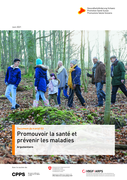
La promotion de la santé et la prévention des maladies nécessitent une action multisectorielle qui renforce les environnements favorables à la santé et oriente les comportements. Au niveau des cantons et des communes, de nombreuses politiques, telles
la protection de la jeunesse, la promotion
...
de la santé à l’école, la promotion de la santé et de la sécurité au travail, l’action sociale, le soutien au logement, la promotion de l’intégration, l’aménagement du territoire, la gestion de la mobilité ou la protection
de l’environnement sont des leviers très efficaces pour améliorer l’état de santé de la population.
L’argumentaire «Promouvoir la santé et prévenir les maladies» a pour objectif d’expliquer les enjeux et
d’inciter les personnes actives dans ces divers domaines à intégrer la promotion de la santé dans leurs activités et projets. Cela exige de leur mettre à disposition des informations actuelles et facilement compréhensibles
more

Atlas of African Health Statistics 2022: Health situation analysis of the WHO African Region
Since 2019, we have been implementing Phase 2 of the regional Transformation Agenda, which informs and aligns with the global WHO Transformation, to ensure WHO is accountable, driven by re- sults and provid
...
ing value for money in the pursuit of better health. Our global priority in this period is to contribute to delivering on the triple billion targets of expanding universal health coverage, protecting people from emergencies, and promoting health and well-being for people across the Region.
This year’s Atlas of African Health Statistics is being produced in the context of the COVID-19 pandemic that we have been expe- riencing for over two years. The ongoing coronavirus pandemic, together with other health emergencies in the WHO African Re- gion, is yet again testing the strength and resilience of our health systems. Indeed, the impact of COVID-19 is visible in the disruption of services. The report also presents the latest data for more than 50 health-related indicators of the Sustainable Development Goals and WHO’s “triple billion” targets and provides comprehensive country-level statistics using the results chain of the AFRO frame- work of actions for strengthening health systems to achieve UHC and the health-related SDGs.
more
