
Filter
3407
Text search:
malnutrition
Featured
Recommendations
292
New Publications
1121
Language
Document type
No document type
2035
Studies & Reports
542
Guidelines
294
Strategic & Response Plan
186
Manuals
118
Training Material
81
Fact sheets
61
Situation Updates
50
Infographics
23
Resource Platforms
9
Online Courses
4
Dashboards/Maps
2
Brochures
1
Videos
1
Countries / Regions
India
137
Global
110
Congo, Democratic Republic of
109
Kenya
99
Ethiopia
98
Senegal
75
Uganda
71
Nepal
68
Myanmar / Burma
66
Sierra Leone
64
Bangladesh
64
Malawi
64
Rwanda
59
Nigeria
53
Haiti
52
South Sudan
52
Burkina Faso
51
Zambia
51
Syria
50
South Africa
49
Liberia
48
Namibia
48
Tanzania
44
Africa
44
Yemen
41
Mozambique
40
Ghana
34
Benin
31
Central African Republic
31
Latin America and the Carribbean
29
Lesotho
28
Cameroon
27
South–East Asia Region
26
Zimbabwe
23
Philippines
23
Guinea
21
Indonesia
20
Cambodia
19
Western and Central Europe
19
Venezuela
19
Madagascar
18
Mali
17
Somalia
16
Eswatini/ Swaziland
16
Afghanistan
15
Botswana
15
Pakistan
14
Sudan
13
Asia
13
West and Central Africa
12
Niger
11
Ukraine
11
East and Southern Africa
11
Middle East and North Africa
10
Eastern Europe
9
Togo
8
Lebanon
8
Jordan
7
Russia
7
Turkey
6
Chad
5
Papua New Guinea
5
Brazil
5
Burundi
5
Colombia
5
Mexico
5
Paraguay
5
Timor Leste/ East Timor
5
Côte d’Ivoire / Ivory Coast
4
Peru
4
Eastern Europe and Central Asia
4
Palestine
4
Iraq
3
Thailand
3
China
3
Libya
3
Angola
3
Sri Lanka
3
Western Pacific Region
3
Albania
3
Laos
3
Tajikistan
3
Saudi Arabia
2
Egypt
2
Ecuador
2
Chile
2
Djibouti
2
Moldova
2
Iran
2
Vietnam
2
North America
2
Morocco
1
USA
1
Germany
1
Gambia
1
Mauritania
1
Singapore
1
Argentina
1
North Macedonia
1
Bolivia
1
Other region
1
Solomon Islands
1
Southern Africa
1
Canada
1
Qatar
1
Georgia
1
Turkmenistan
1
France
1
Azerbaijan
1
Authors & Publishers
Publication Years
Category
Countries
1663
Women & Child Health
298
Key Resources
247
Clinical Guidelines
225
Public Health
153
Capacity Building
82
Pharmacy & Technologies
12
Annual Report MEDBOX
1
Toolboxes
COVID-19
198
TB
179
Planetary Health
153
Conflict
139
HIV
120
Disability
108
Mental Health
103
Global Health Education
90
Caregiver
85
Natural Hazards
74
Ebola & Marburg
62
NCDs
62
Cholera
50
Refugee
48
NTDs
46
Rapid Response
38
AMR
36
Malaria
29
Pharmacy
22
Health Financing Toolbox
21
2.0 Rapid Response
21
Polio
19
Zika
8
Social Ethics
4
Typhoon
3
Specific Hazards
2
South Sudan
1
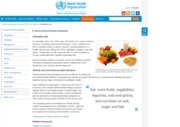
The WHO Eastern Mediterranean Region webpage discusses the impact of unhealthy diets on non-communicable diseases (NCDs) such as cardiovascular diseases, cancer, and diabetes. It highlights unhealthy eating as a major risk factor for these conditions and recommends increasing the consumption of frui
...
The NIH webpage discusses how dietary habits influence the risk of heart disease, stroke, and type 2 diabetes. It highlights that both excessive and insufficient intake of certain foods and nutrients can increase mortality risk from these conditions, emphasizing the importance of a balanced diet for
...
The document presents a systematic analysis of dietary risks and their health impacts in 195 countries from 1990 to 2017. It highlights that suboptimal diets, such as those high in sodium and low in whole grains, fruits, and vegetables, significantly contribute to non-communicable diseases like hear
...
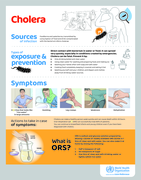
The cholera poster provides essential information about the disease, including its symptoms, sources of infection, prevention measures, and treatment options. It describes cholera as a potentially fatal disease that spreads through contaminated food and water, particularly in emergency conditions. K
...
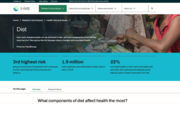
The webpage from the Institute for Health Metrics and Evaluation (IHME) discusses the global impact of diet on health, highlighting poor dietary habits as a major contributor to deaths worldwide, primarily through cardiovascular diseases. It emphasizes the health risks of high sodium intake and insu
...

School Nutrition Education Material for Teachers, Parents, and School-Aged Children is a set of nutrition education materials developed by the World Food Programme with the Ministry of Education, Culture, Research, and Technology and UNICEF
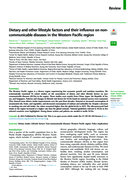
The document systematically examines dietary and lifestyle factors influencing non-communicable diseases (NCDs) in the Western Pacific region. It highlights regional nutrition transitions, including dietary improvements like increased fruit and vegetable consumption and reduced salt intake, alongsid
...
