
Filter
3406
Text search:
medication
Featured
Recommendations
352
New Publications
754
Language
Document type
No document type
1928
Studies & Reports
474
Guidelines
470
Manuals
210
Training Material
83
Fact sheets
82
Strategic & Response Plan
64
Brochures
28
Situation Updates
24
Infographics
18
Resource Platforms
17
Online Courses
4
Videos
3
App
1
Countries / Regions
India
157
Global
134
South Africa
123
Kenya
107
Ethiopia
76
Tanzania
67
Western and Central Europe
67
Uganda
62
Africa
62
Sierra Leone
57
Nigeria
56
Malawi
52
Nepal
51
Zambia
50
Liberia
47
Ukraine
43
Ghana
41
Bangladesh
39
Namibia
39
Syria
33
Rwanda
33
Latin America and the Carribbean
33
Zimbabwe
28
Germany
25
Congo, Democratic Republic of
22
Philippines
22
Indonesia
22
South–East Asia Region
22
Lesotho
21
Myanmar / Burma
21
Mozambique
20
Asia
20
Cambodia
18
Eastern Europe
15
Botswana
14
Middle East and North Africa
14
Russia
14
Haiti
13
Burkina Faso
12
East and Southern Africa
12
Venezuela
12
Cameroon
11
Guinea
10
West and Central Africa
10
Eastern Europe and Central Asia
10
Senegal
9
USA
9
Pakistan
9
Jordan
9
Eswatini/ Swaziland
9
Brazil
8
South Sudan
7
Lebanon
7
Thailand
7
Benin
7
Afghanistan
6
China
6
Sri Lanka
6
North America
6
Madagascar
5
Yemen
5
Western Pacific Region
5
Tajikistan
5
Moldova
5
Vietnam
5
Mali
4
Côte d’Ivoire / Ivory Coast
4
Chad
4
Sudan
4
Colombia
4
Bhutan
4
Albania
4
Southern Africa
4
Laos
4
Canada
4
Georgia
4
United Kingdom
4
Somalia
3
Iraq
3
Papua New Guinea
3
Central African Republic
3
Libya
3
Mexico
3
Palestine
3
Timor Leste/ East Timor
3
Estonia
3
Jamaica
3
Spain
3
Guinea-Bissau
2
Togo
2
Turkey
2
Gambia
2
Malaysia
2
Peru
2
Ecuador
2
Angola
2
Chile
2
Paraguay
2
Fiji
2
Romania
2
Iran
2
Kyrgyzstan
2
Kazakhstan
2
Belarus
2
Morocco
1
Saudi Arabia
1
Niger
1
Egypt
1
Ireland
1
Argentina
1
Switzerland
1
Serbia
1
Burundi
1
Greece
1
Guatemala
1
Other region
1
Solomon Islands
1
Poland
1
North Korea
1
Armenia
1
Lithuania
1
Australia
1
Gabon
1
Turkmenistan
1
Japan
1
Denmark
1
Mauritius
1
Tunisia
1
South Korea
1
Azerbaijan
1
Latvia
1
Guyana
1
Oman
1
Authors & Publishers
Publication Years
Category
Countries
1184
Clinical Guidelines
333
Public Health
242
Women & Child Health
157
Key Resources
99
Capacity Building
85
Pharmacy & Technologies
16
Annual Report MEDBOX
2
Toolboxes
Mental Health
502
HIV
313
COVID-19
209
TB
203
NCDs
185
Caregiver
132
Disability
115
Pharmacy
106
AMR
103
Refugee
92
NTDs
78
Ebola & Marburg
73
Conflict
68
Malaria
35
Rapid Response
33
Natural Hazards
26
Planetary Health
23
Global Health Education
19
Zika
13
2.0 Rapid Response
12
Health Financing Toolbox
11
Cholera
8
Specific Hazards
8
Social Ethics
7
Polio
6
Effective surveillance and monitoring of noncommunicable diseases (NCDs) and their risk factors are essential for informing evidence-based public health policies, addressing health inequities, and ensuring progress toward global and regional targets. By tracking trends in NCDs, their modifiable risk
...
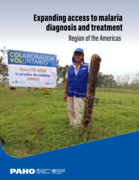
The overall objective of this approach is to accelerate efforts toward malaria elimination by increasing
access to early diagnosis and treatment. The specific objectives are to: Minimize the barriers that the population faces in accessing timely, quality diagnosis and treatment. Reduce the time bet
...

The objective of this guideline is to present the complete set of all WHO recommendations and best practice statements relating to abortion. While legal, regulatory, policy and service-delivery contexts may vary from country to country, the recommendations and best practices described in this docume
...

This publication provides an overview of evidence and guidance on the growing challenge of workplace heat stress in the context of climate change. It highlights the health and productivity risks faced by billions of workers, especially in manual labor sectors. The report details the physiological, s
...

Non-Communicable Diseases (NCDs) have emerged as conditions of great public health concern in Kenya accounting for 39% of deaths annually. The Ministry of Health through the Department of Non-Communicable Diseases has adopted the vision of achieving a nation free from preventable burden of NCDs. Fur
...

The guide helps patients to understand their rights in relation to the care received and provides insights into the common legal and
human rights issues they may encounter, and encourages them to share these with the health care provider for support. This booklet covers key issues that you mig
...
These guidelines have been developed in simple, user-friendly language and they explain the procedures for patients’ access to and the safe management of Schedule I and II drugs that are necessary for the treatment and relief of moderate to severe pain. They provide both procedures for acquisition
...

This resulting toolkit is a practical guide intended to assist users to become advocates for palliative care in a practical and effective
way. It is not necessarily a resource to read from cover to cover; rather, it can also be used selectively to each reader’s needs to engage audiences and
...

For education to be competency-based and effective, appropriate training methodologies have to be used to support the learner to have the appropriate knowledge and to translate this knowledge into skills and competencies. Such education and training should lead to a change in attitudes, beliefs a
...

The African Palliative Care Association is pleased to publish the first edition of Palliative Care Standards for Africa. The development of these standards was achieved through wide consultation with service beneficiaries and providers, and they have been developed to suit different levels of
...

In this guide, the African Palliative Care Association (APCA) has put together evidence‑based information on the use of specific opioids commonly used in the management of moderate‑to‑severe pain to manage both cancer and non‑cancer pain. APCA hopes that this guide will be a useful tool i
...

Drawing on the World Health Organization’s package of NCD best buys, the report demonstrates how these evidence-based measures can help countries reduce premature deaths, strengthen health systems, and advance progress towards the Sustainable Development Goals. It provides policymakers, donors, ad
...

WHO guideline on balanced national controlled medicines policies to ensure medical access and safety
Access to medicines is essential for attainment of universal health coverage, which is central to achievement of the health-related Sustainable Development Goals. Controlled medicines include those such as opioids, benzodiazepines, barbiturates, amphetamines and others with identified or emergent cl
...

WHO guideline on HIV service delivery
recommended
Updated guidance on the integration of diabetes, hypertension and mental health services, and interventions to support adherence to antiretroviral therapy. The guideline offers practical implementation guidance for countries and key stakeholders as well as outlining key research gaps. As life expec
...

Lesotho’s Social and Behaviour Change Communication Strategy is a strategic response to the high levels of HIV and TB prevalence in the country that are exacerbated by the persistence of structural and sio-economic difficulties, such as poverty, unemployment, gender inequality and more. This strat
...

20 YEARS OF STRATEGIC HIV AND PUBLIC HEALTH DATA . beThe completion of the 6th South African National HIV Prevalence, Incidence and Behaviour Survey (SABSSM) report, coincides with the celebration of 30 years of democracy in South Africa; and marks 20 years of conducting nationally representative ho
...

he UNFPA “Programmatic guidelines: Cash and Voucher Assistance in Sexual and Reproductive Health programming in Emergencies” explains how CVA can be effectively integrated into humanitarian responses to help women, girls, and other vulnerable groups access lifesaving and comprehensive SRH servic
...

This Toolkit for ensuring rights-based and ethical use of digital technologies in HIV and health programmes is derived from the comprehensive UNDP Guidance on the rights-based and ethical use of digital technologies in HIV and health programmes document. The foundational UNDP Guidance document outli
...

AIDS 2024, 38:1579–1588. Treatment interruptions are a barrier to successful antiretroviral therapy (ART). 'Fresh start messages', which leverage significant days on the calendar (e.g., new year, public holiday) in order to prompt action, have the potential to encourage people with HIV (PWH) to re
...

Building on the WHO guidelines for disclosure to children up to age 12 in 2011, this implementation guidance provides evidence on existing interventions that support children and adolescents living with HIV in the process of disclosure. It includes interventions that focuses on safe disclosure, as w
...
