Filter
1076
Text search:
Government
of
Pakistan
Featured
Recommendations
92
New Publications
269
Language
Document type
No document type
605
Studies & Reports
259
Guidelines
76
Manuals
61
Strategic & Response Plan
40
Fact sheets
11
Situation Updates
10
Training Material
7
Resource Platforms
4
Infographics
2
Online Courses
1
Countries / Regions
Global
97
Nepal
39
Pakistan
37
India
29
Bangladesh
27
Afghanistan
21
Asia
21
Myanmar / Burma
20
Nigeria
19
Ethiopia
14
Uganda
14
Western and Central Europe
14
Syria
13
South–East Asia Region
12
Kenya
11
Congo, Democratic Republic of
9
Haiti
9
Philippines
9
Zambia
9
Tanzania
9
Indonesia
9
Malawi
9
Africa
9
Liberia
8
Yemen
8
Sierra Leone
7
South Sudan
7
South Africa
7
Ukraine
7
Zimbabwe
6
Germany
6
Iran
6
Ghana
5
Somalia
5
Cambodia
5
Mozambique
5
Sri Lanka
5
Thailand
4
Middle East and North Africa
4
Eastern Europe
4
Russia
4
Guinea
3
Jordan
3
Lebanon
3
China
3
Central African Republic
3
Namibia
3
Palestine
3
Mali
2
Iraq
2
Turkey
2
Rwanda
2
Sudan
2
Colombia
2
Mexico
2
West and Central Africa
2
Eastern Europe and Central Asia
2
Venezuela
2
Djibouti
2
Laos
2
Vietnam
2
Burkina Faso
1
Senegal
1
Saudi Arabia
1
Niger
1
Egypt
1
Malaysia
1
Papua New Guinea
1
Vanuatu
1
Peru
1
Ecuador
1
Botswana
1
El Salvador
1
Greece
1
Libya
1
Madagascar
1
Lesotho
1
East and Southern Africa
1
Western Pacific Region
1
Latin America and the Carribbean
1
Solomon Islands
1
Bhutan
1
North Korea
1
Southern Africa
1
Tajikistan
1
Qatar
1
Moldova
1
Uzbekistan
1
Maldives
1
Authors & Publishers
Publication Years
Category
Countries
232
Key Resources
119
Clinical Guidelines
70
Women & Child Health
67
Public Health
63
Pharmacy & Technologies
15
Capacity Building
14
Toolboxes
Mental Health
110
Disability
88
COVID-19
77
HIV
72
TB
69
Planetary Health
46
Refugee
44
Global Health Education
43
Health Financing Toolbox
37
Polio
34
Natural Hazards
34
Conflict
28
NTDs
22
Caregiver
21
AMR
20
Rapid Response
19
Pharmacy
14
2.0 Rapid Response
13
Malaria
11
Ebola & Marburg
10
NCDs
9
Specific Hazards
7
Cholera
4
Typhoon
2
Zika
2
Part 2: Part 2 Beyond the evidence: Implications for innovation and practice
Part 2 of the Gap Analysis presents the insights from individuals working in humanitarian response, disability inclusion and older age inclusion. This report begins by lo
...
A Provisional Document. The purpose of this manual is to provide guidance to public health professionals tasked with managing a response to viral hepatitis. As every country’s needs are different with respect to its epidemiology and the current le
...
The report discusses the epidemiological and social aspects of ageing, health and functional changes experienced with ageing, the impact of physical activity, assessment
...

Antimicrobial resistance (AMR) is a global public health crisis that resulted in 1.14 million deaths in 2021. According to the Institute for Health Metrics and Evaluation estimates, 96 416 of these deaths occurred in the World Health Organization (WHO) Eastern Mediterranean Region. All 22 countr
...

WHO guidelines for clinical management of arboviral diseases: dengue, chikungunya, Zika and yellow fever
recommended
The new WHO guidelines provide clinical management recommendations for four of the most widespread arboviruses affecting humans: dengue, chikungunya, Zika, and yellow fever.
An integrated approach is vital, as these four diseases often present wi
...
COVID-19 has altered health sector capacity in low-income and middle-income countries (LMICs). Cost data to inform evidence-based priority setting are urgently needed. Consequently, in this paper, we calculate the full economic health sector costs of
...

The Global guidance framework for the responsible use of the life sciences: mitigating biorisks and governing dual-use research (the framework) aims to provide values and principles, tools and mechanisms to support Member States and key stakeholders
...
An Economist Intelligence Unit briefing paper | The Economist Intelligence Unit (EIU) undertook a study aimed at assessing the degree of commitment of 15 countries within the AsiaPacific region to
...
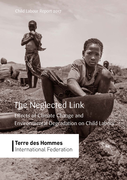
Over half a billion children are living in areas with extremely high levels of floods and nearly 160 million children live in areas of high or extremely high droughts. The World Health Organisation
...
This report presents the most current data on four specific forms of violence – violent discipline and exposure to domestic abuse during early childhood; violence at school; violent deaths among adolescents; and sexual violence in childhood and ad
...
This scoping study done in Myanmar offers the chance for FoodSTART+ to explore prospects for future partnerships in another important country of the region. The study was done from October 2016 to February 2017 and included visits to selected major
...
Pharmaceutical regulators are at the forefront of ensuring that only safe and effective medicines are authorized and available in the market. This document builds on the recommendations in the above publication and has been prepared to specifically
...
J Epidemiol Community Health 2011;65:1166e1170. doi:10.1136/jech.2009.097469
Updated Guideline.
The Emergency Triage Assessment and Treatment (ETAT) guidelines provide guidance on the most common emergency conditions in children presenting at the health facility. These include but are not limited to airway obstruction and other breathing problems; circulatory impairment or
...
Mortality statistics are fundamental to public health decision making. Mortality varies by time and location, and its measurement is affected by well known biases that have been exacerbated during the COVID-19 pandemic. This paper aims to estimate excess mortality from
...