
Filter
4351
Text search:
National
Primary
Health
Care
Development
Agency
Featured
Recommendations
372
New Publications
1287
Language
Document type
No document type
2562
Studies & Reports
720
Guidelines
490
Manuals
242
Strategic & Response Plan
197
Training Material
51
Situation Updates
39
Fact sheets
31
Resource Platforms
10
Infographics
4
Brochures
3
App
1
Online Courses
1
Countries / Regions
Global
186
Kenya
170
India
152
Nigeria
132
Ethiopia
126
Nepal
108
Liberia
97
Western and Central Europe
97
Uganda
87
Malawi
84
Zambia
82
Sierra Leone
77
Tanzania
77
Myanmar / Burma
74
Rwanda
70
Ghana
68
South Africa
67
Syria
66
Bangladesh
65
Namibia
62
Ukraine
57
Latin America and the Carribbean
51
Africa
49
Philippines
47
Zimbabwe
42
South Sudan
38
Cambodia
38
Congo, Democratic Republic of
37
Indonesia
37
Eastern Europe
36
Senegal
29
Haiti
29
South–East Asia Region
28
Lesotho
27
Mozambique
26
Guinea
22
Botswana
22
Asia
22
Jordan
19
Pakistan
17
East and Southern Africa
17
Eastern Europe and Central Asia
17
Yemen
16
Afghanistan
15
Eswatini/ Swaziland
15
Somalia
14
Lebanon
14
Sudan
14
West and Central Africa
14
Burkina Faso
13
Germany
13
Middle East and North Africa
13
Brazil
12
Colombia
12
Mali
10
Cameroon
10
Iraq
10
Thailand
10
Laos
10
Moldova
10
Vietnam
10
USA
9
Sri Lanka
9
Venezuela
9
Russia
9
Turkey
8
Benin
8
Central African Republic
8
Palestine
7
Albania
7
Tajikistan
7
China
6
Papua New Guinea
6
Iran
6
Georgia
6
Côte d’Ivoire / Ivory Coast
5
Peru
5
Burundi
5
Poland
5
Romania
5
Hungary
4
Libya
4
Mexico
4
Western Pacific Region
4
Timor Leste/ East Timor
4
Niger
3
Egypt
3
Argentina
3
North Macedonia
3
Serbia
3
Bolivia
3
Chile
3
Paraguay
3
Armenia
3
Canada
3
Kyrgyzstan
3
Turkmenistan
3
Belarus
3
Saudi Arabia
2
Croatia
2
Honduras
2
El Salvador
2
Greece
2
Angola
2
Guatemala
2
Madagascar
2
Bhutan
2
Southern Africa
2
Bulgaria
2
Slovakia
2
Uzbekistan
2
Kazakhstan
2
Jamaica
2
Japan
2
Bosnia and Herzegovina
2
Morocco
1
Togo
1
Chad
1
Gambia
1
Malaysia
1
Ireland
1
Singapore
1
Dominican Republic
1
Switzerland
1
Ecuador
1
Nicaragua
1
Other region
1
Fiji
1
Djibouti
1
Mongolia
1
Qatar
1
Estonia
1
Australia
1
North America
1
Gabon
1
Denmark
1
Belgium
1
Maldives
1
Tunisia
1
United Kingdom
1
Portugal
1
Spain
1
Azerbaijan
1
Belize
1
Costa Rica
1
Panama
1
Authors & Publishers
Publication Years
Category
Countries
1833
Key Resources
309
Women & Child Health
281
Clinical Guidelines
277
Public Health
235
Capacity Building
73
Pharmacy & Technologies
39
Toolboxes
HIV
297
Mental Health
291
COVID-19
237
TB
216
Disability
194
Conflict
180
Planetary Health
122
Caregiver
116
Refugee
99
AMR
99
Ebola & Marburg
90
Rapid Response
86
NTDs
72
Global Health Education
69
Pharmacy
62
Natural Hazards
60
Health Financing Toolbox
59
NCDs
55
2.0 Rapid Response
54
Malaria
42
Specific Hazards
29
Polio
21
Zika
15
Cholera
14
Social Ethics
10
South Sudan
2
Typhoon
1

Nature Reviews Microbiology Vol. 17 (2019)pp.51-62
Antimicrobial susceptibility testing (AST) technologies help to accelerate the
initiation of targeted antimicrobial therapy for patients with infections and could potentially
extend the lifespan of current narrow- spectrum antimicrobials. Althoug
...

The HIV/AIDS Sustainability Index Dashboard is a tool completed every two years by President’s Emergency Plan for AIDS Relief (PEPFAR) teams, host government and partner stakeholders to sharpen the understanding of each country’s sustainability landscape and to assist PEPFAR and other donors in
...
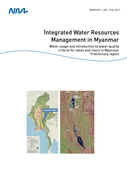
The purpose of the report is to present some first recommendation for the development of Myanmar ecological quality criteria using the system of the EU Water Framework Directive (EU WFD) as baseline, with main focus on the characterization and class
...
Prepared as an outcome of ICMR Subcommittee on Tongue Cancer | This Consensus Document on Management of Tongue Cancers summarizes the modalities of treatment including the site-specific anti-cancer therapies, supportive and palliative care and molec
...
Addendum: 2020 mid-year COVID-19 resvision, summary of the reprioritisation & additional requirements in response to COVID-19
In June and July 2020, a mid-year revision of the 2020 South Sudan Regional Refugee Response Plan (RRRP) was undertaken as an inter-
...
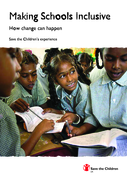
Making education more inclusive requires schools and education authorities to remove the barriers to education experienced by the most excluded children - often the poorest, children with disabilities, children without family care, girls, or childre
...
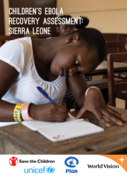
Nearly half the population of Sierra Leone is under the age of 18 years and the impact of the Ebola crisis on their lives now and on their future opportunities has been far-reaching: no school; loss of family members and friends to the virus; and changing roles and responsibilities in the home and t
...
Broken links Psychosocial support for people separated from family members: a field guide
recommended
The 40-page field guide outlines possible causes of separation, discusses the psychosocial impacts of being separated, such as how we experience loss, and provides guidelines on how to support those who have been separated from family members – including delivering difficult news to loved ones, ba
...
The Trends and Developments report presents a top-level overview of the drug phenomenon in Europe, covering drug supply, use and public health problems as well as drug policy and responses. Together with the online Statistical Bulletin and 30 Countr
...

Asthma is the most common chronic condition in children worldwide. It affects daytime activities, sleep and school attendance and causes anxiety to parents, families and other carers. The quality of asthma diagnosis and management globally still needs substantial improvement. From infancy to the tee
...
Following a long recovery from the economic crisis (2007–2013), young people in the EU proved to be more vulnerable to the effects of the restrictions put in place to slow the spread of the COVID-19 pandemic. Young people were more likely than older groups to experience job loss, financial insecur
...

Much remains unknown about displaced communities in out-of-camp areas as identification constraints hinder knowledge on the overall situation and preeminent needs of an area. When compared to regularly monitored in-camp populations, less is known about the
...

The COVID-19 pandemic is having far reaching impacts, well beyond the health crisis and needs, with the most severe impacts experienced in the poorest countries and those most vulnerable to humanitarian crises including natural disasters, such as Ne
...
The importance of robust mortality surveillance systems cannot be overstated in an era marked by increasing global health challenges where health threats loom large and population dynamics continue
...
This document provides a systematic approach in developing a coordinated, standardized, reliable, efficient, cost-effective, and sustainable specimen transport and referral system to support IVHD and VL testing networks. This document provides technical and programmatic recommendations on the approp
...

This technical report presents the epidemiology of human and animal leishmaniases in the EU and its neighbouring countries and concludes that the disease remains widespread and underreported in many countries of southern Europe, northern Africa, and the Middle East and that there is a need to improv
...
The International Organization for Migration (IOM) and partners from 27 humanitarian and development organisations and governments are appealing for USD 84 million to provide life-saving assistance to hundreds of thousands of African migrants and ho
...
AACAP OFFICIAL ACTION | This Practice Parameter identifies best approaches to the assessment and management of children and adolescents across all phases of a disaster. Delivered within a disaster system of care, many interventions are appropriate f
...
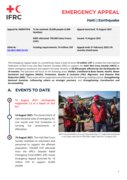
Early damage assessments indicate that at least 800,000 people could be directly exposed to minor to severe damages, including communication, access, security, loss of livelihoods, infrastructure, and health services could be impacted.
