
Filter
662
Text search:
related
substances
control
act
Featured
81
163
Language
Document type
354
112
89
52
26
17
5
4
1
Countries
39
34
34
24
21
18
18
18
14
12
10
10
8
8
7
7
7
7
6
6
5
5
4
4
4
4
4
4
4
4
3
3
3
3
3
2
2
1
1
1
1
1
1
1
1
1
1
1
1
1
1
1
1
1
Authors & Publishers
Publication Years
Category
275
41
39
36
25
16
16
Toolboxes
85
42
38
30
29
25
22
22
17
16
12
11
11
10
9
8
4
4
3
3
2
2
1
1

The decriminalization of drug use and possession for personal use, when implemented effectively, is a critical element in a human rights and public health-based HIV response. The group of countries that have adopted decriminalization models spans all continents. This document brings together differe
...

Antimicrobial resistance (AMR) is a multifaceted, international public health problem, which poses a direct threat to the safety of the population of South Africa. A national response is required to complement the development of a global plan, as articulated in the WHO’s draft resolution EB134/37
...
The growing challenges for people in low and middle-income countries to access new medicines.
Analysis 58
A guide for doctors providing health services for children. 2nd edition
Towards a Healthier Botswana
SITUATION ANALYSIS AND RECOMMENDATIONS
Antimicrobial resistance (AMR) is a global threat that requires urgent collaborative action within and among countries. AMR makes standard treatments ineffective and facilitates the spread of antimicrobial resistant infections rendering communities vulnerable. The Ministry of Health (MOH) and Minist
...
Operational Guideline

The National Department of Health and Department of Agriculture, Forestry and Fisheries have collectively engaged to determine the key interventions that will form the basis for this strategy taking into account the recommendations from the WHO and OIE.
The development and implementation of a Natio
...
The availability of controlled medicines is crucial for patients requiring palliative care, pain relief and symptom management. Many individuals worldwide, especially in low- and middle-income countries, continue to experience limited access to these essential medicines. Enhancing access to controll
...
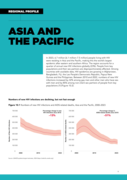
In 2023, 6.7 million [6.1 million–7.5 million] people living with HIV were residing in Asia and the Pacific, making this the world’s largest epidemic after eastern and southern Africa. The region accounts for a quarter of annual new HIV infections globally (23%). People from key populations and
...
This publication provides guidance to governments, civil society organizations (nongovernmental organizations and community-based organizations) and other partners implementing HIV prevention, care and treatment programs with key populations. This guide is designed to assist these programs in the de
...

The document "Chronic Respiratory Diseases: A Handbook for Pharmacists" outlines the significant role pharmacists play in managing asthma and COPD, emphasizing patient education, disease prevention, medication management, and promoting healthy lifestyles. It highlights the importance of pharmacists
...
The intent of these guidelines is to develop a holistic, coordinated, proactive and technology driven strategy for management of biological disasters through a culture of prevention, mitigation and preparedness to generate a prompt and effective response in the event of an emergency. Th
...
he Guidelines are an example of the support that UNDP provides to practically integrate international human rights commitments into national, regional and global policy and programmes.

An Indicator-based Approach - This manual presents an indicator-based approach for rapidly assessing pharmaceutical management systems and programs. The manual contains a set of 46 indicators of performance, grouped under eight topics of pharmaceutical management, with each topic being covered by a
...
