
Filter
2791
Text search:
experience
of
child
mortality
Featured
280
888
Language
2730
47
35
30
18
14
11
7
3
2
2
2
2
1
1
1
1
1
1
1
1
1
1
1
1
1
1
Document type
1614
484
347
132
109
54
31
13
3
2
1
Countries
160
133
100
83
81
71
70
68
66
65
64
56
53
53
49
43
43
41
32
31
26
25
24
24
22
21
21
19
18
18
17
17
16
16
15
14
14
13
11
10
10
10
9
8
8
7
6
6
6
6
6
6
6
6
5
5
5
5
5
4
4
4
4
4
4
4
3
3
3
3
3
3
3
3
2
2
2
2
2
2
2
2
2
2
2
2
1
1
1
1
1
1
1
1
1
1
1
1
1
1
1
1
1
1
1
1
1
1
1
1
1
1
Authors & Publishers
380
110
75
74
71
65
51
41
36
29
24
20
19
18
17
17
16
14
13
12
12
11
11
11
11
11
10
10
9
9
9
9
8
8
8
8
8
8
8
7
7
7
7
7
7
7
7
7
7
6
6
6
6
6
6
6
6
6
5
5
5
5
5
5
5
5
5
5
5
5
5
5
5
5
5
5
5
5
5
4
4
4
4
4
4
4
4
4
4
4
4
4
4
4
4
4
4
4
4
4
4
4
4
4
4
4
4
4
4
3
3
3
3
3
3
3
3
3
3
3
3
3
3
3
3
3
3
3
3
3
3
3
3
3
3
3
3
3
3
3
3
3
3
3
3
3
3
3
3
3
3
3
3
3
3
3
3
3
3
3
3
3
3
3
3
3
3
3
3
3
3
3
3
3
2
2
2
2
2
2
2
2
2
2
2
2
2
2
2
2
2
2
2
2
2
2
2
2
2
2
2
2
2
2
2
2
2
2
2
2
2
2
2
2
2
2
2
2
2
2
2
2
2
2
2
2
2
2
2
2
2
2
2
2
2
2
2
2
2
2
2
2
2
2
2
2
2
2
2
2
2
2
2
2
2
2
2
2
2
2
2
2
2
2
2
2
2
2
2
2
2
2
2
2
2
2
2
2
2
2
2
2
2
2
2
2
2
2
2
2
2
2
2
2
2
2
2
2
2
2
2
2
2
2
2
2
2
2
2
2
2
2
2
2
2
2
2
2
2
2
2
2
2
2
2
2
2
2
2
2
2
2
2
2
2
2
2
2
2
2
2
2
2
2
2
2
2
2
2
2
2
2
2
2
2
2
2
2
2
2
2
1
1
1
1
1
1
1
1
1
1
1
1
1
1
1
1
1
1
1
1
1
1
1
1
1
1
1
1
1
1
1
1
1
1
1
1
1
1
1
1
1
1
1
1
1
1
1
1
1
1
1
1
1
1
1
1
1
1
1
1
1
1
1
1
1
1
1
1
1
1
1
1
1
1
1
1
1
1
1
1
1
1
1
1
1
1
1
1
1
1
1
1
1
1
1
1
1
1
1
1
1
1
1
1
1
1
1
1
1
1
1
1
1
1
1
1
1
1
1
1
1
1
1
1
1
1
1
1
1
1
1
1
1
1
1
1
1
1
1
1
1
1
1
1
1
1
1
1
1
1
1
1
1
1
1
1
1
1
1
1
1
1
1
1
1
1
1
1
1
1
1
1
1
1
1
1
1
1
1
1
1
1
1
1
1
1
1
1
1
1
1
1
1
1
1
1
1
1
1
1
1
1
1
1
1
1
1
1
1
1
1
1
1
1
1
1
1
1
1
1
1
1
1
1
1
1
1
1
1
1
1
1
1
1
1
1
1
1
1
1
1
1
1
1
1
1
1
1
1
1
1
1
1
1
1
1
1
1
1
1
1
1
1
1
1
1
1
1
1
1
1
1
1
1
1
1
1
1
1
1
1
1
1
1
1
1
1
1
1
1
1
1
1
1
1
1
1
1
1
1
1
1
1
1
1
1
1
1
1
1
1
1
1
1
1
1
1
1
1
1
1
1
1
1
1
1
1
1
1
1
1
1
1
1
1
1
1
1
1
1
1
1
1
1
1
1
1
1
1
1
1
1
1
1
1
1
1
1
1
1
1
1
1
1
1
1
1
1
1
1
1
1
1
1
1
1
1
1
1
1
1
1
1
1
1
1
1
1
1
1
1
1
1
1
1
1
1
1
1
1
1
1
1
1
1
1
1
1
1
1
1
1
1
1
1
1
1
1
1
1
1
1
1
1
1
1
1
1
1
1
1
1
1
1
1
1
1
1
1
1
1
1
1
1
1
1
1
1
1
1
1
1
1
1
1
1
1
1
1
1
1
1
1
1
1
1
1
1
1
1
1
1
1
1
1
1
1
1
1
1
1
1
1
1
1
1
1
1
1
1
1
1
1
1
1
1
1
1
1
1
1
1
1
1
1
1
1
1
1
1
1
1
1
1
1
1
1
1
1
1
1
1
1
1
1
1
1
1
1
1
1
1
1
1
1
1
1
1
1
1
1
1
1
1
1
1
1
1
1
1
1
1
1
1
1
1
1
1
1
1
1
1
1
1
1
1
1
1
1
1
1
1
1
1
1
1
1
1
1
1
1
1
1
1
1
1
1
1
1
1
1
1
1
1
1
1
1
1
1
1
1
1
1
1
1
1
1
1
1
1
1
1
1
1
1
1
1
1
1
1
1
1
1
1
1
1
1
1
1
1
1
1
1
1
1
1
1
1
1
1
1
1
1
1
1
1
1
1
1
1
1
1
1
1
1
1
1
1
1
1
1
1
1
1
1
1
1
1
1
1
1
1
1
1
1
1
1
1
1
1
1
1
1
1
1
1
1
1
1
1
1
1
1
1
1
1
1
1
1
1
1
1
1
1
1
1
1
1
1
1
1
1
1
1
1
1
1
1
1
1
1
1
1
1
1
1
1
1
1
1
1
1
1
1
1
1
1
1
1
1
1
1
1
1
1
1
1
1
1
1
1
1
1
1
1
1
1
1
1
1
1
1
1
1
1
1
1
1
1
1
1
1
1
1
1
1
1
1
1
1
1
1
1
1
1
1
1
1
1
1
1
1
1
1
1
1
1
1
1
1
1
1
1
1
1
1
1
1
1
1
1
1
1
1
1
1
1
1
1
1
1
1
1
1
1
1
1
1
1
1
1
1
1
1
1
1
1
1
1
1
1
1
1
1
1
1
1
1
1
1
1
1
1
1
1
1
1
1
1
1
1
1
1
1
1
1
1
1
1
1
1
1
1
1
1
1
1
1
1
1
1
1
1
1
1
1
1
1
1
1
1
1
1
1
1
1
1
1
1
1
1
1
1
1
1
1
1
1
1
1
1
1
1
1
1
1
1
1
1
1
1
1
1
1
1
1
1
1
1
1
1
1
1
1
1
1
1
1
1
1
1
1
1
1
1
1
1
1
1
1
1
1
1
1
1
1
1
1
1
1
1
1
1
1
1
1
1
1
1
1
1
1
1
1
1
1
1
1
1
1
1
1
1
1
1
1
1
1
1
1
1
1
1
1
1
1
1
1
1
1
1
1
1
1
1
1
1
1
1
1
1
1
1
1
1
1
1
1
1
1
1
1
1
1
1
1
1
1
1
1
1
1
1
1
1
1
1
1
1
1
1
1
1
1
1
1
1
1
1
1
1
1
1
1
1
1
1
1
1
1
1
1
1
1
1
1
1
1
1
1
1
1
1
1
1
1
1
1
1
1
1
1
1
1
1
1
1
1
1
1
1
1
1
1
1
1
1
1
1
1
1
1
1
1
1
1
1
1
1
1
1
1
1
1
1
1
1
1
1
1
1
1
1
1
1
1
1
1
1
1
1
1
1
1
1
1
1
1
1
1
1
1
1
1
1
1
1
1
1
1
1
1
1
1
1
1
1
1
1
1
1
1
1
1
1
1
1
1
1
1
1
1
1
1
1
1
1
1
1
1
1
1
1
1
1
1
1
1
1
1
1
1
1
1
1
1
1
1
1
1
1
1
1
1
1
1
1
1
1
1
1
1
1
1
1
1
1
1
1
1
1
1
1
1
1
1
1
1
1
1
1
1
1
1
1
1
1
1
1
1
1
1
1
1
1
1
1
1
1
1
1
1
1
1
1
1
1
1
1
1
1
1
1
1
1
1
1
1
1
1
1
1
1
1
1
1
1
1
1
1
1
1
1
1
1
1
1
1
1
1
1
1
1
1
1
1
1
1
1
1
1
1
1
1
1
1
1
1
1
1
1
1
1
1
1
1
1
1
1
1
1
1
1
1
1
1
1
1
1
1
1
1
1
1
1
1
1
1
1
1
1
1
1
1
1
1
1
1
1
1
1
1
1
1
1
1
1
1
1
1
1
1
1
1
1
1
1
1
1
1
1
1
1
1
1
1
1
1
1
1
1
1
1
1
1
1
1
1
1
1
1
1
1
1
1
1
1
1
1
1
1
1
1
1
1
1
1
1
1
1
1
1
1
1
1
1
1
1
1
1
1
1
1
1
1
1
1
1
1
1
1
1
1
1
1
1
1
1
1
1
1
1
1
1
1
1
1
1
1
1
1
1
1
1
1
1
1
1
1
1
1
1
1
1
1
1
1
1
1
1
1
1
1
1
1
1
1
1
1
1
1
1
1
1
1
1
1
1
1
1
1
1
1
1
1
1
1
1
1
1
1
1
1
1
1
1
1
1
1
1
1
1
1
1
1
1
1
1
1
1
1
1
1
1
1
1
1
1
1
1
1
1
1
1
1
1
1
1
1
1
1
1
1
1
1
1
1
1
1
1
1
1
1
1
1
1
1
1
1
1
1
1
1
1
1
1
1
1
1
1
1
1
1
1
1
1
1
1
1
1
1
1
1
1
1
1
1
1
1
1
1
1
1
1
1
1
1
1
1
1
1
1
1
1
1
1
1
1
1
1
1
1
1
1
1
1
1
1
1
1
1
1
1
1
1
1
1
1
1
1
1
1
1
1
1
1
1
1
1
1
1
1
1
1
1
1
1
1
1
1
1
1
1
1
1
1
1
1
1
1
1
1
1
1
1
1
1
1
1
1
1
1
1
1
1
1
1
1
1
1
1
1
1
1
1
1
1
1
1
1
1
1
1
1
1
1
1
1
1
1
1
1
1
1
1
1
1
1
1
1
1
1
1
1
1
1
1
1
1
1
1
1
1
1
1
1
1
1
1
1
1
1
1
1
1
1
1
1
1
1
1
1
1
1
1
1
1
1
1
1
1
1
1
1
1
1
1
1
1
1
1
1
1
1
1
1
1
1
1
1
1
1
1
1
1
1
1
1
1
1
1
1
1
1
1
1
1
1
1
1
1
1
1
1
1
1
1
1
1
1
1
1
1
1
1
1
1
1
1
1
1
1
1
1
1
1
1
1
1
1
1
1
1
1
1
1
1
1
1
1
1
1
1
1
1
1
1
1
1
1
1
1
1
1
1
1
1
1
1
1
1
1
1
1
1
1
1
1
1
1
1
1
1
1
1
1
1
1
1
1
1
1
1
1
1
1
1
1
1
1
1
1
1
1
1
1
1
1
1
1
1
1
1
1
1
1
1
1
1
1
1
1
1
1
1
1
1
1
1
1
1
1
1
1
1
1
1
1
1
1
1
1
1
1
1
1
1
1
1
1
1
1
1
1
1
1
1
1
1
1
1
1
1
1
1
1
1
1
1
1
1
1
1
1
1
1
1
1
1
1
1
1
1
1
1
1
1
1
1
1
1
1
1
1
1
1
1
1
Publication Years
739
1744
297
10
1
Category
1277
278
246
169
155
57
14
1
Toolboxes
186
166
112
107
97
93
89
72
66
58
50
43
41
38
36
31
30
25
24
24
18
13
6
6
2
1
The primary audience for the guideline is health programme managers, including governmental and non-governmental organizations, and policy makers who are responsible for designing maternal, newborn and child health programmes, primarily in low-incom
...
e settings. The guideline is also aimed at health providers and teaching institutions, to increase knowledge of interventions. Development programmes and organizations supporting women’s empowerment and rights will also find this guideline of use.
more
The document provides a detailed overview of cholera, including its clinical features, diagnosis, treatment, and prevention. It explains the causes of cholera, its symptoms such as severe diarrhea a
...
nd dehydration, and the importance of rehydration therapy (oral or intravenous) to reduce mortality. The document also emphasizes public health measures, including access to clean water, proper sanitation, and vaccination, as essential strategies to control and prevent cholera outbreaks. It serves as a comprehensive resource for healthcare professionals managing cholera cases and outbreaks.
more
This special issue on Newborn Health in Global Health Action is being launched to share the experience of how to scale up a cost-effective package of
...
newborn care that involves families, community health workers and health facilities. The results of this community randomized trial, the Uganda Newborn Study (UNEST), show that home visits in pregnancy and soon after delivery resulted in improved breastfeeding practices, skin-to-skin care immediately after birth, delaying a baby’s first bath, and hygienic care of the baby’s umbilical cord among the poorest households with lowest access to care.
more

Just about everyone has experienced the joy that a healthy newborn child brings to parents, families and communities. But the arrival of a newborn who is small or sick often results in immediate wor
...
ry and sadness. When the infant is at high risk of death or disability, these concerns can be a tremendous additional burden.
more

This document puts forward the joint position and vision of an expert, global, multistakeholder working group on implementing Kangaroo Mother Care (KMC) for all preterm or low birth weight (LBW) infants as the foundation for small and/or sick newbor
...
n care within maternal, newborn, and child health programmes, and spur collaborative global action. The document summarizes the background information, evidence, and rationale for making KMC available to every preterm or LBW newborn and seeks to galvanize the international maternal, newborn, and child health community and families to come together to support the implementation of KMC for all preterm or LBW infants to improve their and their mothers and families health and well-being.
This position paper is intended to be used by policy-makers (i.e. those responsible for national policy, guideline development and budget allocation), development partners, programme managers, health workforce leadership, practising clinicians, civil society leadership (e.g. parent and professional organizations) and researchers/research organizations involved in KMC implementation research.
more

2nd edition. This second edition builds on the experience of more than 10 years of SMC deployment, and reflects changes introduced in the WHO guide
...
lines for malaria, 3 June 2022. The goal of this publication is to share these best practices to improve SMC implementation, coverage, and monitoring and evaluation. Examples of materials and tools as well as links to resources are included to support managers and health workers in their efforts to conduct successful SMC activities and prevent malaria among vulnerable children.
more
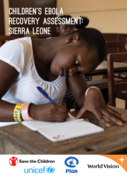
Nearly half the population of Sierra Leone is under the age of 18 years and the impact of the Ebola crisis on their lives now and on their future o
...
pportunities has been far-reaching: no school; loss of family members and friends to the virus; and changing roles and responsibilities in the home and the community.
While the priority now remains meeting the goal of zero cases, the Government of Sierra Leone (GoSL) is also developing a comprehensive strategy aimed at supporting communities to recover from this crisis, to put the country back on track to meet development targets. The Ebola Recovery Strategy – currently being finalised by the GoSL – represents a potentially transformative framework to support the immediate recovery of children from the crisis and to ensure their place in the future development of Sierra Leone.
To date, there has not been a formal process for children to outline their own priorities for recovery to decision-makers. In mid-March 2015, child-centred agencies conducted a Children’s Ebola Recovery Assessment (CERA) in nine districts across Sierra Leone to create a mechanism for more than 1,100 boys and girls, to discuss issues of concern; assess the impact of the crisis on their roles, responsibilities and future opportunities; and to formulate their recommendations for recovery.
more
Stronger collaboration, better health: global action plan for healthy lives and well-being for all
recommended
The overall objective of the Global Action Plan is to enhance collaboration among 12 global organizations engaged in health, development and humanitarian responses to accelerate country progress on the health-related SDG targets. The Plan presents a
...
new approach to strengthening collaboration among and joint action by the organizations, building on an initial joint commitment made in October 2018. The Plan is primarily intended to be strategic but provides some operational detail to guide implementation while also allowing flexibility for adjustment based on regular reviews of progress and learning from experience. Although the purpose of the Global Action Plan is not to provide or seek additional resources, the Plan will enable better use of existing resources as a result of improved collaboration, recognizing that each agency has its own unique mandate and area of expertise.
more

Promoting health and preventing disease is a critical component of the effort required to achieve Universal Health Coverage (UHC). to date, efforts to achieve UHC have focused mostly on strengthening health systems and their capacities to provide cu
...
rative care. However, experience from the COVID-19 pandemic has reaffirmed the need for resilient health systems, emphasizing primary health care, including preventive and promotive health and well-being.
Emerging from the eye of the storm as the global health lead agency during the pandemic, WHO is equipped with the required insights and actions for a holistic approach to “building back fairer and better” after COVID-19.
The Healthier Populations (UHP) Cluster in the African Region is designed to support Pillar 3 of WHO’s 13th Global Programme of Work (GPW13) which aims to make 1 billion people healthier by reducing health inequities, preventing diseases and injuries, addressing health determinants, and promoting partnerships for collaborative actions amongst all stakeholders.
more

Asthma is the commonest chronic childhood disease and encompasses a spectrum of airway diseases with similar symptoms. Inaccurate diagnosis remains common, especially in younger children, with failure to characterize the different “asthmas.” Chi
...
ldren worldwide repeatedly suffer symptoms which severely affect their everyday lives. Children die from asthma, especially in low and middle-income countries (LMICs). In many countries, asthma prevalence is rising. Access to effective care and changing environments are hugely variable and may explain the higher morbidity in inner-city children, in LMICs, and in deprived populations in high-income countries. Despite the disease being eminently controllable, morbidity and mortality persist.
more
This paper examines the implications of the IMF’s April 2024 macro-fiscal forecast updates on government health expenditure (GHE) across 170 economies through 2029, covering nearly all years remaining to achieve the Sustainable Development Goals (
...
SDGs). The findings reveal wide disparities in governments' capacities to increase health spending, with differences not only observed across income groups but also within them. Primary concerns focus to two groups of low- and lower middleincome
countries: the first group is projected to experience a contraction in real per capita GHE from 2019 and 2029, threatening to reverse progress toward the health SDG targets, while the other group faces stagnation in real per capita GHE, greatly limiting advancement. The insights presented are crucial for health policymakers and their external partners to respond to evolving macro-fiscal circumstances and stabilize investment growth in health. While increasing the priority of health in spending is a key policy option, it will not be sufficient on its own. Effective responses also
require improving spending efficiency and addressing broader fiscal challenges. Without decisive action, many countries have little chance of achieving the health SDGs.
more
The primary audience of these recommendations includes healthcare providers who are responsible for developing national and local health protocols (particularly those related to hypertensive disorders of
...
pregnancy), and those directly providing care to pregnant women and their newborns, including midwives, nurses, general medical practitioners, obstetricians, obstetric physicians, managers of maternal and child health programmes, and relevant staff in ministries of health, in all settings.
more

Guideline on Inclusive Disaster Risk Reduction: Early Warning and Accessible Broadcasting
Dion, Betty; Qureshi, Aqeel
Global Alliance on Accessible Technologies and Environments (GAATES), Asia Pacific Broadcasting Union, Asia Disaster Preparedness Center
(2014)
C1
- Build community resilience to coastal hazards by improving capacity of inclusive disaster management systems.
- Reduce the mortality rate of per
...
sons with disabilities in situations of risk.
- Raise awareness about inclusive policies, practices and disaster risk reduction strategies that address the accessibility of communication, shelter, transportation and early warning systems.
- Foster collaboration between disaster preparedness organizations, broadcasters and organizations of persons with disabilities to mainstreaming disability issues in disaster risk reduction strategies.
- Build the capacity of disaster management organizations, governments, broadcasters and built environment practitioners by providing technical specifications on accessible communications and the design of accessible shelters and the built environment.
more

The Global Burden of Disease (GBD) study, a collaborative endeavour of the World
Health Organization (WHO), the World Bank and the Harvard School of
...
Public Health,
drew the attention of the international health community to the burden of neurological
disorders and many other chronic conditions. This study found that the burden of neurological
disorders was seriously underestimated by traditional epidemiological and health
statistical methods that take into account only mortality rates but not disability rates. The
GBD study showed that over the years the global health impact of neurological disorders
had been underestimated.
more
Refugee Health
recommended
An approach to emergency situations. Relief workers face rapidly changing and complex environments, new disease patterns, enormous humanitarian needs and relatively limited resources. The authors of this book use their
...
experience in the area to produce an operational manual of the issues involved in refugee health programs. This book is aimed at professionals involved in public health assistance to refugees and displaced persons. It deals with a variety of specific refugee health issues at the decisional level, and discusses the priorities of intervention during the different phases of a refugee crisis, from emergency to repatriation.
more

Humanitarian emergencies, regardless of type and cause, have a number of common risk factors for communicable diseases inextricably linked to excess risk
...
of morbidity and mortality which can come from vaccine–preventable diseases (VPDs). The reduction of VPDs is a significant aim of public-health interventions during crises.
The WHO Strategic Advisory Group of Experts (SAGE) on Immunization carried out a comprehensive review of evidence on vaccination decision-making processes and considerations in humanitarian emergencies.
more
Mothers and healthcare workers who support them have many questions and concerns about whether it is safe for mothers with confirmed or suspected COVID-19 to be close to and breastfeed their babies during the pandemic.
To address their questions, WHO has released a list
...
of Frequently asked questions: Breastfeeding and COVID-19. The FAQ complements the WHO interim guidance: Clinical management of severe acute respiratory infection when COVID-19 is suspected and draws upon other WHO recommendations on infant and young child feeding.
The FAQs aim to provide information to healthcare workers supporting mothers and families in maternity services and community settings, and communicate how the interim guidance should be implemented. Additionally, the FAQs provide information about the protective effects of breastfeeding and skin-to-skin contact, and the harmful effects of inappropriate use of infant formula milk.
more
In 2012, all Member States of the World Health Organization (WHO) endorsed a historical target to reduce premature mortality from noncommunicable diseases
(NCD). This commitment was echoed in 2015
...
by the United Nations Sustainable Development Goals, which included a target to reduce premature mortality (the
measure of unfulfilled life expectancy and deaths between the ages of 30 and 70 years) from NCD by 30% by the year 2030. The Sustainable Development Goals are especially relevant to cardiovascular disease (CVD), the leading cause of death globally, with increasing prevalence in low- and middle-income countries (LMIC).
more

During the year 2022, COVID-19 continued to be a significant challenge in Eritrea as in many other countries across the world. As COVID-19 devastated communities around the world, WHO worked with the MoH to strengthen the National and Sub-National health systems in order to meet community needs and
...
mitigate the devastation during the pandemic and beyond.
One of the major achievements in the year 2022 was the beginning of the journey towards validation of
the elimination of mother to child transmission of HIV, syphilis, and hepatitis B. This is the culmination of years
of commitment and determination by the political leadership, national and international partnerships to
reduce the associated indices to levels that qualify for elimination.
more
We investigate whether and to what extent Chinese development finance affects infant mortality, combining 92 demographic and health surveys (DHS) for a maximum of 53 countries and almost 55,000 sub-
...
national locations over the 2002-2014 period. We address causality by instrumenting aid with a set of interacted variables. Variation over
time results from indicators that measure the availability of funding in a given year. Cross-sectional variation results from a sub-national region’s “probability to receive aid.” Controlled for this probability in tandem with fixed effects for country-years and provinces, the interactions of these variables form powerful and excludable instruments. Our results show that Chinese aid increases infant mortality at sub-national scales, but decreases mortality at the countrylevel. In several tests, we show that this stark contrast likely results from aid being fungible within recipient countries.
more
