
Filter
431
Text search:
Government
of
Lesotho
Featured
Recommendations
18
New Publications
87
Language
Document type
No document type
279
Studies & Reports
105
Manuals
13
Guidelines
13
Strategic & Response Plan
8
Situation Updates
5
Fact sheets
5
Training Material
2
Infographics
1
Countries / Regions
Lesotho
87
Africa
33
Global
30
South Africa
19
Zimbabwe
12
Namibia
11
Malawi
10
East and Southern Africa
10
Ethiopia
9
Kenya
9
Eswatini/ Swaziland
9
Nigeria
8
Tanzania
8
Congo, Democratic Republic of
7
Zambia
7
Botswana
7
Uganda
6
Liberia
5
West and Central Africa
5
Sierra Leone
4
Ghana
4
Rwanda
4
Mozambique
4
India
3
Southern Africa
3
Guinea
2
Somalia
2
Angola
2
Middle East and North Africa
2
Jamaica
2
Burkina Faso
1
Senegal
1
Mali
1
Cameroon
1
Togo
1
Philippines
1
Nepal
1
Pakistan
1
South Sudan
1
Iraq
1
Afghanistan
1
Chad
1
Cambodia
1
China
1
Indonesia
1
Bangladesh
1
Papua New Guinea
1
Sudan
1
Vanuatu
1
Peru
1
Brazil
1
Serbia
1
Ukraine
1
Madagascar
1
Myanmar / Burma
1
South–East Asia Region
1
Asia
1
Solomon Islands
1
Eastern Europe
1
North Korea
1
Russia
1
Iran
1
Vietnam
1
Mauritius
1
Authors & Publishers
Publication Years
Category
Countries
176
Public Health
28
Women & Child Health
17
Clinical Guidelines
16
Key Resources
16
Pharmacy & Technologies
5
Capacity Building
2
Toolboxes
HIV
96
Disability
31
TB
26
COVID-19
17
Planetary Health
15
Health Financing Toolbox
13
Global Health Education
12
Mental Health
11
Caregiver
9
Natural Hazards
8
Conflict
5
Refugee
5
NCDs
5
AMR
3
Pharmacy
3
2.0 Rapid Response
3
Ebola & Marburg
2
Rapid Response
2
Specific Hazards
2
NTDs
2
Zika
1
Social Ethics
1
Malaria
1

Rehabilitation in health systems provides recommendations for Member States and other relevant stakeholders to strengthen and expand the availability of quality rehabilitation services. Currently, there is a significant unmet need for rehabilitation
...

To complement the Global Strategy progress reporting, this report provides a detailed look at country leadership and action toward the Every Newborn National Milestones by 2020. Countries have taken the initiative to show the way forward and have demonstrated significant progress. As part
...
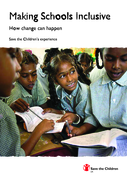
Making education more inclusive requires schools and education authorities to remove the barriers to education experienced by the most excluded children - often the poorest, children with disabilities, children without family care, girls, or children from minority groups. Also included in the text a
...

This report makes clear that there is a path to end AIDS. Taking that path will help ensure preparedness to address other pandemic challenges, and advance progress across the Sustainable Development Goals. The data and real-world examples in the report make it very clear what that path is. It is not
...
This ten year global plan for measles and rubella outlines the strategy that needs to be fully implemented to achieve the measles and rubella goals endorsed by the World Health Assembly. The plan sets out the: vision, goals and targets for the 2011-2020 period, recommended strategies, guiding princi
...
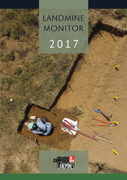
This is the 19th annual Landmine Monitor report. It is the sister publication to the Cluster Munition Monitor report, first published in November 2010.
Landmine Monitor 2016 provides a global overview of the landmine situation. Chapters on develop
...
The major neglected tropical diseases, Taenia solium taeniosis/cysticercosis and schistosomiasis caused by Schistosoma mansoni or S. haematobium are presumed to be widely distributed in Africa. Taenia solium taeniosis/ cysticercosis has been reported as an emerging disease in different regions
...
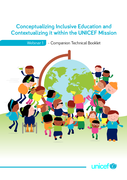
you can find all 14 Technical Booklets on Inclusive Education, produced by UNICEF, in ENGLISH. Other versions can be found on the website https://www.ded4inclusion.com/inclusive-education-resources-free/unicef-inclusive-education-booklets-and-webinars-english-version. Each Technical Booklet (and com
...
Community health workers (CHWs) enable marginalised communities, often experiencing structural poverty, to access healthcare. Trust, important in all patient–provider relationships, is difficult to build in such
communities, particularly when stigma associated with HIV/AIDS, tuberculosis and now
...

The WHO Global Antimicrobial Resistance and Use Surveillance System (GLASS) was launched in 2015 to foster AMR surveillance and inform strategies to contain AMR. The system started with surveillance of AMR in bacteria causing common human infections
...

This is a report from a National, representative household survey carried out in Swaziland in 2009 – 2010. A large amount of effort has been put into this two‐year exercise until finally we can present the results
...
The WHO/UNICEF JMP report, WASH in Health Care Facilities, is the first comprehensive global assessment of water, sanitation and hygiene (WASH) in health care facilities. It also finds that 1 in 5 health care facilities has no sanitation service*, i
...

This status report shows how far we have come—and how much further we must go—if we hope to meet the global commitments to end AIDS in children. It offers a snapshot of global progress and permits an early assessment
...
Tuberculosis (TB) control in the African Region has evolved since the disease was declared a global emergency by the World Health Organization (WHO) in 1993. Member States have adopted and implemented successive global and regional strategies and resolutions, with demonstrable positive impacts on in
...

Chapter 1 provides new data on the latest developments in the global treatment effort, highlighting positive trends as well as aspects that require improvement. Chapter 2 summarizes the impact of the scale-up in reducing AIDS-related mortality and n
...
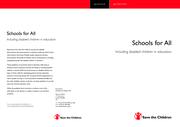
Experience from Save the Children and partners globally
demonstrates that improvements in education quality go hand-in-hand
with inclusion and access, Flexible, quality, responsive learning
environments will benefit all children and are fundamental to including
marginalised groups like disabled
...
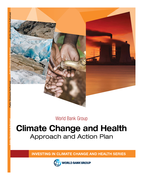
Climate change (CC) impacts on health outcomes, both direct and indirect, are sufficient to jeopardize achieving the World Bank Group’s visions and agendas in poverty reduction, population resilience, and health, nutrition and population (HNP). In the last 5 years, the number
...
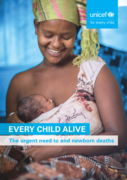
Globally, in low-income countries, the average newborn mortality rate is 27 deaths per 1,000 births, the report says. In high-income countries, that rate is 3 deaths per 1,000. Newborns from the riskiest places to give birth are up to 50 times more likely to die than those from the safest places.
...
...

DHS WORKING PAPERS 2016 No. 126 | DEMOGRAPHIC AND HEALTH SURVEYS
