
Filter
3044
Text search:
Epidemiological
review
Featured
Recommendations
296
New Publications
684
Language
Document type
No document type
1545
Studies & Reports
606
Guidelines
473
Manuals
178
Strategic & Response Plan
143
Fact sheets
41
Training Material
34
Situation Updates
17
Resource Platforms
5
Infographics
1
Online Courses
1
Countries / Regions
Global
151
India
125
Western and Central Europe
84
Latin America and the Carribbean
78
Sierra Leone
64
Liberia
60
Africa
57
Ethiopia
55
Kenya
55
Nigeria
50
South Africa
49
Uganda
43
Nepal
41
Eastern Europe
37
Rwanda
36
Malawi
34
Ghana
33
Zambia
32
Tanzania
31
Brazil
31
Russia
30
Bangladesh
29
Guinea
28
Ukraine
25
Myanmar / Burma
25
Asia
24
Congo, Democratic Republic of
23
Namibia
23
South–East Asia Region
23
Mozambique
21
East and Southern Africa
20
West and Central Africa
20
Pakistan
16
Zimbabwe
15
Senegal
14
Philippines
14
Syria
14
Germany
13
Cambodia
13
Indonesia
13
Lesotho
13
Eastern Europe and Central Asia
13
Venezuela
13
Colombia
12
Middle East and North Africa
12
Tajikistan
9
Burkina Faso
8
Cameroon
8
Madagascar
8
Yemen
8
Afghanistan
7
Peru
7
Botswana
7
Chile
7
Western Pacific Region
7
Albania
7
North America
7
Mali
6
China
6
Eswatini/ Swaziland
6
Vietnam
6
Somalia
5
Benin
5
Argentina
5
Angola
5
Sri Lanka
5
Paraguay
5
Georgia
5
Spain
5
Côte d’Ivoire / Ivory Coast
4
South Sudan
4
Jordan
4
Lebanon
4
Thailand
4
Sudan
4
Ecuador
4
Kyrgyzstan
4
Guinea-Bissau
3
Togo
3
Iraq
3
Gambia
3
Burundi
3
Honduras
3
Bolivia
3
Armenia
3
Southern Africa
3
Laos
3
Timor Leste/ East Timor
3
Moldova
3
Iran
3
France
3
USA
2
Saudi Arabia
2
Niger
2
Haiti
2
Turkey
2
Egypt
2
Central African Republic
2
Dominican Republic
2
North Macedonia
2
Greece
2
Libya
2
Guatemala
2
Bhutan
2
Estonia
2
Jamaica
2
Mauritius
2
United Kingdom
2
Portugal
2
Morocco
1
Chad
1
Mauritania
1
Ireland
1
Singapore
1
Serbia
1
El Salvador
1
Mexico
1
Nicaragua
1
Other region
1
Poland
1
Palestine
1
North Korea
1
Italy
1
Djibouti
1
Qatar
1
Lithuania
1
Uzbekistan
1
Kazakhstan
1
Turkmenistan
1
Maldives
1
Tunisia
1
Belize
1
Costa Rica
1
Panama
1
Authors & Publishers
Publication Years
Category
Countries
970
Clinical Guidelines
271
Public Health
220
Key Resources
122
Women & Child Health
94
Capacity Building
35
Pharmacy & Technologies
28
Toolboxes
COVID-19
315
HIV
296
TB
253
Mental Health
216
NTDs
209
Rapid Response
114
Planetary Health
109
Ebola & Marburg
107
Malaria
79
AMR
78
NCDs
77
2.0 Rapid Response
62
Zika
44
Disability
41
Polio
39
Global Health Education
38
Caregiver
36
Cholera
33
Pharmacy
30
Refugee
24
Health Financing Toolbox
23
Conflict
22
Natural Hazards
13
Specific Hazards
7
Social Ethics
5

This toolkit is a comprehensive set of practical tools and resources designed to support country-level risk communication and community engagement (RCCE) practitioners, decision-makers, and partners to plan and implement readiness and response activities for yellow fever outbreaks. The toolkit conta
...

This publication provides guidance for planning country-specific programming to achieve the triple elimination of mother-to-child (or vertical) transmission of HIV, syphilis and hepatitis B virus. It is based on the WHO Triple Elimination Framework, which promotes an integrated, person-centred appro
...
This operational guidance provides a structured approach to support countries in sustaining priority services for HIV, viral hepatitis and sexually transmitted infections in the context of reduced external funding. The guidance is intended for national governments, public health programmes, communit
...
The World Health Organization recently redefined leprosy elimination as a phased process, with the first milestone being the
interruption of transmission, achieved when no new child cases (defined as younger than 15 years) are reported for five consecutive years.
In Pakistan, the well-functioning
...

Growing emergencies and displacements across the world demand increasingly complex interventions and responses. The World Health Organization (WHO) has developed Malaria control in emergencies: a field manual to provide technical guidance to help partners respond effectively to malaria in emergency
...
Exposure to air pollution has significant adverse health effects, leading to nearly 1 in every 8 deaths globally. Air pollution affects all age groups, from unborn children to older people, in both high- and low-income nations.
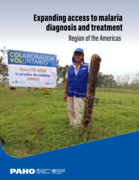
The overall objective of this approach is to accelerate efforts toward malaria elimination by increasing
access to early diagnosis and treatment. The specific objectives are to: Minimize the barriers that the population faces in accessing timely, quality diagnosis and treatment. Reduce the time bet
...

The ongoing global pandemic of SARS-CoV-2 (Covid-19) poses unique diagnostic and clinical management challenges in regions where seasonal epidemic-prone diseases are endemic. Diseases such as dengue, malaria, seasonal influenza, leptospirosis, chikungunya, scrub typhus and bacterial infections often
...

The annual bulletin of the Mekong Malaria Elimination (MME) programme is a yearly report that reviews ongoing efforts to combat multidrug resistance and eliminate malaria in the 6 countries of the Greater Mekong subregion (GMS): Cambodia, China (Yunnan province), Lao People's Democratic Republic, My
...

This guidance synthesizes current evidence on dengue laboratory testing and diagnostics and provides practical recommendations for laboratories, clinicians, public health officials, and programme managers involved in dengue diagnosis, surveillance, and control, in the context of the global emergency
...

In the absence of a such a measure, and building on the success of developing the APCA African
Palliative Outcome Scale (POS) for adults, the African Palliative Care Association has developed the
APCA African Children’s POS. The tool has been validated across diseases, countries, settings and
...

This document outlines the plan for a continental cholera prevention and control with the implementation framework for the Cholera IMST, detailing its governance structure, strategic priorities, and operational modalities

Public health challenges over the past decade have highlighted the importance of approaching health through a holistic lens of human, animal, and environmental sectors, recognizing the need for a collaborative response against shared threats. Zoonotic diseases, transmitted between humans and animals
...

WHO guideline on balanced national controlled medicines policies to ensure medical access and safety
Access to medicines is essential for attainment of universal health coverage, which is central to achievement of the health-related Sustainable Development Goals. Controlled medicines include those such as opioids, benzodiazepines, barbiturates, amphetamines and others with identified or emergent cl
...

WHO, as the coordinating authority on international health, supports countries in protecting public health through evidence-based policies and actions. Considering the significant health burden and the multiple potential benefits of interventions, the WHO Air Quality, Energy and Health Unit aims to
...

The Best Buys for Disease Elimination is a practical, evidence-based guide to the most effective actions for countries to implement in order to eliminate communicable diseases. The guide highlights the efficient use of resources and prioritizing populations in vulnerable situations.
“The Region
...

Strengthening global health security to protect the world against future epidemics and pandemics requires well-tested and decentralized capacities for the local detection and rapid containment of outbreaks of infectious disease. For such capacities to translate into effective response actions, ind
...

In an era of constrained resources and tightening budgets, strategic prioritization in tuberculosis (TB) programming is more critical than ever. Countries must make informed decisions to allocate limited resources effectively - maximizing impact, preventing avoidable deaths, and sustaining progress
...

Abrupt reductions in international HIV assistance in 2025 have deepened existing funding shortfalls. The OECD estimates that external health assistance is projected to drop by 30–40% in 2025 compared with 2023, causing immediate and even more severe disruption to health services in low- and middle
...

The findings of the report are both urgent and devastating. At the current rate of progress, by 2040 we would still have 1.9 million new HIV infections and 990,000 AIDS-related deaths in children. But if funding for HIV prevention and treatment continues to fall as current trends suggest, the world
...
