Filter
573
Text search:
World
Health
Organization
WHO,
WASH
Cluster,
Health
Cluster
Featured
Recommendations
78
New Publications
210
Language
Document type
No document type
286
Studies & Reports
87
Guidelines
75
Strategic & Response Plan
54
Manuals
37
Situation Updates
22
Fact sheets
6
Training Material
5
Infographics
1
Countries / Regions
Global
25
Sierra Leone
21
Nepal
20
South Sudan
18
Myanmar / Burma
17
Yemen
17
Liberia
16
Bangladesh
16
Kenya
14
Malawi
14
Nigeria
13
Syria
13
Ukraine
11
Congo, Democratic Republic of
10
Ethiopia
10
Philippines
10
Mozambique
10
India
9
Venezuela
9
Uganda
8
Haiti
8
Africa
8
Zimbabwe
6
Tanzania
6
Ghana
5
Somalia
5
Rwanda
5
South Africa
5
Sudan
5
Central African Republic
5
Madagascar
5
Guinea
4
Niger
4
Colombia
4
Latin America and the Carribbean
4
Mali
3
Cameroon
3
Pakistan
3
East and Southern Africa
3
West and Central Africa
3
Western and Central Europe
3
Burkina Faso
2
Senegal
2
Iraq
2
Jordan
2
Lebanon
2
Zambia
2
Indonesia
2
Eswatini/ Swaziland
2
South–East Asia Region
2
Eastern Europe and Central Asia
2
Asia
2
Palestine
2
Iran
2
Guinea-Bissau
1
Morocco
1
Saudi Arabia
1
Togo
1
Afghanistan
1
Turkey
1
Cambodia
1
Malaysia
1
Papua New Guinea
1
Namibia
1
Brazil
1
Hungary
1
Burundi
1
Greece
1
Libya
1
Lesotho
1
Sri Lanka
1
Middle East and North Africa
1
Western Pacific Region
1
Bhutan
1
Poland
1
Albania
1
Laos
1
Russia
1
Romania
1
Moldova
1
Georgia
1
Tunisia
1
Belarus
1
Authors & Publishers
Publication Years
Category
Countries
258
Key Resources
81
Public Health
25
Clinical Guidelines
25
Women & Child Health
25
Capacity Building
7
Pharmacy & Technologies
1
Toolboxes
COVID-19
82
Conflict
51
Ebola & Marburg
29
Natural Hazards
29
Cholera
22
Disability
21
Planetary Health
18
Rapid Response
16
NTDs
16
2.0 Rapid Response
13
Refugee
12
HIV
11
Mental Health
11
Global Health Education
9
AMR
9
Caregiver
7
TB
5
Pharmacy
4
Zika
3
Malaria
3
Specific Hazards
2
Health Financing Toolbox
2
Polio
1
South Sudan
1
Typhoon
1
NCDs
1
Rwanda’s fourth health sector strategic plan (HSSP4) is meant to provide the health sector with a Strategic Plan that will highlight its commitments and priorities for the coming 6 years. It will
...
The guidance aspires
• To emphasize the 'need' to mainstream disaster risk reduction (DRR) in the health sector initiatives.
• To identify key approaches for mainstreaming DRR in the health ...
• To emphasize the 'need' to mainstream disaster risk reduction (DRR) in the health sector initiatives.
• To identify key approaches for mainstreaming DRR in the health ...
This report presents the findings from a ‘deep dive’ undertaken by UNICEF East Asia and the Pacific Regional Office to consider the experiences in Cambodia, Indonesia, the Lao People’s Democratic Republic, Malaysia, Myanmar, the Philippines and the Pacific. The target audience for this report
...
In the current absence of vaccine for COVID-19, public health response target breaking the chain of infection by focusing on the mode of transmission. This paper summarizes current evidence-base around the transmission dynamics, pathogenic, and clin
...

SAMS team rose to meet these challenges, delivering world class COVID treatment with four newly established COVID hospitals complete with 100 ICU beds and state of the art equipment like ventilators, monitors, and oxygen generators. By using innovat
...

Ces questions fréquemment posées (FAQs) ont été élaborées par le Groupe de travail sur les maladies infectieuses du Groupe l'alimentation central sur des nourrissons en situation d'urgence (IFE) en se basant sur les recommandations les plus récentes, les connaissances collectives et les donnÃ
...
This handbook is a quick-reference tool that provides practical, field-level guidance to establish and maintain a GBV sub-cluster in a humanitarian emergency. It provides the foundations for coordination. More in-depth information can be pursued thr
...
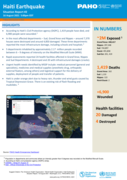
Here you can find the latest situation reports
In many humanitarian emergencies, there is a serious lack of access to even the most basic materials needed for managing the blood in addition to a lack of appropriate sanitation facilities (including water), which are critical for addressing menstrual hygiene. Privacy in emergencies is often scarc
...