Filter
326
Text search:
World
Health
Assembly
(WHA)
Featured
20
95
Language
Document type
148
62
49
39
20
4
2
1
1
Countries
19
11
11
8
8
8
7
7
7
7
6
5
4
4
4
4
3
3
3
3
3
3
3
3
2
2
2
2
2
2
2
2
1
1
1
1
1
1
1
1
1
1
1
1
1
1
1
1
1
1
1
1
1
1
1
Authors & Publishers
Publication Years
Category
98
34
32
28
26
5
3
Toolboxes
37
20
19
16
16
14
11
10
10
8
8
8
7
3
3
3
3
3
2
2
1
1
1
1
Vor welchen Herausforderungen die Weltgesundheitsorganisation steht und wie Deutschland zu ihrer Stärkung beitragen kann.
Manual para directores de programas
PLOS Neglected Tropical Diseases September 2014 | Volume 8 | Issue 9 | e3016 DOI: 10.1371/journal.pntd.0003016
This working paper aims to provide a rough over-view of existing rules and guidelines on the coopera-tion between the UN and the private sector – at least as they are publicly available. It will describe com-mon features and discuss advances and shortcomings of the most prominent a
...
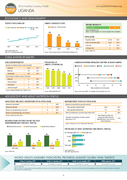
Global Nutrition Report

This document was prepared in response to a need to review and potentially update the current recommendations for the antibiotic treatment of both inpatient and outpatient management of severe acute malnutrition (SAM). The current recommendations (Table 1) are based on guidelines published in 2013 i
...
The main objectives of the SOPs are to: (i) establish standards and timelines for response activities; and (ii) guide national governments and GPEI partners in key support functions.
This new version of the SOPs presents overall response requirements for dealing with type 1, 2 and 3 poliovirus fo
...
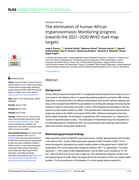
PLOS Neglected Tropical Diseases 18(4): e0012111. https://doi.org/10.1371/journal.pntd.0012111

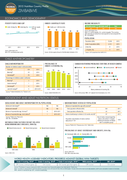
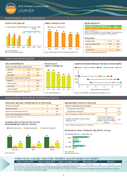

Biology, Diagnosis and Treatment, Epidemiology and Prevention
Responding to a poliovirus event and outbreak, Part 1: General (SOPs) describes the general principles and steps to facilitate timely and effective responses to poliovirus events and outbreaks, and incorporate lessons learned from recent previous outbreak response efforts. This document summarizes r
...
The growing challenges for people in low and middle-income countries to access new medicines.
Analysis 58