
Filter
350
Text search:
Malawi
Human
Rights
Commission
Featured
Recommendations
19
New Publications
78
Language
Document type
No document type
228
Studies & Reports
69
Guidelines
28
Manuals
11
Strategic & Response Plan
9
Training Material
3
Situation Updates
1
Resource Platforms
1
Countries / Regions
Malawi
43
Global
22
Africa
21
Zambia
14
South Africa
10
Ethiopia
6
Kenya
6
Ghana
5
Bangladesh
5
Mozambique
5
Lesotho
5
Sierra Leone
4
Tanzania
4
Namibia
4
East and Southern Africa
4
Middle East and North Africa
4
Liberia
3
Congo, Democratic Republic of
3
Eswatini/ Swaziland
3
West and Central Africa
3
Guinea
2
Mali
2
Cameroon
2
Uganda
2
Zimbabwe
2
Rwanda
2
South–East Asia Region
2
Latin America and the Carribbean
2
Southern Africa
2
Nigeria
1
Senegal
1
Niger
1
Philippines
1
India
1
Nepal
1
Pakistan
1
South Sudan
1
Lebanon
1
Indonesia
1
Sudan
1
Benin
1
Burundi
1
Botswana
1
Angola
1
Myanmar / Burma
1
Yemen
1
Eastern Europe and Central Asia
1
Western and Central Europe
1
Asia
1
Laos
1
Mauritius
1
Authors & Publishers
Publication Years
Category
Countries
112
Public Health
28
Women & Child Health
24
Key Resources
19
Clinical Guidelines
15
Capacity Building
3
Pharmacy & Technologies
3
Toolboxes
Disability
63
HIV
59
COVID-19
20
Mental Health
17
Global Health Education
16
Planetary Health
16
TB
15
Refugee
12
NTDs
10
Health Financing Toolbox
7
Conflict
6
Caregiver
6
Malaria
4
Ebola & Marburg
3
Social Ethics
2
Pharmacy
2
NCDs
2
2.0 Rapid Response
2
Polio
1
Typhoon
1
Natural Hazards
1
Rapid Response
1
AMR
1
This report presents the results of the official United Nations estimates and projections of urban and rural populations for 233 countries and areas of the world and for close to 1,900 urban settlements with 300,000 inhabitants or more in 2018, as published in World Urbanization Prospects: The 2018
...
Networking for Policy Change: TB/HIV Participant’s Guide
WHO/HTM/TB/2007.384b
“TB is too often a death sentence for people with AIDS. It does not have to be this
way.”
-Nelson Mandela, International conference on HIV and AIDS, Bangkok, Thailand, July 2004.


The WHO document "Integrating the prevention and control of noncommunicable diseases in HIV/AIDS, tuberculosis, and sexual and reproductive health programmes: implementation guidance" provides a framework for integrating noncommunicable diseases (NCDs) into existing health programs for HIV/AIDS, tub
...

Integrating the prevention and control of noncommunicable diseases in HIV/AIDS, tuberculosis, and sexual and reproductive health programmes: implementation guidance

On Global Handwashing Day, WHO and UNICEF have released the first-ever global Guidelines on Hand Hygiene in Community Settings to support governments and practitioners in promoting effective hand hygiene outside health care – across households, public spaces and institutions. Framing hand hygiene
...

Universal health coverage ensures everyone has access to the health services they need without suffering financial hardship as a result. In December 2012, a UN resolution was passed encouraging governments to move towards providing universal access to affordable and quality health care services. As
...
Les programmes de planification familiale sont une solution gagnant-gagnant ; le bien-être de chaque femme et des enfants est amélioré, et l'économie nationale et l'environnement en tirentles bénéfices
The Education 2030 Incheon Declaration and Framework for Action specifies that the mandate of the Global Education Monitoring Report is to be ‘the mechanism for monitoring and reporting on SDG 4 and on education in the other SDGs’ with the responsibility to ‘report on the implementation of nat
...
Background paper for the Oslo Summit on Education for Development.
This paper covers the four topics of the Oslo Summit: investment in education, quality of learning, education in emergencies and girls’ education. Disability continues to be one of the primary causes of educational disadvantage a
...
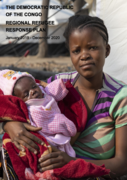
Looking forward, the 2019-2020 Regional Refugee Response Plan (RRRP) for the DRC situation aims at addressing the needs of new arrivals of Congolese refugees in the region, and those in protracted situations. By supporting livelihoods opportunities and through a resilience-based approach, refugees w
...

This report makes the case for a major new initiative—to rapidly recruit, train and deploy 2 million community health workers in Africa. Drawing on a vast body of evidence and substantial regional experience, the report shows how community health workers save lives and improve quality of life and
...
