Filter
354
Text search:
International
Union
Against
Tuberculosis
and
Lung
Disease,
World
Health
Organization
Featured
38
75
Language
Document type
261
37
31
12
7
3
2
1
Countries
22
11
11
11
7
6
6
5
5
4
4
3
3
3
3
3
3
3
3
3
2
2
2
2
2
2
2
2
2
1
1
1
1
1
1
1
1
1
1
1
1
1
1
1
1
1
Authors & Publishers
Publication Years
Category
78
52
21
9
8
3
2
Toolboxes
225
8
8
8
7
7
6
5
5
5
4
4
3
3
2
2
2
Globally, approximately 56.8 million people are in need of palliative care
services; 78% of them living in low and middle-income country yet only
about 12% have their needs being met causing great suffering for many.
Suggested language and usage for tuberculosis communications
First edition
Accessed November 2017

Rewiew Article
Hindawi Publishing Corporation, Tuberculosis Research and Treatment; Volume 2011, Article ID 712736, 6 pages, doi:10.1155/2011/712736
FORTBILDUNG – SCHWERPUNKT TUBERKULOSE HIV & More

Eur Respir J 2016; 48: 808–817 | DOI: 10.1183/13993003.00840-2016
J Epidemiol Infect Dis 1(1): 00003.n DOI: 10.15406/jeid.2017.01.00003
Published: September 14, 2017

PLOS ONE | DOI:10.1371/journal.pone.0133869 July 28, 2015, p.1-16
Accessed: 08.10.2019

The Open Infectious Diseases Journal, 2010, 4, 33-37
HIV & AIDS Treatment in Practice No.202
Pathak et al. (2016), PeerJ, DOI 10.7717/peerj.1738; 1-14
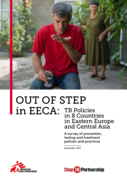
A survey of prevention, testing and treatment policies and practices

This publication gives a broad vision of what a comprehensive approach to cervical cancer prevention and control means. In particular, it outlines the complementary strategies for comprehensive cervical cancer prevention
...
HIV & AIDS Treatment in Practice No. 188