
Filter
2525
Text search:
Institute
for
research
in
international
assistance
Featured
187
739
Language
2454
67
41
30
26
12
11
6
5
3
3
3
2
2
2
2
2
2
2
1
1
1
1
1
1
1
1
1
1
1
1
1
1
1
Document type
1508
520
200
134
87
33
20
16
4
1
Countries / Regions
135
120
81
70
68
64
58
57
54
53
48
45
42
41
40
40
40
35
34
33
32
30
30
30
27
23
23
18
18
18
16
15
15
14
14
14
14
13
11
11
11
10
10
9
9
9
9
9
7
7
7
7
7
7
6
6
6
6
6
6
6
6
5
5
5
5
5
5
4
4
4
4
4
3
3
3
3
3
3
3
3
3
3
2
2
2
2
2
2
2
2
2
2
2
2
2
2
2
2
2
2
1
1
1
1
1
1
1
1
1
1
1
1
1
1
1
1
1
1
1
1
1
1
1
1
1
1
1
1
1
1
1
Authors & Publishers
243
102
88
63
54
37
36
33
31
24
21
18
17
15
15
14
14
13
13
13
12
11
11
11
11
10
10
10
10
9
9
9
9
9
9
9
9
8
8
8
8
7
7
7
7
7
7
7
7
7
6
6
6
6
6
6
6
6
5
5
5
5
5
5
5
5
5
5
5
5
5
5
5
4
4
4
4
4
4
4
4
4
4
4
4
4
4
4
4
4
4
4
4
4
4
4
4
4
4
4
4
4
4
3
3
3
3
3
3
3
3
3
3
3
3
3
3
3
3
3
3
3
3
3
3
3
3
3
3
3
3
3
3
3
3
3
3
3
3
3
3
3
3
3
3
3
3
3
3
3
3
3
3
3
3
3
3
3
3
3
3
3
3
3
3
3
3
3
2
2
2
2
2
2
2
2
2
2
2
2
2
2
2
2
2
2
2
2
2
2
2
2
2
2
2
2
2
2
2
2
2
2
2
2
2
2
2
2
2
2
2
2
2
2
2
2
2
2
2
2
2
2
2
2
2
2
2
2
2
2
2
2
2
2
2
2
2
2
2
2
2
2
2
2
2
2
2
2
2
2
2
2
2
2
2
2
2
2
2
2
2
2
2
2
2
2
2
2
2
2
2
2
2
2
2
2
2
2
2
2
2
2
2
2
2
2
2
2
2
2
2
2
2
2
2
2
2
2
2
2
2
2
2
2
2
2
2
2
2
2
2
2
2
2
2
2
2
2
2
2
2
2
2
2
2
2
2
2
2
2
2
2
1
1
1
1
1
1
1
1
1
1
1
1
1
1
1
1
1
1
1
1
1
1
1
1
1
1
1
1
1
1
1
1
1
1
1
1
1
1
1
1
1
1
1
1
1
1
1
1
1
1
1
1
1
1
1
1
1
1
1
1
1
1
1
1
1
1
1
1
1
1
1
1
1
1
1
1
1
1
1
1
1
1
1
1
1
1
1
1
1
1
1
1
1
1
1
1
1
1
1
1
1
1
1
1
1
1
1
1
1
1
1
1
1
1
1
1
1
1
1
1
1
1
1
1
1
1
1
1
1
1
1
1
1
1
1
1
1
1
1
1
1
1
1
1
1
1
1
1
1
1
1
1
1
1
1
1
1
1
1
1
1
1
1
1
1
1
1
1
1
1
1
1
1
1
1
1
1
1
1
1
1
1
1
1
1
1
1
1
1
1
1
1
1
1
1
1
1
1
1
1
1
1
1
1
1
1
1
1
1
1
1
1
1
1
1
1
1
1
1
1
1
1
1
1
1
1
1
1
1
1
1
1
1
1
1
1
1
1
1
1
1
1
1
1
1
1
1
1
1
1
1
1
1
1
1
1
1
1
1
1
1
1
1
1
1
1
1
1
1
1
1
1
1
1
1
1
1
1
1
1
1
1
1
1
1
1
1
1
1
1
1
1
1
1
1
1
1
1
1
1
1
1
1
1
1
1
1
1
1
1
1
1
1
1
1
1
1
1
1
1
1
1
1
1
1
1
1
1
1
1
1
1
1
1
1
1
1
1
1
1
1
1
1
1
1
1
1
1
1
1
1
1
1
1
1
1
1
1
1
1
1
1
1
1
1
1
1
1
1
1
1
1
1
1
1
1
1
1
1
1
1
1
1
1
1
1
1
1
1
1
1
1
1
1
1
1
1
1
1
1
1
1
1
1
1
1
1
1
1
1
1
1
1
1
1
1
1
1
1
1
1
1
1
1
1
1
1
1
1
1
1
1
1
1
1
1
1
1
1
1
1
1
1
1
1
1
1
1
1
1
1
1
1
1
1
1
1
1
1
1
1
1
1
1
1
1
1
1
1
1
1
1
1
1
1
1
1
1
1
1
1
1
1
1
1
1
1
1
1
1
1
1
1
1
1
1
1
1
1
1
1
1
1
1
1
1
1
1
1
1
1
1
1
1
1
1
1
1
1
1
1
1
1
1
1
1
1
1
1
1
1
1
1
1
1
1
1
1
1
1
1
1
1
1
1
1
1
1
1
1
1
1
1
1
1
1
1
1
1
1
1
1
1
1
1
1
1
1
1
1
1
1
1
1
1
1
1
1
1
1
1
1
1
1
1
1
1
1
1
1
1
1
1
1
1
1
1
1
1
1
1
1
1
1
1
1
1
1
1
1
1
1
1
1
1
1
1
1
1
1
1
1
1
1
1
1
1
1
1
1
1
1
1
1
1
1
1
1
1
1
1
1
1
1
1
1
1
1
1
1
1
1
1
1
1
1
1
1
1
1
1
1
1
1
1
1
1
1
1
1
1
1
1
1
1
1
1
1
1
1
1
1
1
1
1
1
1
1
1
1
1
1
1
1
1
1
1
1
1
1
1
1
1
1
1
1
1
1
1
1
1
1
1
1
1
1
1
1
1
1
1
1
1
1
1
1
1
1
1
1
1
1
1
1
1
1
1
1
1
1
1
1
1
1
1
1
1
1
1
1
1
1
1
1
1
1
1
1
1
1
1
1
1
1
1
1
1
1
1
1
1
1
1
1
1
1
1
1
1
1
1
1
1
1
1
1
1
1
1
1
1
1
1
1
1
1
1
1
1
1
1
1
1
1
1
1
1
1
1
1
1
1
1
1
1
1
1
1
1
1
1
1
1
1
1
1
1
1
1
1
1
1
1
1
1
1
1
1
1
1
1
1
1
1
1
1
1
1
1
1
1
1
1
1
1
1
1
1
1
1
1
1
1
1
1
1
1
1
1
1
1
1
1
1
1
1
1
1
1
1
1
1
1
1
1
1
1
1
1
1
1
1
1
1
1
1
1
1
1
1
1
1
1
1
1
1
1
1
1
1
1
1
1
1
1
1
1
1
1
1
1
1
1
1
1
1
1
1
1
1
1
1
1
1
1
1
1
1
1
1
1
1
1
1
1
1
1
1
1
1
1
1
1
1
1
1
1
1
1
1
1
1
1
1
1
1
1
1
1
1
1
1
1
1
1
1
1
1
1
1
1
1
1
1
1
1
1
1
1
1
1
1
1
1
1
1
1
1
1
1
1
1
1
1
1
1
1
1
1
1
1
1
1
1
1
1
1
1
1
1
1
1
1
1
1
1
1
1
1
1
1
1
1
1
1
1
1
1
1
1
1
1
1
1
1
1
1
1
1
1
1
1
1
1
1
1
1
1
1
1
1
1
1
1
1
1
1
1
1
1
1
1
1
1
1
1
1
1
1
1
1
1
1
1
1
1
1
1
1
1
1
1
1
1
1
1
1
1
1
1
1
1
1
1
1
1
1
1
1
1
1
1
1
1
1
1
1
1
1
1
1
1
1
1
1
1
1
1
1
1
1
1
1
1
1
1
1
1
1
1
1
1
1
1
1
1
1
1
1
1
1
1
1
1
1
1
1
1
1
1
1
1
1
1
1
1
1
1
1
1
1
1
1
1
1
1
1
1
1
1
1
1
1
1
1
1
1
1
1
1
1
1
1
1
1
1
1
1
1
1
1
1
1
1
1
1
1
1
1
1
1
1
1
1
1
1
1
1
1
1
1
1
1
1
1
1
1
1
1
1
1
1
1
1
1
1
1
1
1
1
1
1
1
1
1
1
1
1
1
1
1
1
1
1
1
1
1
1
1
1
1
1
1
1
1
1
1
1
1
1
1
1
1
1
1
1
1
1
1
1
1
1
1
1
1
1
1
1
1
1
1
1
1
1
1
1
1
1
1
1
1
1
1
1
1
1
1
1
1
1
1
1
1
1
1
1
1
1
1
1
1
1
1
1
1
1
1
1
1
1
1
1
1
1
1
1
1
1
1
1
1
1
1
1
1
1
1
1
1
1
1
1
1
1
1
1
1
1
1
1
1
1
1
1
1
1
1
1
1
1
1
1
1
1
1
1
1
1
1
1
1
1
1
1
1
1
1
1
1
1
1
1
1
1
1
1
1
1
1
1
1
1
1
1
1
1
1
1
1
1
1
1
1
1
1
1
1
1
1
1
1
1
1
1
1
1
1
1
1
1
1
1
1
1
1
1
1
1
1
1
1
1
1
1
1
1
1
1
1
1
1
1
1
1
1
1
1
1
1
1
1
1
1
1
1
1
1
1
1
1
1
1
1
1
1
1
1
1
1
1
1
1
1
1
1
1
1
1
1
1
1
1
1
1
1
1
1
1
1
1
1
1
1
1
1
1
1
1
1
1
1
1
1
1
1
1
1
1
1
1
1
1
1
1
1
1
1
1
1
1
1
1
1
1
1
1
1
1
1
1
1
1
1
1
1
1
1
1
1
1
1
1
1
1
1
1
1
1
1
1
1
1
1
1
1
1
1
1
1
1
1
1
1
1
1
1
1
1
1
1
1
1
1
1
1
1
1
1
1
1
1
1
1
1
1
1
1
1
1
1
1
1
1
1
1
1
1
1
1
1
1
1
1
1
1
1
1
1
1
1
1
1
1
1
1
1
1
1
1
1
1
1
1
1
1
1
1
1
1
1
1
1
1
1
1
1
1
1
1
1
1
1
1
1
1
1
1
1
1
1
1
1
1
1
1
1
1
1
1
1
1
1
1
1
1
1
1
1
1
1
1
1
1
1
1
1
1
1
1
1
1
1
1
1
1
1
1
1
1
1
1
1
1
1
1
1
1
1
1
1
1
1
1
1
1
1
1
1
1
1
1
1
1
1
1
1
1
1
1
1
1
1
1
1
1
1
1
1
1
1
1
1
1
1
1
1
1
1
1
1
1
1
1
1
1
1
1
1
1
1
1
1
1
1
1
1
1
1
1
1
1
1
1
1
1
1
1
1
1
1
1
1
1
1
1
1
1
1
1
1
1
1
1
1
1
1
1
1
1
1
1
1
1
1
1
1
1
1
1
1
1
1
1
1
1
1
1
1
1
1
1
1
1
1
1
1
1
1
1
1
1
1
1
1
1
1
1
1
1
1
1
1
1
1
1
1
1
1
1
1
1
1
1
1
1
1
1
1
1
1
1
1
1
1
1
1
1
1
1
1
1
1
1
1
1
1
1
1
1
1
1
1
1
1
1
1
1
1
1
1
1
1
1
1
1
1
1
1
1
1
1
1
1
1
1
1
1
1
1
1
1
1
1
1
1
1
1
1
1
1
1
1
1
1
1
1
1
1
1
1
1
1
1
1
1
1
1
1
1
1
1
1
1
1
1
1
1
1
1
1
1
1
1
1
1
1
1
1
1
1
1
1
1
1
1
1
1
1
1
1
1
1
1
1
1
1
1
1
1
1
1
1
1
1
1
1
1
1
1
1
1
1
1
1
1
1
1
1
1
1
1
1
1
1
1
1
1
1
1
1
1
1
1
1
1
1
1
1
1
1
1
1
1
1
1
1
1
1
1
1
1
1
1
1
1
1
1
1
1
1
1
1
1
1
1
1
1
1
1
1
1
1
1
1
1
1
1
1
1
1
1
1
1
1
1
1
1
1
1
1
1
1
1
1
1
1
1
1
1
1
1
1
1
1
1
1
1
1
1
1
1
1
1
1
1
1
1
1
1
1
1
1
1
1
1
1
1
1
1
1
1
1
1
1
1
1
1
1
1
1
1
1
1
1
1
1
1
1
1
1
1
1
1
1
1
1
1
1
1
1
1
1
1
1
1
1
1
1
1
1
1
1
1
1
1
1
1
1
1
1
1
1
1
1
1
1
1
1
1
1
1
1
1
1
1
1
1
1
1
1
1
1
1
1
1
1
1
1
1
1
1
1
1
1
1
1
1
1
1
1
1
1
1
1
1
1
1
1
1
1
1
1
1
1
1
1
1
1
1
1
1
1
1
1
1
1
1
1
1
1
1
1
1
1
1
1
1
1
1
1
1
1
1
1
1
1
1
1
1
1
1
1
1
1
1
1
1
1
1
Publication Years
590
1680
241
12
2
Category
1029
167
143
119
116
34
13
Toolboxes
227
155
123
114
107
100
76
71
61
55
55
54
53
41
38
37
37
30
30
27
25
17
14
9
5
2
mnesty International’s annual report on the state of the world’s human rights in 2021, published in March 2022, shows that promises to “build
...
back better” after the Covid-19 pandemic were little more than lip service. Hopes of global cooperation withered in the face of vaccine hoarding and corporate greed.
Governments suppressed independent and critical voices, with some even using the pandemic as a pretext to shrink further the civic space. New and unresolved conflicts erupted or persisted. Those forced to flee were subjected to a litany of abuses, including pushbacks by countries in the Global North. But hopes for a better post-pandemic world were kept alive by courageous individuals, social movements and civil society organizations.
The report is available in different languages
more

This document aims to provide public health authorities in European Union and European Economic Area (EU/EEA) countries with guidance for improved preparedness planning taking the lessons that have
...
been identified through various activities in the context of recent public health crises (e.g. COVID-19 pandemic, mpox multi-country outbreak 2022–23) and translating them to concrete advice. This document, together with the ECDC recommendations on the implementation of public health and social measures (PHSMs) for health emergencies and pandemics published in 2024, form a package of concrete recommendations for preparedness planning for the EU/EEA countries. Lessons learned primarily from the response to the COVID-19 pandemic, but also from the response to the multicountry mpox outbreak in 2022–23, were collected through various activities from Member States, the European Commission, the World Health Organization (WHO) and the WHO Regional Office from Europe. We have then presented these in the form of specific recommendations for planners within each phase of the continuous cycle of preparedness (Anticipation, Response and Recovery), following a prototype structure of a preparedness and response plan. In each section, we have presented a relevant example from a Member State or international organisation to illustrate their practice or attempt to implement lessons after COVID-19 or the mpox outbreak. These examples were identified either through literature review or communication with representatives of the countries within ECDC’s network for Preparedness and Response.
more
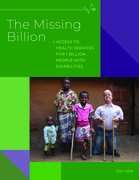
One billion people around the world live with disabilities. This report makes the case that they are being “left behind” in the global community’s work on health. This lack of access not only violates the rights of people with disabilities und
...
er international law, but UHC and SDG 3 cannot be attained without better health services for the one billion people with disabilities.
more
Background:Neonatal mortality accounts for 43% of global under-five deaths and is decreasing more slowly than maternal or child mortality. Donor funding has increased for maternal, newborn, and chil
...
d health (MNCH), but no analysis to date has disaggregated aid for newborns. We evaluated if and how aid flows for newborn care can be tracked, examined changes in the last decade, and considered methodological implications for tracking funding for specific population groups or diseases. MethodsandFindings:We critically reviewed and categorised previous analyses of aid to specific populations, diseases, or types of activities. We then developed and refined key terms related to newborn survival in seven languages and searched titles and descriptions of donor disbursement records in the Organisation for Economic Co-operation and Development’s Creditor Reporting System database, 2002–2010. We compared results with the Countdown to 2015 database of aid for MNCH (2003–2008) and the search strategy used by the Institute for Health Metrics and Evaluation. Prior to 2005, key terms related to newborns were rare in disbursement records but their frequency increased markedly thereafter. Only two mentions were found of ‘‘stillbirth’’ and only nine references were found to ‘‘fetus’’ in any spelling variant or language
more
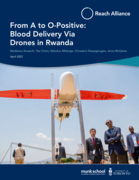
Rwanda’s mountainous topography makes ground transportation of medical supplies unreliable — some roads stretching into rural areas remain uncared for and unpaved. Between 25 and 40 per cent of all temperature-sensitive medical supplies sent fro
...
m urban centres to rural health clinics are wasted because of an unreliable cold-chain infrastructure. Rural clinics are also often subject to stockouts, and patients in need of specialized blood products, drugs and other supplies are unable to acquire them. Zipline, a US-based health logistics company, aims to address the issue of access to medical supplies, largely leapfrogging traditional modes of transportation and various obstacles. Zipline uses drones to deliver blood and other routine and emergency medical supplies from distribution centres to district hospitals and rural health centres.
Although the company has been celebrated in the media for its operations, there is little scholarly work on its operations and performance. This has led to some confusion over its scale. We aimed to gain insight into the details of Zipline’s business model, including the infrastructure, regulations and government support that make Zipline possible, and to understand its impact on health outcomes in Rwanda. Our work was entirely based on published materials since our research was conducted during the COVID-19 pandemic.
more
Climate change (CC) impacts on health outcomes, both direct and indirect, are sufficient to jeopardize achieving the World Bank Group’s visions and agendas in poverty reduction, population resilience, and health, nutrition and population (HNP).
...
In the last 5 years, the number of voices calling for stronger international action on climate change and health has increased, as have the scale and depth of activities. But current global efforts in climate and health are inadequately integrated. As a result, actions to address climate change, including World Bank Group (WBG) investment and lending, are missing opportunities to simultaneously promote better health outcomes and more resilient populations and health sectors. Accordingly, with the financial support of the Nordic Development Fund (NDF), the World Bank Group set out to develop an approach and a 4-year action plan, outlined in this paper, to integrate health-related climate considerations into selected WBG sector plans and investments.
more
2nd revised edition. Accessed Apri. 17, 2019
Prevention strategies based on scientific evidence working with families, schools, and communities can ensure that children and youth, especially the most marginalized and poor, grow and stay healthy and safe into adulthood and old age.
...
For every dollar spent on prevention, at least ten can be saved in future health, social and crime costs.
more
Over the past two decades, Afghanistan has depended on international donor support to fund essential services like health care. But this donor support has been falling for years and will likely to c
...
ontinue do so—perhaps precipitously—following the announcement by United States President Joe Biden that the US will withdraw all US forces from Afghanistan by September 11, 2021. This decline in funding has already had a harmful—and life-threatening—impact on the lives of many Afghan women and girls, as it affects access to, and quality of, health care.
more
The Global Movement for Mental Health has brought renewed attention to the neglect of people with mental illness within health policy worldwide. The maltreatment of the mentally ill in many low-inco
...
me countries is widely reported within psychiatric hospitals, informal healing centres, and family homes. International agencies have called for the development of legislation and policy to address these abuses. However such initiatives exemplify a top-down approach to promoting human rights which historically has had limited impact at the level of those living with mental illness and their families.
more
These guidelines have been compiled for education ministries or other educational leaders (including development partners, non-governmental or private organizations working with schools or directly with caregivers) who want to adapt and adopt resour
...
ces to support the marginalized caregivers of children with disabilities.
The guidance presented in this document was developed by a team of international and national experts following a proof-of-concept pilot4 of the resources in two countries. The work was carried out between February 2021 and January 2022. The pilots demonstrated that principles and activities described in the resources could be carried out, in practical terms, in line with existing government programmes supporting the implementation of disability-inclusive education.
more

A year ago, the second Special Session of the World Health Assembly (WHASS) unanimously agreed to start a diplomatic process for a new binding instrument aimed at ensuring the international communit
...
y is better prepared for the next health emergencies. The establishment of an Intergovernmental Negotiating Body (INB) at the WHO paved the terrain for a proper negotiation, which has started to unfold. The INB will be releasing the “conceptual zero draft” of the treaty text in early December 2022.
more
The QualityRights training and orientation modules have been developed to enhance the knowledge, skills and understanding of key stakeholders on how to promote the rights of people with psychosocial, intellectual or cognitive disabilities, improve the quality of services and support provided
...
in the field of mental health and related areas, in line with international human rights standards, in particular the UN Convention on the Rights of Persons with Disabilities and the recovery approach.
mental health and related fields, in accordance with international human rights standards, in particular the UN Convention on the Rights of Persons with Disabilities and the recovery approach.
more

The 2022 Financing for Sustainable Development Report identifies a “great finance divide” as a main driver of the divergent recovery. Developed countries were able to borrow record sums at ultra-low interest rates to support their people and eco
...
nomies, but the pandemic response and investment in recovery of poor countries was limited by fiscal constraints. This joint report, by over 60 agencies of the United Nations system and partner international organizations, provides analysis and puts forward policy recommendations to overcome this “finance divide” and enhance developing countries’ access to financing for recovery and productive and sustainable investment.
more

Produced by UNICEF and IRC, with the support of the German Corporation for International Cooperation GmbH (GIZ) and the generous funding from the German Federal Ministry of Economic Cooperation and
...
Development (BMZ), the Caring for Child Survivors of Sexual Abuse (CCS) Resource Package (Second Edition, 2023) is a revision of the original CCS Guidelines and associated Training (First Edition, 2012). The Second Edition offers an up-to-date global technical guidance on providing a model of quality care for children and families affected by sexual abuse in humanitarian settings. The new resources include both revised and content additions based on practitioner feedback, the most recent evidence and learning. In particular, the Guidelines aim to bring a stronger focus on gender inequality, intersectionality, as well as the connections between the best interests of the child and a survivor-centered approach.
more

Namibia has, for many years, had a strong legislative and policy framework for the protection of children. These policies and laws have been developed through the combined expertise of those workin
...
g in the field of child protection who have ensured Namibia has a robust legal framework that is in line with international best practices.
more
As part of the UN’s data strategy—which seeks to nurture data as a strategic asset for insight, impact and integrity—UNAIDS plays an indispensable role in generating data
...
for effective action against the AIDS pandemic. It leads the
world’s most extensive data collection on HIV epidemiology, programme coverage, policy and finance, and it publishes the most authoritative and up-to-date information on the HIV pandemic and response. The UNAIDS database of countryreported data is a foundational pillar for global and regional AIDS programmes, research, advocacy and resource mobilization
more

This report presents the performance results of 21 household water treatment (HWT) products evaluated in Rounds III and IV of the WHO International Scheme to Evaluate Household Water Treatment Techn
...
ologies (the Scheme). Released alongside a consolidated overview of findings from Rounds I–II, it represents the third and final report in a series of laboratory-based evaluations of microbial performance. With these latest evaluations, a total of 51 HWT products have been evaluated under the Scheme. The findings equip procurers with the evidence needed to make informed selection of HWT that supports safer drinking water for all.
more
On 17 October 2017, the Ugandan Ministry of Health notified WHO of a confirmed Marburg outbreak of Marburg Virus disease (MVD) in Kween district, Eastern Uganda. The outbreak was officially declared by the Ministry of health on 19 October 2017.
As
...
of 7 November, four cases of MVD have been reported- two confirmed (dead), one probable (dead) and one suspected. Other patients, previously reported as suspected cases, have since tested negative for the virus.
WHO has been implementing the Emergency Response Plan since 20 October 2017 when the Ministry of Health officially declared the outbreak. The Emergency Response Plan was developed on several assumptions which may now need to be revised.
more
Gender-based violence is a life-threatening, global health and human rights issue that violates international human rights law and principles of gender equality. It is also a threat to lasting peace and an affront to our common humanity. United Nati
...
ons Member States have called for urgent action to end GBV in emergencies, recognizing that in crises, the risk of GBV is heightened, particularly for women and adolescent girls.
more
