
Filter
2842
Text search:
recommendation
Featured
Recommendations
300
New Publications
679
Language
Document type
No document type
1511
Guidelines
572
Studies & Reports
400
Manuals
144
Strategic & Response Plan
72
Fact sheets
65
Training Material
46
Situation Updates
18
Resource Platforms
5
Brochures
4
Infographics
2
Videos
2
Online Courses
1
Countries / Regions
India
154
Global
139
Western and Central Europe
62
Nepal
59
Kenya
54
South Africa
49
Nigeria
45
Uganda
45
Sierra Leone
42
Latin America and the Carribbean
39
Tanzania
37
Myanmar / Burma
37
Ethiopia
36
Bangladesh
35
Africa
34
Zambia
31
Philippines
28
Namibia
28
Liberia
27
Rwanda
25
Malawi
24
Ghana
21
Zimbabwe
21
Indonesia
21
Eastern Europe
20
Ukraine
18
Syria
17
Mozambique
17
Brazil
17
Congo, Democratic Republic of
16
Germany
15
South–East Asia Region
15
Lesotho
13
Asia
12
Russia
12
Guinea
11
Burkina Faso
11
Senegal
11
South Sudan
11
West and Central Africa
11
Middle East and North Africa
11
East and Southern Africa
10
Eastern Europe and Central Asia
10
Cambodia
9
Cameroon
8
Haiti
8
Pakistan
8
Eswatini/ Swaziland
8
Afghanistan
7
Botswana
7
USA
6
Colombia
6
Vietnam
6
Mali
5
Madagascar
5
Yemen
5
Western Pacific Region
5
Côte d’Ivoire / Ivory Coast
4
Jordan
4
Thailand
4
Sudan
4
Angola
4
Venezuela
4
Albania
4
Laos
4
Tajikistan
4
Kazakhstan
4
Iraq
3
Turkey
3
Benin
3
Peru
3
Greece
3
Sri Lanka
3
Bhutan
3
Poland
3
Georgia
3
United Kingdom
3
Guinea-Bissau
2
Niger
2
Somalia
2
Central African Republic
2
Argentina
2
Hungary
2
Ecuador
2
Armenia
2
Iran
2
Kyrgyzstan
2
North America
2
Portugal
2
Spain
2
Belarus
2
Egypt
1
Chad
1
Gambia
1
China
1
Malaysia
1
Mauritania
1
Ireland
1
Singapore
1
Vanuatu
1
Burundi
1
El Salvador
1
Bolivia
1
Other region
1
Paraguay
1
Fiji
1
Italy
1
Southern Africa
1
Timor Leste/ East Timor
1
Bulgaria
1
Estonia
1
Lithuania
1
Uzbekistan
1
Japan
1
Denmark
1
South Korea
1
Israel
1
Bosnia and Herzegovina
1
Latvia
1
Authors & Publishers
Publication Years
Category
Countries
889
Clinical Guidelines
340
Women & Child Health
229
Public Health
142
Key Resources
134
Capacity Building
47
Pharmacy & Technologies
32
Toolboxes
HIV
317
COVID-19
247
Mental Health
206
TB
179
NTDs
89
Caregiver
81
Disability
79
AMR
72
NCDs
71
Malaria
65
Ebola & Marburg
55
Planetary Health
55
Rapid Response
49
Refugee
47
Pharmacy
44
Conflict
40
Health Financing Toolbox
26
Polio
24
Global Health Education
24
2.0 Rapid Response
23
Natural Hazards
19
Specific Hazards
18
Zika
17
Cholera
14
Social Ethics
7
Typhoon
2
South Sudan
1
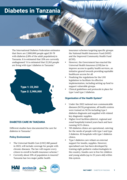
Tanzania has an estimated 2.9 million adults with diabetes, 35% of whom are undiagnosed, and over 22,000 people living with type 1 diabetes. While the 2023 Universal Health Insurance law aims to improve access to care, only 15% of people are insured. Over 700 clinics provide diabetes care and offer
...

This toolkit is a comprehensive set of practical tools and resources designed to support country-level risk communication and community engagement (RCCE) practitioners, decision-makers, and partners to plan and implement readiness and response activities for yellow fever outbreaks. The toolkit conta
...
STANDARD OPERATING PROCEDURES - PREVENTION AND CARE FOR CHILD SURVIVORS

This publication provides guidance for planning country-specific programming to achieve the triple elimination of mother-to-child (or vertical) transmission of HIV, syphilis and hepatitis B virus. It is based on the WHO Triple Elimination Framework, which promotes an integrated, person-centred appro
...
This operational guidance provides a structured approach to support countries in sustaining priority services for HIV, viral hepatitis and sexually transmitted infections in the context of reduced external funding. The guidance is intended for national governments, public health programmes, communit
...
The document "Combating False Information on Vaccines: A Guide for Health Workers" is designed to help health workers address vaccine misinformation. It begins by defining misinformation and explaining why it spreads rapidly, often due to its emotional appeal and simplistic explanations. The guide i
...

WHO guidelines for clinical management of arboviral diseases: dengue, chikungunya, Zika and yellow fever
recommended
The new WHO guidelines provide clinical management recommendations for four of the most widespread arboviruses affecting humans: dengue, chikungunya, Zika, and yellow fever.
An integrated approach is vital, as these four diseases often present with similar symptoms, especially in the early stages
...

Access to safe, effective and quality-assured health products and technologies is crucial for achieving universal health coverage and primary health care goals. The continued growth of the aging population; increasing burden of noncommunicable diseases; growing burden of mental health issues; climat
...

The 2024 edition reviews more than 50 health-related indicators from the Sustainable Development Goals and WHO’s Thirteenth General Programme of Work. It also highlights the findings from the Global health estimates 2021, notably the impact of the COVID-19 pandemic on life expectancy and healthy l
...

Growing emergencies and displacements across the world demand increasingly complex interventions and responses. The World Health Organization (WHO) has developed Malaria control in emergencies: a field manual to provide technical guidance to help partners respond effectively to malaria in emergency
...

Despite being a preventable and curable infectious disease, tuberculosis (TB) has continued to elude global controll efforts. In 2023, 8.2 milion people with TB were diagnosed and notified to the WHO, the hightest number ever reported since WHO began tracking.

Breastfeeding is a cornerstone of healthy infant nutrition, development and survival. It is critical for countries* to improve breastfeeding rates in order to achieve global targets for newborn and child health and survival, as well as economic growth and environmental sustainability

The objective of this guideline is to present the complete set of all WHO recommendations and best practice statements relating to abortion. While legal, regulatory, policy and service-delivery contexts may vary from country to country, the recommendations and best practices described in this docume
...

This publication provides an overview of evidence and guidance on the growing challenge of workplace heat stress in the context of climate change. It highlights the health and productivity risks faced by billions of workers, especially in manual labor sectors. The report details the physiological, s
...

The annual bulletin of the Mekong Malaria Elimination (MME) programme is a yearly report that reviews ongoing efforts to combat multidrug resistance and eliminate malaria in the 6 countries of the Greater Mekong subregion (GMS): Cambodia, China (Yunnan province), Lao People's Democratic Republic, My
...

Malaria remains a significant public health concern in the SADC region, accounting for 20% of childhood deaths, as well as prompting numerous outpatient visits and hospitalisations. Around three-quarters of the population, including 35 million children under the age of five and 8.5 million pregnant
...

For education to be competency-based and effective, appropriate training methodologies have to be used to support the learner to have the appropriate knowledge and to translate this knowledge into skills and competencies. Such education and training should lead to a change in attitudes, beliefs a
...

To contribute to the availability of basic knowledge and skills for the provision of palliative care in
the African region, the African Palliative Care Association (APCA) has developed a competencybased core curriculum framework for use in introductory training on palliative care. The curriculum
...
In this guide, the African Palliative Care Association (APCA) has put together evidence‑based information on the use of specific opioids commonly used in the management of moderate‑to‑severe pain to manage both cancer and non‑cancer pain. APCA hopes that this guide will be a useful tool i
...

Public health challenges over the past decade have highlighted the importance of approaching health through a holistic lens of human, animal, and environmental sectors, recognizing the need for a collaborative response against shared threats. Zoonotic diseases, transmitted between humans and animals
...
