
Filter
1385
Text search:
neglected
tropical
diseases
Featured
127
246
Language
Document type
421
393
154
100
79
66
57
38
18
17
16
10
7
7
2
Countries
216
33
25
24
23
22
21
20
20
18
14
14
13
13
12
11
10
10
10
10
9
9
8
8
8
8
7
7
7
7
6
6
5
5
4
4
3
3
3
3
3
3
3
2
2
2
2
2
2
2
2
2
2
2
2
2
2
2
2
2
1
1
1
1
1
1
1
1
1
1
1
1
1
1
1
1
1
1
1
1
1
1
1
1
1
1
1
1
1
1
1
1
1
1
1
1
Authors & Publishers
Publication Years
Category
287
136
88
52
27
26
15
1
Toolboxes
693
60
45
33
27
27
24
23
22
21
16
15
15
12
12
12
10
8
7
6
4
4
3
2
Au total, 18 laboratoires de 13 pays ont participé aux quatre cycles d'AQE : 10 laboratoires de huit pays africains endémiques, dont quatre ont participé aux quatre cycles et trois à trois cycles. Les résultats globaux ont montré que la performance médiane de ces laboratoires s'est amélioré
...
A major objective of this open access book is to summarize the current status of Buruli Ulcer (BU) research for the first time. It will identify gaps in our knowledge, stimulate research and support control of the disease by providing insight into approaches for surveillance, diagnosis, and treatmen
...

The World Health Organization (WHO) convened a meeting of the Technical Advisory Group on Buruli ulcer at its headquarters in Geneva, Switzerland on 25 to 27 March 2019

The meeting was held from 26 to 27 March 2018 to review and discuss the following topics:
Advances and challenges in the use of fTLC, and new approaches to detecting mycolactone using monoclonal antibodies (mAbs).
The status of development of rapid diagnostic tests (RDTs) targeting the MUL
...
Buruli ulcer : management of Mycobacterium ulcerans disease : a manual for health care providers
recommended
This manual is addressed to health care providers dealing with Mycobacterium ulcerans disease (Buruli ulcer). The manual aims to achieve a better understanding of the disease, its clinical presentation and its surgical management. The manual is aimed particularly at district health care providers. A
...
Prevention of disability in Buruli ulcer
Learn how to identify and treat the disease early.
Learn how to prevent disability.
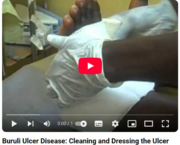
This video "Buruli Ulcer Disease: Cleaning and Dressing the Ulcer" is part of a multimedia-based module by Richard Phillips, Stephen Sarfo, Emmanuel Adu, Veronica Owusu-Afriyie, and Cary Engleberg (University of Michigan). This video addresses the question: How should Buruli ulcers be cleansed and d
...
Education and information about Chagas Disease epidemiology and risk factors.
La enfermedad de Chagas, también conocida como tripanosomiasis americana, es causada por el parásito Trypanosoma cruzi. La forma más común de contraer la infección es a través del contacto con las heces de un insecto triatominio (conocido con los nombres de chinche besucona, benchuca, vinchuca
...
The WHF IASC Roadmap proposes strategies and evidence-based solutions for healthcare professionals, health authorities and governments to help overcome the barriers to comprehensive care for Chagas disease patients. This roadmap describes an ideal patient care pathway, and explores the roadblocks al
...
Since 1996, trachoma has been targeted for elimination as a public health problem worldwide. The active trachoma criterion for national elimination as a public health problem is a TF1–9 < 5%, sustained for at least two years in the absence of antibiotic mass drug administration (MDA), in each formerly endemic EU. Usi
...

Countries, partners, and donors are committed to the global elimination of blinding trachoma by 2020.
Achieving this public health milestone requires more than funding; it requires health personnel with the
right mix of skills, and well supported and managed health systems. Mass drug administratio
...
Trachoma disease
Trachoma is a sequela following infection by the bacterium Chlamydia trachomatis (C. trachomatis). The disease is preventable, but still the cause of blindness in 1.9 million people world wide.
Trachoma is a bacterial eye infection found in poor, isolated communities lacking basic hygiene, clean water, and adequate sanitation.

In 2011, ICTC developed a Trachoma Action Plan (TAP) planning guide to support national health officials in endemic countries. This resource was developed to complement the 2020 INSight roadmap by helping countries create specific national plans detailing how they will reach elimination targets in t
...
The year 2020 is the target date for the elimination of blinding trachoma as a public health problem. There has been great progress, and there is unprecedented funding available – particularly from DFID, the Queen Elizabeth Diamond Jubilee Trust, and USAID. There is also reason for optimism that,
...
The number of people at risk from trachoma, the world’s leading infectious cause of blindness, remained stable in 2020 despite disruptions to community-based interventions caused by COVID-19, the World Health Organization (WHO) reported in its Weekly Epidemiological Record.
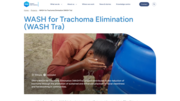
WASH for Trachoma Elimination (WASH Tra) will contribute in the reduction of Trachomatous inflammation – follicular (TF) to <5% through sustained change in enhanced facial cleanliness and handwashing practices of the community, and use of improved sanitation and integration/mainstreaming of trachoma and WASH interve
...

You Tube video on Chagas Disease
Education and information about Chagas Disease, Triatomine bugs, Kissing Bugs, fact sheets, information for special groups, prevention and control, epidemiology, diagnosis and treatment for Health Professionals.
