
Filter
4148
Text search:
Emergency
Medical
Services
for
Children
Featured
Recommendations
435
New Publications
1226
Language
Document type
No document type
2398
Studies & Reports
614
Guidelines
505
Manuals
237
Strategic & Response Plan
195
Situation Updates
66
Training Material
62
Fact sheets
41
Brochures
11
Resource Platforms
10
Infographics
6
Online Courses
2
App
1
Countries / Regions
Global
179
India
174
Kenya
128
Sierra Leone
108
Syria
105
Liberia
104
Nigeria
96
Nepal
96
Ethiopia
92
Uganda
91
South Africa
83
Bangladesh
82
Myanmar / Burma
79
Western and Central Europe
78
Tanzania
67
Rwanda
64
Malawi
62
Ukraine
60
Zambia
59
Latin America and the Carribbean
54
Namibia
53
Ghana
52
Africa
51
South Sudan
49
Congo, Democratic Republic of
40
Philippines
35
Mozambique
35
Zimbabwe
31
Yemen
31
Guinea
30
Haiti
30
Asia
28
Venezuela
27
Lesotho
26
Indonesia
24
South–East Asia Region
22
Germany
20
Cambodia
20
Lebanon
19
Eastern Europe and Central Asia
19
Pakistan
18
Brazil
18
Eastern Europe
18
Senegal
17
West and Central Africa
17
Jordan
16
Russia
16
Afghanistan
15
Sudan
15
Eswatini/ Swaziland
15
Botswana
15
East and Southern Africa
15
Middle East and North Africa
15
Central African Republic
14
Somalia
13
Burkina Faso
12
Iraq
12
Moldova
12
Turkey
11
Colombia
11
Thailand
10
Vietnam
10
Laos
9
USA
8
Cameroon
8
Western Pacific Region
8
Mali
7
Palestine
7
Iran
7
China
6
Benin
6
Greece
6
Angola
6
Sri Lanka
6
Poland
6
Albania
6
Côte d’Ivoire / Ivory Coast
5
Papua New Guinea
5
Burundi
5
Romania
5
Singapore
4
Peru
4
Libya
4
Mexico
4
Tajikistan
4
Portugal
4
Niger
3
Egypt
3
Gambia
3
Malaysia
3
North Macedonia
3
Hungary
3
Armenia
3
Southern Africa
3
Timor Leste/ East Timor
3
Kazakhstan
3
North America
3
Saudi Arabia
2
Togo
2
Argentina
2
Croatia
2
Bolivia
2
Madagascar
2
Paraguay
2
Bhutan
2
Italy
2
Mongolia
2
Qatar
2
Bulgaria
2
Estonia
2
Slovakia
2
Uzbekistan
2
Georgia
2
Japan
2
Spain
2
Guinea-Bissau
1
Morocco
1
Chad
1
Dominican Republic
1
Switzerland
1
Serbia
1
Honduras
1
Ecuador
1
Guatemala
1
Chile
1
Fiji
1
Djibouti
1
Lithuania
1
Kyrgyzstan
1
Turkmenistan
1
France
1
Maldives
1
Mauritius
1
Tunisia
1
United Kingdom
1
South Korea
1
Belarus
1
Israel
1
Authors & Publishers
Publication Years
Category
Countries
1724
Key Resources
301
Women & Child Health
280
Clinical Guidelines
254
Public Health
196
Capacity Building
90
Pharmacy & Technologies
29
Annual Report MEDBOX
1
Toolboxes
COVID-19
394
Mental Health
311
HIV
296
Conflict
233
Disability
139
Ebola & Marburg
135
Refugee
131
TB
120
Caregiver
101
Natural Hazards
90
Planetary Health
90
Rapid Response
86
Global Health Education
64
Pharmacy
51
NCDs
51
AMR
46
Health Financing Toolbox
43
NTDs
40
2.0 Rapid Response
33
Specific Hazards
32
Cholera
31
Zika
31
Malaria
28
Polio
22
Social Ethics
7
Typhoon
5
South Sudan
2
The purpose of this guidance is to assist WHO Member States, and other stakeholders, in the establishment and development of programmes of integrated surveillance of antimicrobial resistance in foodborne bacteria (i.e., bacteria commonly transmitted by food). In this guidance, “integrated surveill
...

WHO’s Ambition and Action in Nutrition 2016-2025 is anchored in the six global targets for improving maternal, infant and young child nutrition and the global diet-related NCD targets.
In support of the 2030 Agenda ...
In support of the 2030 Agenda ...
Updated: 20 July 2019
Fact sheet also available in Arabic, French, Spanish, Portuguese, Chinese and Russian. For other language versions go to: http://www.who.int/mediacentre/factsheets/zika/en/

Antimicrobial resistance (AMR) is a global public health crisis that resulted in 1.14 million deaths in 2021. According to the Institute for Health Metrics and Evaluation estimates, 96 416 of these deaths occurred in the World Health Organizatio
...

This toolkit is a comprehensive set of practical tools and resources designed to support country-level risk communication and community engagement (RCCE) practitioners, decision-makers and partners to plan and implement readiness and response activities fo
...

This toolkit is a comprehensive set of practical tools and resources designed to support country-level risk communication and community engagement (RCCE) practitioners, decision-makers, and partners to plan and implement readiness and response activities f
...

This publication provides an overview of evidence and guidance on the growing challenge of workplace heat stress in the context of climate change. It highlights the health and productivity risks faced by billions of workers, especially in manual labor sectors. The report details the physiological, s
...

This report aims to raise awareness about the role that the reform of public health laws can play in advancing the right to health and in creating the conditions for people to live healthy lives. By encouraging a better understanding of how public h
...
Since the beginning of the Ukraine crisis on 24 February 2022, WHO has supported Government-led efforts and initiatives alongside key partners on the ground. Building on efforts to date, and working alongside Bulgaria’s health authorities to bring added value to existing mechanisms, the WHO Countr
...
Series on Disability-Inclusive Development. This publication introduces the key concepts for disability-inclusive development and highlights practical examples by CBM, to contribute to the dialogue on disability-inclusive development
This document is produced by the Humanitarian Country Team and the United Nations Resident
Coordinator’s Office in Mozambique, with the support of the United Nations Office for the Coordination of
Humanitarian Affairs (OCHA). The projects reflec
...
The audit was undertaken in order to ascertain whether allocations and donations received directly by the Government of Sierra Leone, in the fight against the Ebola Virus Disease were utilised with due regard to economy and efficiency and that internal controls were observed accordingly. The audit f
...
The aim of this paper is to map and critically analyse evidence of good practice in prevention and response to gender-based violence (GBV) in humanitarian contexts which can support humanitarian practitioners and policy makers to improve the quality of GBV programming in the field. The paper is stru
...
This module introduces the “Vaccinator’s Manual”, a guideline for vaccinators. The aim of the manual is to update EPI guidelines to include all the changes since the third edition of the Vaccinators Manual (2008)
The key areas covered are diagnosis, imaging, pathology, surgery, rehabilitation, palliative care and survivorship. It emphasizes a multi-disciplinary team approach which is paramount for quality cancer care. The specific cancers co
...
In 2005, the World Health Organization (WHO) Member States adopted the revised International
Health Regulations (IHR) (2005). The Regulations provide a unique public health framework in the
form of obligations and recommendations that enable countries to better p
...
A comprehensive briefing by Half of Syria
April 2020
A comprehensive briefing on the critical challenges of the COVID-19 pandemic to Syrians, as reported by Syrian civil society organisations. These challenges have been collated following extensive interviews with the teams of member and partner
...
Communities can play a critical role in suicide prevention. Facilitating community engagement in suicide prevention is an important task. The toolkit is a step-by-step guide for communities to engage in suicide prevention activities and have ownersh
...

The objectives of the research presented in this report were to identify case studies of community-led HIV-related health and social inclusion service delivery organizations in eastern and southern Africa; describe the typologies of the services pro
...
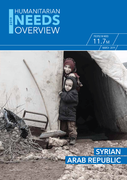
The figures and findings reflected in the 2019 Humanitarian Needs Overview (HNO) represent the independent analysis
of the United Nations (UN) and its humanitarian partners based on information available to them. While the HNO aims
to provide consolidated humanitarian analysis and data to help inf
...
