
Filter
2780
Text search:
Policy
brief
Featured
249
605
Language
2620
95
79
72
44
25
20
20
8
8
6
5
4
3
3
3
3
3
3
2
2
2
2
2
2
2
2
2
2
2
1
1
1
1
1
1
1
1
1
1
1
1
1
1
1
1
1
1
1
1
1
1
1
1
1
Document type
1316
558
404
191
109
98
72
15
9
3
1
1
1
Countries
143
99
71
61
61
54
49
48
47
47
39
39
38
36
35
34
33
32
31
27
27
27
25
24
22
19
19
18
18
18
17
16
15
15
14
13
13
13
12
11
11
10
10
10
10
9
9
8
8
7
7
7
7
6
6
6
5
5
5
5
5
4
4
4
3
3
3
3
3
3
3
3
3
3
2
2
2
2
2
2
2
2
2
2
2
2
2
2
2
2
1
1
1
1
1
1
1
1
1
1
1
1
1
1
1
1
1
1
1
1
1
1
1
1
1
1
1
1
1
Authors & Publishers
442
100
94
82
80
61
45
42
32
29
20
19
19
18
16
15
15
13
12
11
11
11
10
10
10
10
9
9
9
9
8
8
8
8
7
7
7
7
7
7
7
7
7
7
7
7
7
7
7
7
7
6
6
6
6
6
6
6
6
6
5
5
5
5
5
5
5
5
5
5
5
5
5
5
5
5
5
5
5
5
5
4
4
4
4
4
4
4
4
4
4
4
4
4
4
4
4
4
4
4
4
4
4
4
4
4
4
4
4
4
4
4
4
4
4
4
4
4
4
4
4
4
3
3
3
3
3
3
3
3
3
3
3
3
3
3
3
3
3
3
3
3
3
3
3
3
3
3
3
3
3
3
3
3
3
3
3
3
3
3
3
3
3
3
3
3
3
3
2
2
2
2
2
2
2
2
2
2
2
2
2
2
2
2
2
2
2
2
2
2
2
2
2
2
2
2
2
2
2
2
2
2
2
2
2
2
2
2
2
2
2
2
2
2
2
2
2
2
2
2
2
2
2
2
2
2
2
2
2
2
2
2
2
2
2
2
2
2
2
2
2
2
2
2
2
2
2
2
2
2
2
2
2
2
2
2
2
2
2
2
2
2
2
2
2
2
2
2
2
2
2
2
2
2
2
2
2
2
2
2
2
2
2
2
2
2
2
2
2
2
2
2
2
2
2
2
2
2
2
2
2
2
2
2
2
2
2
2
2
2
2
2
2
2
2
2
2
2
2
2
2
2
2
2
2
2
2
2
2
2
2
1
1
1
1
1
1
1
1
1
1
1
1
1
1
1
1
1
1
1
1
1
1
1
1
1
1
1
1
1
1
1
1
1
1
1
1
1
1
1
1
1
1
1
1
1
1
1
1
1
1
1
1
1
1
1
1
1
1
1
1
1
1
1
1
1
1
1
1
1
1
1
1
1
1
1
1
1
1
1
1
1
1
1
1
1
1
1
1
1
1
1
1
1
1
1
1
1
1
1
1
1
1
1
1
1
1
1
1
1
1
1
1
1
1
1
1
1
1
1
1
1
1
1
1
1
1
1
1
1
1
1
1
1
1
1
1
1
1
1
1
1
1
1
1
1
1
1
1
1
1
1
1
1
1
1
1
1
1
1
1
1
1
1
1
1
1
1
1
1
1
1
1
1
1
1
1
1
1
1
1
1
1
1
1
1
1
1
1
1
1
1
1
1
1
1
1
1
1
1
1
1
1
1
1
1
1
1
1
1
1
1
1
1
1
1
1
1
1
1
1
1
1
1
1
1
1
1
1
1
1
1
1
1
1
1
1
1
1
1
1
1
1
1
1
1
1
1
1
1
1
1
1
1
1
1
1
1
1
1
1
1
1
1
1
1
1
1
1
1
1
1
1
1
1
1
1
1
1
1
1
1
1
1
1
1
1
1
1
1
1
1
1
1
1
1
1
1
1
1
1
1
1
1
1
1
1
1
1
1
1
1
1
1
1
1
1
1
1
1
1
1
1
1
1
1
1
1
1
1
1
1
1
1
1
1
1
1
1
1
1
1
1
1
1
1
1
1
1
1
1
1
1
1
1
1
1
1
1
1
1
1
1
1
1
1
1
1
1
1
1
1
1
1
1
1
1
1
1
1
1
1
1
1
1
1
1
1
1
1
1
1
1
1
1
1
1
1
1
1
1
1
1
1
1
1
1
1
1
1
1
1
1
1
1
1
1
1
1
1
1
1
1
1
1
1
1
1
1
1
1
1
1
1
1
1
1
1
1
1
1
1
1
1
1
1
1
1
1
1
1
1
1
1
1
1
1
1
1
1
1
1
1
1
1
1
1
1
1
1
1
1
1
1
1
1
1
1
1
1
1
1
1
1
1
1
1
1
1
1
1
1
1
1
1
1
1
1
1
1
1
1
1
1
1
1
1
1
1
1
1
1
1
1
1
1
1
1
1
1
1
1
1
1
1
1
1
1
1
1
1
1
1
1
1
1
1
1
1
1
1
1
1
1
1
1
1
1
1
1
1
1
1
1
1
1
1
1
1
1
1
1
1
1
1
1
1
1
1
1
1
1
1
1
1
1
1
1
1
1
1
1
1
1
1
1
1
1
1
1
1
1
1
1
1
1
1
1
1
1
1
1
1
1
1
1
1
1
1
1
1
1
1
1
1
1
1
1
1
1
1
1
1
1
1
1
1
1
1
1
1
1
1
1
1
1
1
1
1
1
1
1
1
1
1
1
1
1
1
1
1
1
1
1
1
1
1
1
1
1
1
1
1
1
1
1
1
1
1
1
1
1
1
1
1
1
1
1
1
1
1
1
1
1
1
1
1
1
1
1
1
1
1
1
1
1
1
1
1
1
1
1
1
1
1
1
1
1
1
1
1
1
1
1
1
1
1
1
1
1
1
1
1
1
1
1
1
1
1
1
1
1
1
1
1
1
1
1
1
1
1
1
1
1
1
1
1
1
1
1
1
1
1
1
1
1
1
1
1
1
1
1
1
1
1
1
1
1
1
1
1
1
1
1
1
1
1
1
1
1
1
1
1
1
1
1
1
1
1
1
1
1
1
1
1
1
1
1
1
1
1
1
1
1
1
1
1
1
1
1
1
1
1
1
1
1
1
1
1
1
1
1
1
1
1
1
1
1
1
1
1
1
1
1
1
1
1
1
1
1
1
1
1
1
1
1
1
1
1
1
1
1
1
1
1
1
1
1
1
1
1
1
1
1
1
1
1
1
1
1
1
1
1
1
1
1
1
1
1
1
1
1
1
1
1
1
1
1
1
1
1
1
1
1
1
1
1
1
1
1
1
1
1
1
1
1
1
1
1
1
1
1
1
1
1
1
1
1
1
1
1
1
1
1
1
1
1
1
1
1
1
1
1
1
1
1
1
1
1
1
1
1
1
1
1
1
1
1
1
1
1
1
1
1
1
1
1
1
1
1
1
1
1
1
1
1
1
1
1
1
1
1
1
1
1
1
1
1
1
1
1
1
1
1
1
1
1
1
1
1
1
1
1
1
1
1
1
1
1
1
1
1
1
1
1
1
1
1
1
1
1
1
1
1
1
1
1
1
1
1
1
1
1
1
1
1
1
1
1
1
1
1
1
1
1
1
1
1
1
1
1
1
1
1
1
1
1
1
1
1
1
1
1
1
1
1
1
1
1
1
1
1
1
1
1
1
1
1
1
1
1
1
1
1
1
1
1
1
1
1
1
1
1
1
1
1
1
1
1
1
1
1
1
1
1
1
1
1
1
1
1
1
1
1
1
1
1
1
1
1
1
1
1
1
1
1
1
1
1
1
1
1
1
1
1
1
1
1
1
1
1
1
1
1
1
1
1
1
1
1
1
1
1
1
1
1
1
1
1
1
1
1
1
1
1
1
1
1
1
1
1
1
1
1
1
1
1
1
1
1
1
1
1
1
1
1
1
1
1
1
1
1
1
1
1
1
1
1
1
1
1
1
1
1
1
1
1
1
1
1
1
1
1
1
1
1
1
1
1
1
1
1
1
1
1
1
1
1
1
1
1
1
1
1
1
1
1
1
1
1
1
1
1
1
1
1
1
1
1
1
1
1
1
1
1
1
1
1
1
1
1
1
1
1
1
1
1
1
1
1
1
1
1
1
1
1
1
1
1
1
1
1
1
1
1
1
1
1
1
1
1
1
1
1
1
1
1
1
1
1
1
1
1
1
1
1
1
1
1
1
1
1
1
1
1
1
1
1
1
1
1
1
1
1
1
1
1
1
1
1
1
1
1
1
1
1
1
1
1
1
1
1
1
1
1
1
1
1
1
1
1
1
1
1
1
1
1
1
1
1
1
1
1
1
1
1
1
1
1
1
1
1
1
1
1
1
1
1
1
1
1
1
1
1
1
1
1
1
1
1
1
1
1
1
1
1
1
1
1
1
1
1
1
1
1
1
1
1
1
1
1
1
1
1
1
1
1
1
1
1
1
1
1
1
1
1
1
1
1
1
1
1
1
1
1
1
1
1
1
1
1
1
1
1
1
1
1
1
1
1
1
1
1
1
1
1
1
1
1
1
1
1
1
1
1
1
1
1
1
1
1
1
1
1
1
1
1
1
1
1
1
1
1
1
1
1
1
1
1
1
1
1
1
1
1
1
1
1
1
1
1
1
1
1
1
1
1
1
1
1
1
1
1
1
1
1
1
1
1
1
1
1
1
1
1
1
1
1
1
1
1
1
1
1
1
1
1
1
1
1
1
1
1
1
1
1
1
1
1
1
1
1
1
1
1
1
1
1
1
1
1
1
1
1
1
1
1
1
1
1
1
1
1
1
1
1
1
1
1
1
1
1
1
1
1
1
1
1
1
1
1
1
1
1
1
1
1
1
1
1
1
1
1
1
1
1
1
1
1
1
1
1
1
1
1
1
1
1
1
1
1
1
1
1
1
1
1
1
1
1
1
1
1
1
1
1
1
1
1
1
1
1
1
1
1
1
1
1
1
1
1
1
1
1
1
1
1
1
1
1
1
1
1
1
1
1
1
1
1
1
1
1
1
1
1
1
1
1
1
1
1
1
1
1
1
1
1
1
1
1
1
1
1
1
1
1
1
1
1
1
1
1
1
1
1
1
1
1
1
1
1
1
1
1
1
1
1
1
1
1
1
1
1
1
1
1
1
1
1
1
1
1
1
1
1
1
1
1
1
1
1
1
1
1
1
1
1
1
1
1
1
1
1
1
1
1
1
1
1
1
1
1
1
1
1
1
1
1
1
1
1
1
1
1
1
1
1
1
1
1
1
1
1
1
1
1
1
1
1
1
1
1
1
1
1
1
1
1
1
1
1
1
1
1
1
1
1
1
1
1
1
1
1
1
1
1
1
1
1
1
1
1
1
1
1
1
1
1
1
1
1
1
1
1
1
1
1
1
1
1
1
1
1
1
1
1
1
1
1
1
1
1
1
1
1
1
1
1
1
1
1
1
1
1
1
1
1
1
1
1
1
1
1
1
1
1
1
1
1
1
1
1
1
1
1
1
1
1
1
1
1
1
1
1
1
1
1
1
1
1
1
1
1
1
1
1
1
1
1
1
1
1
1
1
1
1
1
1
1
1
1
1
1
1
1
1
1
1
1
1
1
1
1
1
1
1
1
1
1
1
1
1
1
1
1
1
1
1
1
1
1
1
1
1
1
1
1
1
1
1
1
1
1
1
1
1
1
1
1
1
1
1
1
1
1
1
1
1
1
1
1
1
1
1
1
1
1
1
1
1
1
1
1
1
1
1
1
1
1
1
1
1
1
1
1
1
1
1
1
1
1
1
1
1
1
1
Publication Years
1
1048
1473
246
12
Category
914
250
180
177
140
71
20
2
Toolboxes
308
296
140
129
122
112
87
78
73
61
61
58
45
42
39
36
34
34
33
28
19
18
8
7
6
1
What are the FP and CAC competencies?
Through the clear articulation of the family planning and comprehensive abortion care (FP and CAC) competencies for the primary health care workforce, the aim is to advance improvements in FP and CAC service delivery by aligning health worker education approach
...
es with population health needs and health system demands.
This document, which describes these competencies in detail, is intended to:
be a foundational tool to be adopted and adapted by educators and regulators for FP and CAC providers (students) with a pre-service training pathway of at least 12 months;
describe competencies that are relevant to current and future health practice;
enable widespread use of the competencies not only for curriculum development for pre-service education, but also for in-service education, regulation, qualifications, quality assurance, personal development, performance evaluation, recruitment, management and career progression;
focus on the core functions of FP and CAC providers within broader efforts towards achieving universal health coverage
more
This document, Programme and curriculum development guide, presents a systematic approach to developing programmes and curricula for implementation of the family planning (FP) and comprehensive abortion care (CAC) competencies,and the theory behind the approach. Specifically, the aim is for effectiv
...
e implementation of these competencies in the context of pre-service education and training, post-graduate studies and continuing professional development (CPD). This guide is designed for programme and curriculum developers who are preparing or revising formal education and training programmes and curricula for the FP and CAC workforce.
This guide proposes a new FP and CAC Educational Design Model for programme and curriculum development. This model can support competency-based education (CBE) for current and future FP and CAC services, with a pre-service training pathway of at least 12 months, and can also support in-service training. CBE provides the most effective means to orient educational programmes and curricula towards effective health services that meet population health needs, and this Educational Design Model provides a guide for linking the competencies required to provide a range of health services
more
This report assesses the impact of the conflict in Ukraine and its implications for organized crime and security-related issues for neighbouring countries, with a focus on Moldova.
These include:
Organized crime and illicit trafficking (including trafficking in persons, drugs, arms, illicit toba
...
cco, and other goods); Cybercrimes and fraud; Disinformation and propaganda; and Chemical, Biological, Radiological, and Nuclear (CBRN) threats.
more

This new guidance aims to support programme implementers, coordinators and others in humanitarian settings in their actions to counter suicide and self-harm in humanitarian contexts and to save lives.
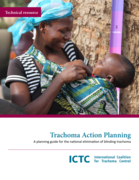
In 2011, ICTC developed a Trachoma Action Plan (TAP) planning guide to support national health officials in endemic countries. This resource was developed to complement the 2020 INSight roadmap by helping countries create specific national plans detailing how they will reach elimination targets in t
...
heir own particular contexts.
more
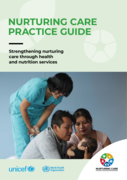
This Guide responds to requests from practitioners and country teams who have learned about the Nurturing care framework and want to understand how to adapt health and nutrition services to be supportive of nurturing care and strengthen caregivers’ capacity.
April 2022 Volume 35 Issue 2 e00152-21
Population movements have turned Chagas disease (CD) into a global public health problem. Despite the successful implementation of subregional initiatives to control vectorial and transfusional Trypanosoma cruzi transmission in Latin American settings where t
...
he disease is endemic, congenital CD (cCD) remains a significant challenge. In countries where the disease is not endemic, vertical transmission plays a key role in CD expansion and is the main focus of its control. Although several health organizations provide general protocols for cCD control, its management in each geopolitical region depends on local authorities, which has resulted in a multitude of approaches. The aims of this review are to (i) describe the current global situation in CD management, with emphasis on congenital infection, and (ii) summarize the spectrum of available strategies, both official and unofficial, for cCD prevention and control in countries of endemicity and nonendemicity. From an economic point of view, the early detection and treatment of cCD are cost-effective. However, in countries where the disease is not endemic, national health policies for cCD control are nonexistent, and official regional protocols are scarce and restricted to Europe. Countries of endemicity have more protocols in place, but the implementation of diagnostic methods is hampered by economic constraints. Moreover, most protocols in both countries where the disease is endemic and those where it is not endemic have yet to incorporate recently developed technologies. The wide methodological diversity in cCD diagnostic algorithms reflects the lack of a consensus. This review may represent a first step toward the development of a common strategy, which will require the collaboration of health organizations, governments, and experts in the field.
more

The World Health Organization (WHO) and the global community of countries, partners, donors, technical experts, scientists and field implementation teams continue to work towards the ultimate goal of a world free of the burden of neglected tropical diseases (NTDs).
Schistosomiasis is a public health problem in tropical and subtropical regions of Africa, Asia, the Caribbean and South America. It is one of the neglected tropical diseases (NTDs) - a group of diseases and conditions that affect particularly low-income populations, worldwide.
Last year, WHO laun
...
ched a new road map for 2021-2030 that aims to end the suffering from NTDs by 2030, in line with the Sustainable Development Goals. The road map specifically targets the elimination of schistosomiasis as a public health problem, globally.
This guideline provides evidence-based recommendations in the following areas: prevalence thresholds, target age groups and frequency of PC, establishment of WASH and snail control activities to support control and elimination of schistosomiasis, diagnostic tests for the assessment of schistosomiasis infection in animal reservoirs, in snail hosts, and in humans.
more
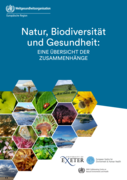
Verstädterung, Flächennutzung, globaler Handel und Industrialisierung haben auf der ganzen Welt tiefgreifende negative Folgen für Natur, Biodiversität und Ökosysteme. Der fortwährende Abbau natürlicher Ressourcen wirkt sich nicht nur auf den Zustand der Umwelt aus, sondern hat auch enorme Aus
...
wirkungen für Wohlergehen und Sicherheit der Gesellschaften. Dieser Bericht bietet eine Übersicht der vielfältigen Einwirkung der natürlichen Umwelt auf die menschliche Gesundheit. Er legt dar, wie Natur und Ökosysteme Gesundheit und Wohlbefinden unterstützen und schützen können und wie zugleich die Zerstörung der Natur und der Verlust an Biodiversität die menschliche Gesundheit bedrohen. Er ist an ein Publikum gerichtet, das nicht über umfassende Erfahrung mit den Verbindungen zwischen Natur und Gesundheit verfügt. Diese Übersicht richtet sich in erster Linie an Personen, die sich beruflich oder politisch mit Umwelt und Gesundheit beschäftigen, kann aber auch für andere Bereiche relevant sein, die mit dem Schutz, der Handhabung und der Nutzung von Natur und Biodiversität befasst sind.
more
This Handbook is primarily for educators, to help them learn about mental health issues and better support them in educational environments. The Handbook aims to provide training to teachers, administrators, and people involved in the education of primary school children about the implementation of
...
mental health literacy into daily school life. Such knowledge, skills and attitudes will equip all levels of educators with key tools to support student mental health, manage difficult classroom behavior, and promote students’ wellbeing and academic success.
more
Snakebite envenoming affects millions of people worldwide annually and is a significant source of mortality. Preventing and treating the problem is complex and requires collaboration among the fields of public health, medicine, ecology, and laboratory science. After being removed from the category A
...
neglected tropical disease (NTD) list in 2013, snakebite envenoming was reinstated in 2017 in response to antivenom shortages and advocacy from researchers and international NGOs. In 2019, the World Health Organization (WHO) set a target to halve the number of deaths and cases of snakebite envenoming by 2030.
more

Promoting health and preventing disease is a critical component of the effort required to achieve Universal Health Coverage (UHC). to date, efforts to achieve UHC have focused mostly on strengthening health systems and their capacities to provide curative care. However, experience from the COVID-19
...
pandemic has reaffirmed the need for resilient health systems, emphasizing primary health care, including preventive and promotive health and well-being.
Emerging from the eye of the storm as the global health lead agency during the pandemic, WHO is equipped with the required insights and actions for a holistic approach to “building back fairer and better” after COVID-19.
The Healthier Populations (UHP) Cluster in the African Region is designed to support Pillar 3 of WHO’s 13th Global Programme of Work (GPW13) which aims to make 1 billion people healthier by reducing health inequities, preventing diseases and injuries, addressing health determinants, and promoting partnerships for collaborative actions amongst all stakeholders.
more
More than 700 000 people lose their life to suicide every year. A core foundation of suicide prevention is the timely registration and regular monitoring of suicide and self-harm. Surveillance data can be used to show important progress towards reaching global targets, such as reducing the suicide r
...
ate by one third by 2030 as articulated in the UN SDGs and in the WHO Mental Health Action Plan 2013-2030. However, there are considerable discrepancies in the quality of data on suicide and self-harm globally. The aim of this training manual is to equip fieldworkers and supervisors with the skills to collect and manage data on suicide and self-harm in the community via key informants, health-care facilities and police records. In doing so, the value and overall goal is to strengthen the surveillance of suicide and self-harm in communities, particularly in LMICs and hard-to-reach communities where CRVS systems are weak or absent.
more
The PS Centre has released three publications addressing the need for MHPSS tools and guidance in Ukraine and surrounding countries.
The Introduction to Psychological First Aid, presents a training module on basic psychological first aid skills for people affected by the international armed confl
...
ict in Ukraine which can be delivered in four hours. It is an adaption of another PS Centre publication, Training in Psychological First Aid for Red Cross and Red Crescent Societies. Module 1. An introduction to PFA.
more
The Assessment package has been developed for countries to evaluate the implementation of the WHO Standards for prosthetics and orthotics. It enables identification of areas in need of strengthening and facilitates relevant planning. The complete Assessment package consists of four components: Asses
...
sment guide: gives directions on how to organize and implement the assessment. Assessment tool: Excel instrument used to carry out assessments and record results.
User manual: explains how the Assessment tool should be used.
Planning document: Excel file into which the recommendations that are generated by the Assessment tool can be pasted for easy use in subsequent planning.
more

WASH and Health working together: a ‘how-to’ guide for neglected tropical disease programmes
recommended
2nd edition. This toolkit provides step-by-step guidance to NTD programme managers and partners on how to engage and work collaboratively with the WASH community to improve delivery of water, sanitation and hygiene services to underserved population affected by many neglected tropical diseases. The
...
toolkit draws on tools and practices used in the delivery of coordinated and integrated programmes for control, elimination and eradication of NTDs. This second edition include revisions and new tools based on experiences of using the toolkit in more than 20 countries.
more

Children with disabilities are particularly vulnerable in humanitarian settings, yet they are often not able to access the services and protection they need. While multiple factors create these barriers, a major cause is how data about children with disabilities is collected and mapped. Data collect
...
ion processes often exclude or underrepresent the views of children with disabilities and thier caretakers. When the experiences of children with disabilities and their caretakers are not defined and collected, they become excluded from mainstreamed protective services, which are meant to serve all children. Children with disabilities also do not get the specialised interventions they need.
This guidance note explores how to use qualitative methods to create more robust assessment processes to ensure more effective programming and services for children with disabilities. This note provides promising practices for engaging with children with disabilities and includes sample tools that can be tailored to fit the needs of a particular assessment process. The note also explores the importance of thoughtful cross-sectoral responses so that children with disabilities, and their families, are carefully considered in areas like water, sanitation, and hygiene (WASH), education, health, and nutrition, and therefore receive the holistic support they need and deserve.
This note is intended for a broad audience of relevant child protection actors, including practitioners, coordination groups, researchers, and donors. The information is not limited to one type of humanitarian setting, geographic region, or culture. As a result, the practices and guidance should be adapted to each specific context, ideally in partnership with well-informed local actors, such as representatives from local organisations for persons with disabilities.
more
This guideline provides evidence-informed guidance on the use of non-sugar sweeteners to reduce the risk of unhealthy weight gain and diet-related noncommunicable diseases in adults and children. The guidance in this guideline is not based on toxicological assessments of the safety of individual no
...
n-sugar sweeteners and is therefore not intended to update or replace guidance on safe or maximal levels of intake established by the Joint Food and Agriculture Organization of the United Nations (FAO)/WHO Expert Committee on Food Additives (JECFA) or other authoritative bodies.
more
The 2023 Country Presence Report provides an overview of what WHO does in countries to advance towards the SDGs and implement GPW13, how we do it, with whom we work, and what is needed to overcome challenges for achieving results and impact in countries.
